Telly, the disruptive startup offering free smart TVs in exchange for user data and advertising exposure, is significantly expanding its advertising capabilities by making its home screen ad inventory available for programmatic buying. This strategic move, announced on Wednesday, September 9th, 2026, signals Telly’s ambition to attract substantial advertising spend by embracing automated ad trading and advocating for standardized ad formats within the connected TV (CTV) ecosystem.
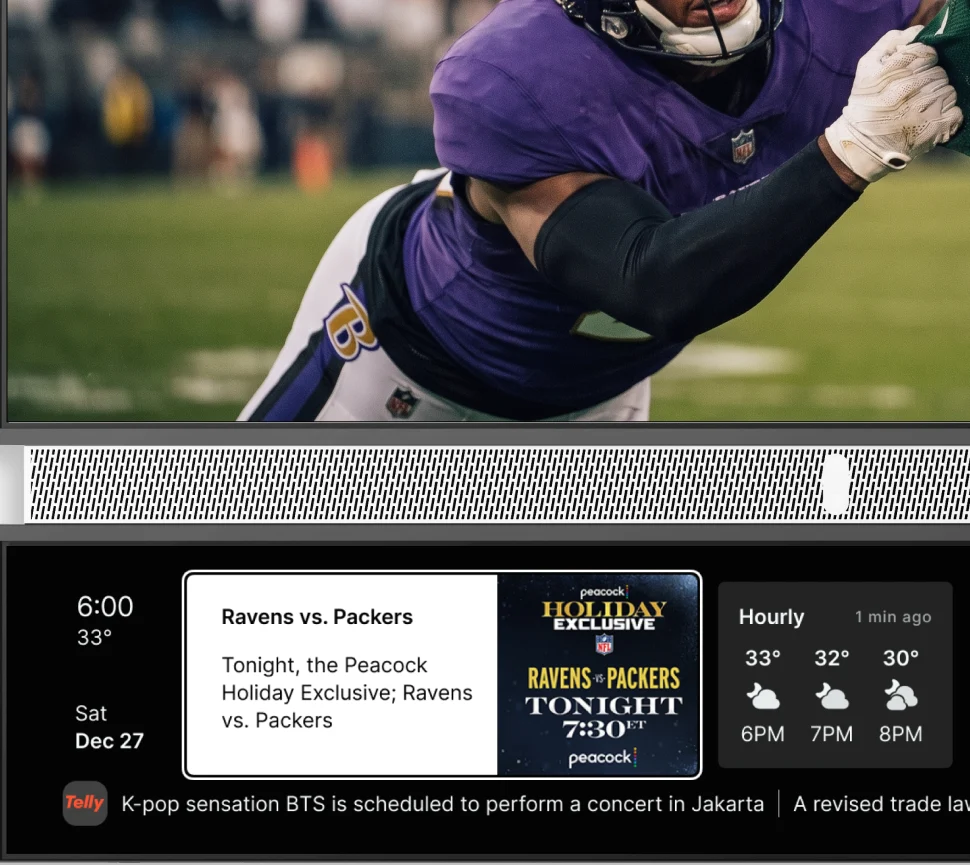
The company’s unique proposition lies in its dual-screen television sets. These devices feature a primary display for content consumption and a smaller, secondary screen positioned below it. This "second screen" is designed to present a continuous stream of news updates and advertisements, including dynamic, programmatically traded ads that appear directly on the home screen. Telly leverages Magnite’s SpringServe ad server for ad delivery, with demand partners such as The Trade Desk and Teads already integrated into the ecosystem.
Mike Shehan, Telly’s Chief Revenue Officer and a seasoned veteran formerly serving as CEO of SpotX before its acquisition by Magnite for $1.17 billion in 2021, emphasized the critical role of programmatic enablement in achieving the necessary scale for home screen advertising to gain traction. "For home screen ads to stick, they need scale," Shehan stated, underscoring the inherent challenge and opportunity of this nascent advertising channel.
While Telly is not the first to introduce programmatic advertising on smart TV home screens, its approach is distinguished by a concerted effort to drive industry standardization. Ad tech platform Nexxen, for instance, began offering programmatic access to its native home screen ads across various TV manufacturers like V (formerly VIDAA) and TiVo last year. Supply-side platforms, including Magnite, have also been facilitating programmatic buying for formats like pause ads for some time. However, Telly is actively carving out its niche by collaborating closely with the IAB Tech Lab.
This collaboration has been instrumental in developing standardized specifications for home screen ads within the bidstream. The IAB Tech Lab concluded its public comment period for proposed spec updates at the end of June 2026 and finalized these signal updates in July. This proactive engagement with a key industry standards body suggests Telly’s commitment to fostering a more predictable and scalable environment for advertisers, potentially accelerating adoption.
Shehan further highlighted Telly’s competitive advantages, citing the company’s second-screen technology and its access to rich first-party customer data as key differentiators. These assets, he argued, enable more precise targeting of home screen ads and, consequently, a greater likelihood of driving measurable business outcomes for advertisers.
The Strategic Advantage of the Second Screen and Deep Data
Telly’s business model hinges on a comprehensive onboarding process for its users. Prospective customers are required to complete an extensive questionnaire to qualify for a free Telly device. This questionnaire delves deeply into demographic information, including household income and the number of occupants, as well as lifestyle and behavioral data. Questions probe brand preferences, insurance providers, types of vehicles owned by household members, and whether these vehicles are leased or purchased.
"The questionnaire goes very deep on demographics, lifestyle and brand loyalty," Shehan explained, emphasizing how this granular data, when combined with Automatic Content Recognition (ACR) data—which tracks the content viewers are consuming—facilitates exceptionally precise targeting. For example, an insurance provider could effectively target households actively in the market for a new policy based on their demonstrated interest and demographic profile.
Beyond its data-gathering function, the second screen itself is a powerful advertising canvas. Its ability to operate independently of the main TV display allows for ad delivery without interrupting the primary viewing experience. This means advertisers can reach viewers even when they are consuming content through ad-free streaming services, a segment that has traditionally been difficult to monetize effectively. The home screen placement offers a persistent and non-intrusive presence, allowing brands to establish a connection with consumers before they even select a program.
Expanding Ad Formats and Driving Engagement
In addition to programmatic enablement, Telly is also introducing longer-form home screen ad units, available in durations of up to five minutes through private marketplace (PMP) deals facilitated by Magnite. Shehan believes that the combination of this extended duration and the inherently non-disruptive nature of a home screen placement is a potent recipe for enhanced engagement.
An illustrative example provided by Telly demonstrated the efficacy of these longer formats. While the specific streaming service was not named, it reportedly achieved a five-fold increase in app opens when utilizing a five-minute home screen ad compared to a two-minute advertisement. This suggests that when presented in a relevant and non-disruptive context, longer ad formats can effectively drive desired consumer actions.
The enthusiasm for this innovative advertising approach is shared by some prominent media buyers. Mike Treon, Head of CTV and Video Strategy at PMG, commented on the strategic value of Telly’s offering: "The home screen has always been a powerful front door for us to engage viewers. Telly extends that opportunity, giving brands a persistent presence that enhances engagement." This sentiment underscores the recognition of the home screen as a prime piece of real estate within the CTV environment.
Broader Industry Implications and Future Outlook
Telly’s move into programmatic home screen advertising, coupled with its push for standardization, has significant implications for the broader CTV advertising landscape. The company’s model, which effectively subsidizes hardware costs for consumers through advertising revenue, presents a compelling alternative to traditional TV and ad-supported streaming models.
The success of Telly’s strategy could spur further innovation in hardware-centric advertising models. As more consumers embrace smart TVs, the potential for direct-to-consumer engagement through the TV itself, rather than solely through content platforms, becomes increasingly attractive to advertisers. The ability to leverage rich first-party data, as Telly does, is a critical component of this evolution, offering a more privacy-compliant and effective alternative to third-party cookies, which are rapidly being phased out.
However, the long-term sustainability of Telly’s model and the widespread adoption of its advertising solutions will ultimately depend on its ability to consistently deliver measurable results for advertisers and maintain user satisfaction. While early indications and expert endorsements are positive, the translation of this initial enthusiasm into sustained, long-term investment remains a key metric to watch. The company’s focus on industry standards through initiatives like its work with the IAB Tech Lab is a prudent step towards building trust and facilitating broader market participation.
The future of CTV advertising is increasingly characterized by a demand for greater transparency, efficiency, and effectiveness. Telly’s approach, combining innovative hardware, deep data insights, and a commitment to programmatic infrastructure and standardization, positions it as a significant player to watch in this rapidly evolving sector. The ability to offer a unique, non-disruptive advertising experience directly on the smart TV home screen, augmented by sophisticated targeting capabilities, represents a compelling proposition for brands seeking to capture the attention of engaged audiences in the living room. As the industry continues to mature, Telly’s model may well serve as a blueprint for future innovations in how consumers access content and how advertisers reach them.