

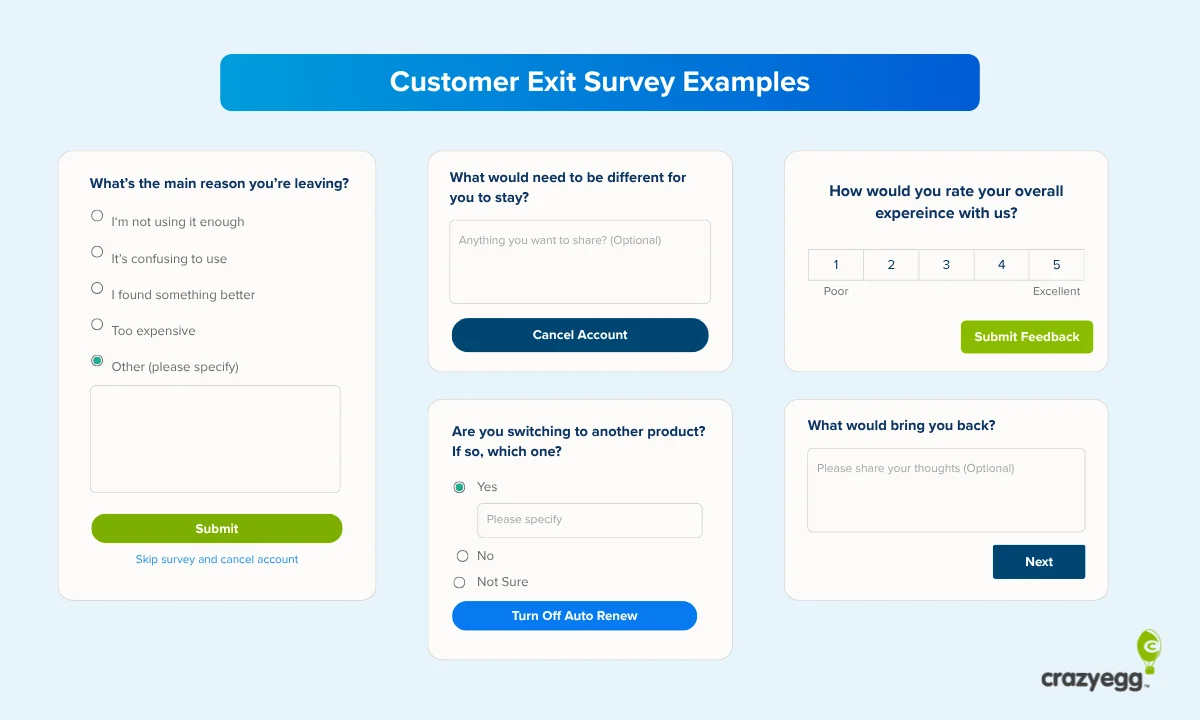
In an increasingly competitive digital marketplace, the customer exit survey has emerged as a critical diagnostic tool for businesses seeking to mitigate churn and refine their product-market fit. Defined as a concise questionnaire presented during the cancellation flow, via post-cancellation email, or upon website abandonment, these surveys provide a final touchpoint for organizations to capture actionable intelligence. Far from being a mere formality, the exit survey serves as a bridge between quantitative churn metrics and qualitative user experience, allowing companies to understand the "why" behind the "what" of customer loss.
The Strategic Framework of Customer Feedback
The modern business landscape, particularly within the Software-as-a-Service (SaaS) and e-commerce sectors, relies heavily on recurring revenue. Consequently, customer retention has become as vital as acquisition. Industry data suggests that acquiring a new customer can be five to twenty-five times more expensive than retaining an existing one. In this context, the exit survey is not just a parting question but a strategic asset.
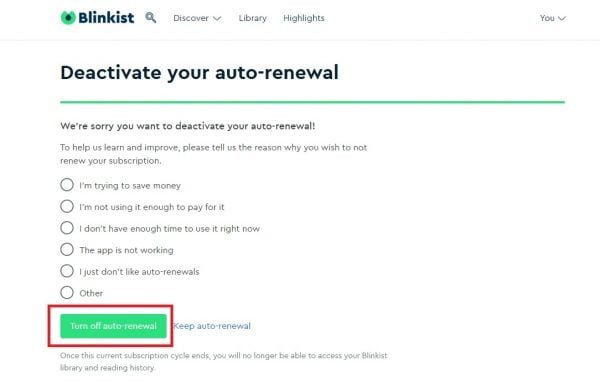
An effective exit survey typically begins with a single-choice question identifying the primary reason for departure, followed by optional open-ended or rating-based queries. This structured approach allows for high-level statistical analysis while leaving room for the nuanced feedback that often reveals deep-seated product flaws or market shifts.
Distinguishing Exit Surveys from Exit Interviews
While both methods aim to extract feedback from departing clients, they serve different operational scales and objectives. An exit survey is an automated, scalable tool best suited for high-volume, self-serve environments. Conversely, an exit interview involves a direct conversation—via phone or video conference—between a company representative and the customer.
According to organizational consultants, exit interviews are most effective for high-value B2B accounts where the loss of a single contract significantly impacts the bottom line. These interviews allow for deep-dive follow-up questions and the potential for immediate "saves" through personalized negotiation. However, for the majority of digital consumers, the survey remains the preferred medium due to its low friction.
Comparison data highlights the trade-offs: exit surveys offer high-volume quantitative data and require minimal administrative effort, while exit interviews provide rich qualitative narratives at the cost of significant time investment from both parties. Many successful enterprises now employ a hybrid model, utilizing automated surveys for all cancellations and triggering personal interview requests only for accounts meeting specific "high-value" criteria.
The Chronology of a Strategic Exit Survey
The timing of a survey’s delivery is a primary determinant of its response rate and the accuracy of the data collected. Industry experts identify three primary windows for deployment:
- The Instant of Cancellation: For subscription-based models, the most effective time to present a survey is immediately after a user clicks "Cancel" or "Downgrade," but before the action is finalized. At this stage, the reasoning is fresh in the user’s mind, leading to higher completion rates.
- The Post-Departure Email: If a cancellation occurs outside the product—such as through a billing provider or a manual support ticket—a follow-up email is typically sent within hours. While this method sees lower engagement, it provides a secondary opportunity to capture data from users who bypassed the standard flow.
- The Point of Website Abandonment: In e-commerce, exit-intent triggers monitor cursor movement or scroll depth. When a visitor appears ready to leave a checkout or pricing page, a survey can capture the barriers to conversion, such as unexpected shipping costs or a lack of trust in payment security.
Data-Driven Design: The 2025 Completion Benchmarks
The design of the survey itself is subject to rigorous optimization. A 2025 study conducted by software firm Survicate, which analyzed over 8,300 surveys, revealed a direct correlation between survey length and completion rates. Surveys featuring only two or three questions maintained a median completion rate of 86.8%. This figure dropped significantly to 77.4% for surveys containing four to six questions.
To maximize utility without alienating the user, professionals recommend a "Reason-First" architecture:
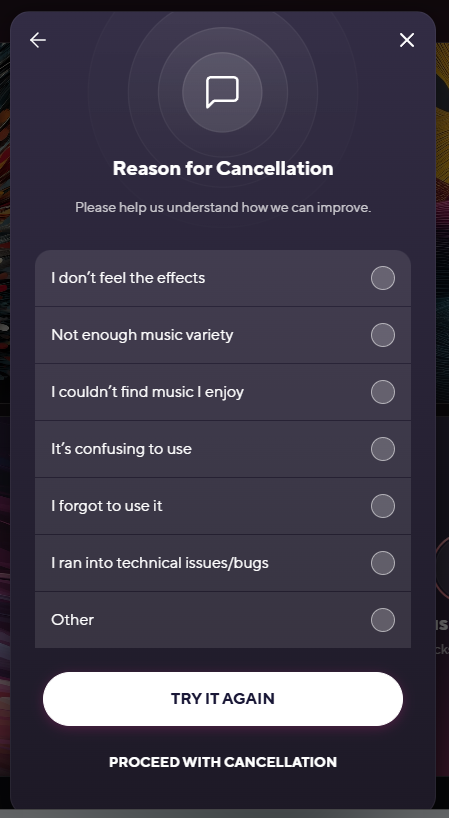
- The Primary Question: A mandatory single-choice question (using radio buttons) asking for the main reason for leaving.
- The Open-Ended Follow-up: An optional text box asking, "What would need to change for you to stay?"
- The Competitive Intelligence: An optional query regarding whether the customer is switching to a specific competitor.
Furthermore, the "20/3% Rule," popularized by growth strategist Leah Tharin, provides a framework for iterative survey improvement. If a single reason is selected by more than 20% of respondents, it should be broken down into more specific sub-categories. Conversely, any option receiving less than 3% of responses should be removed or consolidated to reduce cognitive load for the user.
Behavioral Verification: Reconciling Words and Actions
A significant challenge in exit surveys is the gap between what customers say and what they actually do. Psychologists point to "Social Desirability Bias," where respondents give answers they believe are more acceptable, and "Recency Bias," where a single minor frustration outweighs months of positive experience.
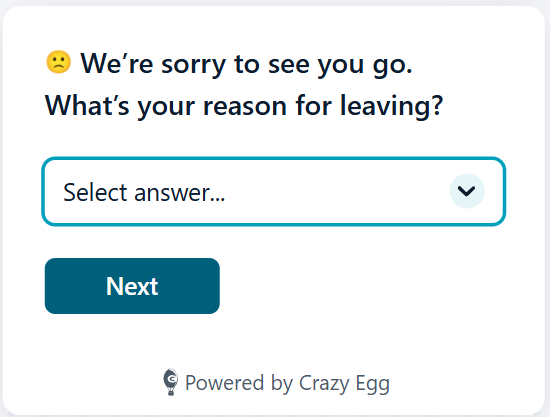
To combat this, leading firms like Crazy Egg advocate for the integration of behavioral analytics with survey responses. By pairing a user’s survey answer with session recordings and heatmaps, analysts can verify the validity of the feedback. For instance, if a customer selects "The product was too difficult to use," session recordings can pinpoint the exact UI element where the user struggled.
A 2024 case study from the SEO tool SEOJuice illustrated this discrepancy. Their analysis found that 41% of users who cited "Price" as their reason for leaving had never actually completed a successful audit with the tool. This indicated that the "Price" complaint was a symptom of a deeper onboarding failure; the customers did not find the price high because of its absolute value, but because they had failed to realize any value from the product during their tenure.
Cross-Functional Data Utilization and Official Responses
For an exit survey to be more than a passive data collection exercise, the results must be routed to the appropriate internal stakeholders. In a mature corporate structure, feedback is categorized and assigned as follows:
- Product and Engineering: Responsible for "Missing Features" and "Technical Bugs."
- Customer Success: Addresses "Confusing Setup" and "Onboarding Friction."
- Marketing and Sales: Manages "Wrong Fit" or "Expectations Not Met" feedback.
Corporate leaders emphasize the importance of "closing the loop." When a product update addresses a specific complaint previously logged in exit surveys, marketing teams can reach out to those churned users. This not only provides a legitimate reason to re-engage former customers but also demonstrates a commitment to user-driven development, which can significantly boost brand reputation.
Regulatory and Ethical Considerations
The implementation of exit surveys must also navigate a complex legal landscape. In jurisdictions such as California, the Business and Professions Code Section 17602 prohibits businesses from making the cancellation process unnecessarily difficult. Forcing a customer to complete a mandatory, lengthy survey before allowing them to cancel a subscription can be interpreted as an "obstructionist practice," potentially leading to significant fines and legal action.
The Federal Trade Commission (FTC) has also increased scrutiny on "dark patterns"—design choices that trick or frustrate users into staying subscribed. Journalistic investigations into major subscription services have highlighted that transparent, easy-to-navigate cancellation flows, which include optional and brief surveys, are the gold standard for both legal compliance and long-term brand loyalty.
Broader Impact and Industry Implications
The shift toward sophisticated exit surveys reflects a broader trend in the global economy: the transition from transactional relationships to experience-based loyalty. As AI and automation continue to lower the barrier to entry for new competitors, the ability to listen to and act upon the reasons for customer departure will separate enduring brands from transient ones.
Analysts predict that the next evolution of exit surveys will involve real-time AI sentiment analysis. Future systems may be able to offer a personalized "save" incentive—such as a specific feature walkthrough or a targeted discount—based on the text a user is typing into an open-ended survey box before they even hit the submit button.
In conclusion, the customer exit survey is a vital instrument in the modern business toolkit. By combining structured questioning with behavioral data and ethical implementation, organizations can transform the negative event of a cancellation into a powerful catalyst for product improvement and future growth. The objective is clear: understand why the customer is leaving today to ensure the next one stays tomorrow.







