The Goalkeepers 2017 report, inaugurated by the Bill and Melinda Gates Foundation, represents a pivotal shift in how global development progress is monitored, analyzed, and communicated to the public. Designed to track the United Nations Sustainable Development Goals (SDGs), the report utilizes a sophisticated blend of data science and storytelling to diagnose urgent global problems, identify high-impact solutions, and interpret key results within the fight against extreme poverty and preventable disease. Among the most critical metrics highlighted in the 2017 publication is the maternal mortality ratio (MMR), a primary indicator of a nation’s healthcare system’s efficacy and social equity. By synthesizing datasets from UNICEF and other international bodies, the report underscores a significant, albeit uneven, global trend toward safer childbirth, with Ethiopia emerging as a primary case study in successful intervention.
The Goalkeepers Initiative and the 2017 Strategic Framework
The Bill and Melinda Gates Foundation launched the "Goalkeepers" initiative to serve as a yearly report card for the world. The 2017 report was the first of its kind, intended to accelerate progress by highlighting both the successes and the gaps in the global effort to meet the 2030 SDG targets. The foundation’s approach focuses on "data stories"—the narrative behind the numbers—to ensure that policymakers and the public remain engaged with issues that can often feel abstract when presented solely through spreadsheets.
A central theme of the 2017 report is the "fight against the odds," focusing on how leadership and targeted investment can overcome the challenges of geography and economics. The report emphasizes that the reduction of maternal mortality is not merely a medical objective but a fundamental human rights issue. Bill and Melinda Gates have frequently asserted that maternal mortality is one of the most devastating forces a community can face, as the death of a mother often precipitates a cascade of negative outcomes for surviving children, including increased risks of malnutrition, school dropout, and infant mortality.
Chronology of Maternal Health Goals: From MDGs to SDGs
The global effort to reduce maternal mortality has been structured around two major international frameworks over the last three decades. The first was the Millennium Development Goals (MDGs), which spanned from 1990 to 2015. Under MDG 5, the international community aimed to reduce the maternal mortality ratio by three-quarters. While the world fell short of this ambitious target, the progress was substantial; the global MMR declined by approximately 44% during this period.
In 2016, the transition to the Sustainable Development Goals (SDGs) marked a new era of accountability. SDG Target 3.1 aims to reduce the global maternal mortality ratio to less than 70 per 100,000 live births by 2030. The Goalkeepers 2017 report arrived at a critical juncture, providing the first major assessment of whether the momentum generated during the MDG era was being sustained. The report utilizes 2015 data as a baseline, a year in which UNICEF and the World Health Organization (WHO) recorded approximately 302,530 maternal deaths globally—a figure that equates to roughly 168.7 deaths per 100,000 live births.
Case Study: Ethiopia’s Remarkable Trajectory
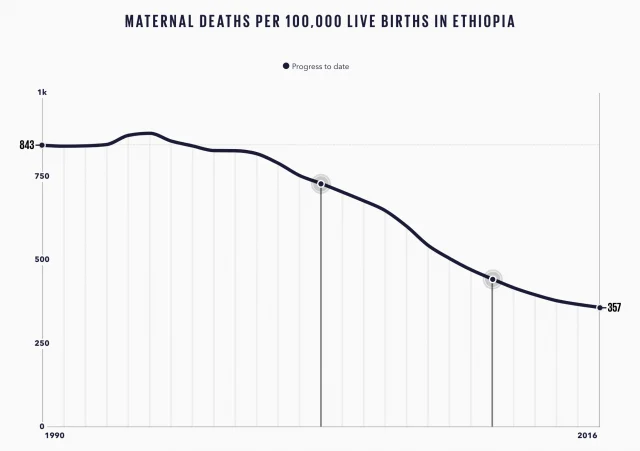
One of the most significant success stories documented in the Goalkeepers 2017 report is the transformation of maternal health in Ethiopia. In 1990, Ethiopia had one of the highest maternal mortality ratios in the world, with an estimated 843 deaths per 100,000 live births. By 2015, this figure had plummeted to 357 per 100,000. While still high compared to developed nations, the rate of decline represents an extraordinary achievement for a country with limited financial resources.
Ethiopia’s success is attributed to a multi-decade strategy centered on the Health Extension Program (HEP), launched in 2003. This initiative involved training and deploying more than 38,000 female health extension workers to rural villages. These workers provide a package of essential health services, including prenatal care, immunization, and education on hygiene and nutrition. By bringing healthcare directly to the doorsteps of the most vulnerable populations, Ethiopia managed to bridge the gap between rural communities and formal medical facilities.
Furthermore, the Ethiopian government invested heavily in the "Health Development Army," a network of women volunteers who promote healthy behaviors and encourage expectant mothers to seek professional care during delivery. This grassroots approach, combined with the expansion of primary hospitals and health centers, created a robust continuum of care that significantly reduced the incidence of home births without skilled attendance.
Supporting Data and Global Disparities
The data provided by UNICEF and analyzed in the context of the Goalkeepers report reveals a stark disparity between different regions of the world. In 2015, Sub-Saharan Africa accounted for roughly 66% of all maternal deaths globally. In many parts of this region, the lifetime risk of maternal death is as high as 1 in 36, compared to 1 in 4,900 in high-income countries.
The primary causes of maternal mortality remain consistent across developing regions: severe bleeding (mostly postpartum hemorrhage), infections (usually after childbirth), high blood pressure during pregnancy (preeclampsia and eclampsia), and complications from delivery. Most of these deaths are preventable with the presence of a skilled birth attendant and access to emergency obstetric care. UNICEF data indicates that while the global percentage of births attended by skilled health personnel rose from 61% in 2000 to 78% by 2016, the coverage remains inadequate in rural and impoverished areas.
The Goalkeepers report also highlights the role of "data visualization" in understanding these trends. By using tools such as horizontal bar charts to compare country-by-country performance and interactive maps to show regional progress, the report makes it clear that while the global trend is downward, the pace is not yet fast enough to meet the 2030 SDG target of 70 deaths per 100,000 live births.
Official Responses and International Analysis
The release of the Goalkeepers 2017 report prompted various responses from international health organizations and government officials. The Bill and Melinda Gates Foundation emphasized that the progress made so far is "fragile." They warned that any reduction in global health funding or a shift in political priorities could stall the gains made in countries like Ethiopia and Malawi.
UNICEF officials have reiterated that the accuracy of maternal mortality data is a challenge in itself. In many developing nations, vital registration systems are incomplete, meaning many maternal deaths go unrecorded. UNICEF has called for greater investment in civil registration and vital statistics (CRVS) to ensure that every birth and death is counted, allowing for more precise interventions.
Health analysts have also noted that the "Ethiopian Model" provides a blueprint for other low-income nations. The focus on community-based health workers and female empowerment has been praised as a cost-effective way to achieve rapid improvements in public health. However, experts also caution that as the mortality rate drops, the remaining deaths become harder to prevent, requiring more sophisticated surgical interventions and blood transfusion services that are more expensive to maintain than basic community care.
Broader Socio-Economic Impact and Implications
The implications of maternal mortality extend far beyond the immediate tragedy of a lost life. From an economic perspective, the death of a mother in a developing nation often results in a significant loss of household income and productivity. For the surviving children, the loss of a primary caregiver frequently leads to poorer nutritional outcomes and a decreased likelihood of completing formal education, thereby perpetuating the cycle of poverty.
The Goalkeepers report argues that investing in maternal health is one of the most efficient ways to foster national development. When women have access to quality reproductive health services, they are better able to participate in the workforce and invest in the health and education of their children. This "demographic dividend" is a key driver of long-term economic growth.
Furthermore, the report highlights the importance of innovation in data management. The use of publicly available datasets from UNICEF and the integration of these numbers into user-friendly platforms like Google Data Studio allows researchers and advocates to create localized reports. This democratization of data empowers local leaders to identify specific gaps in their own districts and hold their governments accountable.
Conclusion: The Road to 2030
As the global community looks toward the 2030 deadline for the Sustainable Development Goals, the Goalkeepers 2017 report serves as both a celebration of what has been achieved and a sobering reminder of the work that remains. The example of Ethiopia proves that dramatic reductions in maternal mortality are possible even in resource-constrained environments, provided there is political will and a clear, data-driven strategy.
The fight against maternal mortality requires a sustained commitment to strengthening healthcare systems, training skilled personnel, and ensuring that the most marginalized women are not left behind. By continuing to tell the "stories behind the data," initiatives like Goalkeepers ensure that the world remains focused on the human lives represented by the statistics. The ultimate goal is a world where no woman dies while bringing new life into it—a goal that, while ambitious, is increasingly within reach if the lessons of the last two decades are applied globally.