The landscape of open-source software underwent a fundamental shift in August 2026, as developer attention migrated from foundational large language models toward the sophisticated machinery required to operationalize them. For the first time since the initial generative AI boom, the GitHub Trending charts were dominated not by new model weights, but by the "connective tissue" of the agentic ecosystem: harnesses, composable skills, memory layers, and intelligent gateways. This transition signifies a maturing market where the primary challenge is no longer the intelligence of the model itself, but the reliability, efficiency, and integration of autonomous agents into production-grade workflows.
The DeepSeek Phenomenon and the Rise of Open Harnesses
The most significant event of the month was the release and subsequent viral adoption of DeepSeek AI’s "deepseek-harness" (dsh). Gaining approximately 191,000 stars in a single four-week window—including a record-breaking 62,000 stars in seven days—the repository has become a foundational element of the 2026 developer stack. Built on an "everything-is-a-plugin" architecture powered by the Cordis framework, dsh provides a standardized environment for deploying and managing AI agents.
Industry analysts suggest that the explosive growth of dsh is a direct response to the community’s demand for a frontier-lab-grade harness that remains open-source under the MIT license. By offering a local web UI accessible via a simple npx command, DeepSeek lowered the barrier to entry for complex agent orchestration. However, the project remains in a "developer preview" state. The maintainers have issued safety notices regarding compatibility-breaking changes, a common characteristic of high-velocity infrastructure projects in this era. The project’s 14,000 commits and 23,000 forks indicate a high level of active contribution, suggesting that dsh may soon serve as the primary alternative to proprietary agent environments.
Modular Intelligence: The Shift Toward Composable Agent Skills
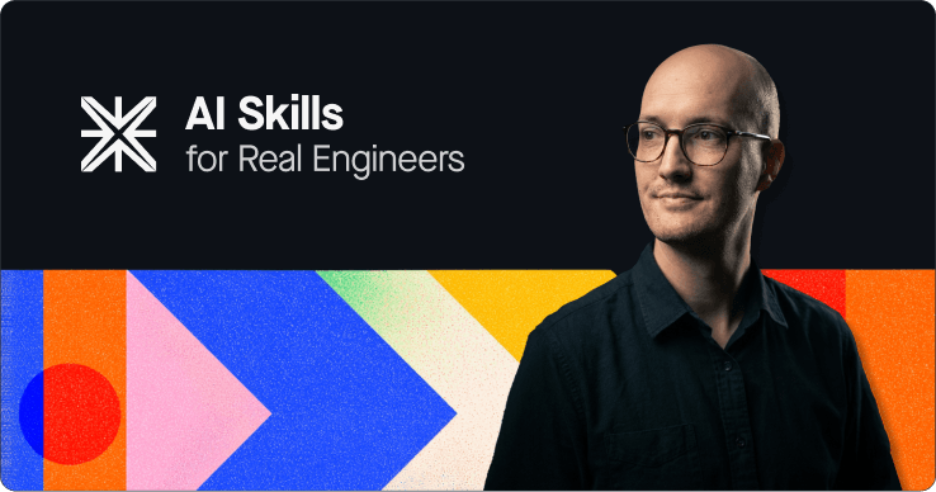
Parallel to the rise of harnesses is the move toward modularity in agent behavior. Matt Pocock’s "skills" repository, which reached a total of 242,000 stars in August, represents the vanguard of this movement. Rather than relying on "process-owning" frameworks—such as GSD or Spec-Kit—which many developers now argue reduce granular control and complicate debugging, the industry is gravitating toward composable skills.
Pocock’s directory provides a collection of discrete, high-utility agent skills distributed through marketplaces like Claude Code. These skills are bifurcated into user-invoked commands (such as /grill-me for code stress-testing) and model-invoked behaviors (such as /tdd for test-driven development). This approach allows developers to "plug and play" specific capabilities into their agents without surrendering the underlying execution logic to a monolithic framework. The success of this repository underscores a broader trend: in 2026, the most effective agents are those built from specialized, swappable components rather than general-purpose black boxes.
The Enduring Influence of OpenAI Codex and the Pi Platform
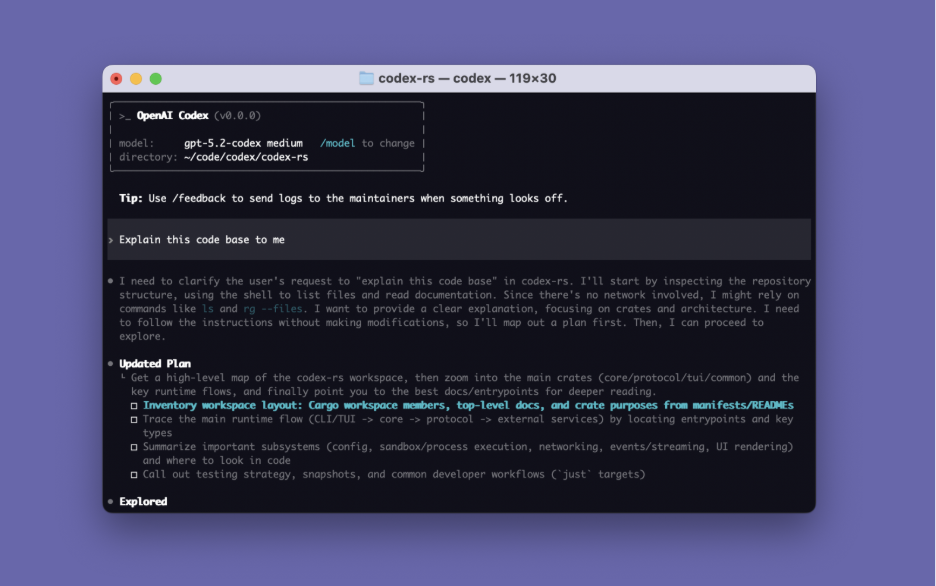
Despite the influx of new tools, OpenAI Codex remains a cornerstone of the terminal-based coding agent ecosystem. While its monthly star growth of 17,500 is lower than the initial spikes of newer repositories, its total count of 121,000 stars and its status as a universal benchmark highlight its sustained relevance. Codex has transitioned from a novel tool to a "reference host."
Evidence of this platform-centric shift is seen in the "pi" toolkit by Earendil Works. Reaching 101,000 stars, Pi is increasingly treated as a first-class host by independent developers. Many of the trending repositories in August, including various diagramming and memory tools, now ship with Pi-specific installers alongside their support for Claude Code and Codex. This suggests that the market is consolidating around a few key "operating systems" for agents, where the value of a tool is increasingly measured by its cross-platform compatibility.
Bridging the Visualization Gap: Archify and Diagram-Design
A long-standing criticism of AI agents has been their inability to produce high-quality visual documentation. In August, two repositories, "archify" and "diagram-design," rose to prominence to solve this specific bottleneck, collectively gaining 56,000 stars.
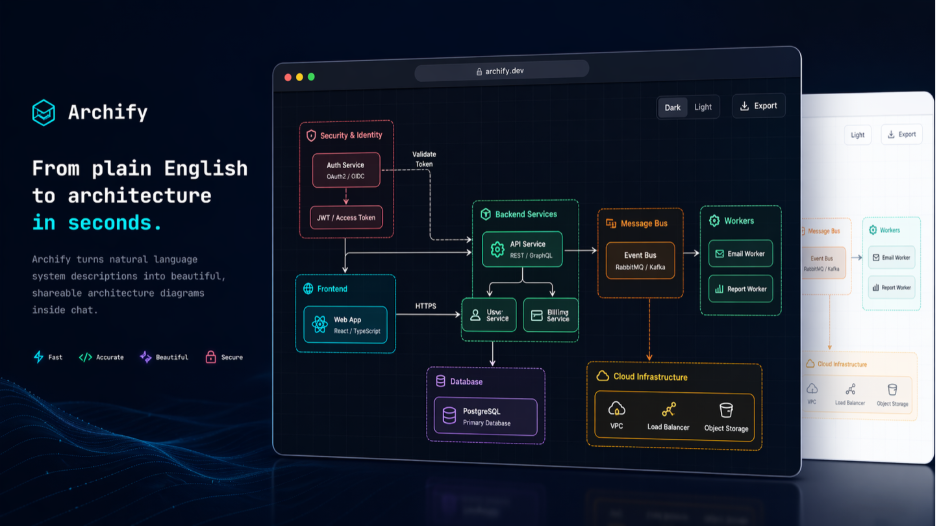
Archify focuses on the technical side of visualization, generating motion-enabled architecture, sequence, and dataflow diagrams as self-contained HTML and SVG files. Conversely, Diagram-Design takes an editorial approach, offering 38 distinct diagram types for Claude Code and Pi. The maintainers of Diagram-Design have been vocal about their "anti-Mermaid" stance, aiming to eliminate the "slop" often associated with auto-generated diagrams. This trend indicates that as agents take over more of the software development lifecycle, the demand for human-readable, presentation-ready visual outputs is becoming a high-priority engineering requirement.
Efficiency as a Metric: The "Ponytail" Philosophy
Perhaps the most philosophically interesting project to trend in August was "ponytail" by Dietrich Gebert. With 120,000 stars, Ponytail is an agent skill that enforces a "less is more" approach to coding. It compels agents to follow a seven-rung ladder of reasoning before writing a single line of code, prioritizing the deletion of redundant code and the use of standard libraries over the creation of new assets.
The repository’s impact is backed by rigorous benchmarking. In tests against real-world FastAPI and React repositories, agents equipped with Ponytail produced 54% less code and completed tasks 27% faster than those without it. The project gained significant credibility when its maintainer retracted an earlier, more aggressive claim of 94% efficiency after a contributor identified a flaw in the baseline. This level of transparency has made Ponytail a favorite among enterprise teams looking to curb the "code bloat" often generated by less sophisticated AI tools.

The Unspectacular but Essential: Firecrawl and OmniRoute
While harnesses and skills capture headlines, the "plumbing" of the AI world is where much of the practical progress is occurring. Firecrawl’s two repositories, "anydoc" and "pdf-inspector," addressed the perennial problem of data ingestion. Their research found that 54% of PDFs do not actually require expensive and slow Optical Character Recognition (OCR). By providing a tool that can classify documents and extract position-aware Markdown in under 50 milliseconds, Firecrawl has significantly optimized the RAG (Retrieval-Augmented Generation) pipeline for developers.
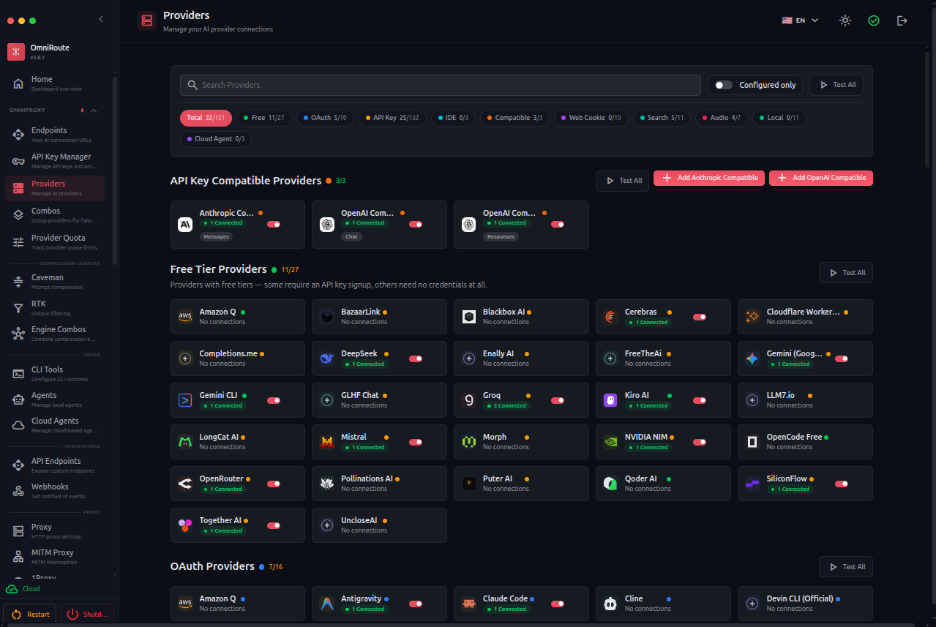
Similarly, "OmniRoute" has emerged as a critical gateway for cost management and model redundancy. Adding 23,200 stars in August, this MIT-licensed gateway allows developers to collapse over 1,200 models from 352 providers into a single endpoint. With features like quota-aware fallback and prompt compression—which the project claims can save up to 95% of token costs—OmniRoute serves as a hedge against vendor lock-in and API instability.
Enterprise Memory and Autonomous Self-Improvement
The final pieces of the August trend puzzle are "TencentDB-Agent-Memory" and Prime Intellect’s "prime-agent." Tencent’s entry addresses the "amnesia" problem in agentic workflows by providing a team-level memory hub. It categorizes interactions into Chat Memory, Skills, LLM-Wiki, and Code-Graphs, allowing agents to retain context across different sessions and frameworks. Given the backing of a major cloud provider, TencentDB is positioned as a durable solution for organizations that have struggled with the ephemeral nature of current agent interactions.
Meanwhile, "prime-agent" represents the cutting edge of research, focusing on self-improving agents for long-running autonomous tasks. While its real-world adoption is still in its infancy, its rapid climb to 20,000 stars reflects the intense interest in agents that can move beyond simple request-response cycles and into continuous, self-correcting operation.
Conclusion: A Standardized Future for Agents
The data from August 2026 suggests that the AI industry is moving away from the "appliance" model and toward a "socket" model. The most successful projects are those that act as infrastructure, allowing different models and tools to interface seamlessly. The massive growth of DeepSeek Harness, the modularity of Pocock’s skills, and the efficiency of Ponytail all point to a developer community that is no longer satisfied with simple AI chat interfaces.
Instead, the focus has shifted to building a robust, efficient, and cost-effective ecosystem where agents can remember, visualize, and optimize their own work. As we move into the final quarter of 2026, the repositories highlighted this month will likely form the backbone of the next generation of autonomous software engineering. For developers and enterprise architects, the message is clear: the model is just the beginning; the infrastructure is where the real value is built.