Tuesday, August 18th, 2026 – 10:56 am, Doug Lauretano, a seasoned advertising executive with a career spanning over two decades across major publishing and supply-side programmatic platforms, has launched Tuple, a new Demand-Side Platform (DSP) aimed at addressing the pervasive trust deficit and opacity plaguing the digital advertising ecosystem. The move comes after Lauretano’s firsthand experience at CivicScience, where his work on deal ID and curation products exposed him to what he described as “pretty ugly” mechanics within existing DSPs. Tuple, which went live in March, is currently working with a select group of eight customers, including a prominent enterprise mobile brand that opted to remain anonymous when discussing their strategic decision to partner with a nascent DSP over established incumbents.
The Erosion of Trust in Programmatic Advertising
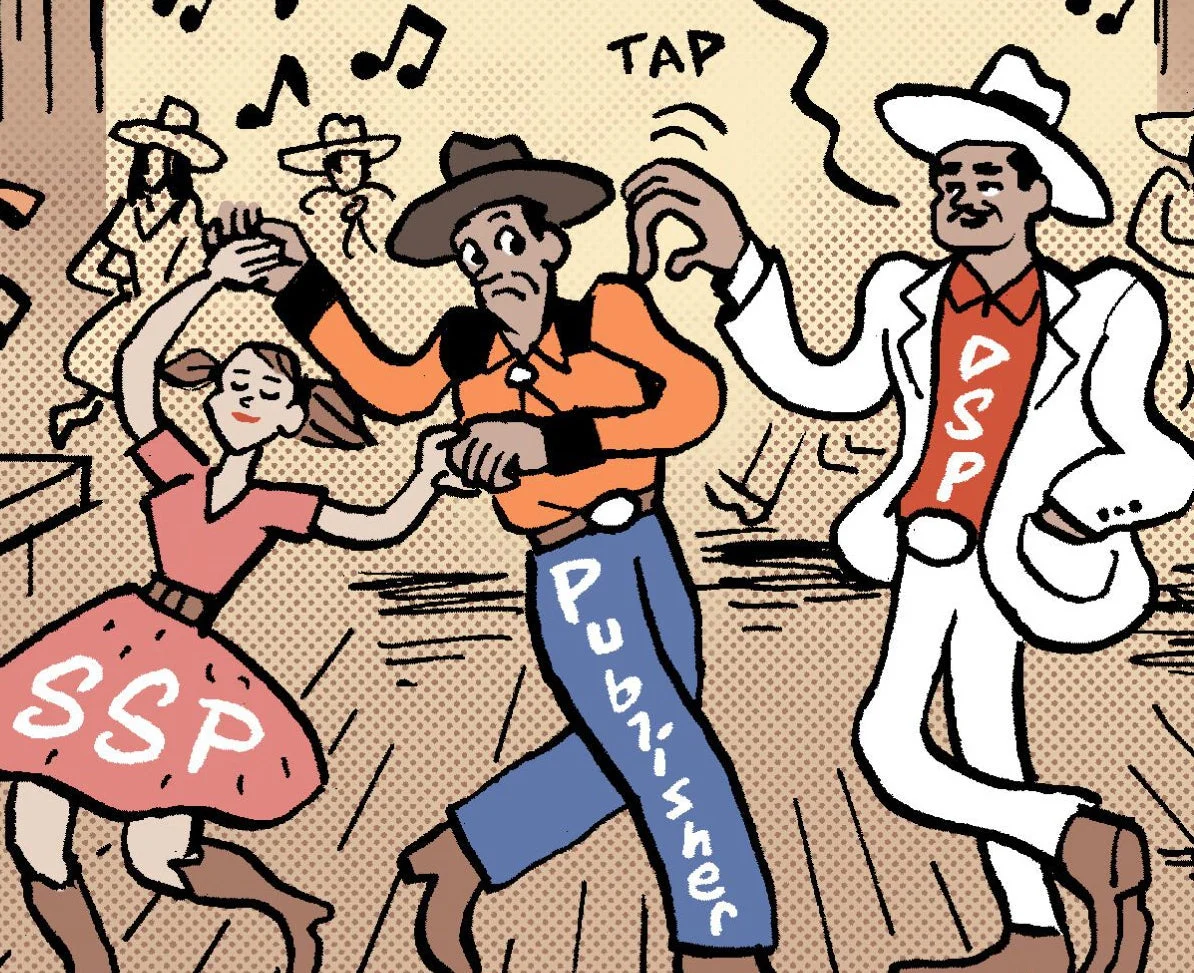
The launch of Tuple occurs at a critical juncture for third-party ad tech, a sector grappling with escalating animosity and a widening gulf of distrust between the buy-side (advertisers and their agencies) and the sell-side (publishers and their platforms). Lauretano articulates this sentiment starkly, stating, "There’s just so much animosity." This friction is exemplified by evolving terminology, such as The Trade Desk’s reclassification of Supply-Side Platforms (SSPs) as "resellers," a move met with skepticism by many in the industry. Conversely, SSPs have been accused of employing duplicitous tactics, including illicitly inflating bids and circumventing frequency capping rules through sophisticated ID bridging techniques. Lauretano characterizes this dynamic as, "It’s almost like one is constantly trying to trick the other."
This inherent distrust is further exacerbated by rapid technological shifts, particularly the integration of Artificial Intelligence (AI) and the rise of cloud-based ad tech infrastructure, often referred to as "containerization." This evolution is enabling DSPs, specialized algorithm providers, and even media buyers themselves to embed their bidding logic directly within SSPs, bypassing the traditional DSP account seat. Lauretano posits that these two trends—the breakdown of trust and the technical upheaval—are deeply interconnected.
A significant contributor to the buy-side’s apprehension towards SSPs stems from opaque throttling and curation practices. While an SSP might possess a vast inventory of impressions highly relevant to a specific advertiser, the DSP may only gain visibility into a fraction of this total. This limitation arises from SSPs rationing the impressions they expose to each DSP, a necessary cost-management measure given the sheer volume of live impressions processed at a global internet scale. However, the advent of containerized bidding models fundamentally alters this dynamic. These models empower buyers to observe every impression as it arrives at the SSP, circumventing the query-per-second (QPS) throttling inherent in traditional DSP-SSP integrations. Lauretano emphasizes that establishing trust between buyers and SSPs is as crucial as any technical advancement in this evolving landscape.
Tuple’s Differentiated Approach: Focus and Transparency
Tuple enters the DSP market not by attempting to overhaul the entire programmatic infrastructure, but by offering a fundamentally different operational model. At its core, Tuple is a DSP, but it diverges significantly from legacy platforms. The prevailing industry practice has been for DSPs and SSPs to integrate in a rather haphazard fashion, often leading to hundreds of individual SSP connections for a single advertiser utilizing a major DSP like The Trade Desk, Beeswax, or Viant.
Tuple’s strategy is one of deliberate curation and focused integration. Currently, Tuple is integrated with only one SSP: Media.net. This choice is rooted in Lauretano’s extensive prior experience with the platform and his high degree of confidence in their deal ID setups and operational integrity. Looking ahead, Lauretano anticipates Tuple may expand its SSP partnerships to a maximum of five. However, the long-term objective is to maintain a tightly curated network of approximately three SSPs. This strategic limitation, Lauretano argues, will grant Tuple unparalleled visibility into nearly every programmatically available impression, a feat difficult to achieve with a more diffuse network.
This focused approach hinges on Lauretano’s assertion that a limited number of SSPs can indeed encompass the vast majority of valuable programmatic inventory. "There are so few with exclusive supply," he notes, suggesting that beyond a select few, additional SSP integrations may offer diminishing returns in terms of unique inventory access. Furthermore, Tuple aims to ensure each impression is processed precisely once, avoiding the redundancy of bidding on duplicated inventory across numerous SSPs, a common occurrence in broader integrations.
Reclaiming Transparency in AI-Driven Optimization
Another area where Tuple seeks to differentiate itself is in the realm of AI-driven optimization. Lauretano observes that many DSPs tout proprietary AI features, often presenting them as "black-box" solutions. In these models, advertisers input their desired outcomes and willingness to pay per conversion, leaving the platform to manage the intricacies of the campaign. While this offers a degree of simplicity, Lauretano contends that it sacrifices a key benefit of sophisticated advertising systems: the ability for advertisers to dissect campaign performance, understand the nuances of bid responses across a complex web of SSPs, and optimize accordingly.
"A platform with as little noise as possible has the best chance of being the best performer," Lauretano asserts. He argues that AI-based optimization products within traditional DSPs often compromise transparency. This lack of clarity is not exclusive to large, integrated platforms like Google’s Performance Max, but is also prevalent among third-party programmatic DSPs.
Illustrative of this opacity, Lauretano points to a scenario where an AI model within a standard DSP might disproportionately drive conversions from a specific region, such as California, even if the advertiser’s primary campaign objective is to expand into other markets. Similarly, the AI might favor lower-cost display ads when the advertiser expects to secure higher-quality inventory. Lauretano explains that AI algorithms are designed to pursue performance metrics as they perceive them, even if this pursuit leads them to disregard explicit buyer preferences that remain hidden from view.
When a DSP abstracts this level of access and visibility from its buyers, Lauretano believes it commits "the original sin" of legacy technology. This very act of obscuring critical data and control, he argues, creates the fertile ground for innovative startups like Tuple to emerge and offer a more transparent and accountable alternative.
The Market Context and Early Traction
The programmatic advertising market has been in flux for years, marked by concerns over ad fraud, brand safety, and the efficiency of ad spend. The increasing complexity of the supply chain, coupled with the rise of walled gardens and the impending deprecation of third-party cookies, has created an environment ripe for disruption. Industry data from eMarketer consistently highlights the significant portion of ad spend that is lost to intermediaries within the programmatic chain. For instance, reports have indicated that as much as 50% of digital ad spend can be absorbed by ad tech fees and non-human traffic, underscoring the need for greater efficiency and transparency.
The shift towards first-party data strategies and the increasing adoption of data clean rooms further emphasize the industry’s move towards more controlled and privacy-compliant advertising. Lauretano’s vision for Tuple aligns with this broader industry trend, emphasizing a more deliberate and less fragmented approach to programmatic buying.
The anonymous enterprise mobile brand’s decision to adopt Tuple is a significant early indicator of the market’s appetite for a DSP that prioritizes transparency and a curated supply path. Their rationale, shared under the condition of anonymity, likely centers on the potential for improved campaign performance through clearer insights into inventory quality and bid efficiency. By reducing the number of SSP integrations, Tuple aims to minimize redundant bidding and offer a cleaner, more predictable path to valuable ad placements. This focus on "less noise" is a compelling proposition for advertisers seeking to maximize their return on investment and gain a deeper understanding of where their ad dollars are being spent.
The initial customer acquisition numbers, while small, suggest that Tuple is resonating with a segment of the market that is actively seeking alternatives to the status quo. The challenges Lauretano identified—the "programmatic trust gap," the complexities of AI optimization, and the opacity of supply paths—are not new. However, Tuple’s proposed solution, centered on a focused integration strategy and a commitment to transparency, offers a tangible approach to addressing these long-standing issues. As the digital advertising landscape continues to evolve, the success of Tuple will likely be measured not only by its customer growth but also by its ability to demonstrably improve campaign outcomes for its clients by fostering a more trustworthy and efficient programmatic ecosystem. The industry will be watching closely to see if Tuple’s focused model can indeed cut through the noise and deliver on its promise of a more transparent programmatic future.