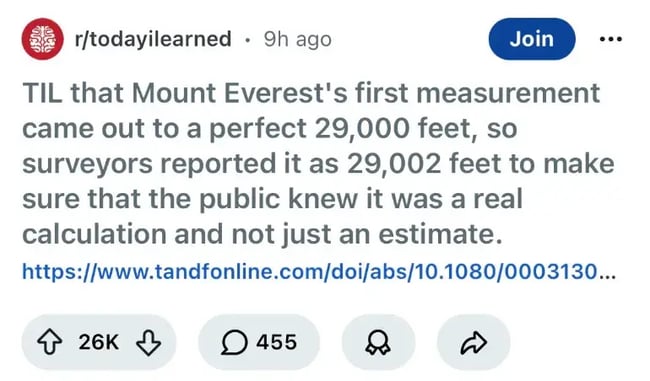
The initial measurement of Mount Everest, the world’s highest peak, stands as a curious testament to a subtle yet powerful psychological phenomenon: the inherent human tendency to trust precise numbers over rounded figures. Rather than declaring Everest’s elevation to be a neat 29,000 feet, the British Royal Geographical Society, following calculations from the Great Trigonometrical Survey of India, announced it as 29,002 feet. This seemingly minor addition of two feet was a deliberate decision, rooted in the understanding that an exact, non-rounded number would lend an air of greater accuracy and credibility to the monumental undertaking. This historical anecdote, often resurfacing in popular discourse, serves as a compelling entry point into a broader exploration of how numerical precision influences perception, fosters trust, and drives compliance across various domains, from historical surveys to modern-day marketing and negotiation strategies.
The Everest Anomaly: A Historical Precedent for Trust in Precision
The story of Mount Everest’s first official measurement is steeped in the ambitious and painstaking efforts of the Great Trigonometrical Survey of India. Initiated in 1802 by the British East India Company, and later continued under the British Raj, this colossal project aimed to map the entire Indian subcontinent with unprecedented accuracy. Sir George Everest, Surveyor General of India from 1830 to 1843, lent his name to the mountain (though not until 1865, after his retirement) and established the rigorous methodologies that would define the survey. His successor, Andrew Scott Waugh, continued the monumental task, facing immense challenges posed by vast distances, difficult terrain, and the sheer scale of the Himalayan range.
By the mid-19th century, the survey’s focus shifted to the towering peaks of the Himalayas, many of which were still unknown to the Western world. Using colossal theodolites – precision instruments weighing up to half a ton – and a network of observation stations often hundreds of miles apart, surveyors employed triangulation to calculate the heights of distant mountains. The process was fraught with difficulties, including adverse weather conditions, the curvature of the Earth, and atmospheric refraction, which could significantly distort readings. It was Radhanath Sikdar, a brilliant Indian mathematician and chief computer of the survey, who, in 1852, first identified "Peak XV" as the highest point on Earth based on data collected by James Nicolson and others. After years of meticulous calculations and cross-verification, often involving multiple observations from different stations, the average height was determined to be precisely 29,000 feet.
However, the team, and particularly Andrew Waugh, recognized a psychological dilemma. A perfectly rounded number like 29,000 feet might be perceived as an estimate or an arbitrary approximation, rather than the product of painstaking scientific measurement. To counter this potential skepticism and to convey the meticulousness of their work, Waugh made the strategic decision to add two feet to the figure, announcing the official height as 29,002 feet in 1856. This slight alteration was a deliberate act of psychological engineering, designed to enhance the credibility of their findings. It suggested that such an odd, non-rounded number could only have been derived from precise, empirical data, thereby reinforcing public trust in the survey’s accuracy. This decision highlights an early, intuitive understanding of what modern psychology would later formalize as the "precise number effect."

It is worth noting that the measurement of Everest has continued to evolve with technological advancements. In 1955, an Indian survey remeasured the height to 29,028 feet (8,848 meters). In 2020, following further surveys by both China and Nepal, a new official height of 8,848.86 meters (29,031.7 feet) was jointly declared, reflecting the ongoing quest for ultimate precision and acknowledging the dynamic geological nature of the Himalayas. Yet, the initial 29,002 feet remains a fascinating historical marker of how human perception of numbers can be strategically managed.
The Pique Technique: Disrupting Mindless Refusal with Specificity
The intuition demonstrated by the 19th-century Everest surveyors finds strong empirical backing in modern behavioral psychology, particularly through a concept known as the "pique technique." This persuasion strategy suggests that people are more likely to comply with a request if it disrupts their "mindless refusal" script through a strange, unusual, or highly specific appeal. When confronted with a standard request, individuals often resort to automatic, unthinking rejection. However, an unexpected or precise request forces them to pause, process the information more deeply, and consider the request consciously, thereby increasing the likelihood of compliance.
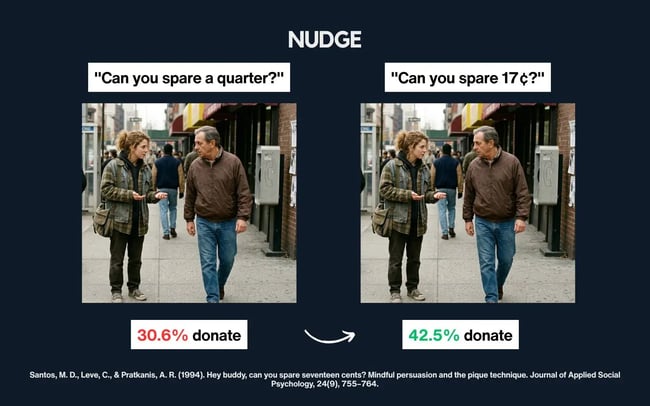
One of the foundational studies exploring the pique technique was published in 1994 in the Journal of Applied Social Psychology. Researchers Michael D. Santos, Craig Leve, and Anthony R. Pratkanis from the University of California, Santa Cruz, devised an experiment to test this theory in a real-world setting. They recruited three female actors and instructed them to approach 289 adults in a public area over several days, asking for spare change.
The core of the experiment lay in the phrasing of the request. Half of the passersby were subjected to a general, rounded request: "Can you spare a quarter (or any change)?" This is a common appeal that many people encounter regularly, often leading to an automatic refusal. The other half, however, received an unusual, highly specific request: "Can you spare 17¢ (or 37¢)?" The choice of these odd, non-rounded amounts was deliberate – they were specific enough to disrupt the usual cognitive processing.
The results were striking and provided robust evidence for the pique technique. Only 44% of individuals who received the general request for "a quarter or any change" complied by donating. In stark contrast, a significantly higher 64% of those asked for the precise amounts of 17¢ or 37¢ agreed to give change. This 20-percentage-point difference highlighted that the unusual specificity of the request effectively piqued curiosity, forcing individuals to break their automatic refusal pattern and engage in more mindful consideration, ultimately leading to a higher rate of compliance. The mental effort required to process an unusual number like "17 cents" also subtly implies that there might be a legitimate, perhaps even urgent, reason for such a specific amount, making the request seem more genuine.

Beyond Money: The Pique Technique in Time and Effort Requests
The effectiveness of specific numbers isn’t limited to monetary requests. The principle extends to other forms of social influence, including requests for time or effort. This was demonstrated in a 2015 study by Nicolas Guéguen, a professor of behavioral sciences at the University of Southern Brittany in France, who reexamined the pique technique in a non-monetary context.
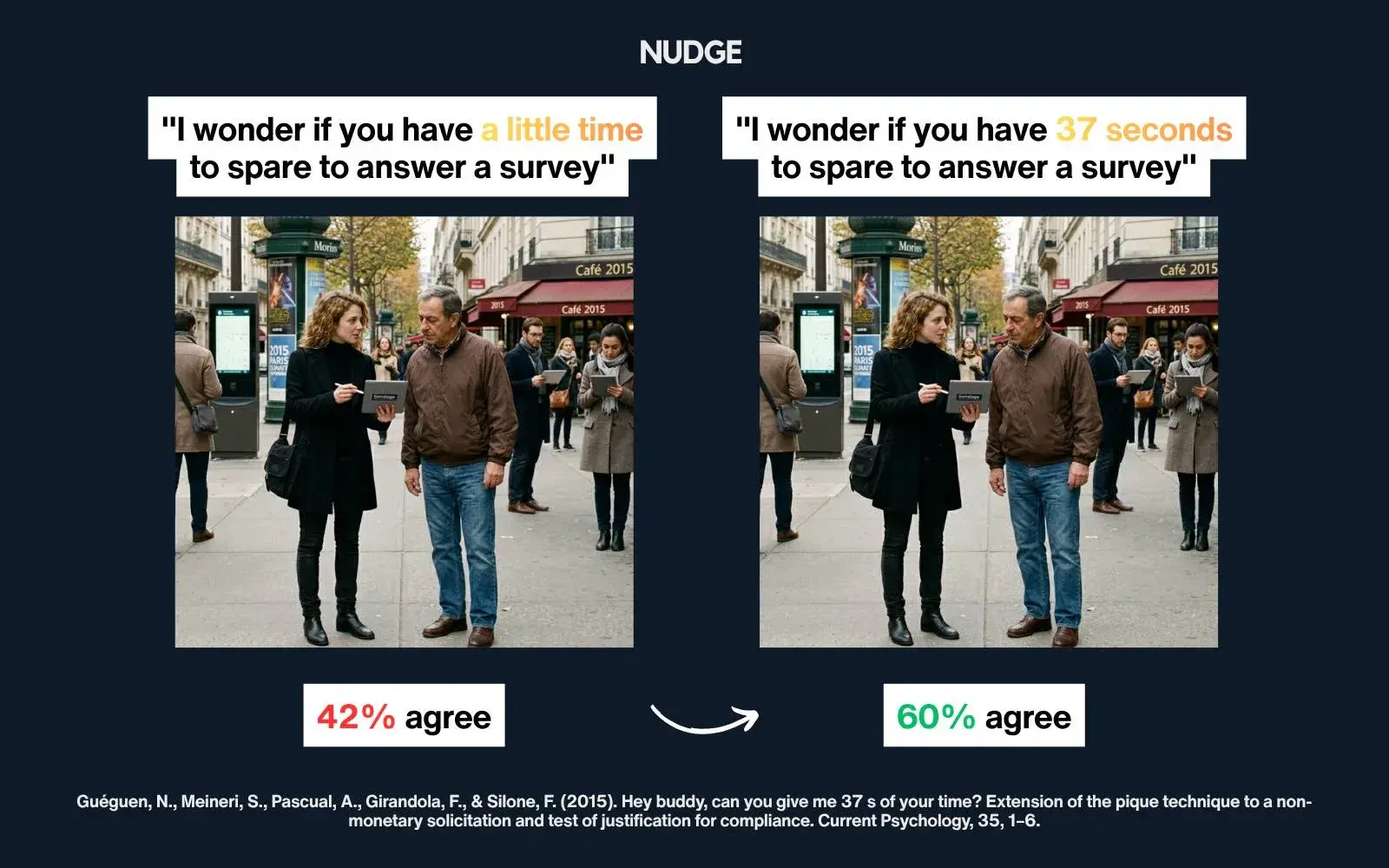
Guéguen’s experiment involved four female actors, identically dressed in black, who approached 300 passersby (an equal split of 150 men and 150 women) in a public setting. The actors were tasked with asking individuals to complete a survey. Similar to the previous study, the phrasing of the request was manipulated.
One group of 150 passersby received a general request: "I wonder if you have a little time to spare to answer a survey." This is a common, vague request that allows for easy, often unthinking, dismissal. The second group of 150 passersby received a highly specific request: "I wonder if you have 37 seconds to spare to answer a survey." The figure "37 seconds" was chosen for its unusual precision, designed to trigger the pique effect.
The findings mirrored those of the monetary experiment. Of the 150 people asked for "a little time," only 63 (42%) agreed to complete the survey. However, among the 150 individuals asked for the precise "37 seconds," a remarkable 90 (60%) complied. This represented a substantial 42.9% increase in compliance rate due to the specific nature of the request. The unusual precision of "37 seconds" likely disrupted the standard refusal script ("I’m busy," "I don’t have time"). It made the request seem less daunting and more manageable, implying that the task was genuinely short and precisely timed, thereby reducing perceived effort and increasing willingness to participate.
The Impact on Negotiation and Perceived Value
The psychological power of precise numbers also plays a significant role in negotiation and the perception of value, particularly in transactions involving goods or services. A 2013 paper published in the Journal of Experimental Social Psychology by four researchers delved into the effect of precise offers in negotiation scenarios.
In one of their studies, participants were asked to engage in a hypothetical negotiation for the sale of a second-hand car. The buyers in the experiment were divided into groups and instructed to initiate the negotiation with different opening prices. Half of the buyers were told to start with a rounded, conventional price of $2,000. The other half were instructed to use a more precise price point, either $1,865 or $2,135. The researchers were keen to observe how these varying levels of precision in the initial offer would influence the sellers’ counter-offers and, ultimately, the final agreed-upon price.
The results provided clear evidence that precise opening offers significantly altered the negotiation dynamic. When buyers initiated the sale with a precise asking price ($1,865 or $2,135), sellers tended to counter with smaller adjustments compared to when faced with a rounded price ($2,000). This indicates that precise numbers made the car prices seem more justified, well-researched, and less arbitrary. A rounded number might imply a rough estimate or a starting point for significant haggling, whereas a precise figure suggests that the buyer has done their homework, knows the exact value, and is less likely to budge substantially. Consequently, using precise numbers in the initial offer often led to higher final selling prices, as sellers were anchored more firmly by the specific figure and perceived less room for aggressive negotiation. This highlights how precision can signal confidence, expertise, and a firm valuation, making the precise offer appear more legitimate and less negotiable.
Broader Implications for Business, Marketing, and Communication
The consistent findings from historical anecdotes and empirical studies underscore a powerful psychological principle: we believe precise numbers. This insight carries significant implications for various fields, particularly in business, marketing, sales, and general communication.
Marketing and Sales Strategies:
Marketers often gravitate towards rounded, "clean" numbers for aesthetic appeal or perceived simplicity (e.g., "$100 off," "Save 50%"). However, the evidence suggests that embracing precision can be far more effective in building trust and driving action.
- Pricing: Instead of pricing a product at $100, a price like $97.99 or even $102.35 (if justifiable by value) can be more persuasive. The non-rounded number implies a careful calculation of value, rather than a generic price point. Similarly, when offering discounts, stating "Save $237 on average" for a service can be more compelling than "Save hundreds," as it conveys a tangible benefit backed by data.
- Performance Metrics: When showcasing results, precision instills confidence. Instead of claiming "We boosted conversions by over 10%," stating "We boosted conversions by 13.7% in Q3" provides a more credible and impactful message. Similarly, "Our software reduces operational costs by 22.3%" is more convincing than "Our software significantly reduces costs."
- Guarantees and Offers: Specificity can enhance the perceived value and reliability of offers. A "37-day money-back guarantee" might seem more robust than a "30-day guarantee," implying a carefully considered and generous offer.
Public Speaking and Presentations:
Speakers and presenters can significantly enhance their credibility by using precise data points. When citing statistics or facts, exact figures, even if slightly unconventional, signal thorough research and mastery of the subject matter. This precision can help an audience distinguish between well-substantiated claims and vague generalizations, thereby increasing the speaker’s authority and the impact of their message.
Journalism and Reporting:
For news outlets, the imperative for precision is paramount. Providing exact figures, citing specific sources, and detailing precise timelines not only adheres to journalistic ethics but also builds trust with the readership. The public expects factual reporting, and precise numbers serve as tangible evidence of rigorous investigation and accuracy, reinforcing the credibility of the publication.
Building Trust and Credibility:
At its core, the precise number effect is about trust. Rounded numbers can subconsciously trigger a perception of approximation, estimation, or even fabrication. They allow for "mindless refusal" or skepticism because they don’t demand cognitive engagement. Conversely, specific, non-rounded numbers disrupt this default processing. They force the audience to pause, consider, and often assume that such an unusual figure must have originated from a legitimate, measured, or calculated source. This signals diligence, accuracy, and honesty on the part of the communicator.
The psychological mechanism at play is complex, touching upon cognitive fluency and the disruption of mental heuristics. When presented with a rounded number, our brains can process it quickly, often categorizing it as "just an estimate." A precise number, however, requires a fraction more cognitive effort to process, and this slight disruption can lead to a more conscious evaluation of the information. This increased engagement, coupled with the implicit message of meticulousness, often translates into higher perceived trustworthiness and, consequently, greater compliance or acceptance.
In conclusion, the fascinating history of Mount Everest’s initial measurement offers a timeless lesson that resonates with contemporary psychological research. Whether it’s the deliberate addition of two feet to a mountain’s height, the specific request for 17 cents, the precise ask for 37 seconds of time, or a non-rounded opening offer in a negotiation, the message is clear: precision isn’t merely about exactness; it’s a powerful psychological tool for influencing perception, cultivating trust, and driving desired outcomes. Marketers, communicators, and negotiators alike should recognize and leverage the profound impact that specific numbers have on human behavior, leaning into precision to establish credibility and enhance effectiveness in an increasingly data-driven world.