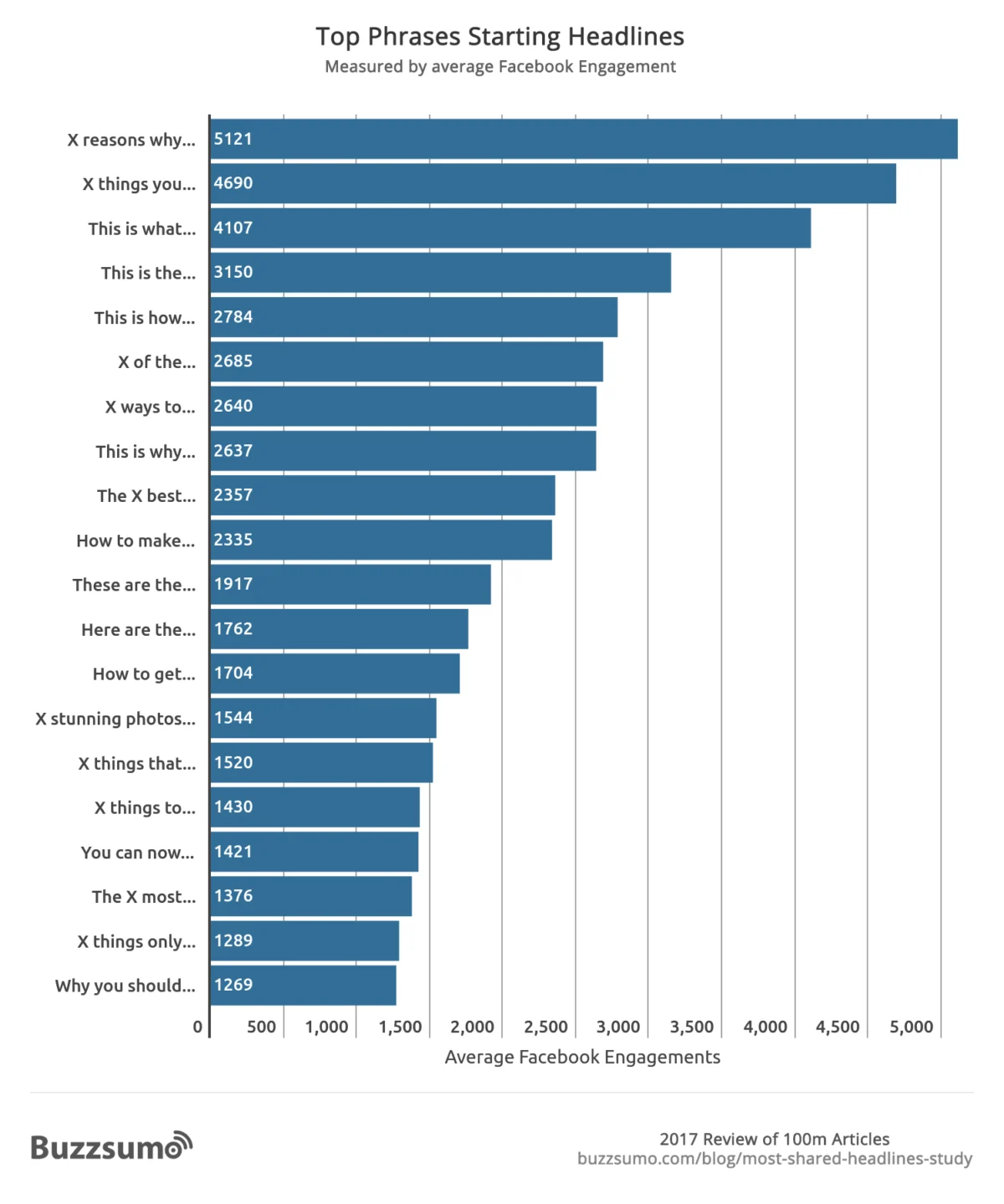
A new comprehensive analysis by BuzzSumo, examining 100 million article headlines across Facebook and Twitter, has unveiled significant shifts in audience engagement patterns between 2017 and 2019-2020. This follow-up to their seminal 2017 study provides critical insights for content creators and publishers navigating an increasingly complex and algorithm-driven digital landscape. The research highlights the critical role headlines play as the primary gateway to content, functioning as miniature advertisements that must connect with audiences amidst unprecedented competition and elevated user expectations.
Methodology and Scope of the Research
Building on the foundation of Steve Rayson’s 2017 study, BuzzSumo’s updated research delved into a massive dataset of 100 million headlines. The analysis focused on identifying "trigrams" (three-word phrases) that garnered the highest average shares on Facebook and Twitter. To ensure robust findings and mitigate the skewing effect of highly popular domains, the methodology included a crucial data cleaning step: only one headline trigram example per domain was included in the analysis. This approach ensured that the identified trends were broadly applicable rather than domain-specific anomalies. Additionally, the three most shared examples of each trigram were removed to prevent outliers from distorting average engagement figures. Industry-leading marketing experts were also consulted to provide their interpretations and strategic recommendations based on the findings.
Key Shifts in Headline Dynamics: A Chronological Overview (2017-2020)
The most striking revelation from the study is the radical transformation in headline effectiveness over just three years. The landscape of what captures audience attention has undergone a near-complete overhaul, particularly on Facebook.
1. The Decline of Emotional and Tribal Headlines:
In 2017, explicitly emotional and sensational language dominated Facebook engagement. Phrases such as "will make you," often preceding emotional responses like "laugh out loud" or "cry tears of joy," were top performers. Similarly, "tribal" headlines that appealed to specific group identities, like "25 Things Only Teachers Will Understand" or quizzes such as "Can We Guess Your Real Age?", were highly effective.
However, the 2019-2020 data shows a stark decline in these types of headlines. The top 20 headline phrases on Facebook in 2020 show a 100% difference compared to 2017, with emotional and tribal content largely absent. The once-dominant "will make you" trigram, which boasted 1.7 million shares for its top headline in 2017, saw its peak engagement drop to a mere 143,000 shares in the updated study. This shift is attributed to algorithmic maturity, notably Facebook’s demotion of "clickbait" style content starting in May 2017. The platform’s ongoing efforts to prioritize trustworthy news sources and authentic content have significantly curtailed the efficacy of overtly sensational and identity-based headlines. While exaggerated phrases like "one of the most beautiful" can still work if they reference genuinely exceptional content, the era of widespread emotional manipulation and narrow tribal appeals appears to be over.
2. The Evolution of Headline Length:
Another significant change is the preferred length of headlines. In 2017, the optimal formula for highly shared headlines was approximately 15 words and 95 characters. The updated study, however, reveals a preference for snappier headlines, with the ideal length shrinking to 11 words and 65 characters. This reduction of roughly four words and 30 characters reflects a broader trend of content overload. With a 64% increase in online content published since 2016, audiences are seeking information faster and prefer concise, to-the-point headlines that offer immediate clarity.
3. Transformation of the Publisher Landscape:
The types of publishers dominating social media engagement have also shifted dramatically. On Facebook, there’s been a clear move away from sites that previously thrived on clickbait towards established news organizations. Domains like CNN, Daily Mail, NBC News, The Washington Post, CBS News, and Time.com now feature prominently among publishers of top-performing headlines. This change directly correlates with Facebook’s algorithmic updates in 2018 and 2020, which began prioritizing news content from "trustworthy sources" and boosting "original and authoritative news reporting." This preferential treatment has undoubtedly shaped the types of headlines that succeed, indicating a platform-wide push for credibility and quality.
4. Divergent Platform Engagement Trends:
The study also revealed a fascinating divergence in overall engagement. While Facebook saw a significant increase in average shares for top phrases (e.g., the top Facebook trigram in 2020, "of the year," garnered 26,702 average shares, nearly triple the 8,691 average for 2017’s top phrase "will make you"), Twitter experienced a nearly fourfold decrease in shares for its most popular phrases. Despite Twitter’s monthly active users remaining relatively stable, overall Twitter shares dropped by 14% from 2017 to 2020. This suggests that while individual headline phrases might still perform well, the distribution of engagement across a more varied array of content on Twitter may be diluting average shares for common phrases.
5. Consistent Preference for Specific Numbers:
Despite the widespread changes, one aspect remained remarkably consistent: the magic number "10" continues to be the most engaging number to use in headlines. Excluding 10, single-digit numbers (three through ten) consistently drive the most social media engagement. While numbers like 15 and 20 were popular in 2017, the preference has shifted towards smaller, more digestible lists, further reinforcing the audience’s desire for quick insights.
Deep Dive: Facebook Headline Dynamics (2019-2020)
Facebook audiences in the updated study showed a strong preference for headlines that provide value, clarity, and a sense of importance.
Top Engaging Trigrams:
The phrase "of the year" emerged as the number one most engaging trigram, often associated with rankings, awards, and public recognition (e.g., "Person of the Year"). This generates discussion between supporters and detractors, driving shares. Closely following was "in X years," frequently part of the longer "for the first time in X years," highlighting "newness" and creating intrigue.
Dominant Thematic Categories:
Categorizing the top 60 Facebook trigrams revealed eight main themes:
- Ranking: Headlines focused on awards or public votes (e.g., "Person of the Year 2020").
- Newness: Centered around unique or rare events ("For the first time in history").
- Hyperbole: Exaggerated statements using superlatives (e.g., "One of the Most Important People"). Phrases like "one of the," "of the most," "X of the," and "of the best" consistently performed well, indicating that strong, albeit well-supported, claims still resonate.
- Instructional: Commanding statements or phrases implying obligation or urgency (e.g., "Everything you need to know," "You need to"). This category was particularly successful, with 13 of the top 60 phrases being instructional. Experts like Ross Simmonds and Brian Dean highlighted this as a significant shift from the "clickbait" era, demonstrating an audience desire for practical, educational content. Amanda Milligan added that such language inherently conveys authority, aligning with a growing desire to learn from experts.
- Surprise: Statements designed to shock or challenge conventional views (e.g., "At Least 36 Intelligent Alien Civilizations").
- Curiosity: Headlines that promise to reveal, explain, or analyze something, often through declarative statements ("Here Are The Results") or listicles ("X reasons why").
- Guidance: "How to" or tutorial-based headlines.
- Story: Headlines centered around a person or topic, similar to case studies ("Inside the Story of").
Optimal Starting and Ending Phrases:
Listicles, headlines beginning with a number, were highly effective, promising readers actionable takeaways. Instructional and curiosity phrases also dominated the beginning of popular headlines. At the end of headlines, "time-centric" phrases, especially those related to 2020 and 2021, were most popular, reflecting a focus on current events and the pandemic’s impact. Numbers at the end often induced surprise or highlighted speed to insight. Social media trends fueling content headlines (e.g., "on social media") also performed well, showcasing a content-conversation loop where trending online discussions become popular article topics.
Deep Dive: Twitter Headline Dynamics (2019-2020)
Twitter audiences demonstrated a distinct preference for forward-looking, research-backed, and immediately relevant content.
Top Engaging Trigrams:
The phrase "future of" was the most popular trigram on Twitter, indicating a strong interest in predictive analysis and evolving topics. This phrase also frequently appeared at the beginning of top Twitter headlines.
Distinctive Thematic Preferences:
While there was some overlap with Facebook, Twitter audiences showed a higher inclination towards:
- Curiosity: Headlines that hinted, teased, or questioned something performed significantly better on Twitter.
- Research/Studies: The words "study" and "report" prominently featured at the start of top Twitter headlines, suggesting that Twitter is an ideal platform for sharing research and data-driven insights.
- Immediacy and Reactivity: The most popular ending phrases were overwhelmingly date and time-specific (e.g., "2020"), highlighting an appetite for current affairs and rapid developments.
Cross-Platform Strategies and Implications
While Facebook and Twitter exhibit distinct preferences, the study found increasing commonality. In 2017, only one phrase overlapped in the top 20 headlines across both platforms. By 2019-2020, eight of the top 20 phrases were shared, increasing similarity from 2.5% to 20%. This suggests that for certain types of headlines, a unified content distribution strategy might be effective. Phrases like "of the year," "in X years," "for the first," and "the first time" were among the crossovers.
However, the significant disparity in average shares – Facebook’s top phrase had 590 times more average shares than Twitter’s – underscores that a one-size-fits-all approach is insufficient. Content creators are advised to tailor headlines to each platform’s unique audience behavior and algorithmic preferences, and to continuously test what resonates best.
Expert Commentary and Strategic Recommendations
Marketing experts widely lauded BuzzSumo’s research for its depth and practical implications. Heidi Cohen, Chief Marketing Officer at Actionable Marketing Guide, highlighted the study’s reflection of key customer behavior changes due to the pandemic, including a preference for trustworthy content, a need for educational material, and a desire for real-time information. She advises marketers to focus on core marketing basics and continually assess evolving customer needs.
Rand Fishkin, founder of SparkToro, emphasized the study’s value beyond just headline writing, noting its ability to contrast past and present effective strategies. He pointed out that while clickbait and emotional triggers were once dominant, the research now "mythbusts" some of these older assumptions, illuminating the nuance of what truly works.
Ross Simmonds, founder of Foundation, found the success of instructional copy ("you need to," "you should") particularly insightful, suggesting more brands should adopt this approach. He stressed the importance of understanding human psychology and the desire to not miss out on crucial information. Brian Dean of Backlinko echoed this, calling the shift to instructional headlines on Facebook "fascinating" and a "huge shift" from the BuzzFeed-style clickbait of the past. Amanda Milligan of Fractl further elaborated that instructional language demonstrates authority, fulfilling readers’ desire to learn from experts.
Practical Application for Content Creators
The findings provide a data-backed blueprint for crafting more effective headlines:
- Embrace Clarity and Value: Prioritize headlines that explicitly communicate the value proposition, offering insights, instructions, or new information.
- Optimize Length: Aim for approximately 11 words and 65 characters for broad social media appeal, adjusting slightly for platform specifics.
- Strategic Number Usage: Leverage the "magic number 10" and other single-digit numbers for listicles, providing a clear structure and promise of actionable takeaways.
- Platform-Specific Tailoring:
- Facebook: Focus on instructional language, hyperbole (backed by strong content), newness, and themes of ranking or awards. Time-centric phrases are effective for endings.
- Twitter: Emphasize curiosity, research ("study," "report"), and immediacy. "Future of" topics and current affairs resonate strongly.
- Avoid Outdated Tactics: Steer clear of overtly emotional or sensational clickbait, generic quizzes, and overly tribal headlines, as algorithms and audience preferences have moved past these.
- Continuously Test: The digital landscape is dynamic. Content creators should use tools like BuzzSumo to analyze headline performance for their specific niche, audience, and platforms.
In conclusion, BuzzSumo’s updated analysis underscores that effective headline writing is not a static art but an evolving science. As platforms mature and audiences grow more discerning amidst content saturation, the demand for credible, concise, and value-driven headlines has never been higher. The era of pure clickbait is fading, replaced by a preference for content that genuinely informs, instructs, and intrigues.