
 rifanmuazin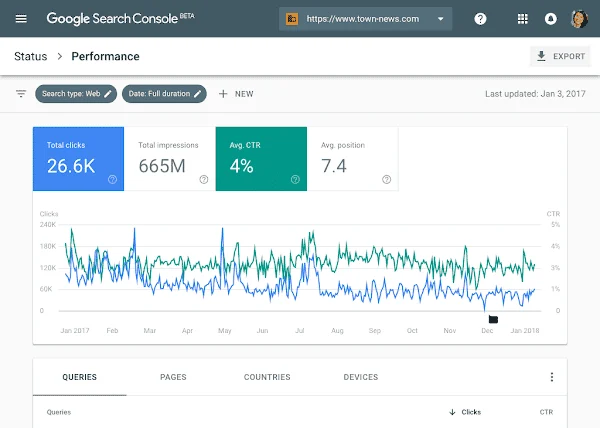
The landscape of digital presence has undergone a radical transformation, moving far beyond the era when website analysis was defined solely by monitoring traffic volumes and keyword rankings. As of 2026, the criteria for a successful digital property have shifted toward a complex interplay of discoverability, machine readability, and user-centric credibility. In an ecosystem where buyers are as likely to discover a brand through a ChatGPT query or a Perplexity recommendation as they are through a traditional Google search, the methodology for evaluating website performance has been forced to evolve. Modern website analysis now serves as a comprehensive health checkup that evaluates how effectively a site communicates with both human users and the artificial intelligence agents that increasingly mediate the internet.
The Shift Toward AI-Driven Search and Visibility
The primary driver of this evolution is the fundamental change in how information is retrieved. For over two decades, search engine optimization (SEO) focused on the “ten blue links” model. However, recent data highlights a significant pivot. Industry projections from Gartner previously indicated that traditional search engine volume would drop by approximately 25% by 2026. This shift is attributed to the rise of AI chatbots and virtual agents that provide direct answers, often bypassing the need for a user to click through to a website.
Research from the Pew Research Center has further quantified this impact on user behavior. Their findings suggest that when an AI summary or “AI Overview” appears in search results, the likelihood of a user clicking on a traditional link drops from 15% to just 8%. This 47% decrease in click-through rates (CTR) necessitates a new form of visibility analysis. Businesses must now ask not only “Where do I rank on Google?” but also “How is my brand represented in AI-generated summaries?” and “Is my content structured in a way that AI agents can accurately parse and recommend it?”
To address these questions, analysts are now utilizing Google Search Console (GSC) with a more nuanced lens. Beyond checking for impressions and clicks, professionals are scrutinizing the Indexing report for specific hurdles such as “Crawled — currently not indexed” or “Discovered — currently not indexed” statuses, which often signal that a search engine does not find the content unique or valuable enough to serve to users. Furthermore, the use of URL Inspection tools has become a daily requirement to ensure that technical barriers, such as robots.txt misconfigurations or canonical errors, are not hindering the “machine readability” of the site.
Quantitative and Qualitative User Behavior Analysis
Once visibility is established, the focus of website analysis shifts to what occurs after a visitor—or an AI crawler—arrives. This is the domain of Conversion Rate Optimization (CRO), which has evolved into a 360-degree audit of the user journey. Experts categorize this data into two distinct streams: quantitative and qualitative.
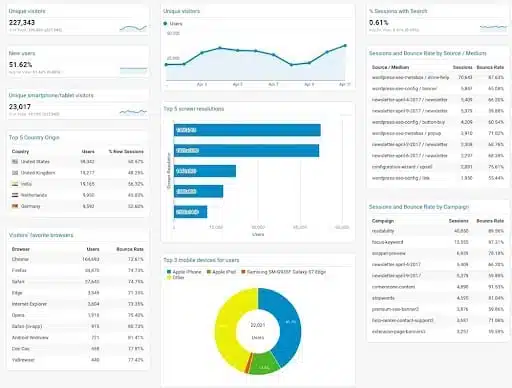
Quantitative data provides the numerical backbone of the analysis. By utilizing tools such as Google Analytics 4 (GA4), Similarweb, or Open Web Analytics, businesses can track session durations, bounce rates, and specific conversion events. For example, a high bounce rate on a high-traffic landing page may indicate a “messaging mismatch,” where the promise made in a search result or ad does not align with the content on the page.
Qualitative data, conversely, provides the “why” behind the numbers. This involves the use of heatmaps, scroll maps, and session recordings—tools provided by platforms like FigPii. These visual representations of user behavior can reveal that users are failing to see a primary Call to Action (CTA) because it is buried too far down the page, or that a specific form field is causing significant friction and leading to abandonment. In 2026, the integration of on-site surveys has also become critical, allowing brands to capture real-time feedback on user intent and frustration levels.
The Role of Technical Health and Functionality
A website’s technical infrastructure remains the foundation of its performance. Functionality assessments are now more rigorous, focusing on three core questions: Are the functions discoverable? Are they easy to use? And are the technical elements, such as links and buttons, operational across all device types?
The industry has largely adopted the “Heuristic Evaluation” framework, popularized by Jakob Nielsen, to conduct expert reviews of website usability. This systematic approach involves checking a site against ten established rules of thumb:
- Visibility of system status: The site should always keep users informed about what is going on.
- Match between system and the real world: Using language and concepts familiar to the user.
- User control and freedom: Providing clear “emergency exits” for mistaken actions.
- Consistency and standards: Ensuring users don’t have to wonder whether different words or actions mean the same thing.
- Error prevention: Designing to prevent problems from occurring in the first place.
- Recognition rather than recall: Minimizing the user’s memory load.
- Flexibility and efficiency of use: Catering to both inexperienced and experienced users.
- Aesthetic and minimalist design: Removing irrelevant or rarely needed information.
- Help users recognize, diagnose, and recover from errors: Using plain language to explain problems and suggest solutions.
- Help and documentation: Providing easy-to-search information if a user needs assistance.
Violations of these heuristics are often the silent killers of conversion rates, as they create subtle psychological friction that discourages users from completing a purchase or inquiry.
Content Quality and the Trust Factor
In the age of AI-generated content, the “quality” of a website’s material is no longer just about word count or keyword density; it is about authority and trust. Content analysis now involves evaluating whether a site provides “Information Gain”—a term used by search experts to describe content that adds new, unique value to the existing body of knowledge on a topic.
Trust signals, including clear author biographies, citations of reputable sources, and visible customer testimonials, have become mandatory. For AI engines to recommend a brand, the brand must demonstrate high E-E-A-T (Experience, Expertise, Authoritativeness, and Trustworthiness). Analysts now conduct deep dives into content relevance to ensure that the messaging resonates with the specific demographic segments identified in the traffic data.
Strategic Implementation: The Six-Step Roadmap
For organizations looking to conduct a comprehensive analysis, industry experts recommend a structured roadmap to avoid “data puke”—the act of collecting information without a clear purpose.

Step 1: Define Objectives. Analysts must identify specific baselines, such as current cart abandonment rates or specific keyword ranking drops, to anchor their investigation.
Step 2: Tool Selection. A multi-layered stack is required, including SEO tools (Ahrefs, Semrush), CRO tools (FigPii, Hotjar), and usability tools (Qualaroo, UserTesting).
Step 3: Create a Roadmap. This involves benchmarking against industry standards and mapping the ideal customer journey from discovery to conversion.
Step 4: Data Collection. Using the selected tools to gather both the numerical “what” and the behavioral “why.”
Step 5: Address Loopholes. This is the action phase, where technical errors are patched, messaging is refined, and UI/UX barriers are removed.
Step 6: Consistent Iteration. Website analysis is no longer a one-time project but a continuous cycle of improvement to keep pace with algorithmic changes.
The Necessity of Competitive Analysis
A significant debate within the digital marketing community involves the extent to which one should focus on competitors. However, the consensus in 2026 is that competitive analysis is essential for market positioning. By studying the organic traffic patterns of competitors using tools like Ahrefs, businesses can identify “content gaps”—topics that the competition is ranking for but they are not.
Furthermore, analyzing competitor demographics through Similarweb can reveal underserved market segments. In the realm of paid search, tools like iSpionage allow companies to study the ad funnels and creative strategies of their rivals, ensuring that their own PPC (Pay-Per-Click) investments are optimized against the current market standard.
Broader Impact and Future Implications
The shift toward comprehensive website analysis reflects a broader trend in the global economy: the move toward an “Answer Engine” optimization model. As AI agents become the primary interface for the internet, the websites that survive will be those that prioritize structured data, high-quality human-centric insights, and flawless technical execution.
The implications for businesses are clear. Those who continue to rely on 2010-era metrics like simple page views will find themselves invisible in an AI-mediated world. Conversely, those who embrace a holistic approach—integrating technical health, user psychology, and machine readability—will not only maintain their visibility but will also build the deep-seated trust required to convert modern, skeptical consumers. The power of comprehensive website analysis lies in its ability to turn a static digital brochure into a dynamic, high-performing asset that meets the needs of both the human reader and the algorithms that guide them.








