
 rifanmuazin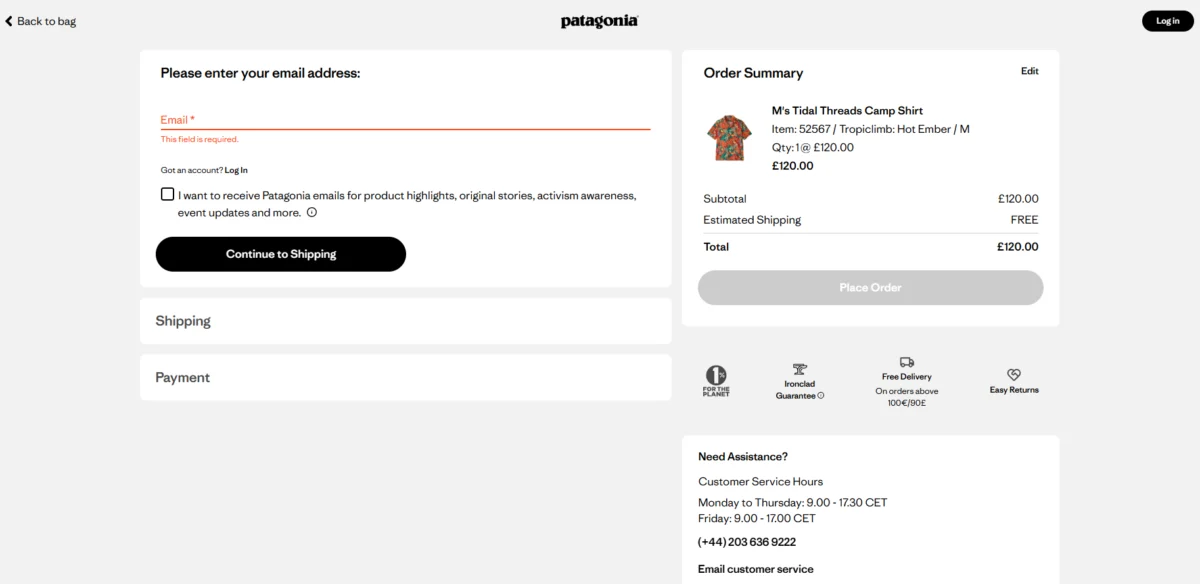
The digital marketplace has reached a critical inflection point in 2025 as e-commerce entities grapple with a global average cart abandonment rate of 70.22%. While nearly half of these instances—approximately 43%—are attributed to non-transactional behaviors such as price comparison and window-shopping, the remaining majority represents a significant loss in realized revenue due to fixable friction within the checkout process. As retail competition intensifies, the optimization of the checkout page has transitioned from a design preference to a fundamental economic necessity. Industry analysts suggest that even marginal improvements in the final stages of the customer journey can result in millions of dollars in recovered annual revenue for mid-to-large-scale enterprises.
![Checkout Page Design: 11 Ways to Reduce Cart Abandonment Rates [+Examples]](https://ceblog.s3.amazonaws.com/wp-content/uploads/2021/09/30141304/Checkout-Page-Design-guest-signin.png)
The Economic Reality of Abandoned Carts
In the current fiscal landscape, the "abandonment gap" remains the primary hurdle for digital retailers. Recent data indicates that the reasons for drop-offs are predominantly structural. Surprise costs, such as unannounced shipping fees and taxes, remain the leading deterrent, accounting for 39% of all abandonments. This is followed closely by logistical concerns, with 21% of consumers citing slow delivery timelines as the reason for exiting a transaction.
Further research into consumer psychology reveals that trust and complexity are significant secondary factors. Approximately 19% of shoppers will abandon a purchase if they do not trust the site with their credit card information, while another 19% will leave if they are forced to create an account before finalizing a purchase. Finally, 18% of modern shoppers cite a checkout process that is "too long or complicated" as their primary reason for non-completion. These figures underscore a clear mandate for retailers: the checkout must be transparent, efficient, and secure.
![Checkout Page Design: 11 Ways to Reduce Cart Abandonment Rates [+Examples]](https://ceblog.s3.amazonaws.com/wp-content/uploads/2021/09/30141200/Checkout-Page-Design-installment-payment.png)
A Chronology of Digital Friction: From 2020 to 2026
The evolution of checkout design has moved through several distinct phases over the last half-decade. In the early 2020s, the focus was primarily on "mobile responsiveness." However, by 2024, the industry shifted toward "headless commerce," allowing for more flexible, lightning-fast checkout experiences.
In 2025, the trend has solidified around "Identity-Free Transactions," where the friction of account creation is minimized through Guest Checkout and Single Sign-On (SSO) technologies. Looking forward to 2026, audits such as the WebAIM Million have highlighted a new frontier: accessibility. As of early 2026, 95.9% of top homepages still fail basic Web Content Accessibility Guidelines (WCAG), a failure that experts predict will soon move from a design oversight to a legal liability, particularly with the full implementation of the 2025 European Accessibility Act.
![Checkout Page Design: 11 Ways to Reduce Cart Abandonment Rates [+Examples]](https://ceblog.s3.amazonaws.com/wp-content/uploads/2021/09/30141517/Checkout-Page-Design-address-autocomplete.png)
Transparency and the Logistics of Trust
To mitigate the impact of surprise costs, leading retailers such as Wayfair have pioneered the "Upfront Disclosure" model. By displaying the total price, including shipping and taxes, along with an estimated delivery date directly on the product page, these companies effectively filter out price-sensitive abandoners before they enter the checkout funnel.
This proactive approach addresses the two largest causes of abandonment simultaneously. When a shopper enters the checkout already aware of the total financial commitment and the arrival date, the likelihood of a "sticker shock" exit is virtually eliminated. Analysts note that this level of transparency reinforces the customer’s desire to buy rather than providing an excuse to compare prices elsewhere.
![Checkout Page Design: 11 Ways to Reduce Cart Abandonment Rates [+Examples]](https://ceblog.s3.amazonaws.com/wp-content/uploads/2021/09/30141608/Checkout-Page-Design-patagonia-email.png)
Identity Management and the Frictionless Gateway
The requirement for account creation remains one of the most significant barriers to conversion. To counter this, Etsy and other high-volume marketplaces have prioritized Guest Checkout and SSO options. By allowing users to authenticate via Google, Facebook, or Apple, retailers can increase conversion rates by an estimated 20% to 50%.
The logic behind this is rooted in data accuracy and speed. SSO provides the retailer with verified customer information while sparing the user the effort of manual entry. For businesses that require recurring billing, industry best practices now suggest delaying account creation until the "Thank You" or confirmation page, thereby securing the transaction first and the relationship second.
![Checkout Page Design: 11 Ways to Reduce Cart Abandonment Rates [+Examples]](https://ceblog.s3.amazonaws.com/wp-content/uploads/2021/09/30141709/Checkout-Page-Design-cross-sell.png)
Architectural Strategy: Single-Page vs. Multi-Step Flows
A long-standing debate in e-commerce design concerns the efficacy of single-page versus multi-page checkouts. In 2025, the consensus has shifted toward intentionality rather than a "one size fits all" approach.
One-page checkouts, popularized by platforms like Shopify, are highly effective for low-complexity, low-cost impulse buys, such as consumer packaged goods. Conversely, multi-step checkouts are increasingly favored for high-ticket items or complex orders. These flows leverage the "sunk-cost fallacy"—as a customer completes each logical step, their psychological commitment to the purchase increases. Case studies, including those by conversion experts like Kurt Elster, have demonstrated that a well-structured three-page checkout can occasionally outperform a single-page version by providing more opportunities for trust signals and value-added upsells, such as warranties.
![Checkout Page Design: 11 Ways to Reduce Cart Abandonment Rates [+Examples]](https://ceblog.s3.amazonaws.com/wp-content/uploads/2021/09/30141752/Checkout-Page-Design-linkedin-post.png)
The Global Payment Landscape and Conversion Optimization
The diversification of payment methods has become a major revenue driver. A landmark Stripe experiment conducted in April 2025 revealed that adding regional and digital wallet options resulted in a 7.4% increase in conversion and a 12% boost in revenue.
The impact varies significantly by region and technology:
![Checkout Page Design: 11 Ways to Reduce Cart Abandonment Rates [+Examples]](https://ceblog.s3.amazonaws.com/wp-content/uploads/2021/09/30141823/Checkout-Page-Design-multistep-form.png)
- Apple Pay: Delivered a 22.3% conversion lift.
- iDEAL (Netherlands): Produced a 39% lift.
- Alipay (China): Resulted in a 91% lift.
- Buy Now, Pay Later (BNPL): Services like Affirm and Klarna increased conversions by up to 14% by lowering the immediate financial barrier for consumers.
Retailers like Decathlon have successfully integrated these findings by displaying all major payment options—cards, wallets, and BNPL—prominently on the main checkout page, avoiding the friction of hidden dropdown menus.
The Mobile-First Mandate in the Post-2025 Era
As of March 2026, mobile devices account for approximately 74% of all e-commerce traffic, with some sectors like Beauty and Personal Care reaching as high as 93%. Despite this dominance, mobile abandonment rates remain nearly 11 percentage points higher than desktop rates.
![Checkout Page Design: 11 Ways to Reduce Cart Abandonment Rates [+Examples]](https://ceblog.s3.amazonaws.com/wp-content/uploads/2021/09/30141901/Checkout-Page-Design-express-checkout.png)
To bridge this gap, "mobile-native" design is essential. This includes the use of numeric keypads for credit card entries, sticky "Place Order" buttons that remain visible during scrolling, and the integration of biometric authentication like Face ID. Brands like Gymshark have set the standard by placing express payment buttons at the very top of the mobile view, allowing users to bypass form fields entirely through pre-saved shipping and billing data.
Structural Efficiency and Form Validation
Minimizing the "effort-to-reward" ratio is a core tenet of modern UX. Research from Baymard indicates that the issue is rarely the number of pages, but rather the number of form fields. A standard B2C checkout should require no more than 6 to 8 fields.
![Checkout Page Design: 11 Ways to Reduce Cart Abandonment Rates [+Examples]](https://ceblog.s3.amazonaws.com/wp-content/uploads/2021/09/30141943/Checkout-Page-Design-payment-options.png)
Techniques to achieve this include:
- Address Autocomplete: Utilizing APIs like Google Maps to reduce address entry to a single field.
- Unified Name Fields: Using one "Full Name" field instead of separate "First" and "Last" name boxes.
- Inline Validation: Providing real-time feedback as a user types. Marks & Spencer utilizes this to highlight errors immediately, though experts warn that these errors must clear as soon as the user begins to correct them to avoid frustration.
Regulatory Compliance and Universal Design
The 2025 European Accessibility Act has fundamentally changed the requirements for digital storefronts. Designing for accessibility—ensuring that customers with visual, auditory, or motor impairments can navigate the checkout—is now a prerequisite for doing business in the EU and a best practice globally.
![Checkout Page Design: 11 Ways to Reduce Cart Abandonment Rates [+Examples]](https://ceblog.s3.amazonaws.com/wp-content/uploads/2021/09/30142034/Checkout-Page-Design-mobile-usage-chart.png)
Microsoft’s Store serves as a primary example of accessible design, utilizing high-contrast color schemes, keyboard-focusable controls, and a logical tab order. By adhering to WCAG standards, companies not only avoid legal repercussions but also expand their market reach to a demographic that is often underserved by standard e-commerce layouts.
Industry Implications and the Path Forward
The data from 2025 and 2026 paints a clear picture: the checkout page is no longer just a functional end-point; it is a psychological and technical gauntlet. The difference between a 70% abandonment rate and a 60% rate can be the difference between a struggling enterprise and a market leader.
![Checkout Page Design: 11 Ways to Reduce Cart Abandonment Rates [+Examples]](https://ceblog.s3.amazonaws.com/wp-content/uploads/2021/09/30142139/Checkout-Page-Design-mobile-checkout.png)
Industry experts emphasize that optimization is not a one-time project but a continuous process of testing and refinement. Tools such as heatmaps, session recordings, and A/B testing remain vital for identifying specific points of friction. As the global economy continues to shift online, the retailers who prioritize transparency, accessibility, and speed in their checkout design will be the ones who secure consumer loyalty in an increasingly crowded digital landscape.








