

Craig Kistler, the Vice President of User Experience, Personalization, and Experimentation at Signet Jewelers, has provided a comprehensive overview of the shifting landscape of digital optimization, highlighting a transition from traditional user experience (UX) design to a data-driven culture of continuous experimentation. As the leader of experimentation for the world’s largest retailer of diamond jewelry—the parent company of iconic brands such as Kay Jewelers, Zales, and Jared—Kistler’s insights arrive at a critical juncture for the retail industry. The integration of artificial intelligence (AI) and the refinement of personalization strategies are currently redefining how multi-billion-dollar enterprises interact with consumers in an increasingly crowded digital marketplace.
Kistler’s professional trajectory illustrates a broader industry trend where qualitative research and quantitative experimentation converge. Beginning his career in UX design, Kistler built foundational practices for various large-scale brands before joining Signet. His transition into the realm of optimization occurred when he observed that A/B testing tools could validate the hypotheses generated through usability studies. While UX research identifies specific friction points and customer struggles, Kistler asserts that experimentation provides the necessary scale to determine if proposed solutions actually drive business results. This methodology has since become a cornerstone of Signet’s digital strategy, moving beyond subjective design choices to an evidence-based framework.

The Strategic Framework of Signet Jewelers in the Retail Sector
To understand the impact of Kistler’s work, one must consider the scale of Signet Jewelers. With annual sales frequently exceeding $7 billion and a dominant share of the specialty jewelry market in the United States, United Kingdom, and Canada, the company operates in a high-stakes environment where even a 1% increase in conversion rates can result in tens of millions of dollars in incremental revenue. The jewelry sector is uniquely characterized by high-average order values (AOV) and long consideration cycles, making the digital experience a vital component of the "omnichannel" journey.
In recent years, Signet has undergone a massive digital transformation, pivoting from a brick-and-mortar-centric model to an integrated digital ecosystem. Kistler’s role is central to this evolution, ensuring that the digital storefront is not merely a catalog but a dynamic environment that responds to the specific intent of each visitor. By applying a rigorous testing mind map, the company has moved away from "gut-feeling" decisions, instead adopting a philosophy Kistler describes as "using experimentation to optimize experiences."
The Integration of Artificial Intelligence in Experimentation Workflows
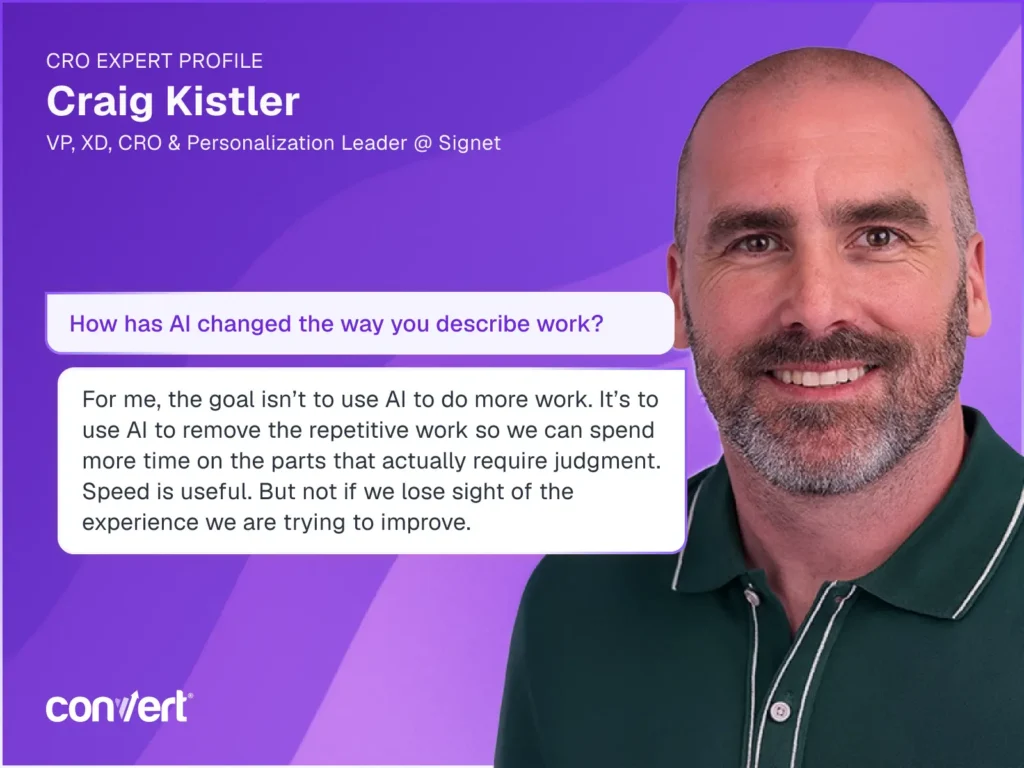
The rise of generative AI and machine learning has introduced new efficiencies into the experimentation process, yet Kistler maintains a cautious perspective on its application. While AI has significantly reduced the cost and time associated with execution—enabling teams to build prototypes and analyze data sets in minutes rather than hours—it has not replaced the necessity for human judgment.

Kistler identifies a four-stage process for experimentation: Problem, Bet, Evidence, and Extension (PBEE).
- Problem: Identifying a specific customer pain point.
- Bet: Formulating a hypothesis on what will improve the experience.
- Evidence: Analyzing the behavioral data and results.
- Extension: Deciding whether to roll out, revise, or abandon the change.
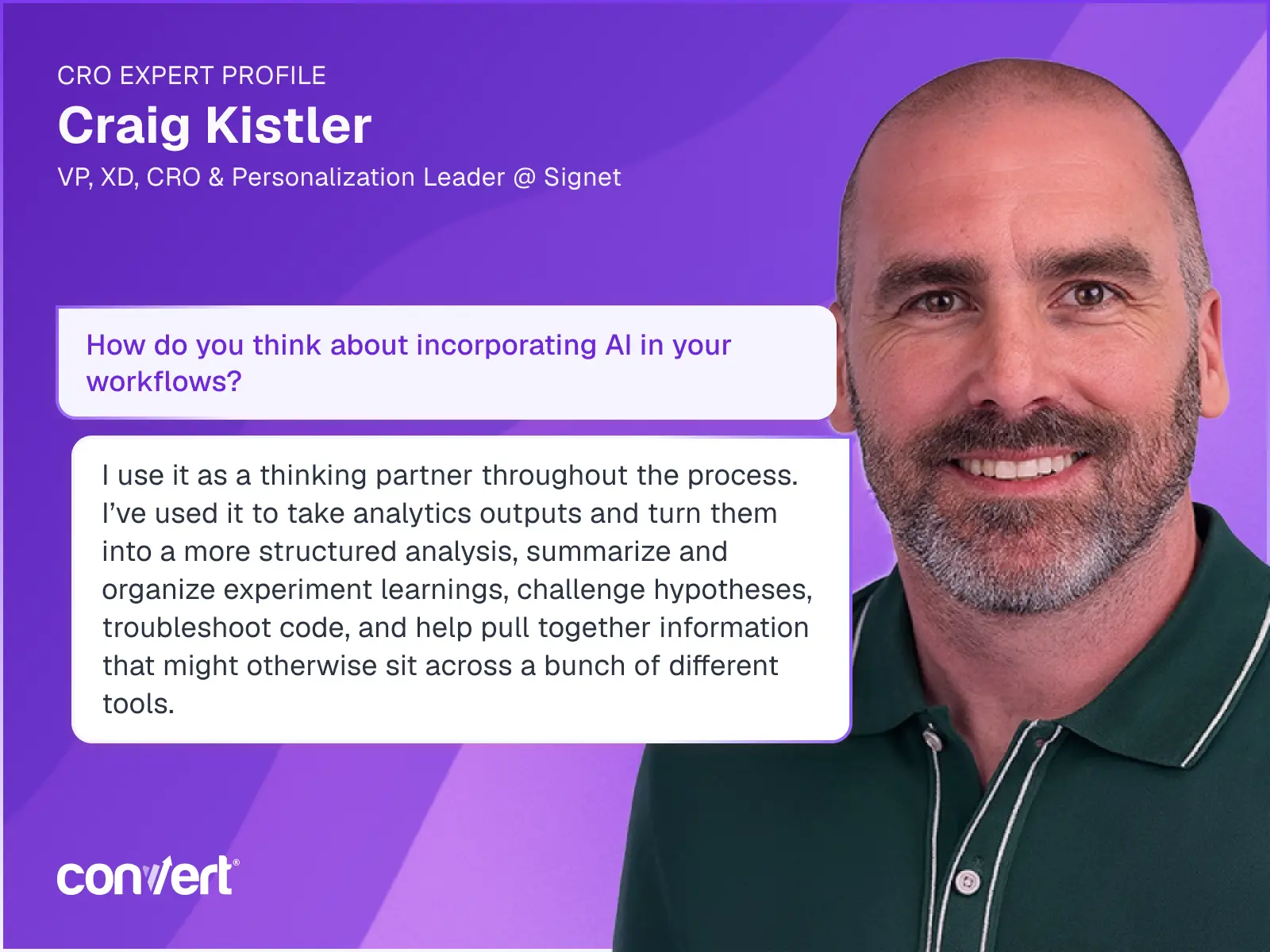
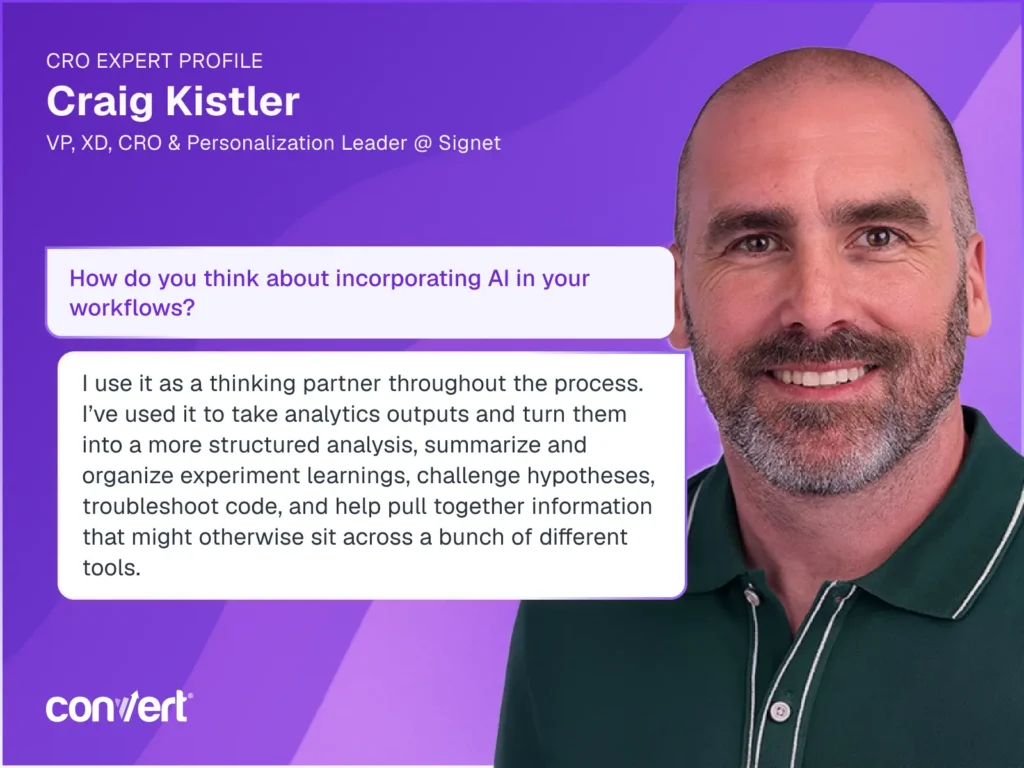
Within this framework, AI serves as a "thinking partner." It is utilized to summarize experiment learnings, challenge hypotheses, and troubleshoot code. However, Kistler warns against the "experiment factory" approach. If the underlying understanding of a customer problem is flawed, AI only serves to produce "bad ideas faster." The industry is currently seeing a divide between firms that use AI for sheer volume and those, like Signet, that use it to enhance the quality of insights. This distinction is vital as the cost of execution continues to plummet, shifting the competitive advantage back toward superior strategic judgment and customer empathy.
Redefining Personalization Beyond One-to-One Marketing
For nearly a decade, the retail industry has chased the "holy grail" of one-to-one personalization—the idea that every user sees a completely unique version of a website. Kistler argues that this focus is often misplaced. Instead of hyper-individualization, he advocates for "segments on steroids," where visitors are grouped by intent and immediate needs.
The resurgence of interest in personalization is partly driven by the sheer volume of signals now available to retailers. Modern tools allow for real-time adjustments to a page’s layout, content, and guidance based on how a user interacts with a site in the moment. Kistler envisions a future where the static Product Detail Page (PDP) becomes a thing of the past. Instead, the digital experience will adapt dynamically: the information emphasized, the guidance offered, and the sequence of content will change to match the shopper’s current stage in the buying journey.
This approach acknowledges that a shopper’s needs are not static; a visitor looking for an engagement ring requires a different set of tools and information than a customer looking for a pair of earrings as a last-minute gift. By focusing on intent rather than just identity, Signet aims to make the digital experience more intuitive and less overwhelming.
Case Studies in Strategic Friction and Value Exchange
One of the most significant contributions Kistler has made to the field is challenging the "frictionless" dogma of modern e-commerce. Conventional wisdom suggests that removing every possible click or step is the key to conversion. However, Signet’s experimentation revealed that in high-consideration categories like jewelry, total lack of friction can lead to "choice paralysis."
In one notable experiment, Signet’s team observed that users landing on category pages with thousands of products often scrolled briefly and left. The experience was frictionless but unhelpful. To combat this, the team introduced "strategic friction" by asking users what they were looking for before presenting products. This extra step provided guidance and narrowed the selection, leading to better performance. Kistler’s takeaway is that "guidance is not the same thing as friction." In many cases, an extra step that provides direction is more valuable to the consumer than a direct but overwhelming path.
Another experiment targeted the ubiquitous "email for discount" pop-up. Recognizing that asking for an email address immediately upon arrival is a lopsided value exchange, Kistler’s team tested an alternative: offering help. Instead of a discount prompt, the site asked visitors what they were shopping for and used that information to tailor the subsequent experience. This shift from a "give me your data" approach to a "tell me how I can help" approach proved more effective, reinforcing the idea that personalization should be a service provided to the customer, not just a data collection tactic.
The Role of Evidence in Overcoming Corporate Conviction
Experimentation also serves a vital cultural role within large organizations: the systematic deconstruction of "strongly held beliefs." Kistler notes that often, an idea is pursued simply because a competitor is doing it or because internal stakeholders feel strongly about its potential.
In one instance, Signet tested a feature that had significant internal backing but failed to produce results in the initial experiment. Rather than dismissing the idea immediately, the team iterated on its execution, placement, and journey integration. After multiple failed iterations, the cumulative evidence was finally enough to convince the organization that the idea was not solving a meaningful customer problem. This highlights a critical, if overlooked, benefit of testing: it provides the objective data necessary to let go of unsuccessful strategies, preventing "sunk cost" fallacies from draining resources.
Broader Impact and Future Implications for Digital Retail
The insights provided by Craig Kistler suggest a broader shift in the digital economy. As AI commoditizes the ability to create content and code, the value of a digital professional is increasingly found in their ability to interpret human behavior. The "Testing Mind Map" is no longer just about A/B testing buttons; it is a holistic approach to understanding the psychological and emotional triggers of the consumer.
Industry data supports this shift. According to recent market analysis, the global conversion rate optimization (CRO) software market is expected to grow at a compound annual growth rate (CAGR) of over 10% through 2030. Furthermore, reports from McKinsey and Company indicate that companies that excel at personalization generate 40% more revenue from those activities than average players.

As Signet Jewelers continues to refine its experimentation practice, the focus remains on the balance between speed and judgment. The ability to launch hundreds of tests is a technical capability, but the ability to launch the right ten tests is a strategic one. For Kistler and his team, the goal is to ensure that as technology evolves, the focus remains squarely on the customer’s needs. In an era of AI-driven automation, the retailers that maintain a human-centric approach to data will likely be the ones that secure long-term loyalty in the digital age.







