rifanmuazin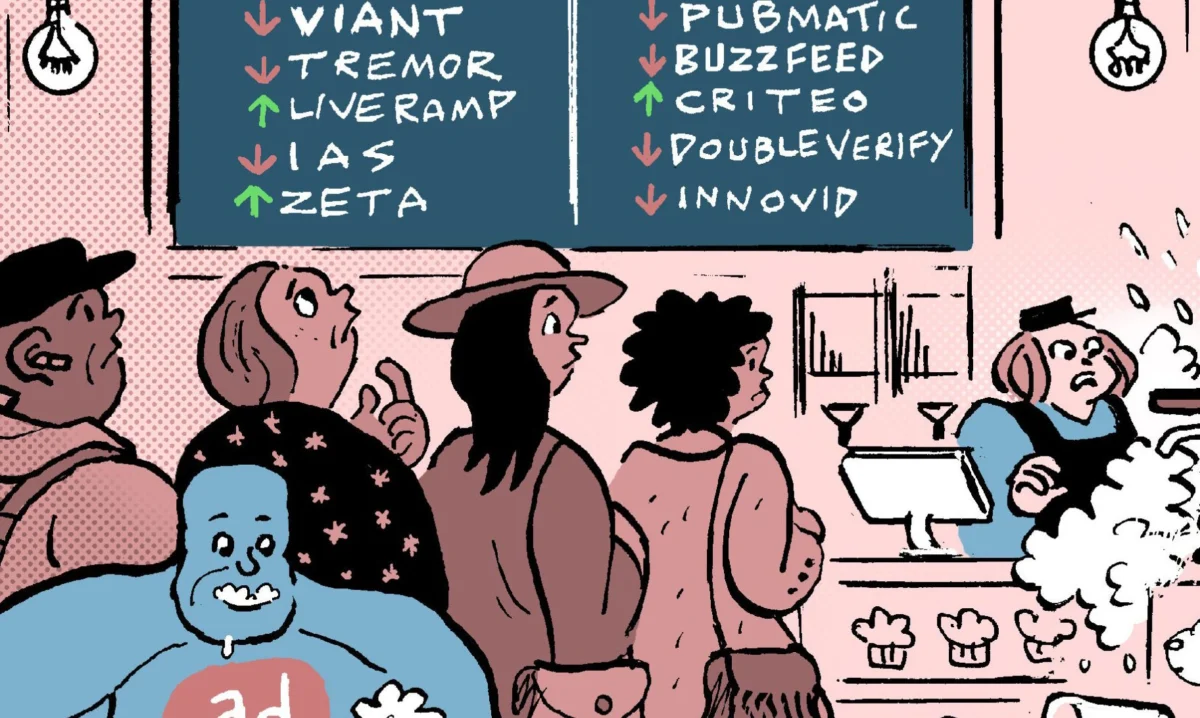
Tuesday, November 18th, 2025 – 1:13 pm
The programmatic advertising industry is currently navigating a turbulent period, characterized by escalating competitive tensions, significant disruptions within the ad tech ecosystem, and a palpable downturn in revenue for many key players. This confluence of factors, evident in recent earnings reports from prominent companies, signals a departure from the more unified front previously presented by third-party programmatic entities, particularly in their collective stance against perceived dominance by tech giants like Google. The current landscape is marked by a series of strategic maneuvers and public disagreements that are reshaping the dynamics of digital advertising procurement and supply.
The Erosion of a Unified Front
For years, a prevailing narrative within the programmatic advertising space posited a common enemy in Google and a shared ambition among independent Demand-Side Platforms (DSPs) and Supply-Side Platforms (SSPs) to foster a more open and competitive market. This era, where companies like The Trade Desk were often seen as allies in challenging the status quo, appears to be receding. The current year has witnessed a significant escalation of inter-company friction, with disputes over access to bidstream data, accusations of developers being undermined in their efforts to adapt to new privacy frameworks like Google’s Chrome Privacy Sandbox, and prominent platforms actively asserting their market influence.
The reverberations of these disputes are no longer confined to industry forums and technical discussions. They are now demonstrably impacting financial performance, as evidenced by recent quarterly disclosures from major ad tech firms. These earnings calls, traditionally focused on growth and innovation, have become arenas where underlying strategic battles and their financial consequences are laid bare.
The Stark Reality: Declining Revenues as the Primary Driver
Beneath the surface of philosophical debates about data transparency and supply chain roles, the fundamental driver of the current animosity and strategic recalibrations appears to be a stark reality: a widespread decrease in revenue across the programmatic ecosystem. This financial pressure is forcing companies to re-evaluate their partnerships, prioritize profitability, and engage in more aggressive tactics to secure their market share and revenue streams.
Several leading SSPs have recently disclosed significant and unexpected reductions in spending from DSPs. Magnite, PubMatic, and Nexxen, all significant players in the programmatic supply chain, reported that unnamed DSPs, or in some cases, a singular dominant DSP, abruptly curtailed their ad spend on their respective platforms during the third quarter of 2025.
PubMatic CEO Rajeev Goel offered a veiled reference to The Trade Desk’s new ad-buying platform, Kokai, noting that it operates "differently from what we have seen." This observation echoed sentiments previously expressed by PubMatic leadership regarding a sudden decline in spending from a specific DSP. Similarly, Magnite CEO Michael Barrett directly attributed a decrease in revenue to a strategic shift by The Trade Desk. Barrett stated that The Trade Desk had implemented a change that "prioritized OpenPath as a default path for supply." This move, according to Barrett, necessitated Magnite’s direct engagement with major agency buyers to re-establish a "preferred supply path." Given The Trade Desk’s substantial role as a source of demand and Magnite’s position as a major programmatic supplier, Barrett acknowledged that this policy change had a "significant impact."
Nexxen, which operates both a DSP and an SSP, revised its financial forecast downwards for the remainder of the year. CEO Ofer Druker attributed this adjustment to a lack of anticipated growth in the system, which typically surges in October in anticipation of holiday advertising. Druker clarified that the slowdown was not isolated to a single DSP but represented a "programmatic-wide reduction plateau" that failed to materialize as usual. This suggests a broader market contraction or a reallocation of ad spend away from traditional programmatic channels.
Beyond these revenue-impacting shifts, another significant issue has emerged. System1 CEO Michael Blend reported that an unnamed programmatic vendor within their demand channel had supplied the company with "significant invalid or nonhuman" traffic. System1 is reportedly pursuing reimbursements and may consider legal action, highlighting concerns about the quality and integrity of programmatic inventory and the accountability of demand-side partners.
Strategic Positioning and the Battle for Narrative Control
While the immediate concern for publicly traded ad tech companies is undoubtedly their financial performance, the escalating antagonism also reflects a broader strategic effort to position themselves favorably in the eyes of investors, marketers, and the wider industry. Companies are actively attempting to shape the narrative around how programmatic advertising should function, emphasizing their unique value propositions and critiquing the strategies of competitors.
The Trade Desk CEO Jeff Green, for instance, has publicly questioned the classification of Amazon’s advertising operations as a DSP, stating, "I don’t think Amazon has a DSP as we define it." This statement serves to differentiate The Trade Desk’s own DSP offering and potentially delineate a more exclusive category of buy-side platforms.
In response, Viant, an independent DSP, has sought to carve out its own competitive niche. CEO Tim Vanderhook commented that Viant "sees less competition when you look at truly objective buy-side-only platforms." He further characterized The Trade Desk as "no longer independent or objective" due to its prioritization of its own OpenPath supply integrations. This framing suggests that Viant positions itself as a purer, more impartial buy-side solution, in contrast to what it perceives as The Trade Desk’s vertically integrated interests.
Nexxen’s CEO, Ofer Druker, has also voiced his perspective on industry consolidation, noting that "Big DSPs in the future will have to build their own end-to-end solutions in order to increase their margins." This outlook suggests a belief that the current programmatic model, with its multiple intermediaries, is unsustainable for maximizing profitability on the buy-side, particularly as DSPs increasingly integrate with supply-side functionalities. These seemingly contradictory perspectives from independent DSPs underscore the intense competition and the strategic imperative to define their market position and attract investment.
The "Reseller" Controversy and SSP Responses
A significant point of contention, particularly for SSPs, has been The Trade Desk’s classification of certain supply-side partners as "resellers." This designation has created unease among investors, raising concerns about potential disintermediation and reduced margins for SSPs.
PubMatic’s CEO, Rajeev Goel, has been vocal in refuting this label for his company. He asserts that PubMatic is not a reseller and maintains a strong partnership with The Trade Desk. Goel has expressed a pragmatic view, stating that while the decrease in spend from The Trade Desk and the "reseller noise" are factors, the "ecosystem is multifaceted, certainly complex." This suggests an acceptance of the dynamic nature of industry relationships and a focus on navigating these complexities rather than dwelling on perceived slights.
Magnite’s CEO, Michael Barrett, has also directly addressed the "reseller" issue. While acknowledging that supply-side resellers represent a genuine problem within the industry, he firmly stated that Magnite does not fall into that category. Barrett emphasized Magnite’s commitment to "cleaning up the system" by eliminating duplicate bids and low-quality impressions. He explicitly stated, "we don’t believe Magnite is a reseller. I think the term applies to others." This clear demarcation aims to reassure investors and partners about Magnite’s role and integrity within the supply chain.
Implications for the Future of Programmatic Advertising
The current turbulence in programmatic advertising has several profound implications:
- Increased Consolidation and Vertical Integration: The trend towards DSPs building end-to-end solutions, as predicted by Nexxen’s CEO, could lead to further consolidation. Companies with the resources and strategic vision may seek to control more of the supply chain to enhance margins and gain a competitive edge.
- Heightened Scrutiny of Supply Chain Participants: The debate around "resellers" and the concerns about invalid traffic suggest a growing demand for greater transparency and accountability throughout the programmatic supply chain. Marketers and advertisers are likely to exert more pressure on platforms to ensure the quality and efficiency of their ad spend.
- Shifting Power Dynamics: The assertive stance of major platforms like The Trade Desk, coupled with their ability to influence spending patterns, highlights the ongoing shift in power dynamics. While SSPs are pushing back and seeking to redefine their roles, the influence of large demand-side players remains substantial.
- Emphasis on Measurable Outcomes: As revenues become tighter, the industry may see a stronger pivot towards performance-based advertising and a greater emphasis on measurable outcomes. This could lead to more sophisticated attribution models and a demand for greater data accuracy.
- Evolving Privacy Landscape: The ongoing evolution of privacy regulations and the deprecation of third-party cookies continue to shape the programmatic landscape. Companies that can effectively navigate these changes while demonstrating value will be better positioned for long-term success.
The current period of intense competition and financial pressure in programmatic advertising is not merely a temporary blip. It represents a fundamental recalibration of the industry, driven by economic realities and strategic imperatives. The outcomes of these ongoing disputes and the choices made by key players will undoubtedly shape the future architecture and operational dynamics of digital advertising for years to come. The coming quarters will be critical in determining which companies adapt successfully and which struggle to maintain their footing in this rapidly evolving environment.