
 rifanmuazin
The global fintech sector is currently defined by a paradox: while data is more abundant than ever, the actionable insights derived from that data often vanish as quickly as they are generated. For many growth and marketing teams, the process of running experiments follows a predictable but flawed trajectory where hypotheses are tested, results are tallied, and the findings are eventually buried within fragmented communication channels like Slack threads, email chains, or disorganized spreadsheets. When similar challenges arise months later, these teams frequently find themselves starting from scratch, wasting resources on redundant tests. Vinayak Purshan, Associate Marketing Director at Cashfree Payments, recently addressed this systemic inefficiency, outlining a robust five-step framework designed to transform Conversion Rate Optimization (CRO) from a series of isolated events into a compounding institutional asset.
Speaking on the VWO Podcast, Purshan highlighted the critical need for a "fail-forward" mindset, particularly within the high-stakes environment of financial technology. Cashfree Payments, a major player in India’s payment processing landscape, serves over 800,000 businesses. In a sector where user trust, transaction security, and interface speed are the primary drivers of conversion, the cost of losing a learning is not merely an administrative oversight—it is a lost opportunity for market share. Purshan’s framework provides a blueprint for capturing, sharing, and reusing insights to ensure that every experiment, regardless of its statistical success, fuels the next stage of company growth.
The Problem of Perishable Insights in Digital Marketing
In the traditional digital marketing workflow, experimentation is often viewed as a linear path: ideation, execution, and conclusion. However, the true value of an A/B test or a multivariate experiment lies not in the immediate "win" but in the underlying change in user behavior it reveals. Industry data suggests that a significant majority of experiments—some estimates place it as high as 80%—do not result in a statistically significant "winning" variation. If a team only documents their wins, they lose 80% of the value of their experimentation program.

Purshan noted that without a structured documentation system, teams suffer from "organizational amnesia." This occurs when a team member leaves the company or when a campaign concludes, and the "why" behind a specific decision is forgotten. The framework developed at Cashfree Payments seeks to solve this by mandating that documentation be as rigorous as the experiment itself.
Step 1: Documenting Experiments with Comprehensive Context
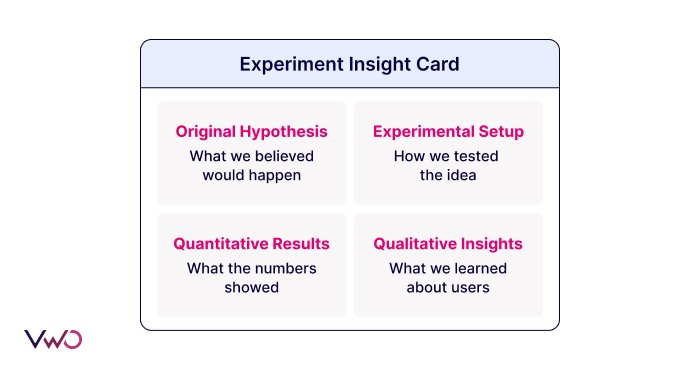
The foundation of the Cashfree approach is a standardized record for every test, regardless of the scale. Documentation at Cashfree goes beyond simple metrics like click-through rates or conversion lifts. Instead, it focuses on four pillars: the initial hypothesis, the primary and secondary success metrics, the qualitative and quantitative learnings, and the specific next steps.
By documenting the hypothesis, the team preserves the "intent" of the experiment. This allows future marketers to understand what the team believed about the user at that specific point in time. When a test fails, the documentation explains why the hypothesis was incorrect, which is often more valuable than a successful test because it prevents the company from pursuing a flawed strategy in the future. This standard applies to everything from minor copy tweaks on a landing page to complete overhauls of the checkout flow.
Step 2: Implementing Structured Knowledge-Sharing Rituals
Documentation is only effective if the information is accessible and socialized. To prevent insights from remaining siloed within specific sub-teams, Cashfree Payments has implemented monthly "all-hands" marketing meetings. These sessions serve as learning labs where both successful and unsuccessful experiments are dissected with equal rigor.
The ritualized nature of these meetings serves two purposes. First, it ensures that the entire department is aware of what has been tested, preventing duplicate efforts. Second, it fosters a culture of psychological safety. When leadership celebrates a "failed" experiment for the high-quality learning it produced, it encourages the team to take the calculated risks necessary for breakthrough innovation. This "fail-forward" philosophy is essential in fintech, where the fear of disrupting a stable payment environment can often lead to stagnation.
Step 3: Breaking Silos for Cross-Functional Impact
One of the most significant insights from Purshan’s framework is that CRO learnings have utility far beyond the marketing department. At Cashfree, insights regarding which Unique Selling Propositions (USPs) resonate with users are shared directly with the product, sales, and customer success teams.
For example, if a marketing experiment reveals that users are three times more likely to convert when presented with messaging about "setup speed" rather than "security features," this is a signal for the product team. They might prioritize streamlining the onboarding UI. Similarly, the sales team can use this data to lead their pitches with the most effective messaging. This creates a feedback loop where digital marketing serves as a testing ground for broader corporate strategy. Purshan emphasized that while this requires deliberate communication and stakeholder buy-in, the result is a company-wide learning engine that outpaces competitors who keep their data sequestered in marketing dashboards.
Step 4: Developing Reference Libraries for Campaign Cycles
The fintech industry, like many others, operates on cyclical demand. In India, the festive season and major e-commerce sales events create massive surges in transaction volume. Rather than reinventing the wheel every year, Cashfree maintains a digital library of past experiments organized by theme, season, audience, and objective.

This library acts as a "playbook" for recurring events. When a new team member is tasked with a Diwali campaign, they do not start with a blank page. They can access the results of the previous three years of testing. They might find, for instance, that compliance-focused messaging outperformed speed-focused messaging during high-traffic periods because business owners were more concerned with audit trails than transaction latency. By building on the "winner" of the previous year, the team can focus their energy on testing new, more sophisticated variables, leading to a compounding effect on ROI.
Step 5: Fostering a Learning-First Mindset
The final and perhaps most critical component of the framework is cultural. Purshan argues that the goal of an experimentation program should not be to "be right," but to "learn fast." This shift in perspective changes the way a team handles data. If the goal is to be right, a failed test is a disappointment. If the goal is to learn, a failed test is a successful acquisition of knowledge.
This mindset encourages "bold testing"—experiments that challenge fundamental assumptions about the business. In the fintech space, where regulatory requirements often dictate the boundaries of what is possible, having the cultural freedom to test the limits of user experience is a significant competitive advantage. It ensures that the team remains agile and that the documentation process is seen as a tool for empowerment rather than a bureaucratic burden.
Analysis of Implications and Industry Impact
The methodology shared by Purshan reflects a broader shift in the digital economy. As the cost of customer acquisition (CAC) continues to rise across global markets, companies can no longer afford to ignore the efficiency gains found in their own data. The "compounding learning" model is becoming a prerequisite for sustainability in high-growth sectors.

From a technical perspective, the use of platforms like VWO (Visual Website Optimizer) facilitates this framework by allowing for the creation of sub-accounts and shared workspaces. This technological infrastructure supports the cultural goal of transparency. When product teams can view the marketing team’s "Plan" and "Observations" in real-time, the friction of knowledge transfer is minimized.
Furthermore, the implications for the fintech industry are profound. In a market like India, where the Unified Payments Interface (UPI) and digital banking have democratized access to finance, the differentiator for a payment gateway is no longer just the technology—it is the user experience and the clarity of the value proposition. By using a structured documentation framework, Cashfree Payments is able to refine its messaging and interface with a level of precision that "gut-feeling" marketing cannot match.
Conclusion: The Strategic Value of Documented Growth
The insights provided by Vinayak Purshan serve as a reminder that the most valuable asset a modern marketing team possesses is not their budget, but their collective knowledge. By documenting every experiment with context, creating rituals for sharing, breaking down cross-functional silos, building reference libraries, and prioritizing a learning mindset, organizations can stop the "leakage" of valuable insights.
For companies looking to emulate Cashfree’s success, the transition requires more than just new software; it requires a commitment to a new way of working. It is a shift from viewing marketing as a creative output to viewing it as a scientific process where every data point is a building block for future growth. As the fintech landscape continues to evolve, those who can successfully institutionalize their learnings will be the ones who lead the next wave of digital transformation.








