rifanmuazin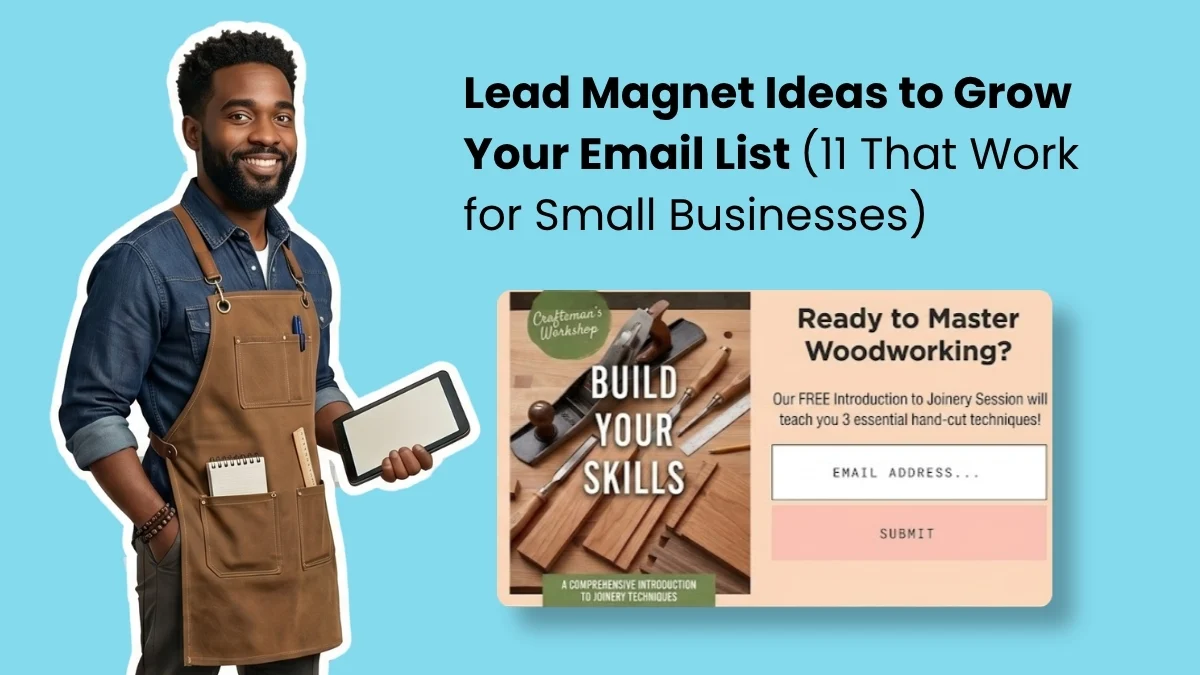
In the fiercely competitive landscape of digital marketing, the ability to effectively capture and nurture potential customers is paramount for sustained business growth. While a basic sign-up form might yield a modest 2% conversion rate, integrating a well-crafted lead magnet can dramatically elevate this figure to approximately 6.5%. This represents an astounding 325% increase in subscriber acquisition, transforming a slow, incremental list-building effort into a dynamic engine of growth with every visitor to a digital storefront. The misconception that lead magnets are synonymous with lengthy, time-consuming ebooks often deters small businesses. However, industry insights reveal that a lead magnet is, at its core, any valuable offering that compels a visitor to willingly exchange their email address. This spectrum ranges from tangible discounts and practical checklists to comprehensive templates, personalized quiz results, or even compelling free trials. The efficacy of a lead magnet hinges not on its format, but on its resonance with the target audience – providing an offer they genuinely need and will actively use. The critical challenge, therefore, lies not in the decision to employ a lead magnet, but in discerning which format will best align with a business’s unique offerings and its audience’s specific needs.
The Evolution of Lead Generation in a Digital Age
The journey of lead generation has evolved significantly over the past two decades. Early digital marketing often relied on broad advertising and simple "subscribe to our newsletter" prompts. However, as internet users became more discerning and their inboxes more crowded, marketers realized the need for a more compelling value exchange. The concept of "permission marketing," popularized by Seth Godin, underscored the importance of earning a prospect’s attention rather than demanding it. This philosophical shift paved the way for lead magnets, transforming the sign-up process from a passive request into an active, value-driven transaction. Today, a sophisticated lead magnet strategy is a cornerstone of inbound marketing, designed to attract, convert, close, and delight customers by providing immediate utility and building trust from the first interaction.
Deciphering Effectiveness: The "Immediate Miracle" Principle
An effective lead magnet operates on the principle of immediate gratification, delivering tangible value within the same session a subscriber opts in. This immediacy is crucial; the value should not be deferred to a later time when the subscriber might "find time to read" or engage. As articulated by author and long-time AWeber customer Alexandra Franzen, the objective of every email interaction should be "delivering a little miracle to their inbox." This powerful framing serves as a vital litmus test for any prospective lead magnet. Can a subscriber utilize this offer within the next 30 minutes? Does it directly address a specific problem they are actively trying to solve? If the answer is affirmative, the lead magnet holds significant potential. Conversely, if it demands a substantial time commitment that the prospect likely doesn’t possess, a re-evaluation of its format is warranted. This philosophy ensures that the initial interaction fosters a sense of accomplishment and immediate benefit, reinforcing the subscriber’s decision and setting a positive tone for future engagements.

A Data-Driven Approach: Unpacking Performance Metrics
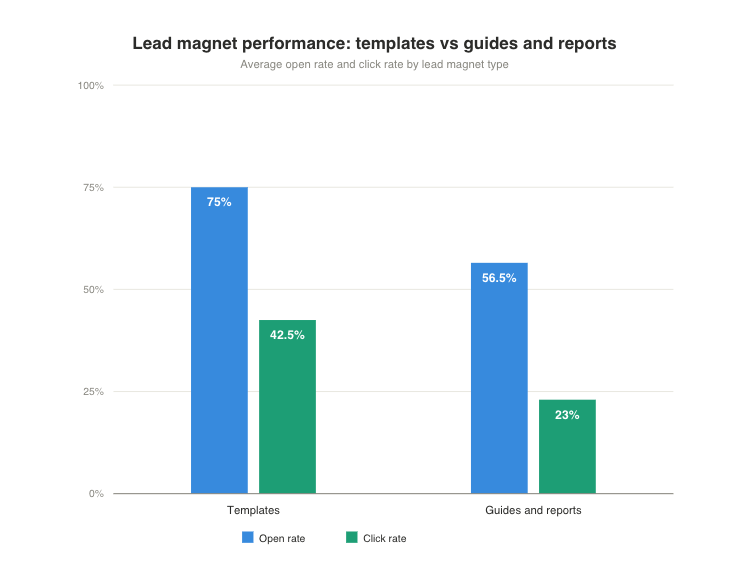
Empirical data consistently highlights the superior performance of instantly actionable lead magnets over purely knowledge-based content. A comprehensive analysis by AWeber, spanning over 42,000 welcome email sends, revealed compelling statistics. Template-based lead magnets achieved an impressive average open rate of 75% and a click rate of 42.5%. In stark contrast, guides and reports, while valuable, lagged with average open rates of 56.5% and click rates of 23%. This significant disparity underscores the preference for resources that enable immediate application rather than requiring extensive study.
Further granular data from AWeber reinforces this trend:
- An email marketing planning template garnered a 76% open rate and a 47% click rate across more than 3,000 sends.
- A collection of 45 email templates saw a 74% open rate and a 38% click rate over 28,700 sends.
These figures demonstrate that prospects value tools that save them time and effort on tasks they are already undertaking, often preferring them over lengthy educational materials. While guides and reports have their place, particularly for audiences in deep research mode, their lower engagement metrics in the immediate post-signup phase suggest a different psychological trigger for conversion.
Category Spotlight: Fast-Converting Deals and Offers
These types of lead magnets are designed for rapid conversion, particularly where price plays a significant role in the purchasing decision. They require no reading or downloading, offering immediate, tangible benefits.
-
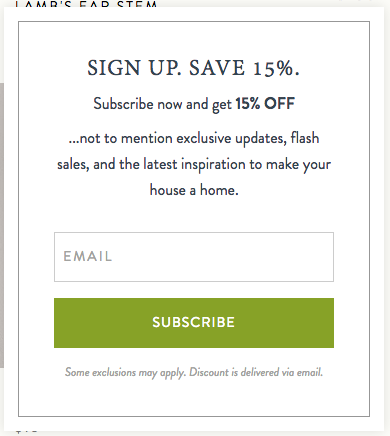
Discounts and Coupons: For e-commerce businesses, retailers, restaurants, and service providers with fixed-price menus, a discount is an exceptionally powerful lead magnet. An offer such as "Get 15% off your first order when you join our list" provides immediate, measurable value. Subscribers gain an instant benefit, while businesses acquire an email address tied to clear purchase intent. The efficacy stems from the concrete and immediate usability of the value, eliminating any delay between subscription and benefit realization. A local coffee shop offering a free drink on a next visit, or a clothing retailer providing 20% off a first purchase, exemplify leveraging peak purchase intent.
-
Giveaways and Contests: Giveaways generate rapid list growth by offering a prize in exchange for an email address, often incentivizing bonus entries for social sharing. While highly effective for quickly expanding an audience, it is crucial to align the prize with the ideal customer profile to ensure lead quality. A fitness studio offering a free month of classes, or a home goods brand giving away a product bundle, are effective examples because the prize naturally appeals to individuals already interested in their core offerings, thus qualifying the leads. The organic reach achieved through sharing mechanics further amplifies list growth, especially when promoted strategically across social media platforms.
-
Free Trials and Demos: Predominantly effective for SaaS businesses, subscription products, and service businesses with clearly defined scopes, free trials and demos position the product itself as the lead magnet. Subscribers engage directly with the offering, eliminating the need for downloads. For software and subscription services, trial users are significantly more likely to convert into paying customers compared to cold leads who merely downloaded an ebook. This strategy signals high confidence in the product’s value, lowering the barrier to entry and building trust. A project management tool offering a 14-day free trial or a marketing consultant providing a free 30-minute strategy call are prime examples of acquiring leads with demonstrated, active interest.
Category Spotlight: High-Value, Ready-to-Use Resources
These formats empower subscribers with resources they can deploy immediately, consistently outperforming purely knowledge-based content in initial engagement.
-
Templates: Ideal for any business where subscribers need assistance with specific tasks such as writing, planning, organizing, designing, or presenting. Templates are designed for immediate application, making the welcome email a direct fulfillment of an expectation. AWeber’s own email marketing planning template and a collection of 45 email templates have shown exceptional engagement, proving that a template saving 20 minutes on an existing task is often more valuable than a lengthy guide. Examples include a social media manager offering caption templates or a financial coach providing a budget spreadsheet.
-
Checklists and Cheat Sheets: Universally applicable across various small business categories, checklists are quick to create and even quicker to use. Unlike multi-day ebooks, a one-page checklist can be developed in hours and utilized in minutes. The most effective checklists act as decision-support tools, offering actionable items that simplify complex processes. They demonstrate expertise without demanding extensive time investment from the subscriber. Examples range from "10 things to check before launching a website" to "The questions to ask when hiring a photographer," providing immediate, specific utility.
-
Workbooks and Worksheets: These formats are essentially interactive checklists with prompts, guiding subscribers through a structured process or decision. By actively filling in the workbook, subscribers engage deeply with the provided framework, moving beyond passive consumption. This approach is highly effective for coaches, educators, consultants, and health and wellness businesses. A well-designed 8-10 page PDF can be created swiftly and offers the kind of structured thinking often found in paid coaching sessions. Examples include a business coach’s 90-day goal-setting workbook or a nutritionist’s meal planning workbook.
-
Resource Lists and Toolkits: Catering to subscribers actively seeking tools, resources, or services, a curated resource list saves invaluable research time. The value lies in expert curation and opinionated selection, not sheer volume. A concise list of 7 highly recommended tools often outperforms an exhaustive list of 50. Specificity is key: "The apps every bakery owner should know" is far more compelling than a generic "marketing tools" list. Such lists build authority and position the provider as a trusted expert.
Category Spotlight: Engaging Interactive and Educational Formats
While requiring a greater time investment from subscribers, these formats foster deeper relationships and higher levels of trust through sustained engagement.
-
Quizzes and Assessments: These lead magnets excel by offering personalization. Instead of a generic offering, a quiz promises results tailored to the subscriber’s specific answers, leading to higher conversion rates (typically between 20% and 40%). Beyond conversion, quizzes provide invaluable segmentation data from the outset, allowing for highly targeted follow-up communication. A financial coach offering a "money personality" quiz or a marketing consultant determining "which content type fits your business" are excellent examples of leveraging personalization.

-
Challenges: Multi-day commitments, such as a "5-day writing challenge" or a "7-day meal prep challenge," attract highly motivated individuals. Subscribers opt in knowing they are committing to a structured, time-bound experience. Challenges not only drive list growth but also generate social proof as participants often share their progress publicly, organically extending reach. This format builds a strong relationship through consistent interaction before any direct offer is made.
-
Mini-Courses Delivered by Email: A concise email course, often spanning three to five days, functions as both a lead magnet and an introductory nurture sequence. Each email delivers a discrete lesson, setting clear engagement expectations. Subscribers who complete such a course develop a deeper understanding of the provider’s perspective and methodology, making them significantly more receptive to subsequent offers. Each lesson provides a compelling reason to open the next email, fostering a consistent engagement loop.
Category Spotlight: In-Depth Content for Research-Oriented Audiences
These formats are best suited for subscribers in the research phase, evaluating options, building knowledge, and preparing for significant decisions.
- Guides, Reports, and Ebooks: While historically common, AWeber’s data indicates that these are often not the fastest-converting lead magnets. A small business email marketing report showed a 54% open rate and 21% click rate, while a landing page guide yielded 59% opens and 25% clicks. The lower urgency associated with learning "eventually" means these often fall victim to the "I’ll get to this later" impulse. Their effectiveness hinges on providing genuinely unique data or frameworks that are difficult to find elsewhere, offering deep specificity that compels completion rather than mere bookmarking. Examples include a recruiting firm’s "2026 Salary Guide for Tech Roles" or an accountant’s "Small Business Tax Prep Checklist," both delivering specialized, in-depth information.
Seamless Integration: Implementing Lead Magnets with Marketing Automation
The successful delivery and management of lead magnets rely heavily on robust marketing automation. Platforms like AWeber streamline this process, enabling businesses to build the necessary infrastructure without extensive coding knowledge.

- Build Your Landing Page: This dedicated page serves as the digital gateway where visitors exchange their email for the offer. It should be singularly focused: one offer, one form, one clear call to action to maximize conversion.
- Create Your Sign-Up Form: The form should be minimalist, ideally requesting only an email address unless additional information is strictly necessary for personalization or qualification. Each extra field typically reduces conversion rates. Crucially, new subscribers should be tagged based on the specific lead magnet they chose, providing immediate segmentation data.
- Apply Tags for Segmentation: Tags are vital for routing subscribers into appropriate follow-up sequences. A subscriber downloading a beginner checklist should receive different nurturing content than one who opts for an advanced course. AWeber’s visual workflow automations simplify the creation of these tailored paths.
- Set Up Your Welcome Email Automation: The moment a subscriber signs up, an automated welcome email is triggered, delivering the promised offer. For PDFs, a direct download link is provided. For discount codes, they are embedded directly in the email body. For challenges or mini-courses, this initial email serves as "day one," initiating the sequence. This entire setup can be completed in under 20 minutes and operates autonomously thereafter.
Strategic Blueprint: Traits of High-Converting Lead Magnets
Lead magnet conversion rates vary widely, from 5% to 35%, with success largely determined by adherence to key strategic principles:
- Solve One Specific Problem: Broad, generic offerings like "10 Marketing Tips" are less effective than highly specific solutions such as a "5-Minute Email Template That Books Discovery Calls." Specificity resonates because it addresses an immediate, felt need.
- Demonstrate Your Unique Process: The most compelling lead magnets offer a glimpse into a business’s unique methodology or framework. A template designed around a proprietary process or a checklist reflecting a distinct approach is harder to replicate and fosters a sense of exclusive value.
- Require Minimal Time Investment: The faster a subscriber can extract value, the more likely they are to engage with the welcome email, utilize the offer, and trust subsequent communications. A one-page checklist often outperforms a 20-page guide for most audiences seeking quick solutions.
- Match Your Paid Offering’s Value Level: The lead magnet should align proportionally with the value of the core product or service. A substantial offering, like a $5,000 consulting service, necessitates a more robust lead magnet than a $29 course. This alignment prevents a disconnect that could undermine trust.
- Match Format to Subscriber Intent: The choice of format should directly correspond to what the subscriber is trying to achieve. Someone launching a product needs a template, while someone evaluating a coach benefits from an assessment.
- Use as a Segmentation Signal: Every lead magnet provides implicit data about the subscriber’s intent. Tagging subscribers by their chosen offer enables highly personalized follow-up content, moving beyond generic broadcasts to deliver relevant, timely information.
Conclusion: The Future of Permission-Based Marketing
The strategic implementation of lead magnets is no longer an optional marketing tactic but a fundamental requirement for sustainable digital growth. By understanding the diverse array of formats, leveraging data-driven insights, and focusing on immediate, tangible value, businesses can transform passive website visitors into engaged, qualified leads. The "immediate miracle" philosophy, coupled with seamless automation, ensures that the initial interaction is not just a conversion point, but the foundation of a lasting, trusting customer relationship. As the digital landscape continues to evolve, the ability to thoughtfully exchange value for attention will remain the cornerstone of effective, permission-based marketing, driving not just subscriber numbers, but ultimately, business success.