

In a strategic move to redefine the landscape of digital marketing and conversion rate optimization (CRO), Instapage has announced the transition of its service suite into a fully integrated, end-to-end AI-powered marketing platform. This evolution marks a significant milestone for the company, which has been a prominent player in the landing page industry since 2012. By embedding advanced artificial intelligence across every stage of the marketing funnel—from initial page generation to automated lead nurturing—Instapage aims to address the growing complexities faced by modern marketing teams who are increasingly pressured to deliver higher returns with fewer resources.
The announcement comes at a time when the "MarTech sprawl"—the fragmentation of marketing technology across dozens of disconnected tools—has become a primary bottleneck for business growth. Instapage’s new direction seeks to eliminate the friction caused by "stitching together" disparate software for landing pages, websites, personalization, experimentation, and email marketing. The platform now offers a unified environment where AI-driven content creation and data-backed optimization work in tandem to accelerate the journey from a creative concept to a live, revenue-generating campaign.
A Decade of Evolution: The Chronology of Instapage
To understand the significance of this AI-driven pivot, it is essential to trace the company’s trajectory over the last fourteen years. Since its inception in 2012, Instapage has focused on democratizing high-conversion design, which was previously the exclusive domain of specialized developers and high-budget agencies.
In its early years, the company established itself by launching a "pixel-perfect" drag-and-drop builder, which became the industry benchmark for landing page technology. By the mid-2010s, recognizing that a landing page is only as effective as the traffic it converts, Instapage expanded its offerings into a comprehensive CRO suite. This expansion included heatmaps, A/B testing modules, and advanced analytics, providing marketers with the data necessary to refine their strategies.
By the early 2020s, the platform introduced sophisticated personalization features, allowing users to serve dynamic content based on visitor behavior and demographics. However, the most transformative shift began in the mid-2020s as generative AI reached a level of maturity that allowed for seamless integration into creative workflows. The current 2026 rollout represents the culmination of this journey, moving from AI as a supplementary "bolt-on" feature to AI as the foundational engine of the entire platform.
Solving the "Blank Page" Crisis with AI Generation
One of the primary challenges identified by Instapage in its market research is the "intimidation of the blank page." For many marketing teams, the transition from a strategic idea to a functional, aesthetically pleasing landing page involves significant delays. Traditional workflows often involve drafting copy, briefing designers, and waiting for developer implementation—a process that can take weeks.
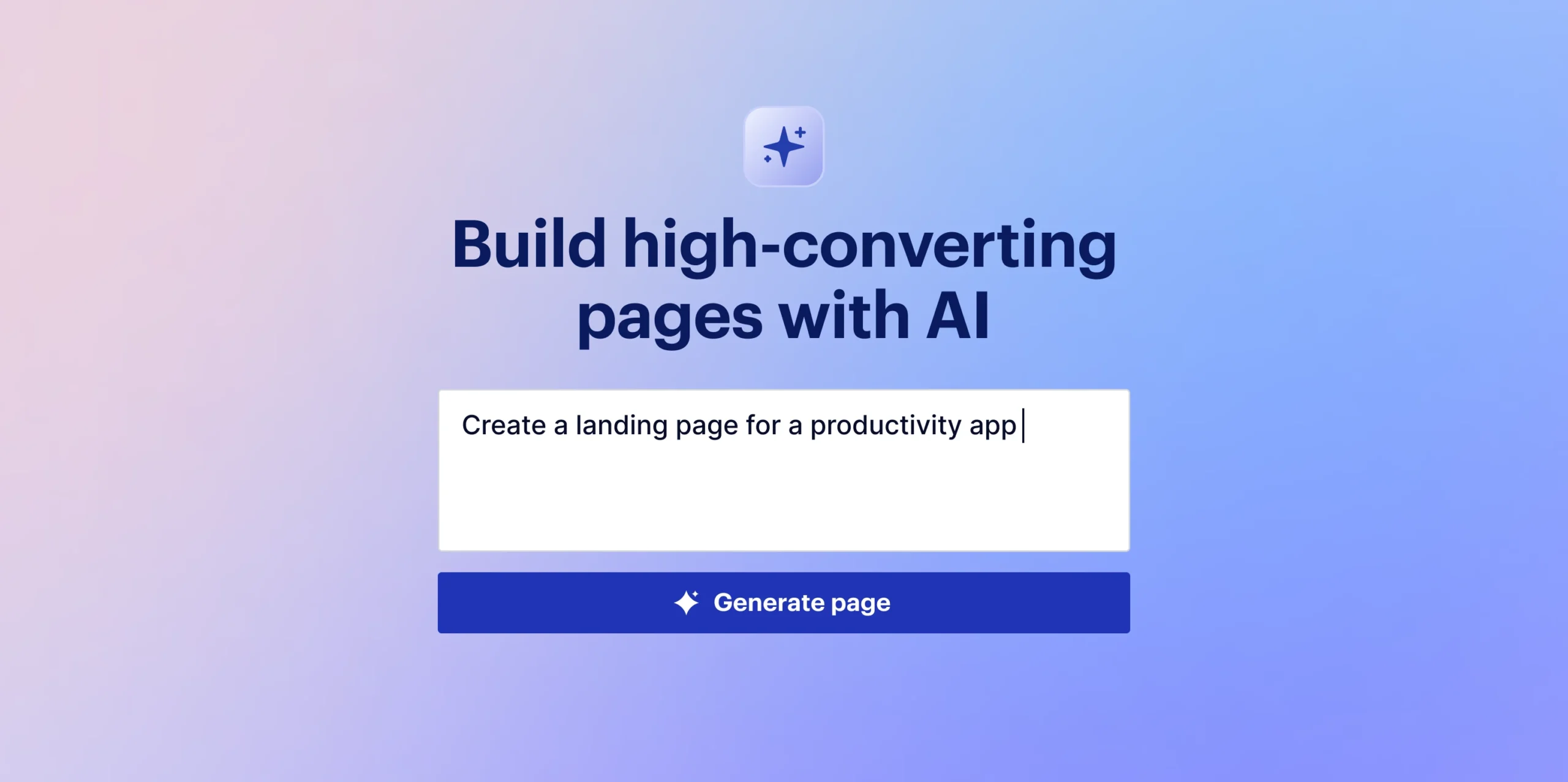
Instapage’s new AI page generation tool seeks to condense this timeline into seconds. By inputting a simple description of the desired outcome, users can generate a complete, conversion-ready page. This includes tailored messaging, optimized layouts, and visual elements designed to drive specific user actions. Unlike standalone AI generators that often produce static or rigid outputs, Instapage maintains its signature "pixel-perfect" drag-and-drop editor. This allows marketers to refine the AI-generated starting point without having to regenerate the entire page, a common pain point in current AI design tools where small changes often require a complete restart, consuming both time and computational tokens.
Industry data suggests that the ability to rapidly iterate is a key driver of success in digital advertising. According to recent benchmarks in the SaaS sector, companies that test more than five versions of a landing page see a 25% higher conversion rate on average than those that stick to a single version. By automating the initial build, Instapage allows teams to spend more time on these high-value optimizations.
Bridging the Gap: AI-Powered Email and Lead Nurturing
The expansion into AI-powered email marketing represents a critical vertical integration for Instapage. Historically, a significant "drop-off" occurs between a lead submitting a form on a landing page and the subsequent follow-up from a marketing or sales team. When leads are exported to external email platforms, delays and data silos often lead to missed opportunities.

The new Instapage AI email generator is designed to close this gap. By hosting pages, leads, and email sequences within a single ecosystem, the platform allows for instantaneous, context-aware responses. The AI can draft tailored messaging based on the specific landing page the lead interacted with, ensuring a consistent brand voice and relevant content. Marketers can define the goal, audience, tone, and length of the communication, while the AI handles the execution of the copy and the timing of the automation.
This integration addresses a major operational hurdle. Statistics from the 2025 Marketing Operations Report indicate that the average marketing team uses between 12 and 15 different tools daily, with "context switching" between these tools accounting for a 40% loss in overall productivity. By consolidating these functions, Instapage aims to reclaim this lost time for its users.
Data-Driven Scaling and the "AI Collections" Framework
Beyond creation and follow-up, the new platform introduces "AI Collections," a feature designed to help businesses scale what is already working. In the current economic climate of 2026, characterized by tighter budgets and leaner staff, the ability to replicate success across multiple markets or product lines is vital.
AI Collections allow marketers to organize their highest-performing assets and use AI to adapt them for different segments. This might involve translating a high-performing US-based landing page for a European market while automatically adjusting cultural nuances, localizing currency, and refining the tone to suit the new demographic. This level of automated scaling was previously only available to enterprise-level organizations with massive localization and dev teams.
Analysis of Market Implications and Official Outlook
The shift toward an end-to-end AI platform is not merely a technical update but a response to the changing role of the digital marketer. As AI handles the mechanical tasks of layout and drafting, the marketer’s role is shifting toward that of a "strategist and curator."
"Most platforms bolt AI onto one part of the workflow," the company noted in its release documentation. "You still end up stitching tools together and losing time in the gaps between them. Instapage is different. AI runs through the entire marketing workflow… from generating conversion-ready pages in seconds, to following up with leads instantly."
Market analysts suggest that this move places Instapage in direct competition with larger marketing clouds, but with the advantage of being more agile and focused specifically on the conversion end of the funnel. By offering a 14-day free trial and rolling out features in a controlled beta, Instapage is positioning itself to capture a significant share of the mid-market and enterprise segments that are looking to consolidate their tech stacks without sacrificing the quality of their creative output.
Conclusion: The Future of Lean Marketing
The implications of Instapage’s AI integration extend beyond simple convenience. It represents a fundamental change in the economics of digital marketing. By reducing the "cost per experiment," Instapage enables smaller teams to compete with larger corporations on the basis of agility and optimization rather than just raw spend.
As these AI features continue to roll out through 2026, the focus for the industry will likely remain on the balance between automated efficiency and human creativity. Instapage’s insistence on keeping the "pixel-perfect" builder alongside the AI suggests a future where technology does the heavy lifting, but the marketer retains ultimate creative control.
For businesses currently navigating a fragmented landscape of marketing tools, the move toward a unified, AI-driven platform offers a potential path to sustainable growth. As Instapage continues to transition its beta features into full release, the success of this platform will be measured by its ability to turn the promise of AI into measurable revenue for its thousands of global users. Organizations interested in the new features can currently access them through the platform’s standard plans, with select beta features being rolled out gradually to ensure stability and performance across the ecosystem.







