


The persistent divide between sales and marketing departments has evolved from a mere communication hurdle into a critical structural bottleneck for small and medium-sized businesses (SMBs) in 2026. According to a comprehensive study of 500 go-to-market (GTM) professionals conducted by Unbounce, the stakes for achieving internal synergy have never been higher. While 87% of GTM teams acknowledge that improved alignment is the primary lever for lifting overall business performance, a staggering gap remains between expectation and reality: only 56% of organizations currently describe themselves as "highly aligned." This disconnect is not merely a matter of office culture; it represents a systemic failure that manifests as untrusted leads, fragmented messaging, and a pipeline that appears robust while actual revenue growth plateaus.
The Perception Gap: Divergent Realities Between Executives and Staff
One of the most striking findings in the 2026 report is the significant disparity in how different levels of the corporate hierarchy perceive organizational health. This "perception gap" suggests that leadership is often insulated from the day-to-day operational frictions that plague their teams. Data indicates that 69% of executives report strong sales and marketing alignment, yet only 47% of non-executive staff agree with this assessment.
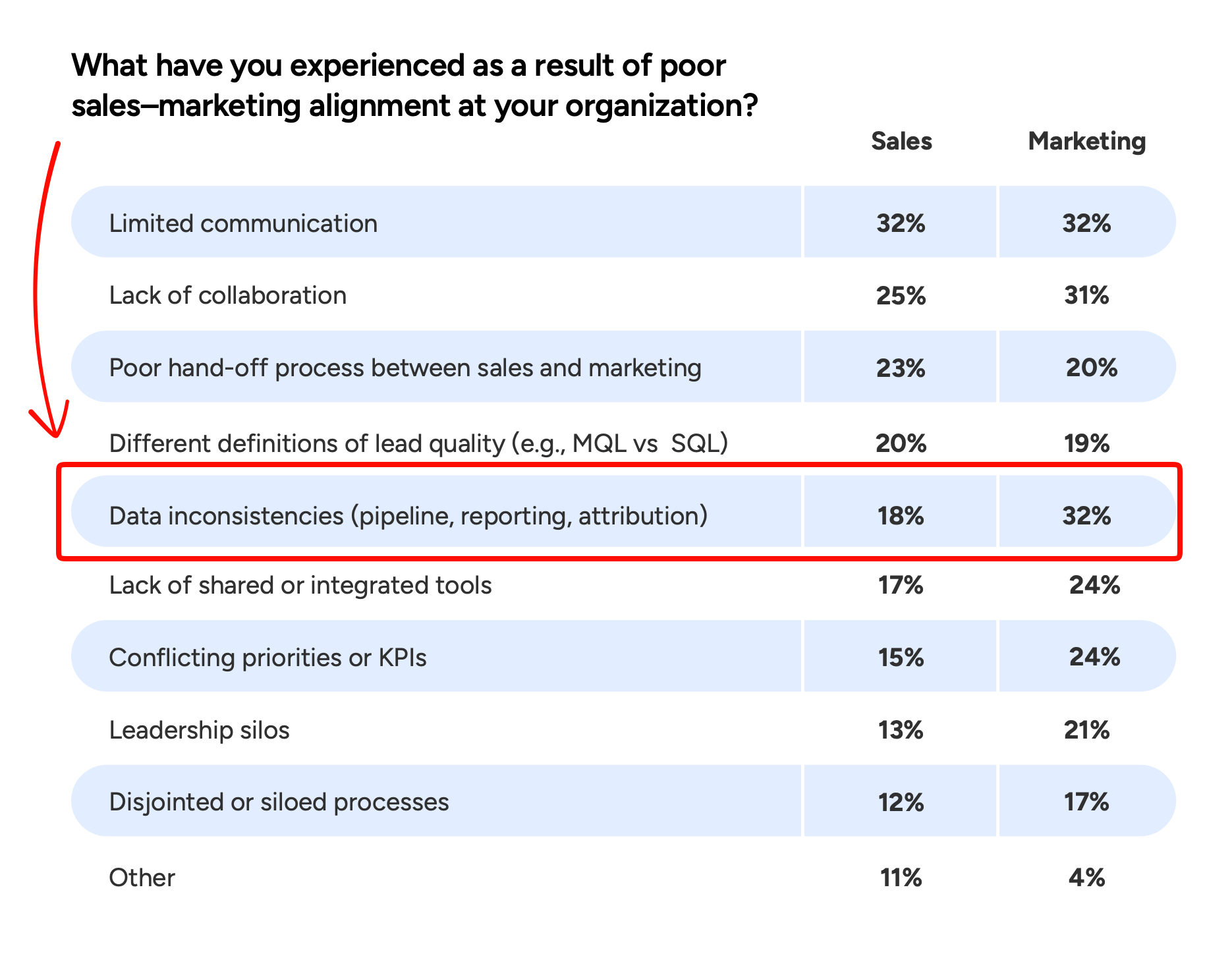
This information lag suggests that while leadership may see alignment in strategic decks and high-level planning sessions, the reality on the ground is far more fractured. Non-executives are more likely to encounter the barriers that leadership tends to underreport, including data inconsistencies (28% vs. 22%), limited cross-departmental communication (33% vs. 28%), and the presence of leadership silos (19% vs. 14%). Furthermore, there is a functional split in perception: 62% of sales professionals feel highly aligned, compared to just 53% of their counterparts in marketing. These figures highlight a structural information lag that compounds as an organization expands, often leaving those farthest from the decision-making table to deal with the fallout of broken processes.

The Economic and Operational Cost of Misalignment
Misalignment is frequently mischaracterized as a "soft" cultural issue, but the 2026 data reveals it to be a significant operational expense. When GTM functions fail to synchronize, the consequences are immediate and measurable. According to the surveyed professionals, the primary outcomes of poor alignment include:
- Employee Frustration (29%): Systemic friction leads to burnout and decreased morale, particularly when marketing efforts are ignored or sales feedback is dismissed.
- Delayed Lead Follow-up (28%): Inefficient handoff processes result in "lead decay," where prospective customers lose interest before a sales representative makes contact.
- Wasted Marketing Spend (25%): Budget is frequently allocated to campaigns that attract the wrong audience or generate leads that do not meet sales’ criteria.
- Stalled Deal Cycles (20%): A lack of messaging consistency between the initial marketing touchpoint and the sales discovery call creates confusion for the buyer, slowing down the conversion process.
The report highlights a particular pain point regarding lead quality. While 32% of marketers flag delayed follow-up as a primary concern, only 22% of sales reps share this view. Conversely, 29% of marketers cite a lack of clarity regarding target customers as a barrier, compared to 16% of sales professionals. This suggests that marketing teams often feel they are operating in a vacuum, producing volume without the necessary feedback loops to ensure quality.
Root Causes: Why Communication Frequency is Not a Panacea
A common mistake among SMB leadership is the belief that increasing the frequency of meetings will naturally lead to alignment. The report challenges this assumption, noting that 54% of GTM teams prioritize "communication frequency" as their primary alignment strategy, yet the root causes of friction are deeply embedded in the operating model rather than the meeting schedule. The report identifies four primary pillars of misalignment:
- Operational Failures (53%): Broken handoff rules and inconsistent workflows.
- Goal and Incentive Discrepancies (43%): Marketing is often incentivized by lead volume (MQLs), while sales is rewarded solely for closed revenue.
- Cultural Barriers (40%): A "us vs. them" mentality that prevents collaborative problem-solving.
- Structural Sios (34%): Organizational charts that isolate functions and prevent shared accountability.
The "MQL vs. SQL" debate remains a central point of contention. Approximately 20% of sales and 19% of marketing professionals cite differing definitions of lead quality as a major blocker. Without a shared Service Level Agreement (SLA) that defines exactly what constitutes a "qualified" lead and when it should be handed over, teams continue to work toward conflicting targets.

The Technology Paradox: Tool Bloat vs. Operational Efficiency
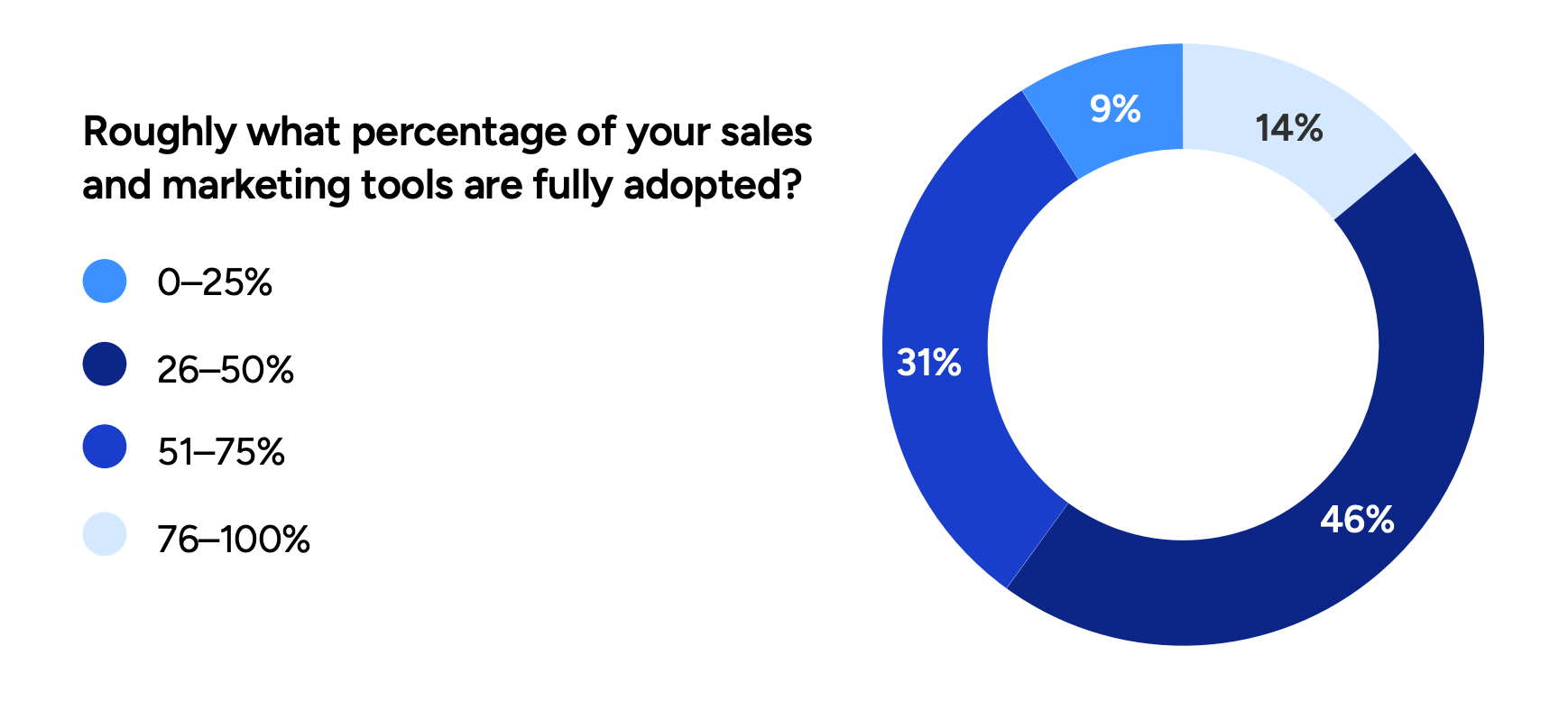
In an attempt to solve alignment issues, many SMBs have over-invested in software, leading to what industry experts call "tool bloat." The 2026 report finds that 56% of GTM professionals believe tool bloat is a significant issue within their organization. Perhaps more concerning is the lack of adoption: 60% of teams use less than half of their available technology stack.
The data reveals a stark adoption curve: 14% of teams utilize only 0-25% of their tools, while 46% utilize between 26% and 50%. This unused technology generates maintenance overhead and creates additional data silos. However, the report offers a clear path forward for high performers. Teams that have significantly consolidated their tech stacks are twice as likely to rate their lead quality as "excellent" (55% vs. 20%). Aligned teams tend to favor a leaner, more integrated approach, focusing on tools that both functions actually use, such as shared CRM platforms, unified analytics, and collaborative landing page optimization tools.
Characteristics of Highly Aligned Teams
The 56% of organizations that identify as "highly aligned" exhibit specific behaviors that set them apart from their peers. These organizations prioritize the "operating model" over the "meeting cadence."
- Data Democratization: Aligned teams are 3.5 times more likely to have strong cross-functional data sharing (59% vs. 16%). They move beyond simply "discussing" data to operating from a single source of truth.
- Messaging Consistency: These teams report significantly lower rates of messaging inconsistency (17% vs. 28%). By ensuring that marketing campaigns reflect the actual language and objections heard by sales reps on discovery calls, they create a seamless customer journey.
- Unified KPIs: High performers align their incentives. Rather than marketing chasing volume and sales chasing closes, they often share metrics like Customer Acquisition Cost (CAC) and lead-to-close conversion rates.
Strategic Recommendations: Moving the Needle in 2026
To bridge the gap, the report suggests that SMB GTM teams must move from tactical fixes to structural changes. The most impactful actions identified by the 500+ professionals surveyed include:
1. Establishing a Shared Definition of Lead Quality
Alignment begins at the top of the funnel. Buyer personas should not be a "marketing deliverable" but a joint artifact. When sales provides input on the audience definition before campaigns go live, the debate over lead quality is resolved proactively rather than reactively.
2. Formalizing the Handoff Process
A functional handoff requires three components: clear qualification criteria (who is ready to buy?), rich data transfer (what does sales need to know?), and a defined timeline (how fast must sales respond?). Currently, 36% of GTM professionals cite lead qualification and handoff as the single most important action for improving performance.
3. Unifying the Reporting Infrastructure
The report identifies CRMs, marketing automation platforms, and data integration tools as the three highest-rated alignment technologies. However, the technology is only effective if both teams agree on which key performance indicators (KPIs) matter most. Moving forward, 44% of teams are prioritizing data integration and AI-driven insights to make alignment measurable.
Broader Implications for the SMB Landscape
The findings of the 2026 Anatomy of Aligned Go-to-Market Teams report suggest that the "Smarketing" era has matured into a requirement for survival. In an increasingly competitive digital landscape, the cost of internal friction is no longer sustainable. Organizations that fail to align their sales and marketing functions face a compounding "misalignment tax" that manifests as higher acquisition costs and slower growth.
Conversely, the data proves that alignment is a competitive advantage. Teams that treat alignment as a structural operating model—focusing on shared data, leaner tech stacks, and unified incentives—are better positioned to capture demand and scale efficiently. As the report concludes, the strongest alignment moves are not found in the boardroom or on a sync call, but in the underlying systems that dictate how a lead becomes a customer. For the modern SMB, the path to revenue growth is paved with internal integration.







