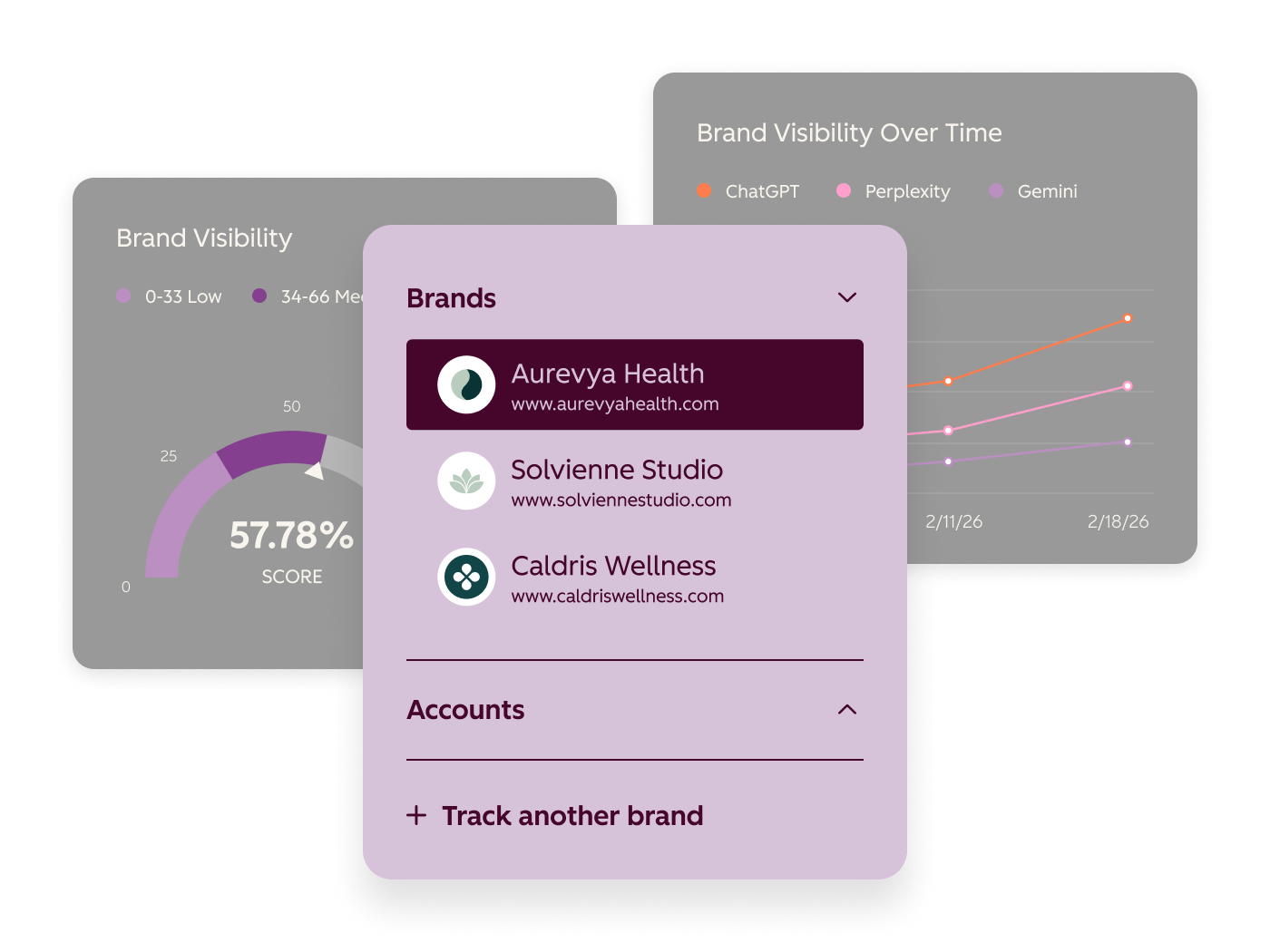
As consumer behavior rapidly shifts from traditional search engine queries to conversational AI interfaces, marketers are confronting a new imperative: understanding and optimizing their brand’s presence within these "answer engines." This fundamental change has spurred the development of specialized tools designed to track how brands appear in responses from platforms like ChatGPT, Gemini, and Perplexity. Among the leading solutions emerging in this nascent field are HubSpot AEO (Answer Engine Optimization) and Ahrefs Brand Radar, each offering distinct approaches to address the challenges and opportunities presented by AI-driven search. While both aim to provide visibility into AI answers, their design philosophies—one prioritizing workflow integration and actionability, the other focusing on data breadth and comprehensive monitoring—dictate their suitability for different organizational needs and existing technology stacks. The strategic decision between these tools hinges almost entirely on a brand’s operational requirements beyond mere data acquisition.
The Paradigm Shift in Search: From Links to Answers
The rise of generative AI has ushered in a transformative era for information retrieval. Where traditional search engines indexed and ranked web pages based on relevance and authority, AI answer engines synthesize information from various sources to provide direct, conversational answers. This shift has profound implications for how brands connect with potential customers. Users increasingly bypass conventional search results, seeking immediate, concise recommendations and insights directly from AI models. Platforms like ChatGPT, which achieved unprecedented user growth in record time, and Google’s Gemini, along with Perplexity’s focus on source attribution, underscore this evolving landscape. Industry reports indicate a significant percentage of users now rely on AI for product research, recommendations, and problem-solving, fundamentally altering the buyer journey. This necessitates a proactive approach from marketers, moving beyond traditional Search Engine Optimization (SEO) to embrace Answer Engine Optimization (AEO). AEO is not just about ranking; it’s about being accurately, positively, and prominently cited by AI, ensuring brand narratives are reflected faithfully in these new digital gatekeepers. The emphasis shifts from click-through rates to citation accuracy and sentiment.
Introducing the Contenders: HubSpot AEO and Ahrefs Brand Radar
At the forefront of this AEO revolution are HubSpot AEO and Ahrefs Brand Radar, two powerful tools designed to help brands navigate the complexities of AI visibility.
HubSpot AEO: The Workflow Integrator
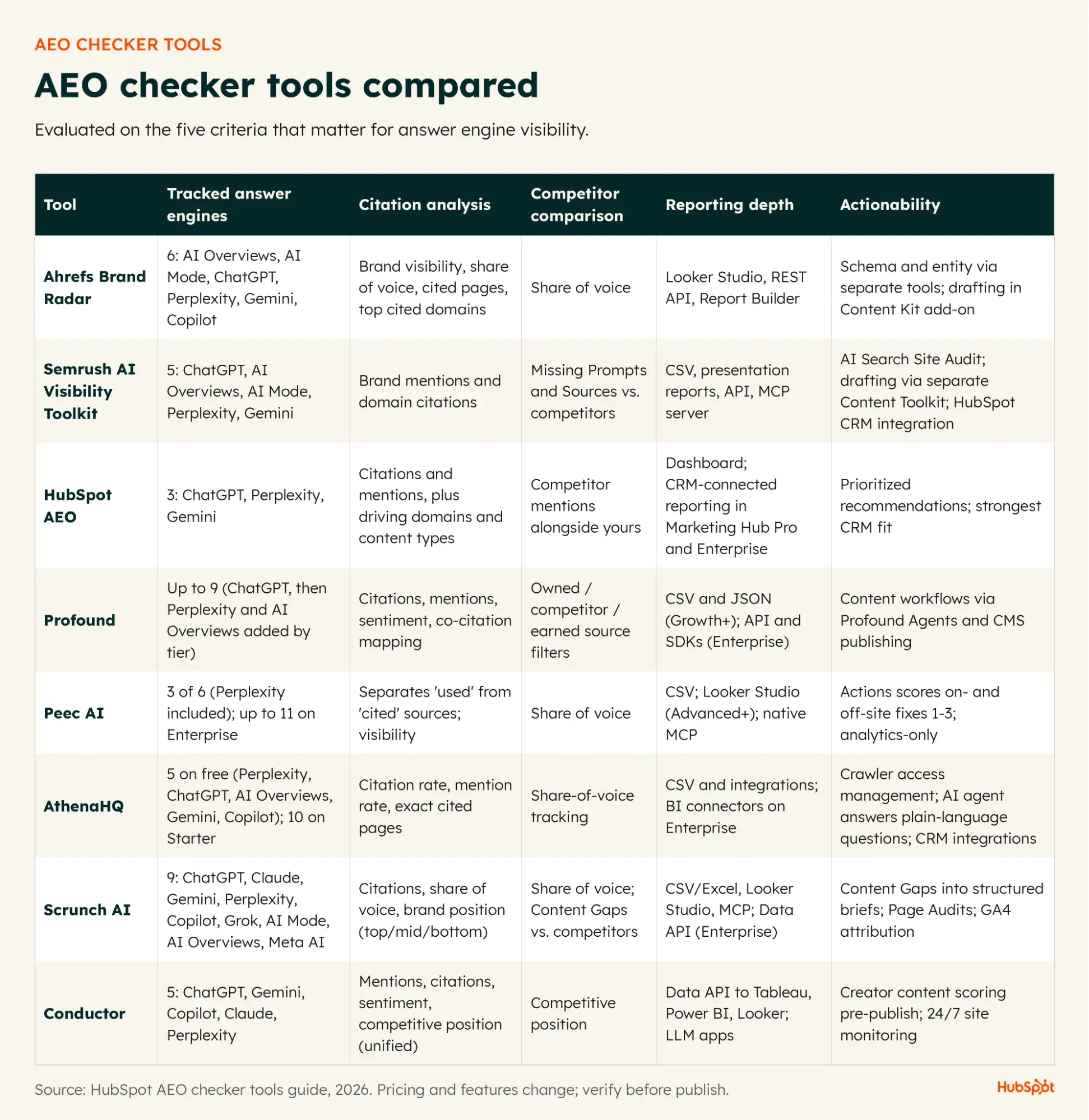
HubSpot AEO positions itself as a comprehensive solution for tracking brand visibility and sentiment across key AI platforms: ChatGPT, Gemini, and Perplexity. Its core differentiator lies in its deep integration with HubSpot’s broader marketing ecosystem. Unlike standalone monitoring tools, HubSpot AEO connects visibility data directly to content creation and campaign management workflows. When a visibility gap or an opportunity is identified—for instance, a competitor frequently appearing for a specific high-value query where the user’s brand is absent—the system doesn’t merely present data. Instead, it surfaces prioritized, actionable recommendations. This could involve suggesting the creation of a new blog post, the update of an existing landing page, or even a targeted social media campaign, all manageable within the HubSpot platform. This seamless transition from insight to execution is a significant advantage for marketing teams seeking to streamline operations and reduce friction between data analysis and content deployment. Furthermore, its connection to a brand’s CRM data is a notable feature, allowing the tool to intelligently suggest relevant prompts based on existing customer interactions, business objectives, and competitive intelligence, ensuring that tracking efforts are aligned with strategic goals from the outset.
Ahrefs Brand Radar: The Data Aggregator
Ahrefs Brand Radar, conversely, approaches AI visibility as an extension of Ahrefs’ established strengths in comprehensive data collection and robust monitoring. It boasts a broader coverage of AI platforms, tracking brand mentions across seven distinct engines: AI Overviews, AI Mode, ChatGPT, Perplexity, Microsoft Copilot, Gemini, and Grok. This expansive reach is complemented by an impressive prompt database of 406 million monthly queries, derived from real user searches rather than synthetic data, offering a vast repository of potential AI interactions. Brand Radar’s strength lies in its monitoring-first philosophy, providing detailed insights into where and how a brand is mentioned, its competitive standing, and the underlying sources driving AI citations. Beyond AI engines, it also incorporates visibility tracking on prominent social platforms like YouTube, Reddit, and TikTok (currently in beta), offering a more holistic view of brand presence across various influential digital surfaces. For teams already embedded within the Ahrefs ecosystem, Brand Radar offers a natural extension, allowing them to integrate AI visibility trends with their traditional SEO metrics, such as organic traffic, backlinks, and keyword rankings, for a unified performance overview. Its MCP server capability, allowing direct querying of Ahrefs data within AI models like Claude or ChatGPT, further caters to data-intensive workflows.
Chronology of AI Search Tool Development
The rapid evolution of generative AI, spearheaded by breakthroughs like OpenAI’s GPT models in the early 2020s, quickly transformed theoretical possibilities into tangible applications. The widespread adoption of ChatGPT following its late 2022 public release marked a critical inflection point, demonstrating the immense user appetite for conversational AI. This surge in usage immediately highlighted a new frontier for digital marketing: how to influence and monitor AI-generated answers.
In response, the concept of Answer Engine Optimization (AEO) began to solidify in 2023. Digital marketing strategists recognized that traditional SEO tools, while still vital for web search, were not equipped to analyze or influence AI responses effectively. Tool developers rapidly moved to fill this void. HubSpot, leveraging its integrated marketing platform, launched HubSpot AEO, emphasizing its workflow-centric design and CRM integration, likely in late 2023 or early 2024, as the market demand for actionable AI insights intensified. Similarly, Ahrefs, a long-standing leader in the SEO tools space, developed Brand Radar as an extension of its robust data-gathering capabilities, aiming to provide comprehensive monitoring across a wider array of AI platforms. This development trajectory underscores a reactive, yet agile, response from the industry to a rapidly changing technological landscape, with both tools emerging as key players within a very short timeframe.
Key Feature Comparison: A Detailed Analysis
The choice between HubSpot AEO and Ahrefs Brand Radar often boils down to a granular comparison of their feature sets and how they align with specific marketing objectives.
![HubSpot AEO vs. Ahrefs Brand Radar: Features compared [2026]](https://53.fs1.hubspotusercontent-na1.net/hubfs/53/hubspot-aeo-vs-ahrefs-brand-radar-1-20260805-255574.webp)
AI Engine Coverage: This is arguably the most straightforward differentiator. HubSpot AEO focuses its efforts on ChatGPT, Gemini, and Perplexity. While these three platforms account for a significant portion of current AI search volume and are highly relevant for many B2B and B2C categories, brands operating in ecosystems heavily reliant on Microsoft products might find the absence of Microsoft Copilot coverage a limitation. Ahrefs Brand Radar, by contrast, offers broader coverage across seven platforms: AI Overviews, AI Mode, ChatGPT, Perplexity, Microsoft Copilot, Gemini, and Grok. For enterprises or brands targeting specific user bases (e.g., those deeply integrated with Microsoft 365 or early adopters of X’s Grok), this wider net cast by Ahrefs can be a decisive factor, ensuring no significant AI mention goes unmonitored.
Prompt Tracking & Data Sources: The method by which each tool identifies and tracks relevant prompts also varies considerably. HubSpot AEO leverages its CRM data to suggest prompts, offering a personalized, business-contextual starting point. This means marketers aren’t beginning from a blank slate but are guided by insights into their existing customer base, competitors, and product offerings. This approach ensures prompt tracking is directly relevant to business outcomes. Ahrefs Brand Radar, on the other hand, boasts an enormous database of 406 million monthly prompts, derived from actual user search queries. This massive dataset offers unparalleled breadth, allowing for the discovery of a wider range of relevant queries. Both tools allow for custom prompt additions, though Ahrefs’ custom prompt limits vary significantly by plan, ranging from 5 prompts on its Lite plan to over 2,500 on its Enterprise standalone offering, requiring careful consideration of a brand’s scale of operations.
Citation Analysis & Sentiment: Both tools provide critical insights into how and where brands are cited by AI. HubSpot AEO’s citation analysis categorizes mentions by domain, URL, content type (blog, news, product, social), and source type (owned, competitor, third-party, social, affiliate). Crucially, it assigns a sentiment score from -100 to +100, providing immediate feedback on the qualitative nature of mentions. This quantitative sentiment analysis helps marketers understand not just if they are mentioned, but how favorably. Ahrefs Brand Radar also tracks citations across its broader set of AI platforms and integrates coverage from YouTube, Reddit, and TikTok. This social layer is a significant advantage for brand teams whose reputation and influence are heavily intertwined with social media conversations, offering a more complete ecosystem view of brand references.
Workflow Integration & Actionability: This is arguably the most significant divergence. HubSpot AEO is designed for seamless workflow integration. When a visibility gap is detected, the tool provides prioritized recommendations that can be acted upon directly within the HubSpot Marketing Hub. This means generating a content brief, drafting a blog post, or scheduling a social update can occur without leaving the platform, minimizing context switching and accelerating the "insight-to-action" cycle. Ahrefs Brand Radar, while providing robust data, requires users to integrate these insights into their existing content workflows manually. The path from identifying a gap to creating a content brief, assigning work, and tracking progress remains the responsibility of the user’s external systems. For teams with established, efficient content workflows, this might not be a dealbreaker. However, for those seeking to consolidate tools and streamline their marketing operations, HubSpot’s integrated approach offers substantial time savings and operational efficiency.
Historical Trends & Reporting: Both tools offer historical trend data, enabling marketers to track their brand’s AI visibility evolution over time. HubSpot AEO further integrates this visibility data with campaign metrics, allowing direct correlation between content pushes, AEO score improvements, and broader marketing outcomes within a single platform. Ahrefs Brand Radar, being part of the broader Ahrefs suite, allows full Ahrefs plan users to layer AI visibility trends alongside traditional SEO metrics (organic traffic, backlinks, rankings) for a holistic view of search performance, providing a comprehensive data landscape for SEO professionals.
Pricing and Accessibility: An Investment Perspective
The financial commitment for these tools presents another clear distinction, heavily influencing accessibility for different organizational sizes and budgets.
HubSpot AEO Pricing:
HubSpot AEO offers a relatively accessible entry point, starting at $50/month ($45/month with annual billing). This standalone package includes coverage for ChatGPT, Gemini, and Perplexity, comprehensive brand visibility and sentiment analysis, CRM-powered prompt suggestions, competitor and citation analysis, and prioritized recommendations. A significant advantage is its 28-day free trial, requiring no credit card, which allows marketers to test the tool with real data before committing. For those seeking a fully integrated marketing solution, HubSpot AEO is also bundled within "HubSpot for Marketers" (Marketing Hub + Content Hub), which starts at $900/month, providing a complete toolkit for campaign management, content creation, and social media. This tiered structure allows businesses to scale their investment with their needs.
Ahrefs Brand Radar Pricing:
Ahrefs Brand Radar adopts a different pricing strategy, with no free trials or discounts, requiring an upfront commitment. As a standalone product, it is considerably more expensive, with plans starting from $699/month. This standalone offering includes an Ahrefs Free account for basic SEO functionality. However, for existing subscribers, Brand Radar is bundled into full Ahrefs plans, which include various tiers. This means that for current Ahrefs users, the incremental cost of adding Brand Radar functionality is often negligible or already covered within their existing subscription. The pricing structure thus strongly favors existing Ahrefs users who are looking to expand their monitoring capabilities. For new users solely seeking an AEO solution, the standalone Ahrefs Brand Radar represents a substantially higher initial investment compared to HubSpot AEO.
Strategic Implications for Marketers
The emergence of AEO tools underscores a critical strategic shift for marketers. Brands can no longer solely rely on traditional SEO tactics to capture attention; they must actively shape their digital presence within AI answer engines. Industry analysts suggest that brands neglecting AEO risk becoming invisible to a growing segment of their audience, particularly those seeking quick, direct answers from AI.
For integrated marketing teams, tools like HubSpot AEO facilitate a holistic approach. By centralizing AI visibility data alongside other marketing efforts, teams can ensure consistent brand messaging and optimize content across all touchpoints. This fosters a more agile and responsive content strategy, where insights from AI answers directly inform content creation and distribution.
For specialized SEO agencies or data-intensive marketing departments, Ahrefs Brand Radar’s extensive data coverage and platform breadth offer a powerful advantage. These teams often have sophisticated internal workflows and are adept at synthesizing data from multiple sources. Brand Radar provides the raw, comprehensive data they need to perform deep competitive analysis, identify emerging trends across numerous AI platforms, and integrate these insights into their existing, often complex, SEO strategies. This capability ensures that no stone is left unturned in understanding the complete AI search landscape.
![HubSpot AEO vs. Ahrefs Brand Radar: Features compared [2026]](https://no-cache.hubspot.com/cta/default/53/9dd5e54b-fbef-4dd0-bc44-1689feb1ea18.png)
Addressing Specific Use Cases: When to Choose Which Tool
The ultimate decision between HubSpot AEO and Ahrefs Brand Radar hinges on a brand’s specific needs and existing operational framework.
For Monitoring Only: If the primary objective is to gain comprehensive visibility into how a brand appears across a wide array of AI platforms, track competitors, and obtain reliable citation data without necessarily overhauling existing content workflows, Ahrefs Brand Radar is often the superior choice. Its seven-platform coverage and vast prompt database provide an unmatched breadth of monitoring capabilities, especially beneficial for organizations already invested in the Ahrefs ecosystem.
For Monitoring Plus Execution: When the requirement extends beyond mere monitoring to include a streamlined path from insight to action—transforming a detected visibility gap into a published piece of content or a campaign—HubSpot AEO stands out. Its seamless workflow integration, CRM-powered prompt suggestions, in-platform content creation, and connected campaign metrics are specifically designed for this "monitoring plus execution" use case. For teams aiming for fewer tools in their stack and greater operational efficiency, HubSpot’s integrated approach offers a compelling advantage.
For Multiple Brands or Regions: Managing AI visibility across multiple brands, distinct markets, or diverse competitive sets presents a heavier use case. HubSpot AEO’s pricing is typically per account, necessitating discussions with sales for multi-brand configurations. Ahrefs Brand Radar’s Enterprise plan, starting at a higher price point with custom limits, is tailored for such complex requirements. In these scenarios, direct consultation with both vendors is advisable to ascertain specific volume capabilities and bespoke pricing.
Emerging Landscape: Alternative AEO Solutions
The AEO market is dynamic, with other players also vying for attention. Profound targets enterprise-level AEO with advanced analytics and attribution tracking, suitable for large organizations requiring executive-level reporting across diverse markets. The Semrush AI Toolkit offers a low-friction option for existing Semrush users, integrating AI visibility into their established SEO workflow, though its coverage and depth are still evolving. Otterly.ai provides a lighter-weight, standalone prompt monitoring solution, serving as an accessible entry point for teams exploring AEO without a full platform commitment. This diverse ecosystem highlights the growing importance and specialization within the AEO domain, offering solutions for various scales and requirements.
Measuring Success in the AI Era: ROI and Attribution
Measuring the Return on Investment (ROI) from AEO is crucial for justifying its adoption. Key metrics typically include improvements in brand visibility score over time, increased share of voice relative to competitors, AI-driven traffic (attributable via UTM tags or referral data), and enhanced lead quality if AI-sourced leads are integrated into the sales pipeline.
HubSpot AEO offers a distinct advantage in ROI measurement due to its inherent integration. By housing AEO data alongside campaign and CRM data, marketers can directly trace a visibility improvement back to a specific content change and observe its downstream impact on lead generation and pipeline progression. This closed-loop attribution simplifies the process of demonstrating AEO’s value. With Ahrefs Brand Radar, while comprehensive visibility data is provided, the responsibility for building out this attribution model and correlating it with broader business outcomes typically falls to the user, requiring additional data consolidation and analysis.
Understanding which AI engines matter most is also paramount for effective AEO. While ChatGPT, Gemini, and Perplexity dominate for many B2B categories, brands should conduct an internal audit of their audience’s AI search habits. For instance, if a target audience heavily utilizes Microsoft Copilot (common in enterprise software or productivity tools), Ahrefs Brand Radar’s inclusion of Copilot coverage becomes a critical advantage. Similarly, for brands whose buyers frequently encounter AI Overviews or AI Mode within Google’s traditional search interface, Ahrefs’ broader coverage can be more impactful.
Operationalizing AEO within existing content workflows is the final piece of the puzzle. This involves consistently tracking relevant prompts, identifying visibility gaps, and establishing clear ownership for acting on these insights. For HubSpot users, the workflow is largely pre-built: CRM-powered prompt suggestions, in-platform content creation, and connected metrics ensure a tight, efficient loop. For Ahrefs users, the approach might involve integrating Brand Radar data into regular content planning meetings or dedicating monthly sprints to address citation-building and content optimization based on AI insights. Regardless of the tool, robust competitive intelligence remains a vital input, guiding where to focus efforts—whether on developing owned content, earning third-party mentions, or enhancing social media presence to influence AI answer generation.
In conclusion, the emergence of HubSpot AEO and Ahrefs Brand Radar marks a pivotal moment in digital marketing, reflecting the seismic shift towards AI-driven information consumption. While both tools are instrumental in navigating this new landscape, their fundamental differences in workflow integration versus data breadth necessitate a careful evaluation based on a brand’s unique operational style, existing technology stack, and strategic AEO objectives. The choice ultimately determines not just how brands monitor their AI presence, but how effectively they can act upon those insights to shape their narrative in the age of conversational AI.