Ammar Sabilarrohman

The global digital marketing landscape has reached a critical juncture where the rising costs of customer acquisition (CAC) are forcing enterprises to shift their focus from raw traffic generation to the maximization of existing visitor value. Conversion Rate Optimization (CRO), once viewed as a secondary tactic involving minor aesthetic adjustments, has evolved into a sophisticated, data-driven discipline essential for maintaining profitability. Industry experts, including Josh Gallant of the organic growth firm Backstage SEO, emphasize that a robust CRO strategy is no longer optional but a fundamental requirement for businesses seeking to stabilize their return on investment (ROI) amidst volatile advertising markets.
The Fundamental Shift: From Guesswork to Systematic Optimization
Modern conversion rate optimization is defined as a systematic, ongoing process of improving a website’s ability to turn passive visitors into active customers. This transition marks a departure from the historical "trial and error" method, where marketing teams frequently changed button colors or headline phrasing based on subjective preferences. In 2025, the industry standard for CRO involves a structured roadmap that identifies specific conversion barriers and implements data-backed solutions.
The economic logic behind this shift is compelling. For many businesses, a marginal increase in conversion rates—even by as little as one percent—can translate into thousands of dollars in additional monthly revenue without necessitating a corresponding increase in advertising spend. This compounding effect allows companies to "fix the holes" in their marketing funnel, ensuring that the capital invested in traffic generation through SEO and PPC is not wasted on inefficient landing pages.
The Evolution of CRO: A Brief Chronology
The trajectory of conversion optimization has moved through several distinct phases over the last two decades:
- The Aesthetic Era (2000s–2010s): Optimization was largely focused on visual elements and "best practices" that were often applied without specific data.
- The Analytics Boom (2015–2020): The rise of tools like Google Analytics and Hotjar allowed marketers to see what users were doing, leading to more informed testing.
- The Holistic Experience Era (2020–Present): CRO now integrates user psychology, qualitative feedback, and sophisticated A/B testing frameworks. It is treated as a permanent component of the marketing stack rather than a one-off project.
Phase I: Establishing Measurable Conversion Frameworks
A successful CRO strategy begins with the rigorous definition of conversion actions, categorized into macro and micro goals. Macro conversions represent the primary business objectives, such as a completed purchase or a qualified lead submission. Micro conversions, conversely, are the incremental steps that indicate engagement, such as newsletter signups, video views, or "add to cart" actions.
Experts argue that these goals must be aligned with the specific stage of the customer journey. A first-time visitor to a blog post is statistically unlikely to commit to a high-value purchase immediately. Therefore, optimizing that page for a micro-conversion, such as a lead magnet download, is a more strategic use of the traffic than pushing for a direct sale. This alignment ensures that the optimization efforts respect the natural progression of user intent.

Phase II: Data Acquisition and Behavioral Analysis
The second pillar of a modern CRO strategy is the integration of quantitative and qualitative data. Analysts typically begin by auditing platforms like Google Analytics 4 (GA4) to identify high-traffic pages with disproportionately high bounce rates. These "drop-off points" serve as the primary targets for optimization.
To move beyond the "what" and into the "why," organizations are increasingly deploying behavioral mapping tools. These include:
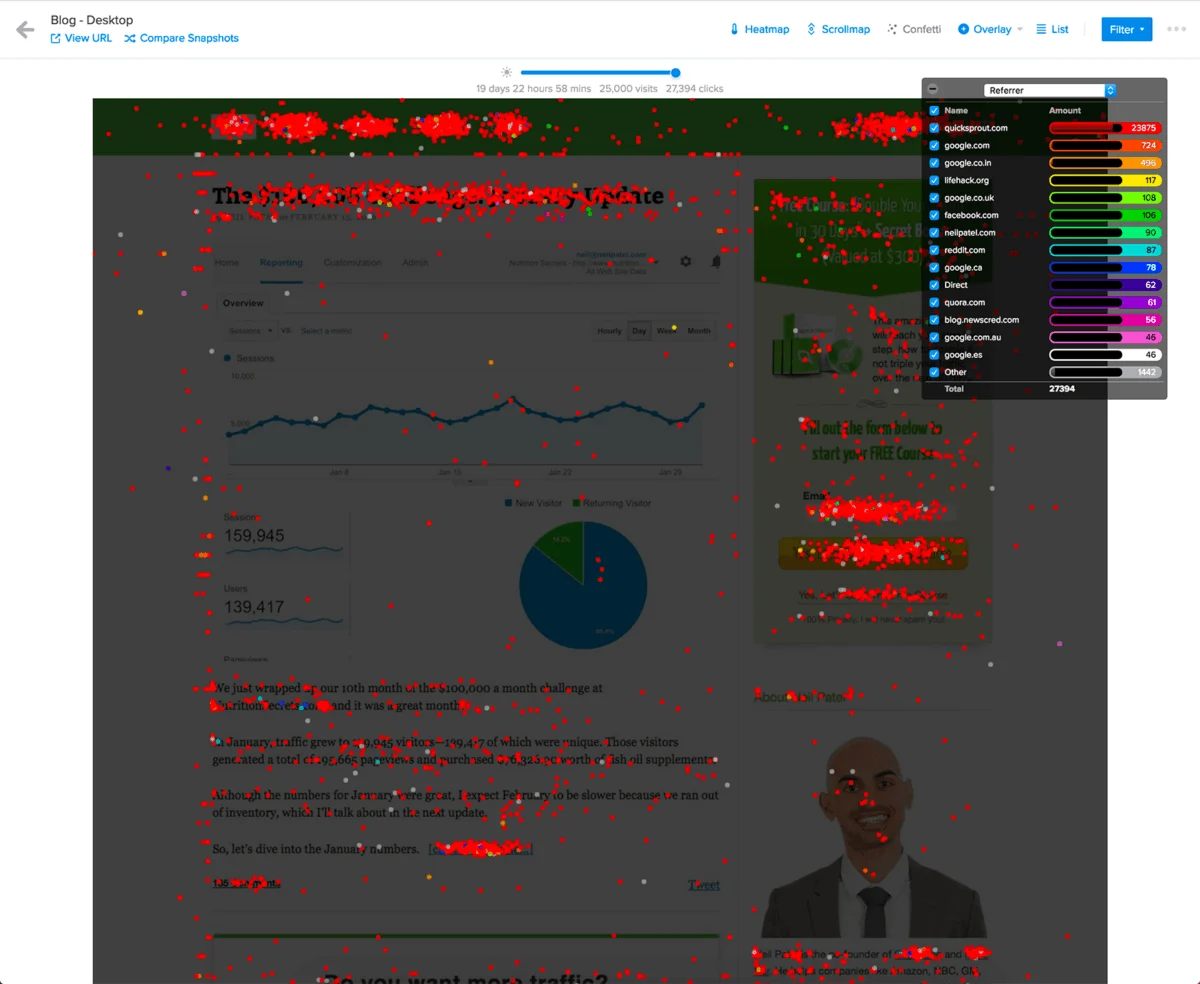
- Heatmaps: Visual representations of where users click, scroll, and move their cursors, highlighting areas of high interest or total neglect.
- Session Recordings: Real-time playbacks of user sessions that reveal "rage clicks" or moments of confusion where a user may be struggling with a navigation menu or form field.
- Voice of Customer (VoC) Data: Qualitative insights gathered through on-site surveys, exit-intent polls, and customer support transcripts. This data provides context regarding the emotional or practical barriers that numbers alone cannot capture.
Phase III: Prioritization of High-Impact Assets
Given that marketing resources are finite, prioritization is essential. Most professional CRO teams utilize frameworks such as ICE (Impact, Confidence, Ease) or PIE (Potential, Importance, Ease) to rank their testing backlog.
High-Intent Pages
The most immediate gains are often found on pricing and checkout pages. Friction on these pages—such as hidden shipping costs, mandatory account creation, or a lack of trust signals—directly results in abandoned carts. Data suggests that adding simple elements like money-back guarantees or security badges can significantly reduce anxiety at the point of purchase.
Information-Dense Pages
For SaaS and B2B service providers, product and core service pages are the primary conversion battlegrounds. Optimization here focuses on clarity of value proposition and the removal of technical jargon. Industry benchmarks indicate that while a standard page might convert at 2-3%, a highly optimized, benefit-driven landing page can achieve rates exceeding 15%.
Phase IV: Rigorous Testing and Statistical Significance
The core of any CRO strategy is A/B testing, where two versions of a page are shown to different segments of visitors to determine which performs better. However, a common pitfall in the industry is the premature termination of tests.
For a test to be valid, it must reach a threshold of statistical significance—typically 95% or higher. This ensures that the observed results are not due to random chance. Experts recommend running tests for at least two full business cycles (usually two weeks) to account for fluctuations in traffic patterns, such as weekend versus weekday behavior. If a site lacks the traffic volume to reach significance on macro-conversions, practitioners often shift their testing focus to higher-funnel actions like button clicks to gather data more quickly.

Phase V: Developing a Culture of Experimentation
The final stage of a mature CRO strategy is its integration into the organizational culture. Leading digital firms no longer view optimization as a quarterly task. Instead, they maintain a continuous "loop" of testing:
- Analyze: Reviewing data to find new opportunities.
- Hypothesize: Creating a theory on what will improve the page.
- Test: Running the experiment.
- Learn: Documenting the results, whether the test won or lost.
- Implement: Applying the winning version and moving to the next test.
This real-time approach is particularly vital for e-commerce businesses running time-sensitive promotions. By establishing a shared knowledge base of past experiments, companies prevent "institutional amnesia," ensuring that failed concepts are not repeatedly tested and that winning strategies are scaled across the entire digital ecosystem.
Industry Benchmarks and Economic Implications
Data from the 2024-2025 Conversion Benchmark Report indicates that the universal average conversion rate across all industries is approximately 6.6%. However, this figure is highly variable. E-commerce sites typically see product page conversions between 1% and 3%, while specialized B2B landing pages often average between 3% and 5%.
The broader impact of CRO extends beyond immediate revenue. When a website is optimized for user experience, it builds long-term brand trust. A seamless, intuitive interface signals professional reliability, which can influence a customer’s decision to return even if they do not convert on their initial visit. Furthermore, high conversion rates allow for more aggressive bidding in PPC auctions; if a company converts traffic at a higher rate than its competitors, it can afford to pay more per click while remaining profitable.
Conclusion: The Future of Optimization
As artificial intelligence and machine learning become more prevalent, the future of CRO is moving toward hyper-personalization. Future strategies will likely involve dynamic content that adjusts in real-time based on a visitor’s past behavior, geographic location, and referral source.
Ultimately, the most successful organizations in the coming years will be those that treat their website as a living laboratory. By moving away from subjective "guesses" and toward a disciplined, data-driven strategy, businesses can insulate themselves from the rising costs of the attention economy and build a sustainable engine for growth. The transition from a "leaky bucket" to a high-efficiency conversion machine is the defining challenge—and opportunity—for digital marketers in 2025.


 Siti Muinah
 Nana