

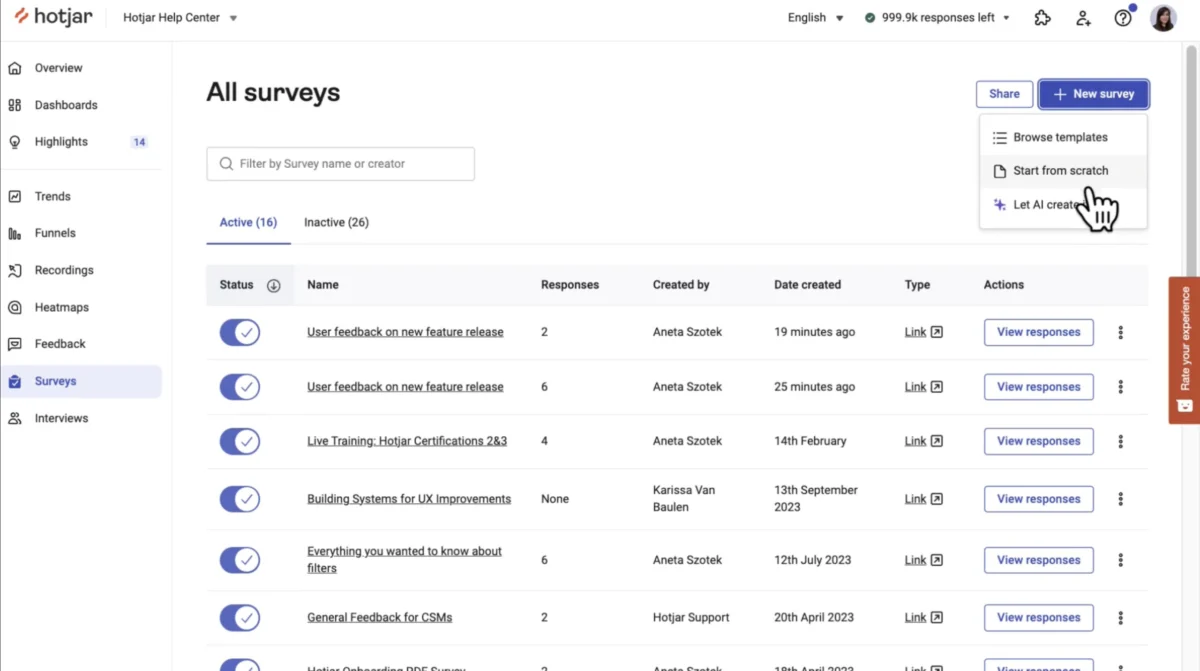
The digital experience intelligence (DXI) market is undergoing a significant transformation as organizations shift from simple behavioral tracking to integrated Voice of Customer (VoC) strategies. At the center of this evolution are two prominent players: Pulse, a specialized feedback tool integrated within the VWO AB Tasty ecosystem, and Hotjar, a pioneer in behavior analytics that has recently completed a full-scale merger with enterprise giant Contentsquare. While both platforms offer a suite of tools designed to bridge the gap between user action and user intent, their technical architectures, mobile capabilities, and ecosystem integrations have diverged, forcing product teams to make more nuanced choices based on their specific technical stacks and research objectives.
The Shifting Landscape of User Feedback and Experience Analytics
For years, the industry standard for understanding web traffic relied on quantitative data—knowing that a user dropped off at a checkout page was common, but knowing why remained elusive. This led to the rise of two distinct methodologies: behavioral analytics (heatmaps and session recordings) and qualitative feedback (surveys and polls). Hotjar historically dominated the former, while tools like Pulse have emerged to perfect the latter, specifically by tying feedback directly to the experimentation and personalization loop.
The recent completion of the Hotjar-Contentsquare merger in July 2025 marks a pivotal moment in this chronology. Hotjar, once the go-to independent tool for small-to-mid-sized businesses, is now a modular component of a much larger enterprise suite. This transition has shifted its pricing and product structure, moving away from an all-in-one bundle toward a tiered, modular system comprising Experience Analytics, VoC, and Product Analytics. Conversely, Pulse has strengthened its position by embedding itself into the VWO AB Tasty full-stack platform, focusing on a seamless transition from qualitative insight to live A/B testing.
Chronology of Development and Market Consolidation
To understand the current state of these tools, one must look at the timeline of their development. Hotjar was founded in 2014 and quickly became the market leader for visual behavioral data. Its acquisition by Contentsquare in 2021 was intended to bring Hotjar’s accessibility to Contentsquare’s enterprise-grade technology. By July 2025, the integration reached its final stage, where Hotjar ceased to exist as a standalone signup entity, fully merging its backend and interface into the Contentsquare environment.
Pulse, meanwhile, was developed as a direct response to the "silo problem" in product management. Product teams often found that feedback collected in one tool (like SurveyMonkey or Typeform) was difficult to act upon in their testing tools. As part of the VWO AB Tasty platform—which serves over 3,000 businesses—Pulse was designed to ensure that a user’s "Voice of Customer" response could immediately trigger a personalized experience or a corrective experiment without the need for manual data exports or complex API integrations.

Technical Architecture and Platform Capabilities
The core difference between Pulse and Hotjar begins at the infrastructure level, particularly regarding mobile support and event triggering.
Native Mobile vs. Web-First Approaches
Pulse has established a clear lead in the native mobile space. It provides comprehensive support for iOS and Android, as well as cross-platform frameworks including React Native and Flutter. This is achieved through a dedicated SDK that allows for in-app micro-surveys that feel like native components of the application.
Hotjar’s surveys, while robust on the web, are primarily optimized for mobile browsers (mobile web) rather than native application environments. While Hotjar offers some workarounds for mobile apps, it lacks the deep, native SDK integration that Pulse utilizes to capture feedback within the app’s internal logic and screen-level events. For companies where a native mobile app is the primary revenue driver, this distinction is often the deciding factor.
Targeting, Triggers, and the "No-Code" Divide
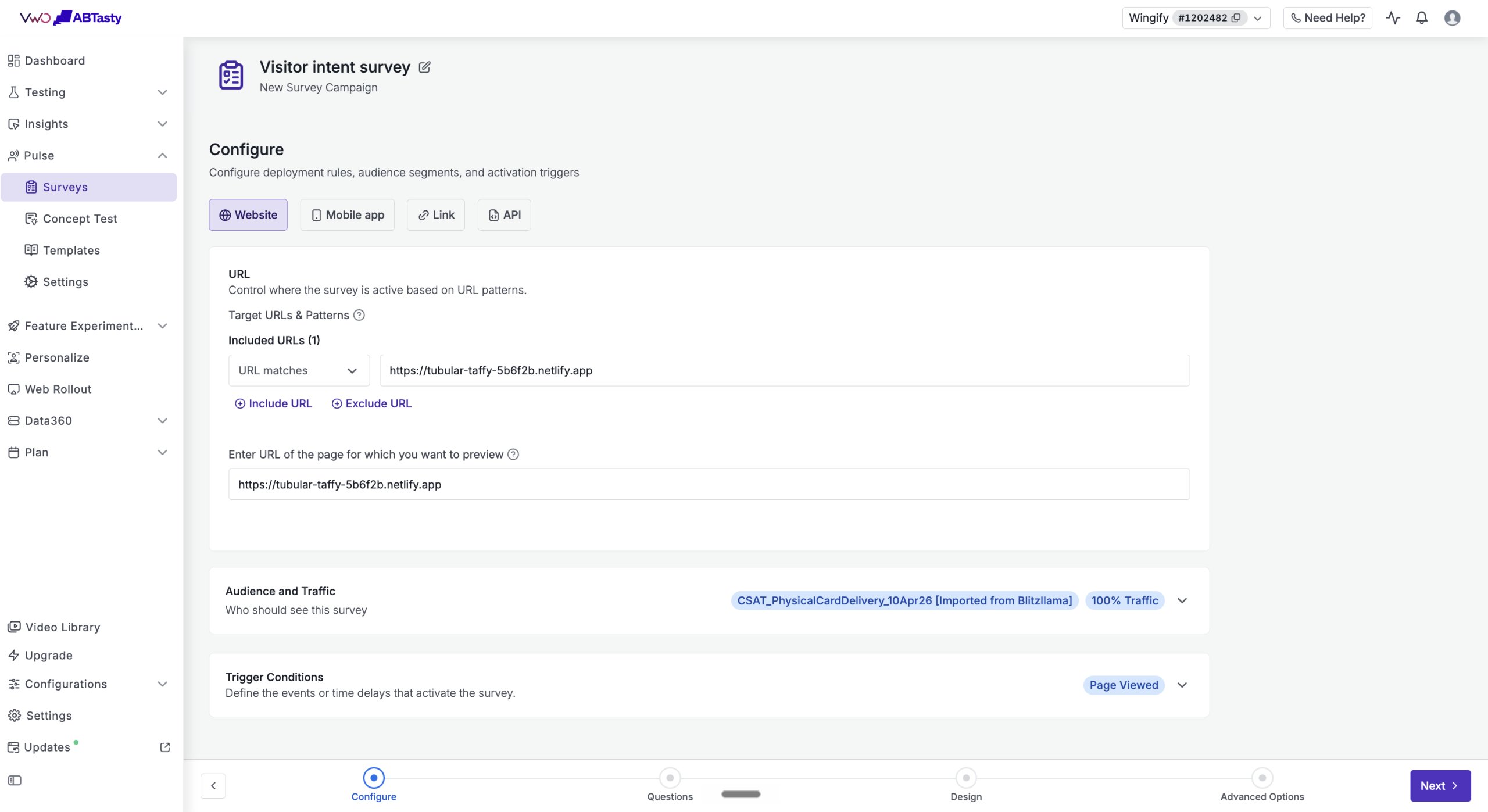
Both platforms offer sophisticated targeting, but the implementation differs. Pulse emphasizes a "no-code" philosophy for triggers. It allows teams to segment users based on behavioral attributes (e.g., "users who have spent more than 3 minutes on the pricing page") and trigger surveys based on custom events without developer intervention once the initial snippet is installed.
Hotjar utilizes a similar logic via its Identify API and URL targeting. However, its more advanced event-based triggers frequently require a developer to set up the Events API. While this provides high levels of precision, it can create a bottleneck for marketing and product teams who need to deploy research campaigns quickly.
The Role of Artificial Intelligence in Feedback Synthesis
In 2024 and 2025, both platforms integrated Large Language Models (LLMs) to handle the massive amounts of qualitative data generated by open-ended survey questions.

Pulse’s AI analysis is laser-focused on the feedback layer. It automatically categorizes thousands of responses into themes and sentiment scores. For example, if a company receives 500 responses about a checkout error, Pulse’s AI will group these, assign a "negative" sentiment, and summarize the core friction point into an actionable brief.
Hotjar’s AI, bolstered by Contentsquare’s technology, takes a broader approach. Its AI covers not just survey summaries but also session replay analysis. It can "watch" hundreds of recordings and provide a summary of where users are struggling, effectively combining behavioral data with sentiment data. This broader scope is beneficial for teams that want a holistic view of the "Experience Gap," though it may lack the granular feedback-specific depth found in Pulse’s specialized AI.
Data Analysis: Pricing Models and User Volume
The financial implications of choosing one tool over the other have changed significantly following the Hotjar merger.
- Pulse Pricing: Pulse typically operates on a Monthly Tracked User (MTU) model. This is advantageous for teams that want predictable costs based on their actual audience size. Because it is part of the VWO AB Tasty suite, it often comes as part of a larger package that includes A/B testing and heatmaps (via the Insights module), providing a consolidated "all-you-can-research" experience.
- Hotjar Pricing: Hotjar maintains a free tier, which remains highly attractive for startups and small projects. However, its new modular pricing means that the VoC features (surveys), Experience Analytics (heatmaps), and Product Analytics (funnels) are now separate line items. For enterprise-level users, this can lead to a higher total cost of ownership as they scale across multiple modules.
Strategic Implications and Official Positioning
Industry analysts suggest that the choice between Pulse and Hotjar should be dictated by the "Action Loop" of the organization.
The Case for Pulse:
Pulse is positioned as a "Discovery-to-Action" tool. Official statements from the VWO AB Tasty team emphasize the platform’s ability to reduce "tool sprawl." When a user provides feedback through Pulse, that data is immediately available in the platform’s experimentation engine. If a user reports that a specific promotion is confusing, the marketing team can immediately exclude that user segment from the promotion or show them a clarified version of the text in real-time.
The Case for Hotjar:
Hotjar remains the gold standard for "Continuous Discovery." With the addition of the "Engage" module, which provides access to a pool of over 200,000 testers for moderated interviews, Hotjar has moved beyond being just a software tool; it is now a research partner. For teams that prioritize deep usability testing and moderated research alongside their automated surveys, Hotjar offers a more comprehensive suite of human-centric research tools.
Broader Impact on Product Management Workflows
The competition between these two platforms highlights a broader trend in software development: the move toward "Experience Optimization." Product managers are no longer satisfied with knowing what happened; they are increasingly required to prove that they understand the why and have a plan to fix it.
Pulse’s integration into a full-stack optimization platform reflects the needs of "Growth Teams" who operate in fast-paced environments where speed-to-insight is the primary metric. Hotjar’s merger into Contentsquare reflects the needs of "UX Research Teams" and "Enterprise Analysts" who require high-fidelity data across every possible touchpoint, including complex multi-step funnels and retention cohorts.
Conclusion: Making the Strategic Call
As organizations finalize their tech stacks for the coming fiscal years, the Pulse vs. Hotjar debate serves as a microcosm of the larger build-vs-buy and specialist-vs-generalist struggle in SaaS.
Hotjar, as part of Contentsquare, offers a sprawling, powerful ecosystem capable of mapping every click and every emotion across a global enterprise. It is the choice for teams that need a "source of truth" for all user behavior and are willing to navigate a modular, enterprise-focused pricing structure.
Pulse, as part of VWO AB Tasty, offers a streamlined, high-velocity feedback loop that is uniquely optimized for native mobile apps and direct experimentation. It is the choice for teams that view feedback not as a standalone report, but as the raw material for their next A/B test.
Ultimately, the decision rests on whether a team values the breadth of a total experience platform (Hotjar/Contentsquare) or the integrated agility of a feedback-to-experimentation loop (Pulse/VWO). Both tools have evolved far beyond their original "feedback box" origins, becoming sophisticated engines of customer-centric growth.







