

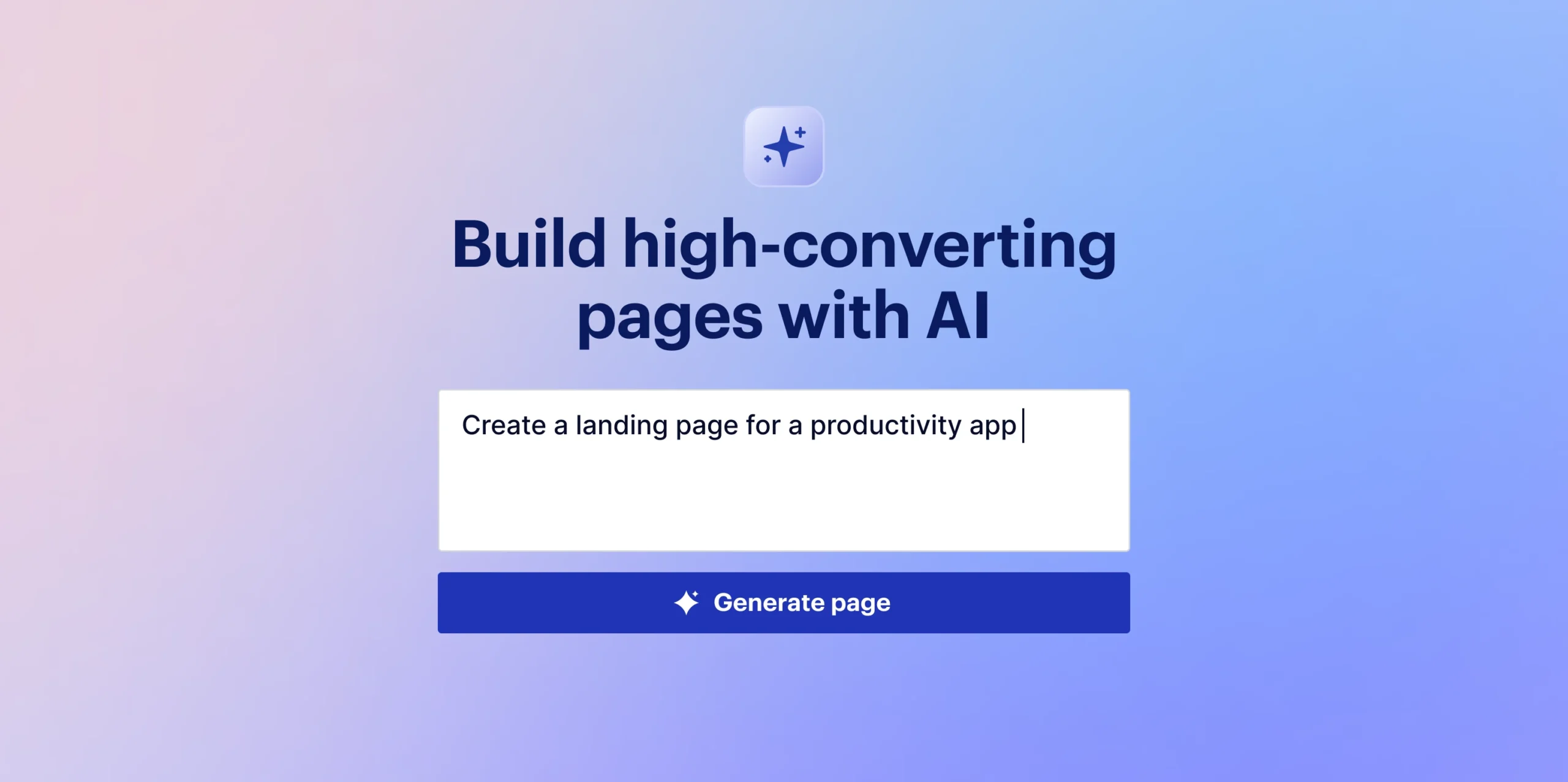
Instapage, a long-standing leader in landing page technology and conversion rate optimization (CRO), has officially announced the transition of its service suite into a fully integrated, end-to-end AI-powered marketing platform. This strategic evolution represents a significant shift for the company, which has spent over a decade refining its reputation as the industry’s premier landing page builder. By embedding advanced artificial intelligence across every stage of the digital marketing lifecycle—from initial page conception to automated lead follow-up—Instapage aims to address the growing demand for efficiency in an era of tightening marketing budgets and leaner operational teams.
The core of the announcement centers on a new wave of AI-driven tools designed to eliminate the friction typically associated with scaling digital campaigns. These features include AI-generated landing pages, automated AI email sequences, and AI Collections, all hosted within a unified environment. The company’s objective is to move beyond "bolted-on" AI features, common in many software-as-a-service (SaaS) products, to create a seamless workflow where data and design flow between tools without the need for manual exports or third-party integrations.
A Decade of Evolution: From Builder to Ecosystem
To understand the significance of this transition, it is necessary to examine the historical trajectory of Instapage within the MarTech (Marketing Technology) landscape. Founded in 2012, Instapage entered the market at a time when creating high-converting landing pages required significant technical expertise or the involvement of dedicated web development teams. The company disrupted this space by introducing a "pixel-perfect" drag-and-drop builder that allowed non-technical marketers to create aesthetically pleasing and functional pages.
By the mid-2010s, Instapage expanded its focus from simple page building to a broader CRO and marketing suite. This expansion included the introduction of personalization features, heatmaps, A/B testing, and sophisticated analytics. This evolution allowed the company to help thousands of businesses scale their digital presence without necessarily increasing their headcount. The current shift toward AI represents the third major era of the company’s history, moving from a manual tool to an automated suite, and finally to an intelligent, self-optimizing platform.
The Technical Framework of AI-Powered Page Generation
One of the primary challenges identified by Instapage is the "blank page syndrome"—the psychological and operational hurdle of starting a new campaign from scratch. The company’s new AI page generation tool seeks to solve this by allowing users to input a description of their desired outcome, audience, and value proposition. In seconds, the system generates a complete, conversion-ready page, including tailored messaging and an optimized layout.
Unlike many standalone AI generators that produce static or difficult-to-edit outputs, Instapage has integrated its AI with its legacy visual builder. This hybrid approach addresses a common pain point in the industry: the inefficiency of "prompt-based" design. In many AI tools, if a user wishes to change a single section or adjust a layout, they must often regenerate the entire page, consuming additional tokens and time. Instapage’s model allows for the initial AI generation to serve as a foundational layer, which the user can then refine manually using the drag-and-drop interface. This ensures that creative control remains with the marketer while the heavy lifting of initial design and copywriting is handled by the algorithm.
Bridging the Gap with AI-Powered Email Automation
The platform’s expansion into AI-powered email represents a strategic move to capture the full lead lifecycle. Historically, marketers have been forced to "stitch together" various platforms—using one tool for landing pages, another for email automation, and a third for AI-assisted copywriting. This fragmentation often leads to data silos, where lead information is not updated in real-time across platforms, resulting in delayed or irrelevant follow-ups.
Instapage’s new AI email generator is designed to function as an immediate extension of the landing page experience. When a lead is captured on an Instapage-hosted site, the platform can automatically trigger a follow-up email sequence. These emails are not generic templates; the AI uses the context of the landing page and the specific audience segment to craft messaging that is timely and relevant. Users can specify the goal of the email, the desired tone, and the length, allowing the AI to generate professional-grade copy that aligns with the brand’s voice. This integration is intended to reduce the "leakage" in the marketing funnel that occurs when teams lose momentum between lead capture and lead nurturing.
Supporting Data and Industry Trends
The shift toward AI-integrated platforms is supported by broader trends in the global marketing industry. According to industry reports from 2023 and 2024, the AI in marketing market is projected to grow at a compound annual growth rate (CAGR) of over 25% through 2030. This growth is driven by the necessity for hyper-personalization at scale, a feat that is physically impossible for human teams to achieve manually across thousands of unique visitors.

Furthermore, internal data from CRO platforms suggests that personalized landing pages can increase conversion rates by as much as 200% compared to generic pages. However, the cost of creating these personalized experiences has traditionally been prohibitive. By utilizing AI to generate these variations, Instapage is effectively lowering the barrier to entry for high-level CRO.
In the current economic climate, where marketing departments are often tasked with achieving higher targets with fewer resources, the efficiency gains of AI are paramount. Data indicates that AI-assisted content creation can reduce the time spent on initial drafts by up to 70%, allowing marketing managers to focus on high-level strategy rather than tactical execution. Instapage’s focus on an "all-in-one" platform also addresses "SaaS fatigue," where companies are looking to consolidate their tech stacks to reduce costs and improve data security.
Strategic Implications and Competitive Landscape
The move by Instapage places it in direct competition with other major players in the MarTech space, such as HubSpot, Unbounce, and Leadpages. While many of these competitors have also introduced AI features, Instapage’s differentiator lies in its "pixel-perfect" design heritage and its focus on the entire conversion funnel rather than just the top-of-funnel lead generation.
Industry analysts suggest that the "consolidation" phase of MarTech is now in full swing. Platforms that can offer a unified data layer—where the AI "knows" what happened on the landing page and uses that knowledge to inform the email and the next experiment—will have a distinct advantage over fragmented tools. Instapage’s AI Collections and experimentation features are designed to create a feedback loop: the AI identifies which page elements are performing best and suggests optimizations for future campaigns, effectively creating a self-improving marketing engine.
Official Responses and Market Positioning
While the company has emphasized the speed and ease of its new tools, it has also maintained a focus on professional standards. In communications regarding the release, the company noted that AI is intended to empower, not replace, the marketer. The goal is to provide "full creative control" from the moment a page is generated. This positioning is a response to concerns within the creative industry that AI-generated content can often feel "soulless" or "generic." By keeping the pixel-perfect builder at the center of the workflow, Instapage is betting that marketers still want the ability to "tweak" and "perfect" the AI’s output.
The company has also addressed the technical rollout of these features, noting that select AI capabilities are currently in beta. This gradual rollout is a common practice in the SaaS industry, allowing the company to gather user feedback and refine the algorithms before a global release. This cautious approach is particularly important in marketing, where errors in AI-generated copy or broken layouts can have a direct impact on a client’s revenue and brand reputation.
Broader Impact on Digital Marketing Workflows
The implications of an end-to-end AI marketing platform extend beyond mere convenience. It represents a fundamental change in how marketing teams are structured and how they operate. In a traditional workflow, a campaign might take weeks to move from concept to launch, requiring coordination between copywriters, designers, and developers. With the integration of AI page and email generation, this timeline can potentially be compressed into a single afternoon.
This acceleration of the "time-to-market" allows businesses to be more reactive to market trends and consumer behavior. For example, a company could launch a dedicated landing page and follow-up sequence in response to a sudden news event or a competitor’s move within hours. This level of agility was previously reserved for large enterprises with massive internal agencies; now, it is becoming accessible to mid-sized businesses and lean startups.
As AI continues to permeate the marketing sector, the focus will likely shift from "how to build" to "what to build." The role of the marketer is evolving into that of an orchestrator—someone who defines the strategy, sets the parameters for the AI, and then curates the results to ensure they meet the brand’s quality standards. Instapage’s latest update is a clear indicator that the industry is moving toward a future where the technical barriers to high-performance marketing are virtually eliminated, leaving creativity and strategy as the primary drivers of competitive advantage.
In conclusion, the transformation of Instapage into an AI-powered marketing platform is a landmark event in the CRO space. By integrating page generation, email automation, and experimentation into a single, intelligent workflow, the company is providing a blueprint for the future of digital campaign management. For businesses operating in the high-pressure environment of 2026 and beyond, these tools offer a path to sustainable growth through technological efficiency and data-driven optimization.







