

In a significant move to redefine the landscape of digital marketing and conversion rate optimization (CRO), Instapage has announced the launch of an integrated, end-to-end AI-powered marketing platform. The company, which has been a prominent player in the landing page technology sector since 2012, is transitioning from its traditional role as a high-tier page builder into a holistic ecosystem that utilizes artificial intelligence to automate the creation, testing, and optimization of marketing assets. This development marks a pivotal shift in how businesses approach digital growth, moving away from fragmented toolsets toward a unified, AI-driven workflow that encompasses landing pages, websites, personalization, experimentation, email marketing, and advanced analytics.
The Evolution of Landing Page Technology and the AI Pivot
Since its inception over a decade ago, Instapage has focused on solving the primary bottleneck of digital advertising: the disconnect between an ad click and a high-converting landing page. By 2012, the industry was struggling with static, developer-dependent web pages that could not keep pace with the rapid iteration required by modern ad platforms like Google Ads and Meta. Instapage’s initial response was the development of a top-rated visual builder, which eventually expanded into a comprehensive suite for personalization and experimentation.
As the digital landscape enters 2026, the company is addressing a new set of challenges: "SaaS fatigue" and the increasing complexity of AI integration. While many platforms have "bolted on" AI features as secondary tools, Instapage’s latest update embeds artificial intelligence into the core architecture of the marketing workflow. This includes the introduction of AI Page Generation, AI Email Generation, and AI Collections—tools designed to eliminate the "blank page" syndrome that often stalls marketing campaigns before they begin.
Overcoming the "Blank Page" Barrier with AI Generation
One of the most persistent hurdles for marketing teams is the initial creation phase. The transition from a strategic concept to a functional, aesthetically pleasing, and conversion-optimized landing page often involves multiple stakeholders, including copywriters, designers, and developers. This process frequently leads to delays, causing many high-potential ideas to be shelved.
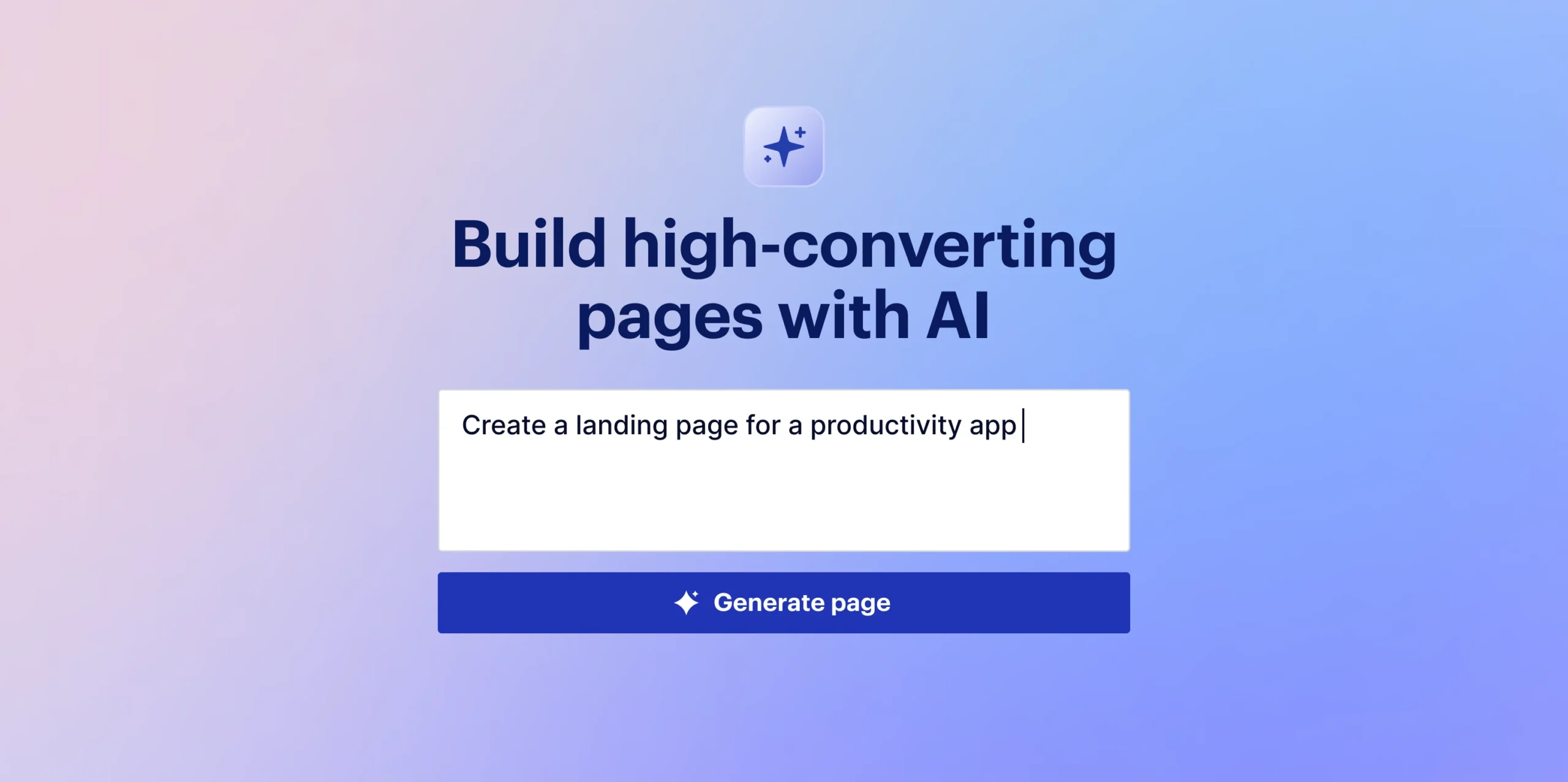
Instapage’s AI Page Generation aims to solve this by allowing users to describe their objectives in plain language. The system then generates a complete, conversion-ready page in seconds, featuring tailored messaging and optimized layouts. Unlike standalone AI generators that often produce rigid outputs, Instapage’s tool is integrated with its proprietary pixel-perfect drag-and-drop builder. This allows marketers to refine AI-generated designs manually without the need for constant re-prompting or expensive token consumption.
Industry analysts note that the inefficiency of many current AI tools lies in the "iteration loop." In many generative AI systems, if a user wishes to change a specific section or layout, they must often regenerate the entire asset. Instapage’s hybrid approach—combining generative AI with a manual visual editor—provides a level of creative control that addresses the limitations of first-generation AI marketing tools.
Bridging the Gap Between Lead Capture and Lead Nurturing
A common point of failure in digital marketing is the handoff between a landing page and the subsequent follow-up. Traditionally, teams have had to export leads from their page builder and import them into a separate email service provider (ESP), often utilizing a third-party AI tool to draft the content. This fragmentation results in data silos, manual errors, and delayed response times.
The new Instapage AI-powered email generator seeks to eliminate these gaps. By housing pages, leads, and emails within a single environment, the platform enables instant follow-up. Users can set goals, define target audiences, and select specific tones and lengths for their messaging. The AI then generates tailored email sequences that are automatically triggered by lead interactions. This integration ensures that every lead receives a relevant, timely response, which is a critical factor in maintaining high conversion rates in a competitive digital economy.
Economic Context: The "Lean Team" Era of 2026
The release of these AI features comes at a time when the global economic landscape for marketing departments is undergoing a profound transformation. Entering 2026, many organizations are operating with leaner teams and tighter budgets, while the expectations for performance and return on investment (ROI) have reached record highs.
Supporting data from recent industry reports indicates that marketing budgets as a percentage of total company revenue have remained under pressure, forcing CMOs to find ways to "do more with less." In this environment, the ability to scale production without adding headcount is no longer a luxury but a strategic necessity. Instapage’s AI Collections and automated experimentation features are designed to meet this demand, allowing small teams to manage hundreds of personalized page variations that would have previously required a large agency or an in-house development team.

Technical Analysis of Implications and Efficiency
The move toward an end-to-end AI platform has several implications for the future of the CRO industry. First, it reduces the "Total Cost of Ownership" (TCO) for marketing technology. By consolidating a dozen disparate tools into one platform, businesses can reduce subscription costs and the technical debt associated with maintaining complex integrations.
Second, the "token economy" of AI is becoming a concern for many enterprises. Every prompt and every regeneration in a standard AI tool carries a cost. Instapage’s model of using AI to provide the "starting point" and then allowing manual refinement via a visual builder is a more cost-effective way to utilize generative technology. This prevents the "inefficient back-and-forth" that slows down workflows and inflates costs.
Official Perspective and Industry Response
While official statements from Instapage emphasize the democratization of high-end design and optimization, the broader industry sees this as a challenge to established players in both the CMS (Content Management System) and ESP (Email Service Provider) markets. By integrating these functions, Instapage is positioning itself as a direct competitor to full-stack marketing clouds, but with a specific focus on conversion efficiency rather than just general content management.
"Most platforms bolt AI onto one part of the workflow," a company spokesperson noted during the announcement. "Instapage is different because AI runs through the entire marketing workflow—from generating pages to following up with leads and scaling what works. No switching between tools. No manual handoffs. No gaps."
The company has confirmed that while many features are now available, select AI tools are currently in beta and are being rolled out gradually to the user base to ensure stability and performance.
Broader Impact on Digital Marketing Strategy
The shift toward AI-integrated platforms like Instapage is expected to accelerate the trend of "No-Code" and "Low-Code" solutions in the enterprise. As AI becomes more adept at understanding design principles and conversion psychology, the role of the digital marketer will likely shift from execution to orchestration.
Instead of spending hours adjusting margins or writing subject lines, marketers will focus on high-level strategy, audience segmentation, and the interpretation of the vast amounts of data generated by AI experimentation. This shift could lead to a more data-driven industry where decisions are based on real-time performance rather than subjective design preferences.
Furthermore, the ability to generate "conversion-ready" pages in seconds will likely increase the volume of digital content on the web, making the quality of the "offer" and the relevance of the "personalization" the primary differentiators for brands. As the barrier to entry for creating high-quality pages drops, the competition for consumer attention will intensify, making the "Experimentation" and "Analytics" components of the Instapage suite more vital than ever.
Timeline of Instapage Innovations
To understand the current release, it is helpful to view it through the lens of the company’s historical trajectory:
- 2012: Launch of the Instapage landing page builder, focusing on ease of use and speed.
- 2015-2018: Expansion into the Enterprise market with features like Collaboration, Global Blocks, and AMP support.
- 2019-2022: Introduction of the "Personalization" and "AdMap" features, allowing marketers to map specific ads to unique landing page experiences.
- 2023-2025: Initial embedding of AI copy tools and basic experimentation automation.
- 2026: Launch of the end-to-end AI-powered marketing platform, integrating AI page generation, AI email generation, and AI-driven collections.
As businesses continue to navigate the complexities of the mid-2020s digital economy, the reliance on integrated AI solutions is set to become the standard. Instapage’s latest move signals a commitment to this future, offering a 14-day free trial for new users to experience the automated workflow firsthand. For an industry that has long been plagued by fragmentation, the promise of a "no-gap" marketing process may represent the next major milestone in digital productivity.







