

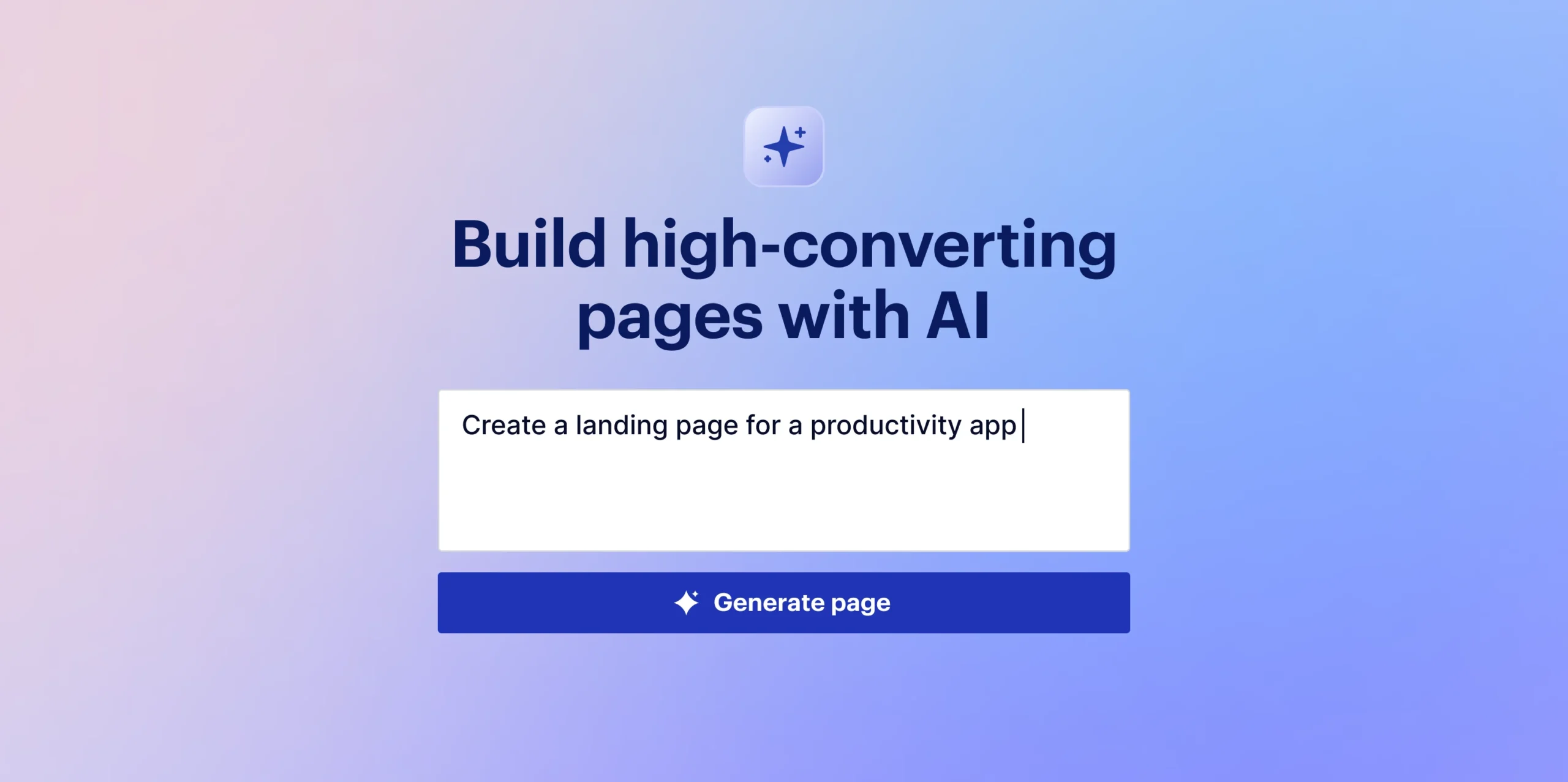
Instapage, a long-standing leader in landing page technology, has officially announced a significant strategic evolution, transitioning from a specialized landing page builder into a comprehensive, end-to-end AI-powered marketing platform. This move, marking a pivotal moment in the company’s history since its inception in 2012, introduces a suite of generative artificial intelligence tools designed to automate the creation, testing, and optimization of digital marketing assets. The update arrives at a time when marketing departments are facing unprecedented pressure to deliver higher returns on investment with fewer resources, a trend that industry analysts expect to intensify through 2026.
The centerpieces of this expansion include AI-driven page generation, integrated AI email systems, and "AI Collections," a feature set designed to manage and scale marketing content across various channels. By embedding AI into every stage of the marketing workflow, Instapage aims to solve the persistent issue of "platform fragmentation"—the necessity for marketing teams to use disparate tools for design, copywriting, lead management, and analytics.
Historical Evolution: From Page Builder to Marketing Ecosystem
To understand the significance of this latest release, it is necessary to look at the trajectory of Instapage over the last decade. Founded in 2012, the company initially focused on a singular pain point: the difficulty of creating high-converting landing pages without extensive coding knowledge. Over the subsequent years, Instapage gained market share by offering a "pixel-perfect" drag-and-drop builder, which allowed non-technical marketers to design sophisticated layouts.
As the digital advertising landscape became more competitive, the company expanded its offerings into a full Conversion Rate Optimization (CRO) suite. This included tools for A/B testing, heatmaps, and personalization—allowing users to show different content to different visitors based on their geographic location or the specific ad they clicked. By 2020, the platform had integrated website building and advanced analytics.
The current shift toward generative AI represents the fourth major era for the company. While previous updates focused on manual tools that made tasks easier, the new AI-centric model focuses on autonomous generation. This shift reflects a broader industry trend where "SaaS" (Software as a Service) is evolving into "AIaaS" (AI as a Service), where the software does not just provide the canvas but also contributes to the creation of the art itself.
Addressing the "Blank Page" Problem with AI Page Generation
One of the primary barriers to rapid campaign deployment identified by Instapage is the psychological and technical hurdle of the "blank page." Even with templates, marketers often struggle to align copy, layout, and design in a way that feels cohesive and conversion-oriented.
The new AI page generation tool allows users to input a descriptive prompt detailing their campaign goals, target audience, and key value propositions. The system then generates a complete, conversion-ready page in seconds. Unlike many standalone AI generators that produce static or difficult-to-edit designs, Instapage’s AI-generated pages remain fully editable within their proprietary visual builder.
Industry data suggests that the speed of campaign deployment is a critical factor in competitive markets. According to a 2024 report on digital marketing agility, companies that can launch new landing pages in under 24 hours see a 15% higher conversion rate compared to those whose internal processes take a week or more. By reducing the "idea-to-execution" gap to seconds, Instapage is positioning itself as a tool for high-velocity marketing environments.
Technical Innovation: Solving the Iteration Loop
A common criticism of early-stage AI design tools is the "regeneration trap." In many systems, if a user wants to change a specific section of an AI-generated layout, the entire page must be regenerated. This process is not only time-consuming but also consumes significant "tokens" or credits, increasing the cost of production.
Instapage’s architecture addresses this by decoupling the AI generation from the layout engine. Once the AI produces the initial design, the user transitions to a "pixel-perfect" drag-and-drop environment. This allows for granular adjustments—such as moving a button, changing a specific headline, or swapping an image—without requiring further AI prompts. This hybrid approach combines the speed of machine learning with the precision of human creative control, a balance that is increasingly sought after by professional design teams.

Bridging the Gap: Integrated AI Email and Lead Nurturing
The expansion into AI-powered email generation represents Instapage’s move to capture the "middle of the funnel." Historically, landing page builders and email marketing platforms have existed as separate silos. This separation often results in data loss, delayed follow-ups, and a disjointed user experience.
The new integrated system allows leads captured on an Instapage landing page to be funneled immediately into an AI-driven email workflow. The AI email generator can write tailored messaging based on the specific page the lead interacted with, the tone of the brand, and the desired call to action.
Data from the Content Marketing Institute indicates that personalized email follow-ups sent within an hour of lead capture are seven times more likely to result in a meaningful conversation than those sent even 24 hours later. By automating the writing and triggering of these emails within a single platform, Instapage aims to eliminate the manual "hand-off" between tools that often leads to lead decay.
Market Context: The "Lean Team" Reality of 2026
The timing of this release coincides with a shifting economic landscape for marketing departments. Projections for 2026 suggest that marketing budgets as a percentage of total company revenue are stabilizing or slightly declining, even as the demand for personalized, multi-channel content increases.
"The modern marketing team is being asked to do more with less," notes a recent analysis by Gartner. "The only way to bridge the gap between rising consumer expectations and tightening budgets is through the aggressive adoption of automation and AI."
Instapage’s strategy appears to be a direct response to this "efficiency frontier." By offering a tool that handles everything from the initial page design to the final lead follow-up, the company is targeting small to mid-sized enterprises (SMEs) and lean agency teams that do not have the headcount to manage a complex "martech stack" of a dozen different tools.
Analysis of Implications for the Digital Marketing Industry
The move by Instapage has several broader implications for the digital marketing industry:
- The Devaluation of Basic Production Tasks: As AI makes the creation of landing pages and emails nearly instantaneous, the market value of "basic production" (simple layout and copy) is expected to drop. The focus of human marketers will likely shift toward high-level strategy, audience psychology, and data interpretation.
- The Consolidation of the Martech Stack: There is a growing "SaaS fatigue" among businesses. Platforms that offer end-to-end solutions are becoming more attractive than "best-of-breed" point solutions that require complex integrations via APIs or third-party tools like Zapier.
- Data-Driven Creativity: With AI embedded in the experimentation phase, "A/B testing" is evolving into "continuous optimization." Instead of a marketer deciding which two versions to test, the AI can theoretically generate and test dozens of variations simultaneously, identifying winning combinations that a human might not have considered.
Official Rollout and Availability
According to company documentation, the new AI features are currently in a beta phase, with a gradual rollout to the existing user base. The company has emphasized that these tools are built into the core platform rather than being offered as expensive add-ons, though access to certain high-end AI capabilities may vary by plan level.
Instapage has also confirmed that it will continue to support its legacy builder while encouraging users to transition to the AI-enhanced workflow. The company provides a 14-day free trial for new users to test the end-to-end capabilities, including the AI page and email generators.
Conclusion: A New Standard for Marketing Platforms
The transformation of Instapage into an AI-powered marketing platform reflects the broader technological shift occurring across the software industry. By moving beyond simple "tools" and toward "intelligent systems," the company is attempting to redefine what it means to be a marketing platform in the mid-2020s.
As these AI features move from beta to full release, the industry will be watching closely to see if the promised efficiencies translate into measurable increases in conversion rates and revenue for businesses. For now, the move signals the end of the era of the "simple page builder" and the beginning of an era where AI-driven integration is the baseline requirement for digital marketing success.







