


The discipline of Conversion Rate Optimization (CRO) is undergoing a fundamental transformation, moving away from tactical A/B testing toward a sophisticated, platform-centric model of enterprise experimentation. At the forefront of this shift is Apurva Sandbhor, Manager of Platform and Product Experimentation at The Home Depot. Based in Atlanta, Georgia, Sandbhor is spearheading a movement that prioritizes structural architecture and automated governance over the traditional, manual methods of testing digital features. Her approach, detailed in the 25th installment of the CRO Perspectives series, underscores a critical reality for modern retailers: scaling experimentation requires more than just increased headcount; it demands a radical re-engineering of how organizations learn from data.
The Structural Challenge of Scaling Experimentation
In the current digital landscape, many organizations equate growth in experimentation with an increase in the number of tests conducted or the number of specialists hired. However, Sandbhor argues that scaling a team without first scaling the underlying platform architecture creates a "compounding friction" that can paralyze an enterprise. When organizations expand their testing teams without a robust framework, the result is often a series of siloed executions, inconsistent metric tracking, and a general increase in operational noise that obscures meaningful insights.
To address this, Sandbhor advocates for a "platform-first" strategy. This involves a transition from a reactive support mindset—where a centralized team fulfills requests from various departments—to a proactive, enablement-driven model. The objective is to keep an enterprise-level organization aligned and moving at high velocity without sacrificing the quality of the decisions being made.

The Dual-Lane Framework for Work Distribution
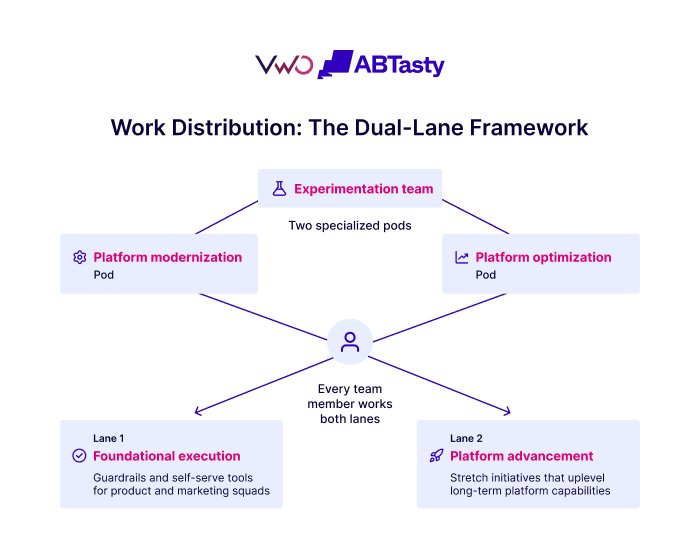
Central to Sandbhor’s methodology is the "Dual-Lane" framework, designed to prevent centralized experimentation teams from becoming bottlenecks. This model decouples day-to-day enablement from core innovation through two distinct operational paths:
- The Innovation Lane (Platform & Core Strategy): This lane is focused on the long-term health and capability of the experimentation ecosystem. It involves building the tools, automated pipelines, and statistical engines that act as force multipliers for the entire company.
- The Enablement Lane (Consulting & Product Support): This lane focuses on empowering individual product squads to run their own tests within the guardrails established by the Innovation Lane. It moves the centralized team away from manual execution and toward a role of strategic oversight and training.
By separating these functions, an organization can ensure that its most skilled experimentation experts are building the future of the platform rather than getting bogged down in the minutiae of QAing individual button-color tests.
Redefining the North Star: From Win Rates to Learning Value
One of the most provocative aspects of Sandbhor’s perspective is her rejection of "win rates" as a primary metric for success. In many corporate environments, a high win rate is seen as a sign of a healthy program. Sandbhor, however, aligns with insights from Harvard Business School Professor Stefan Thomke, who notes that for every successful online experiment, nearly ten do not yield a positive result.
Over-indexing on win rates creates a culture of risk aversion. Teams become incentivized to test low-risk, incremental changes—such as minor visual tweaks—that are likely to succeed but unlikely to drive significant innovation. To counter this, Sandbhor suggests three alternative metrics that map more directly to shareholder value:

- Learning Velocity: The speed at which an organization can generate and distribute high-integrity business insights, regardless of whether the test result was positive or negative.
- Strategic Risk Avoidance: A calculation of the revenue loss prevented by identifying and stopping a flawed feature before it was fully rolled out.
- Infrastructure ROI: Measuring how much the automation of the experimentation platform has reduced the cost per experiment and increased the speed of the development lifecycle.
Achieving Velocity Through Automated Integrity
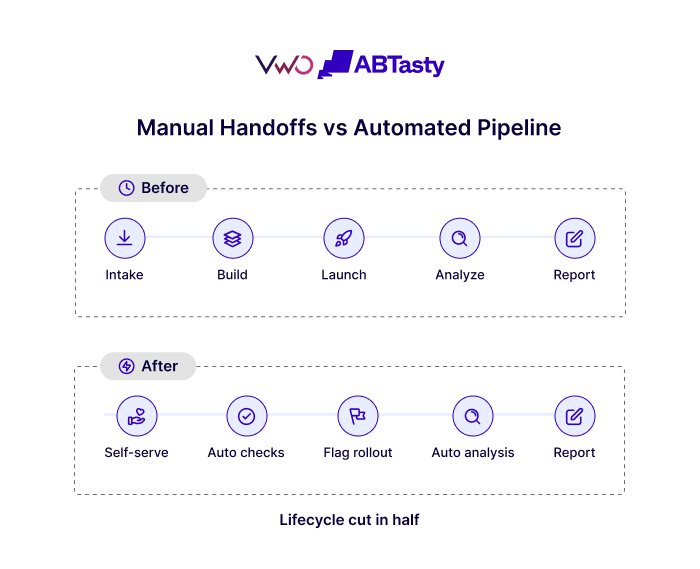
The pursuit of speed in digital development often comes at the expense of data integrity. Sandbhor asserts that true velocity is achieved not by cutting corners, but by automating statistical and operational guardrails directly into the platform architecture. This "guardrail-driven" approach has reportedly cut the end-to-end testing lifecycle at The Home Depot by half while simultaneously increasing the reliability of the results.
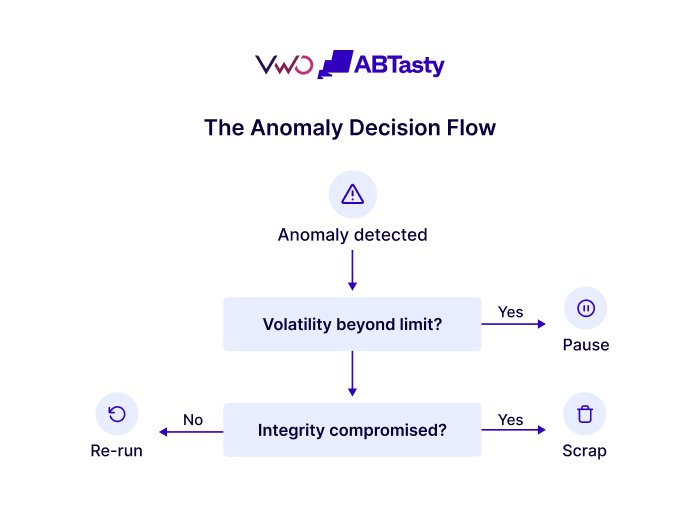
Key to this acceleration is the integration of a proprietary statistical engine into the data ingestion pipeline. This system automatically flags issues such as Sample Ratio Mismatch (SRM)—a common data quality issue where the actual traffic distribution between test variants does not match the intended distribution—and traffic anomalies. By automating these checks, the organization eliminates the need for manual data cleaning and reduces the risk of making multi-million dollar decisions based on "false positive" results.
The Evolution to Server-Side Experimentation
As organizations mature, they often transition from client-side testing (where changes are made in the user’s browser) to server-side experimentation (where changes are made on the server before the page is sent to the browser). While server-side testing offers greater control and performance, it requires a significant cultural and structural evolution.
Sandbhor highlights that before moving to server-side testing, an enterprise must have a robust change management plan in place. This includes deep stakeholder incentives and a mature data culture. The transition is not merely a technical upgrade; it is a shift in how the product is built, requiring engineers to be more deeply involved in the experimentation process from the earliest stages of development.
Case Study: Behavioral Nuance in Checkout Optimization
The importance of high-integrity experimentation was recently demonstrated during a high-visibility checkout optimization project at The Home Depot. The team implemented an algorithmic recommendation engine designed to cross-sell accessories. Unexpectedly, the initial test showed an aggregate drop in cart conversion rates.
In a traditional "win-loss" culture, the initiative might have been abandoned. However, Sandbhor’s team conducted deep-segment analyses. They discovered that while the algorithm worked well for product discovery, presenting too many choices during the high-intent checkout phase caused "decision paralysis" among users.
This insight led to a new hypothesis: replacing the multi-choice layout with a single, pre-configured bundle. The subsequent test validated this approach, converting the initial loss into a net revenue lift. This case study illustrates the value of the "insight-to-hypothesis loop," where even a "failed" test provides the data necessary to unlock future success.
Executive Engagement and Risk Mitigation
Keeping executive leadership engaged in experimentation requires a shift in narrative. Sandbhor suggests that the most impactful information for leaders is often the "Strategic Risk Avoidance" data. By showing how much money was not lost because a flawed feature was caught in the testing phase, the experimentation team demonstrates its value as an "insurance policy" for the company’s capital.
Furthermore, framing inconclusive tests as "learnings" rather than "failures" ensures that the budget for experimentation remains secure. When executives understand that every test—win, lose, or draw—contributes to a more accurate understanding of the customer, they are more likely to support the long-term growth of the platform.
The Role of Artificial Intelligence in Experimentation
As AI becomes more integrated into digital workflows, its role in experimentation is also evolving. Sandbhor views AI as a tool for commoditizing the "execution layer." AI can automate data pulls, build test variants, and enforce statistical guardrails. However, she maintains that AI cannot replace human judgment in three critical areas:
- Strategic Boundaries: Humans must define the ethical and strategic limits of what should be tested.
- Psychological Insight: Translating complex human behavior into novel, creative hypotheses remains a human-centric task.
- Stakeholder Alignment: Leading a cross-functional organization toward a long-term vision requires emotional intelligence and negotiation skills that AI lacks.
"AI can optimize the path," Sandbhor notes, "but humans must choose the mountain."
Conclusion: Experimentation as a Long-Term Capability
The perspective offered by Apurva Sandbhor represents a maturation of the CRO industry. By treating experimentation as a product-driven infrastructure rather than a series of isolated projects, The Home Depot is setting a benchmark for how large-scale enterprises can innovate at speed. The focus on "learning velocity" over "win rates" and "platform-first" scaling over "headcount-first" growth provides a roadmap for organizations looking to navigate the complexities of the modern digital economy.
As the retail sector continues to face pressure from both economic fluctuations and rapid technological change, the ability to make data-driven decisions with high integrity will be the primary differentiator between market leaders and those who are left behind. In this environment, experimentation is no longer just a tactical tool—it is a core strategic capability that protects the enterprise and fuels sustainable growth.







