


Manual A/B testing remains a cornerstone of the digital optimization landscape, persisting far more widely than current industry discourse regarding software-as-a-service (SaaS) platforms might suggest. While dedicated experimentation platforms have seen a surge in adoption, a significant number of enterprise teams—particularly those operating with custom tech stacks, stringent compliance mandates, or highly specialized engineering requirements—continue to execute experiments using a patchwork of feature flags, custom scripts, and internal analytics. This approach, while offering granular control and zero additional licensing costs, presents a complex array of operational challenges that can compromise data integrity and long-term scalability. As organizations mature, the "build versus buy" debate in experimentation is increasingly defined not by the ability to run a test, but by the ability to trust and scale the results.
The Context of the Manual Experimentation Landscape
The decision to forego a dedicated experimentation platform is rarely a matter of technical inability; rather, it is a strategic choice influenced by an organization’s specific operational constraints. For startups and small-to-medium enterprises (SMEs) running fewer than five tests per quarter, the overhead of a five-figure annual contract for a testing platform can be difficult to justify. In these environments, simple traffic-splitting logic and basic tracking via Google Analytics 4 (GA4) are often sufficient to prove initial concepts.
However, the landscape shifts dramatically for organizations in regulated sectors—such as finance, healthcare, and telecommunications—where data residency and privacy laws (like GDPR or HIPAA) create barriers to third-party data processing. For these entities, manual experimentation within their own cloud infrastructure is often the only way to maintain absolute control over sensitive user data. Furthermore, the rise of headless architectures and server-side rendering has empowered engineering teams to prefer owning the randomization logic, ensuring that experimental variations do not interfere with site performance or Core Web Vitals.
A Chronology of Implementation: From Redirects to Feature Flags
The evolution of manual testing follows a distinct technical progression, beginning with simple front-end alterations and moving toward sophisticated backend logic.
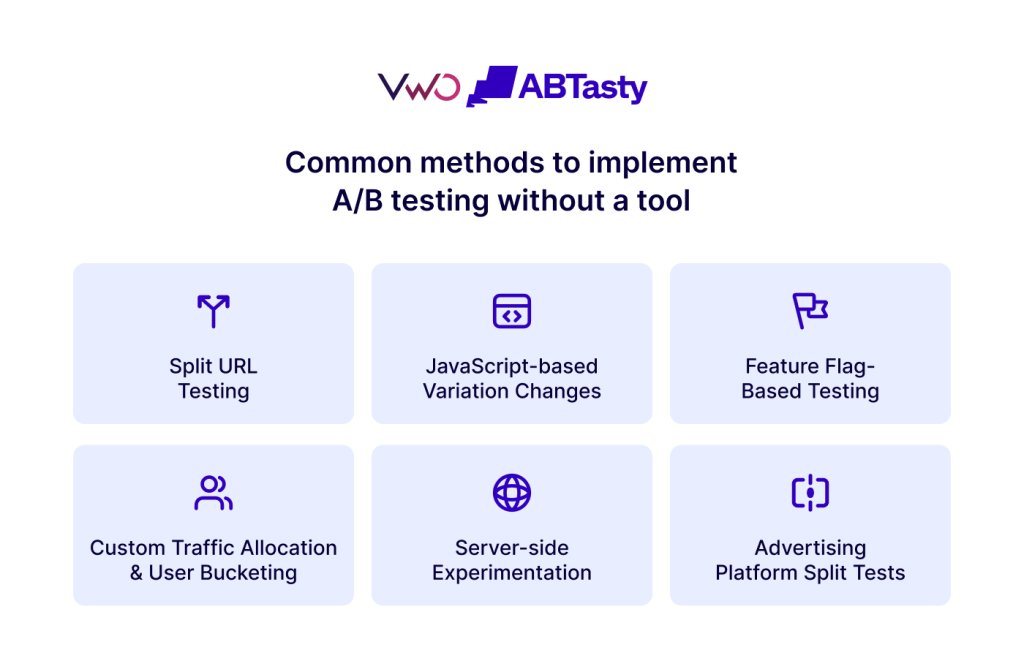
1. The Era of Split URL and JavaScript Injection
The earliest forms of manual testing relied on Split URL redirects, where a Content Management System (CMS) or load balancer would route a percentage of traffic to a different page version. While effective for massive redesigns, this method often resulted in "flicker" or latency issues. This led to the adoption of JavaScript-based changes, where elements are modified dynamically in the browser. While faster to deploy, these client-side changes often negatively impact Cumulative Layout Shift (CLS), a key metric in Google’s search ranking algorithms.
2. The Rise of Feature Flag-Based Testing
As DevOps practices integrated with marketing, feature flags emerged as a primary tool for experimentation. By wrapping code in conditional logic, developers can toggle features on or off for specific user segments without a new code deployment. This methodology bridges the gap between feature management and experimentation, allowing for "canary releases" and staged rollouts that mitigate the risk of catastrophic site failure.
3. Server-Side Maturity
The current gold standard for manual testing is server-side experimentation. In this model, the decision of which variation a user sees is made at the server level before the HTML is even sent to the browser. This eliminates the "flicker" effect and allows for testing complex backend logic, such as pricing algorithms or search engine rankings, which are invisible to front-end scripts.
The Technical Framework for Manual Analysis
Tracking the results of these manual experiments requires a robust data pipeline. Most teams leverage one of three primary frameworks for analysis:
- Google Analytics 4 (GA4): Teams send variation assignments as custom dimensions. While this provides a low-cost entry point, it requires manual data cleaning to ensure that "polluted" sessions—where a user might have seen multiple variations due to cookie expiration—are excluded.
- Product Analytics (Mixpanel/Amplitude): These tools allow for deeper funnel analysis. By tagging every event with an "experiment_id," product managers can see how a specific change affected long-term retention rather than just immediate clicks.
- Data Warehousing (BigQuery/Snowflake): For organizations with mature data engineering teams, routing raw logs to a warehouse allows for the most sophisticated analysis. Using SQL or Python, teams can run their own statistical models, applying Bayesian or Frequentist methodologies to determine winners.
Supporting Data: The Hidden Costs of Manual Systems
While the "sticker price" of manual testing is zero, industry benchmarks suggest that the operational cost can be substantial. A recent analysis of engineering workflows indicates that teams running manual tests spend an average of 15 to 20 hours per experiment on "janitorial" tasks—setting up traffic splits, verifying data triggers, and manually calculating statistical significance.
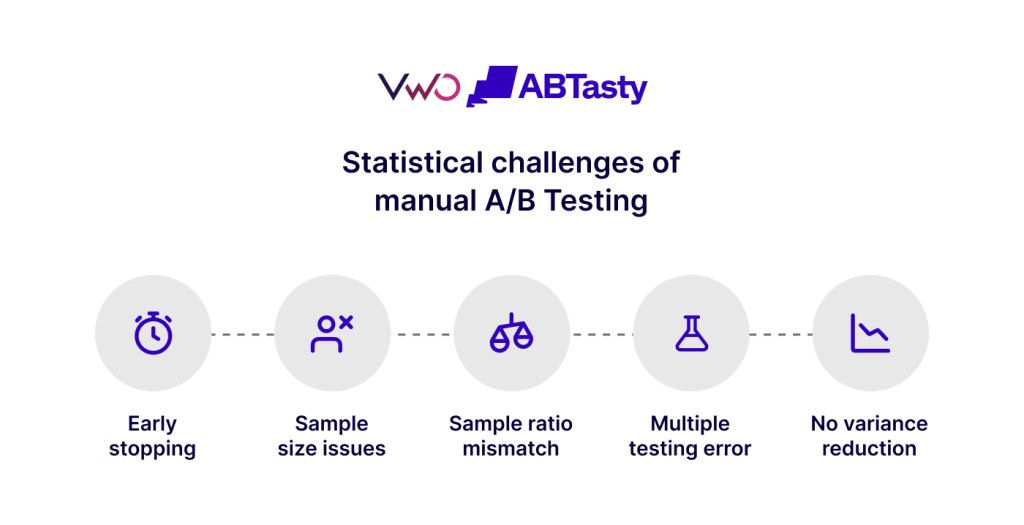
Furthermore, the risk of "Sample Ratio Mismatch" (SRM) is significantly higher in manual setups. SRM occurs when the actual traffic split (e.g., 48/52) deviates from the intended split (50/50) due to bot traffic or caching errors. Without automated detection, which most platforms provide, teams may spend weeks analyzing data that is mathematically invalid from the start.
Statistical and SEO Implications: A Brief Analysis
The most significant danger of manual experimentation is the "peeking problem." Without the guardrails of an automated statistical engine, stakeholders often check results daily and stop tests the moment they see a "95% confidence" rating. Statistically, this is a fallacy; checking results prematurely dramatically increases the probability of a false positive.
From an SEO perspective, manual implementation carries the risk of "cloaking"—presenting different content to search engines than to users—which can result in severe penalties from Google. Additionally, if split URL tests are not correctly managed with rel=canonical tags, search engines may index both versions, diluting the page’s authority and causing a drop in organic rankings.
Industry Reactions and Official Perspectives
Chief Technology Officers (CTOs) often argue that manual testing fosters a "culture of ownership." By forcing developers to understand the logic behind the experiment, the quality of the code tends to be higher. However, Chief Marketing Officers (CMOs) often counter that manual systems create an "engineering bottleneck." When every headline change requires a developer’s ticket, the velocity of experimentation slows, leading to missed revenue opportunities.
Industry analysts at firms like Gartner and Forrester suggest that the move from manual to platform-based testing usually occurs at a "pivot point" of 10 tests per month. Beyond this volume, the human error rate and the cost of engineering hours typically exceed the cost of a premium experimentation platform like VWO or AB Tasty.
Broader Impact and the Future of Scalable Optimization
As artificial intelligence begins to play a larger role in digital experience, the gap between manual and platform-based testing is expected to widen. Modern platforms are now integrating AI to automatically generate variations and predict experiment outcomes before they reach statistical significance. Manual systems, by their nature, struggle to incorporate these advanced capabilities without massive internal R&D investment.
For the modern enterprise, the transition from manual experiments to a scalable program is an evolution of maturity. It represents a shift from "testing for the sake of testing" to "testing as a business intelligence function." While manual methods will always have a place for specific, highly technical use cases, the future of the industry lies in platforms that democratize the ability to experiment, allowing marketing and product teams to move at the speed of the market without being tethered to engineering cycles.
Conclusion: The Path Toward Experimentation Maturity
Manual A/B testing is a valid starting point that provides teams with the flexibility and control needed during the early stages of a product’s lifecycle. However, as the volume of tests increases and the complexity of user journeys grows, the risks of manual execution—ranging from statistical inaccuracies to SEO penalties—become too great to ignore. Organizations must eventually decide whether they are in the business of building experimentation infrastructure or in the business of using experimentation to drive growth.
The most successful companies are those that recognize when their manual processes have reached their limit. By transitioning to a dedicated platform, they can eliminate engineering bottlenecks, ensure the integrity of their data, and focus their creative energy on developing the high-impact hypotheses that move the needle on revenue and user experience. The shift from manual to automated is not just a change in tools; it is a commitment to a more reliable, faster, and more profitable way of making decisions.







