The complex and often unwieldy landscape of B2B marketing technology stacks is undergoing a profound transformation, driven by the burgeoning capabilities of agentic artificial intelligence. Heinz Marketing, a firm at the forefront of B2B marketing innovation, is pioneering the application of AI agents to conduct comprehensive tech stack assessments. This approach promises to compress what were once multi-week, resource-intensive projects into mere days, uncover hidden redundancies that human analysis might overlook, and shift the strategic practice of stack rationalization from an infrequent, ad-hoc scramble to a continuous, repeatable discipline.
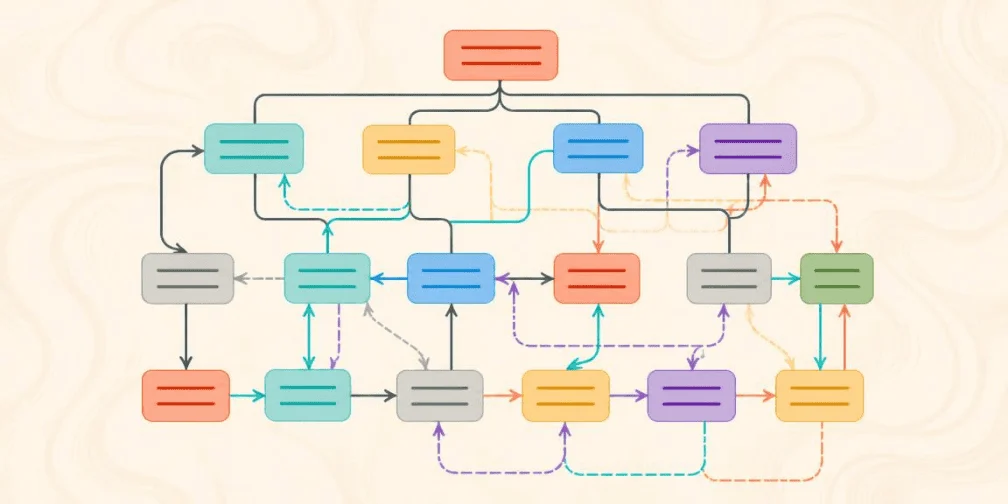
The average B2B marketing technology stack has historically evolved as a patchwork quilt of past decisions, often accumulating over time without a cohesive long-term strategy. This results in a “museum of decisions,” as described by Sarah Threet, Marketing Consultant at Heinz Marketing and author of the firm’s recent analysis. This often includes platforms adopted by previous leadership, point solutions with significant functional overlap with existing tools, and integrations that failed to deliver on their promised attribution capabilities. The inevitable question that surfaces every six months is a stark reminder of this disarray: “What are we actually using, and what is it costing us?”
This question is increasingly pertinent given recent industry data. A Gartner survey from 2025 revealed that organizations are utilizing, on average, only 49% of the capabilities within their marketing technology stacks, a decline from 56% the previous year. This statistic highlights a significant financial inefficiency, with more than half of marketing technology expenditures failing to generate tangible output. Traditionally, the rigorous process of auditing, mapping, and evaluating these stacks was a laborious undertaking, often postponed due to its perceived scale and complexity.
“We’ve been building AI agents that take it on directly,” Threet explains, referring to Heinz Marketing’s innovative approach. This initiative builds upon previous work, including the firm’s exploration of a “Target Market Agent” that similarly compresses initial market discovery phases from weeks to days. The focus on the tech stack itself represents a direct application of agentic AI’s power to optimize core operational functions.
The Mechanics of an Agentic AI Tech Stack Assessment
The discourse surrounding AI’s impact on martech often veers into vagueness or hype. However, the application of agentic AI in tech stack assessment offers a tangible, actionable solution. Unlike generative AI tools that might assist in drafting vendor evaluation emails, an AI agent performs the evaluation. It meticulously analyzes the existing toolset, scrutinizes their intended functionalities against their actual performance, identifies areas of overlap and integration failures, and pinpoints critical gaps. The outcome is a structured, actionable assessment report.
The strategic significance of an optimized tech stack for B2B marketers cannot be overstated. A well-aligned stack empowers teams with speed and clarity, while a bloated, fragmented, or underutilized one hinders every campaign. Historically, conducting such an in-depth evaluation demanded either substantial investment in consulting engagements or diverting critical team resources from revenue-generating activities. Agentic AI fundamentally alters this calculus, offering a more efficient and effective path to stack rationalization. This aligns with the growing imperative for B2B CMOs to embrace agentic AI, with tech stack optimization serving as a prime entry point.
Capabilities of an Agentic AI Tech Stack Assessment
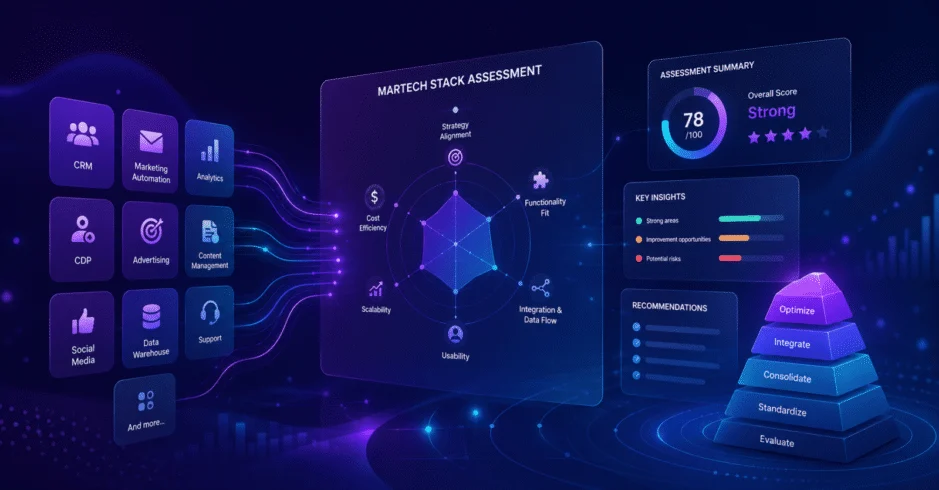
An AI agent purpose-built for this task would possess a suite of capabilities designed to deliver a structured and repeatable evaluation of a B2B marketing organization’s technology and resource footprint. Key functionalities would include:
- Comprehensive Inventory and Mapping: The agent would systematically catalog all marketing technology tools currently in use, documenting their primary functions, licensing details, and current utilization rates.
- Functional Overlap Identification: It would identify and quantify redundancies across the stack, flagging instances where multiple tools perform similar tasks, thus highlighting potential areas for consolidation.
- Integration Analysis: The agent would assess the efficacy of existing integrations, identifying broken links, inefficient data flows, and missed opportunities for seamless data exchange between platforms.
- Gap Identification: By cross-referencing desired marketing capabilities with the existing toolset, the agent would pinpoint critical functional gaps that are hindering strategic objectives.
- Cost-Benefit Analysis: It would correlate the cost of each tool with its actual business impact and utilization, providing data-driven insights into ROI.
- Vendor Performance Benchmarking: The agent could, with appropriate data inputs, benchmark tool performance against industry standards or competitor offerings.
- Risk Assessment: It would identify potential risks associated with the current stack, such as single points of failure, security vulnerabilities, or reliance on outdated technologies.
- Recommendation Prioritization: Based on the comprehensive analysis, the agent would generate a prioritized list of recommendations for optimization, consolidation, or acquisition, tailored to strategic marketing goals.
The output of such an agent would be a “Resources & Tech Assessment Brief.” This structured document would provide a clear overview of the current stack, detailed functional coverage, identified redundancies and gaps, integration risks, and a prioritized roadmap for strategic adjustments, all ready for immediate review by marketing leadership.
The Unseen Costs of an Unoptimized Stack
The financial implications of an unmanaged marketing technology stack extend far beyond the software subscription fees. The true cost lies in the pervasive drag on operational efficiency and strategic agility. Teams often find themselves working around their tools rather than with them, leading to wasted cycles and diminished productivity. Reporting becomes a convoluted process, requiring data to be painstakingly aggregated from disparate sources. Onboarding new team members turns into an extended learning curve, as they must first navigate a complex and often inconsistent toolchain before contributing meaningfully to core marketing initiatives.
Manual stack assessments, while necessary, have historically been protracted endeavors, often taking weeks to complete. This timeline makes them impractical for the dynamic pace of modern B2B marketing. An agentic AI approach, by contrast, can compress this timeline to days, offering a consistent analytical framework applied uniformly across each assessment. This consistency is crucial, especially when presenting findings to executive leadership or a board of directors. A structured, AI-generated brief that anticipates potential questions and provides data-backed answers instills greater confidence and facilitates more informed decision-making.
Furthermore, an agentic AI approach transforms stack rationalization from a one-time, reactive project into a proactive, repeatable practice. Regularly re-evaluating the tech stack, perhaps every quarter, as marketing motions, team structures, and budgets evolve, becomes feasible rather than aspirational. This continuous optimization ensures the martech stack remains a strategic asset, adapting to the organization’s changing needs and market dynamics.
Building an Effective Agentic AI Tech Stack Agent
The creation of an AI agent capable of delivering truly valuable tech stack analysis requires more than just sophisticated algorithms. Several key elements differentiate a truly impactful agent from one that merely produces a superficially attractive, yet ultimately flawed, report:
- Robust Data Integration Capabilities: The agent must be able to securely and efficiently ingest data from a wide array of sources, including CRM systems, marketing automation platforms, analytics tools, financial records, and potentially even direct vendor API integrations. This requires sophisticated data connectors and a flexible data ingestion architecture.
- Deep Understanding of Martech Functionalities and Best Practices: The agent’s knowledge base must be comprehensive, encompassing a deep understanding of the typical functionalities of various marketing technology categories (e.g., CRM, marketing automation, analytics, content management, social media management, SEO tools, ABM platforms) and industry best practices for their utilization. This requires extensive training data and potentially human-in-the-loop refinement.
- Contextual Awareness and Nuance: The agent needs to understand that technology adoption is often influenced by organizational culture, team structure, existing workflows, and strategic priorities. It must be able to infer context from data and flag potential issues that might not be immediately apparent from raw metrics alone. This involves sophisticated natural language processing (NLP) to interpret documentation and user feedback, as well as the ability to learn from human-defined strategic objectives.
- Actionable Output Generation: The agent’s output must be more than just a data dump. It needs to synthesize complex information into clear, concise, and actionable recommendations that marketing leaders can readily understand and implement. This involves advanced report generation capabilities and the ability to articulate the “why” behind each recommendation.
- Security and Data Privacy Compliance: Given the sensitive nature of the data involved, the agent must be built with robust security protocols and adhere to all relevant data privacy regulations (e.g., GDPR, CCPA). This includes secure data handling, encryption, and access controls.
- Scalability and Adaptability: The agent must be designed to handle the diverse and ever-evolving landscape of marketing technology. It needs to be scalable to accommodate large and complex stacks and adaptable enough to learn about new tools and emerging categories as they enter the market.
Implications for Marketing Leadership
For Chief Marketing Officers (CMOs) and VPs of Marketing, the advent of agentic AI-driven tech stack assessment offers a powerful solution to pressing organizational questions. The persistent inquiries regarding technology spend, the integration of AI into existing workflows, and the strategic consolidation of tools are only intensifying. An agentic AI approach provides the means to furnish concrete, data-backed answers to these critical conversations.
Imagine the ability to conduct an honest and thorough stack assessment within a single week, a process that previously consumed months. This assessment can be revisited quarterly, providing a dynamic and up-to-date view of the martech landscape. New team members can be onboarded with a clear understanding of the technology ecosystem from day one, armed with a concise brief that maps out the tools and their intended purposes. During budget season, leaders can confidently defend investments in high-performing technologies while identifying and recovering those that no longer justify their cost.
Revenue and operations leaders will also find significant value in this paradigm shift. Many of the challenges associated with attribution and reporting are, at their core, manifestations of an unoptimized technology stack. By explicitly surfacing these issues, agentic AI paves the way for more effective data infrastructure strategies and improved data integrity.
For agencies and consultants managing multiple client engagements, this approach offers a transformative opportunity. Tech stack assessment work, previously a standalone, time-intensive project, can now be seamlessly integrated into ongoing service offerings. This allows for scaled analytical capabilities without a proportional increase in headcount, enhancing both efficiency and client value.
The Indispensable Role of Human Judgment
Crucially, the narrative surrounding agentic AI must acknowledge the enduring and essential role of human expertise. An AI agent can meticulously map the technology stack, identify redundancies, and flag inefficiencies. However, it cannot, and should not, make the ultimate strategic decisions.
The decision to sunset a tool that a sales team cherishes, despite marketing having outgrown its utility, is a human judgment call. Executing effective change management, navigating vendor negotiations, and sequencing complex stack migrations to avoid disrupting critical campaign cycles all require human insight, diplomacy, and strategic acumen. Understanding the political landscape within an organization and recognizing when leadership is sentimentally attached to a particular platform are inherently human skills.
What an agentic AI tech stack approach provides is a robust, defensible starting point. It furnishes the facts, the structure, and a clear framework for strategic discussions. The critical human elements – judgment, political savvy, and the nuanced understanding of organizational realities – remain firmly in the hands of strategists. The most effective marketing strategists are those who can leverage their time for high-level thinking, advisory, and creative problem-solving, rather than being bogged down by manual data cataloging and vendor research. Agentic AI liberates this valuable human capital, enabling them to focus on what they do best.
Heinz Marketing’s Vision and Future Trajectory
Heinz Marketing is not merely advocating for agentic AI from the sidelines; the firm is actively engaged in its development and implementation. The company is building, testing, and refining AI agents across its client engagements, with tech stack assessment identified as a particularly fertile ground for delivering substantial leverage. The deliberate pace of development reflects the high stakes involved; an inaccurate analysis from an AI agent is a disservice, potentially leading to flawed strategic decisions.
The vision at Heinz Marketing is that marketing organizations poised for success in the next three to five years will treat an agentic AI-powered tech stack as foundational operating infrastructure, not a peripheral experiment. These forward-thinking organizations will be those that can transition from identifying challenges to implementing grounded solutions with unparalleled speed and consistency. Agentic AI is the enabler of this sustainable pace, and a clear-eyed understanding of an organization’s resources and technology is the essential prerequisite for achieving it.
For marketing leaders, revenue operations professionals, and agencies grappling with the integration of agentic AI into their marketing operations and technology stacks, open dialogue is crucial. Comparing notes and exploring best practices can accelerate adoption and ensure the effective deployment of these powerful new tools. Those interested in engaging in such discussions are encouraged to reach out to Heinz Marketing at [email protected].