The global landscape of artificial intelligence has shifted its focus from purely increasing parameter counts to optimizing the efficiency of real-world deployment, and DeepSeek’s latest release of the DSpark module represents a significant milestone in this transition. Integrated into the DeepSeek-V4 architecture, DSpark introduces an advanced iteration of speculative decoding that addresses the inherent latency bottlenecks of large language models (LLMs). While many architectural tweaks remain confined to academic papers, DSpark has already demonstrated its utility in production environments, delivering a 60 to 85 percent increase in per-user generation speeds without compromising the quality of the model’s output. This development arrives at a critical juncture for the AI industry, as enterprises seek to reduce the massive computational overhead associated with serving high-performance models to millions of concurrent users.
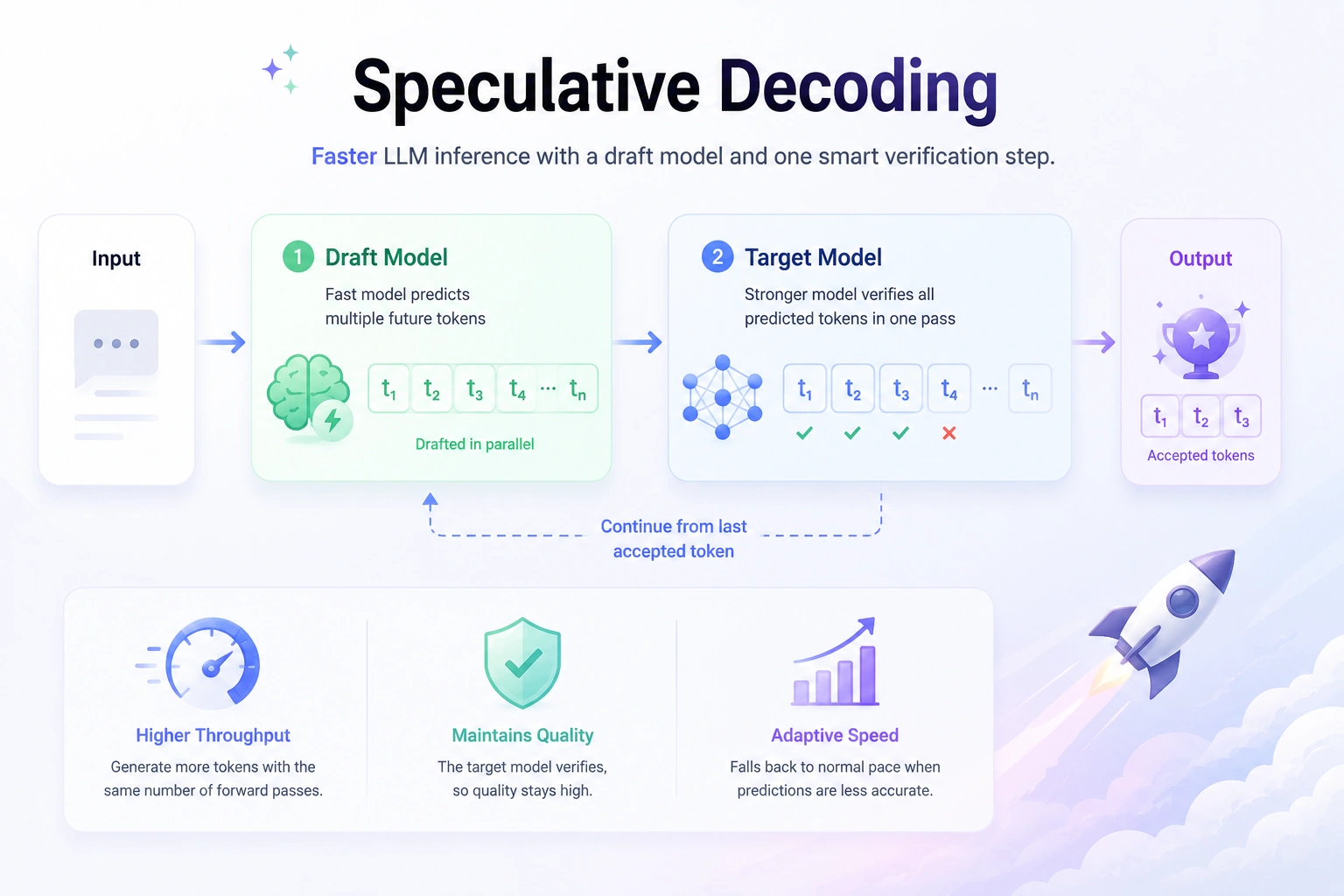
To understand the impact of DSpark, one must first look at the fundamental "Inference Wall" that plagues modern LLMs. Traditional autoregressive generation is a sequential process where each token is generated one by one. This requires a full forward pass through the entire model for every single word or character produced. Because these models are often memory-bandwidth bound—meaning the time taken to move data from memory to the processor exceeds the time taken for the actual calculation—standard inference is notoriously slow and expensive. Speculative decoding was originally proposed as a solution to this problem by utilizing a two-model system: a smaller, faster "draft" model predicts several future tokens in a single burst, and a larger "target" model verifies these predictions in one parallel step. However, previous iterations of this technique often struggled with a "quality-speed trade-off," where inaccurate drafts led to wasted computational cycles during the verification phase.
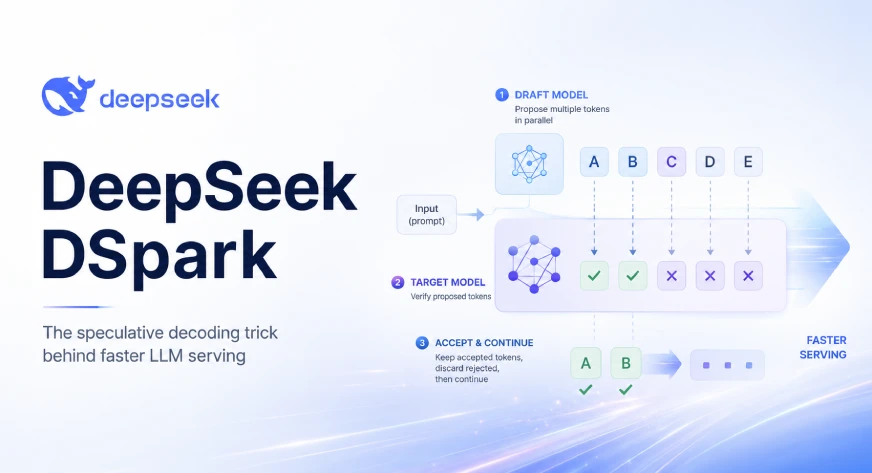
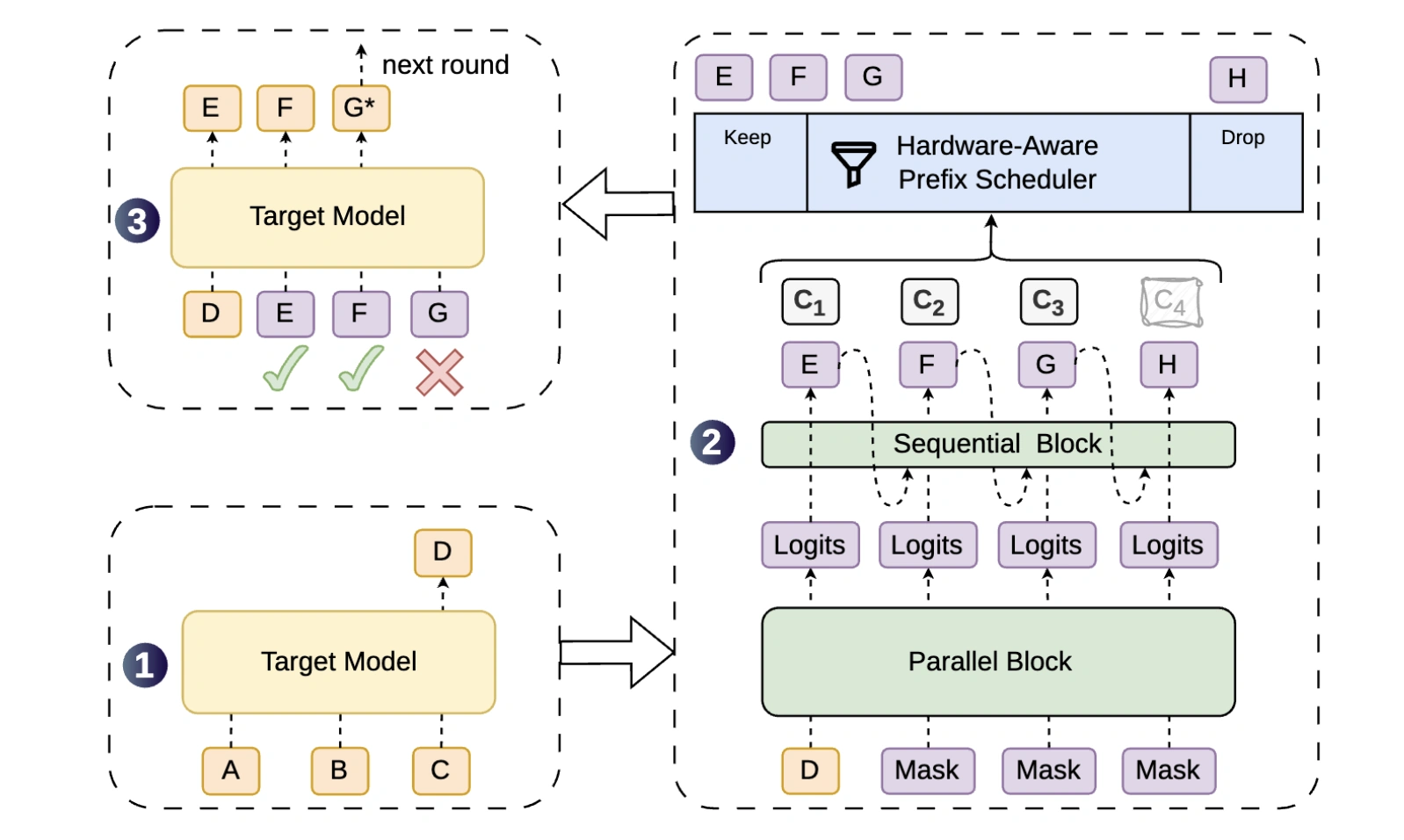
The DSpark module circumvents these historical limitations through a novel architecture known as semi-autoregressive drafting. DeepSeek’s engineering team identified that prior methods generally fell into one of two suboptimal categories: purely sequential models like Eagle3, which are accurate but suffer from linear latency increases, or purely parallel models like DFlash, which are exceptionally fast but produce incoherent results due to a lack of token-to-token dependency. DSpark bridges this gap by combining a parallel processing structure with a lightweight "Markov head." This sequencing structure adds local dependencies between tokens, ensuring that the draft model understands basic linguistic context—such as the relationship between "of" and "course"—without the heavy computational burden of full attention mechanisms.
The evolution of DeepSeek’s inference strategy can be traced through a timeline of rapid iteration within the open-source community. In the early stages of speculative decoding development, most researchers relied on "distilled" versions of larger models to act as drafters. By the release of DeepSeek-V2 and V3, the focus shifted toward specialized draft architectures. With the arrival of DeepSeek-V4 in early 2026, the DSpark module emerged as the definitive solution for high-throughput production. DeepSeek’s decision to open-source the training and evaluation code for these models under the "DeepSpec" repository has further accelerated adoption, allowing developers to train draft models for other popular architectures, including Alibaba’s Qwen and Google’s Gemma series.
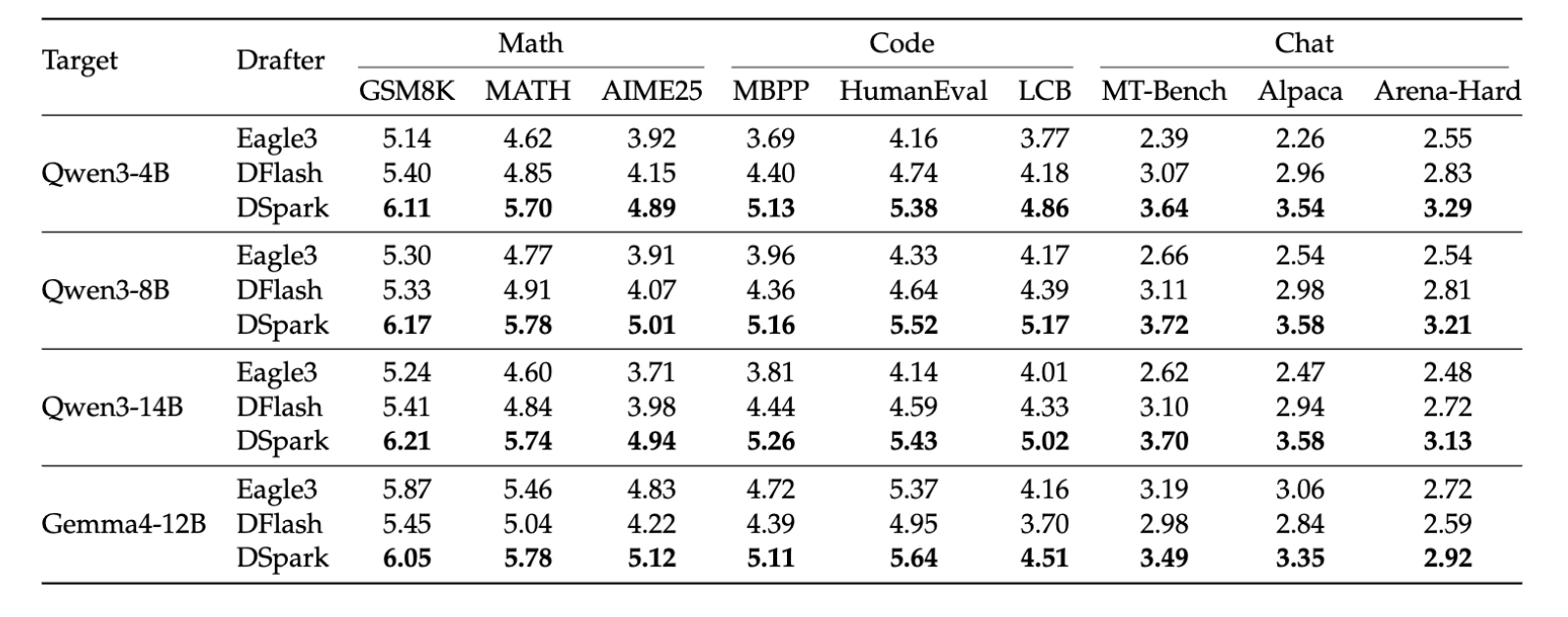
Empirical data provided by DeepSeek underscores the technical superiority of the DSpark approach. In rigorous benchmarking against previous industry standards, DSpark outperformed Eagle3’s accepted token length by 27 to 31 percent. Furthermore, it showed a 16 to 18 percent improvement over the DFlash parallel method. These gains were not limited to DeepSeek’s internal models; the performance improvements remained consistent across Qwen3-4B, 8B, and 14B targets, as well as the Gemma4-12B model. This cross-family compatibility suggests that DSpark is not merely an architecture-specific "trick" but a robust advancement in how neural networks handle predictive sequencing. By demonstrating similar success on Google’s Gemma architecture, DeepSeek has proven that the Markov head logic is a universal optimizer for transformer-based systems.
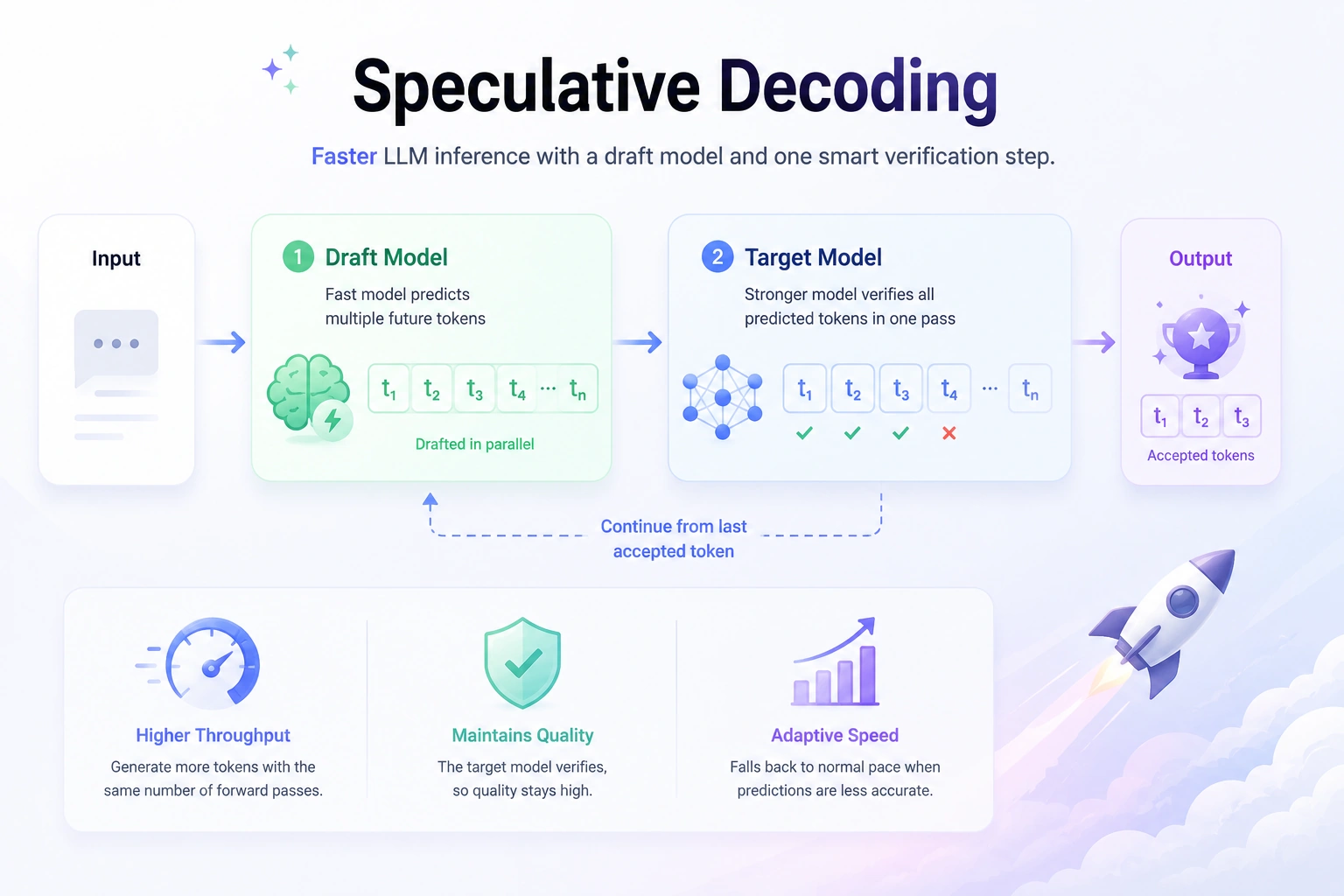
The implementation of DSpark involves a sophisticated three-stage workflow facilitated by the DeepSpec repository. First, developers prepare data by inferring outputs from the target model to create a ground-truth dataset. Second, the draft model is trained using a multi-faceted loss function that optimizes for three distinct criteria: the base language modeling loss, the distribution matching loss (which aligns the draft model’s probabilities with the target model), and the scheduling loss. This third component is particularly vital for production environments, as it allows the system to intelligently decide which tokens are worth verifying based on their "positive expected value." Finally, the evaluation phase measures the "acceptance rate" across various tasks, including mathematical reasoning, code generation, and conversational chat. Higher acceptance rates translate directly to fewer wasted forward passes, thereby maximizing the efficiency of the target model’s hardware.
Beyond the raw speed metrics, DSpark introduces a paradigm shift in how AI hardware is utilized. In a typical data center environment, GPUs are often underutilized during inference because the system is waiting for the next token to be processed. DSpark’s ability to generate and verify blocks of tokens simultaneously allows for higher GPU saturation. This is especially relevant for "varying request loads," where a server might be handling a mix of short chat queries and long-form code generation. DeepSeek’s research indicates that the "scheduling trick" within DSpark allows the inference engine to bypass verification for low-confidence drafts, saving energy and compute time that would otherwise be spent on incorrect predictions.
Official responses from the AI research community have highlighted the elegance of the Markov head implementation. While DeepSeek experimented with more complex Recurrent Neural Network (RNN) heads for the drafting phase, they ultimately found that the simpler Markov structure provided nearly identical benefits with significantly less implementation complexity. This pragmatic approach to engineering—prioritizing reliability and ease of deployment over theoretical complexity—has become a hallmark of DeepSeek’s contribution to the field. By choosing the Markov head for production, DeepSeek has ensured that DSpark can be integrated into existing inference frameworks with minimal friction.
The implications of DSpark extend far beyond the laboratory. For the end-user, an 85 percent increase in generation speed transforms the experience of interacting with AI. It enables near-instantaneous responses in coding assistants, where developers rely on rapid feedback loops, and enhances the fluidity of real-time voice and agentic AI systems. From a business perspective, the cost savings are substantial. If a service provider can serve twice as many users on the same hardware, the margins for AI-driven products improve dramatically, potentially leading to lower subscription costs or more robust free-tier offerings.
Furthermore, the open-sourcing of DeepSpec signals a broader trend toward transparency in AI optimization. By providing the community with the tools to reproduce their results on models like Qwen and Gemma, DeepSeek is positioning itself as a leader in the "efficiency-first" era of artificial intelligence. This move challenges other major players in the industry to move beyond closed-source optimizations and contribute to a shared standard for inference efficiency. The technical documentation included in the DeepSpec repository provides a clear roadmap for researchers to explore "next-token-prediction" beyond the standard autoregressive bottle-neck.
Looking forward, the success of DSpark suggests that the next frontier of LLM development may not be found in larger datasets or more parameters, but in the intelligent orchestration of multiple models working in concert. The "small model, large model" hierarchy is becoming the standard for high-scale deployment. As DSpark continues to be refined, we may see the emergence of even more granular drafting techniques, perhaps involving multi-layered speculative heads that can predict entire paragraphs with high degrees of accuracy.
In conclusion, DeepSeek’s DSpark is a transformative addition to the AI ecosystem. It successfully addresses the dual challenges of draft quality and verification efficiency, providing a scalable solution for the most pressing problem in AI today: the cost and speed of inference. By delivering massive performance gains on production-grade models and providing the community with the tools to build upon their work, DeepSeek has set a new benchmark for what is possible in the realm of speculative decoding. As the industry moves toward more pervasive and real-time AI applications, the innovations found within DSpark will likely serve as the foundation for the next generation of high-speed, high-efficiency language models.