

The annual Google I/O developer conference, held this week, has underscored a fundamental shift in the search giant’s strategy: the deep and irreversible integration of artificial intelligence into its core search and commerce products. While not signaling a complete abandonment of traditional search, the three key product launches revealed at the event—Search Agents, Agentic Booking, and Universal Cart—collectively point towards a future where AI proactively assists users, potentially redefining how consumers discover information, interact with brands, and make purchases. This paradigm shift necessitates a proactive re-evaluation by SEO professionals regarding measurement, site architecture, and the very nature of the customer journey.
The Dawn of AI-Powered Information Agents
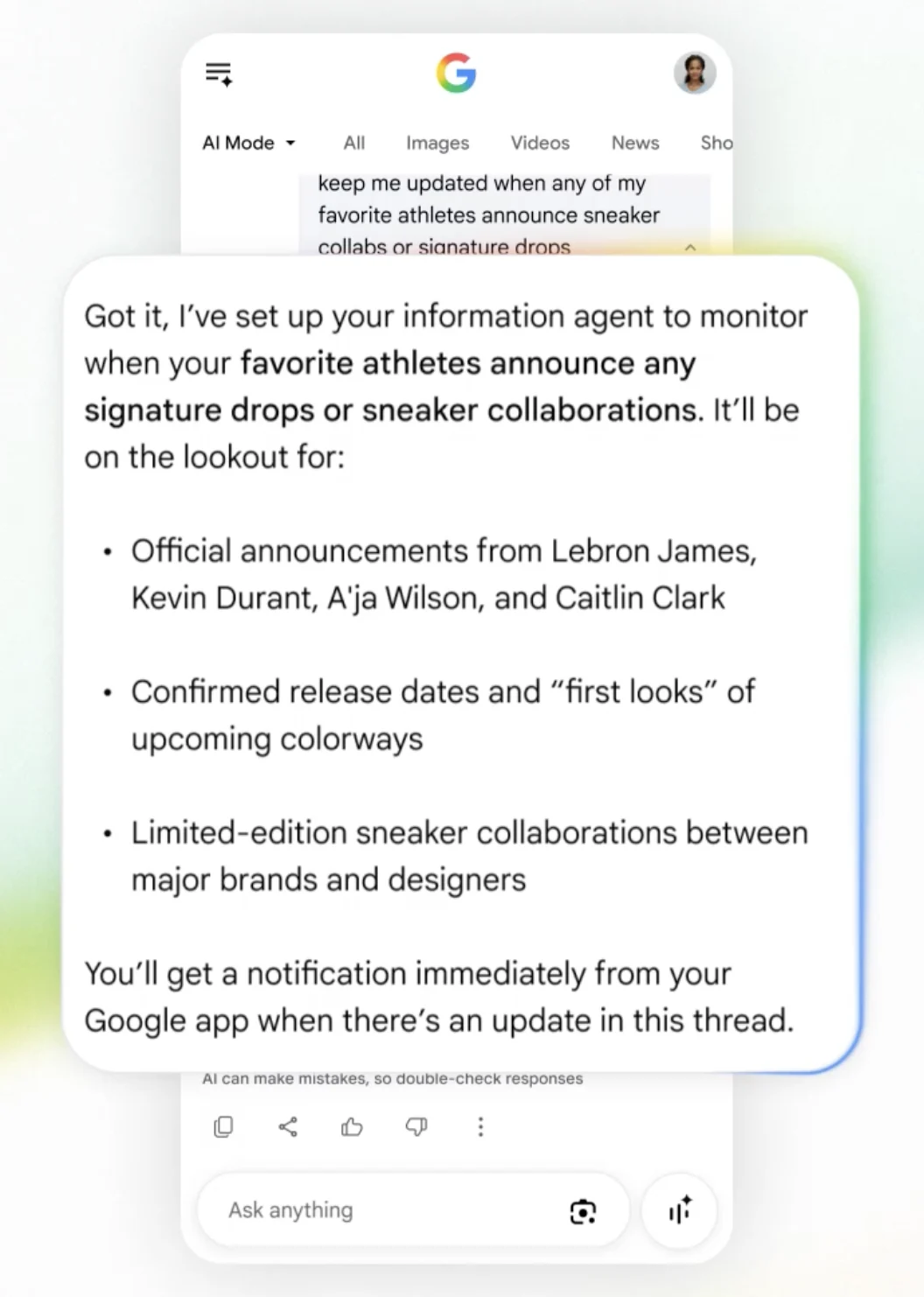
At the heart of this transformation are Google’s newly unveiled “Information Agents,” AI-powered entities designed to operate autonomously within a user’s Google account. These agents are engineered to continuously monitor the web, acting as tireless digital assistants that scour news sites, blogs, social media, and real-time data feeds for information relevant to a user’s predefined interests. Users can set a “brief”—for instance, seeking a flat within specific parameters—and the agent will then proactively monitor for matching opportunities. Upon identifying relevant information, the agent synthesizes the findings into a concise update, complete with recommendations, delivered directly through the Google App. This “watch, reason, and notify” model, as described by Google, signifies a move away from users actively searching for information towards a more passive, AI-curated consumption experience.
The implications for search engine optimization are substantial. A single, ongoing brief given to an information agent effectively replaces numerous individual queries that would have previously generated distinct, measurable search signals over time. Consequently, traditional metrics like search volume, once a primary indicator of demand, may begin to inaccurately represent actual consumer interest.
This shift elevates the importance of “impressions” as a key performance indicator. If a brand’s content is consistently utilized by these agents in their synthesized updates, it signifies that the brand is reaching users effectively, even if a direct click-through doesn’t occur. While clicks will undoubtedly continue, they are expected to become less frequent but potentially more qualified. For content that serves as a foundational element for agent-generated insights, impressions will increasingly serve as the primary signal of visibility and discoverability.
However, this new landscape presents significant measurement challenges. The industry is grappling with how to accurately quantify the impact of these AI agents. Questions linger about whether Google Search Console will provide visibility into which URLs are being cited in agent-synthesized updates. Furthermore, if notifications are delivered via the Google App, the trackability of these impressions and subsequent clicks remains an open question. The concept of attribution in an agent-driven search environment is a complex area that the industry must now collectively address.

This fundamental shift—fewer active searches, more passive content consumption, and a lag in measurement capabilities—extends beyond general information retrieval, directly impacting Google’s approach to local search and e-commerce.
Agentic Booking: Automating Transactions
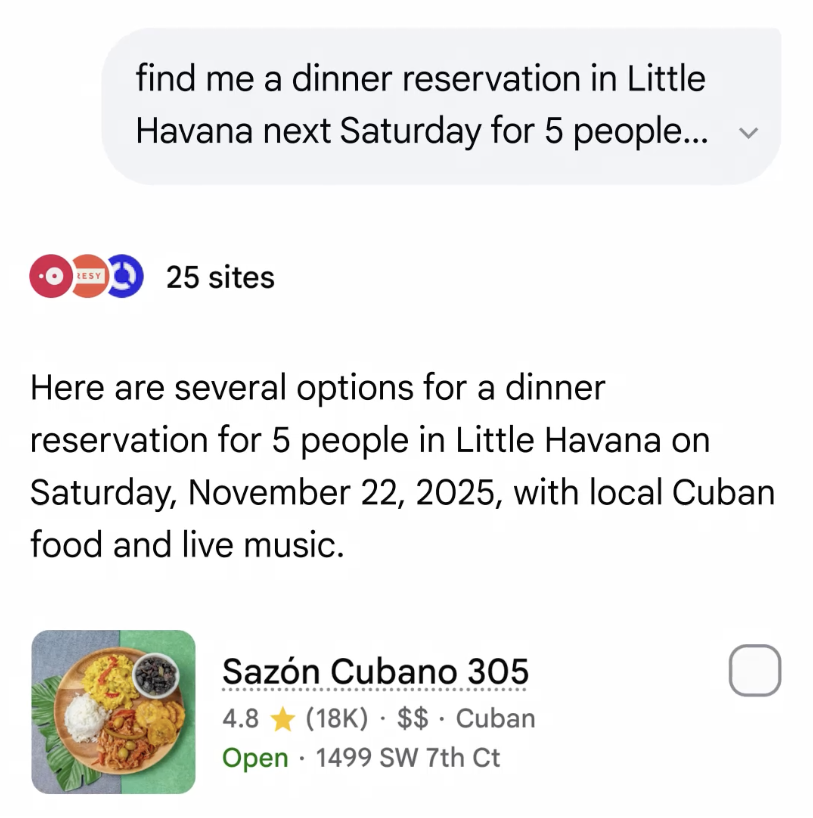
Extending the AI agent concept, “Agentic Booking” applies this proactive assistance to transactional activities. Instead of merely synthesizing information, these agents are designed to complete bookings on behalf of users. This involves identifying suitable restaurants, events, or services based on user preferences, verifying availability, and executing the reservation. For businesses in service-oriented sectors where bookings are the primary conversion event, this introduces a critical question: can their websites effectively facilitate agent-driven bookings? For many, the answer is currently no, primarily due to the underlying architecture of their digital platforms.
Most websites are designed with the patient navigation of human users in mind, often accommodating complex multi-step purchase processes. AI agents, however, operate differently. They interpret websites at a more literal, code-based level. If crucial booking functionalities, such as form submissions or availability checks, rely heavily on JavaScript execution that is triggered only after user interaction, agents may fail to perceive or interact with them. This means that any critical action contingent on JavaScript execution could effectively become invisible to an agent attempting to complete a task.
To be “agent-ready” for booking purposes, websites must prioritize making key information and actionable elements directly accessible within the raw HTML code. This includes readily available pricing, real-time availability, clear booking steps, and contact details. Furthermore, structured data—the machine-readable markup that provides context about a webpage’s content to search engines—must be accurate, comprehensive, and meticulously maintained, rather than treated as a mere compliance exercise.
Beyond these foundational requirements, Google is actively developing and standardizing a suite of protocols designed to facilitate full agent readiness. The Web Model Context Protocol (Web MCP) aims to enable websites to communicate their capabilities directly to AI agents, eliminating the need for agents to navigate a site as a human customer would. Payment protocols such as AP2 and APC are being developed to allow agents to finalize transactions on behalf of users without requiring their direct intervention at the checkout stage. The Agent-to-Agent (A2A) protocol is designed to enable seamless handoffs between agents operating across different services, while the Unified Control Protocol (UCP) aims to integrate these various protocols into a cohesive system.
Collectively, these protocols are intended to enable the seamless, end-to-end fulfillment of a user’s intent, from initial discovery to final payment, potentially without any direct user interaction with a webpage. While the widespread implementation of these protocols is still nascent, they represent the emerging standard for agent-friendly web experiences. Websites that proactively address the foundational requirements of agent readiness today are likely to be better positioned to leverage these future advancements. Cloudflare’s “IsItAgentReady.com” offers a valuable resource for assessing a website’s current compliance with these evolving criteria. This evolution marks a significant shift from AI that merely suggests to AI that actively acts, a transition most vividly illustrated in Google’s advancements in the shopping domain.
Universal Cart: A Unified E-commerce Experience
Google’s “Universal Cart” represents a significant innovation in the e-commerce landscape, aiming to create a unified, cross-surface shopping cart experience. The core concept is to eliminate the fragmentation of individual shopping carts across different retailer websites, replacing them with a single, persistent cart integrated within a user’s Google account. This means users can add items to their cart while browsing Google Search, watching product reviews on YouTube, reading emails in Gmail, or even interacting with Gemini, with all selections consolidated into one central location. Google then leverages its AI capabilities to monitor prices across various merchants, identify and surface deals, and alert users when the optimal time to purchase arises.
For e-commerce brands, Universal Cart fundamentally alters the competitive arena. Success will no longer hinge solely on page rankings for specific queries, but rather on the completeness and accessibility of product data, enabling Google’s agents to efficiently discover, compare, and present offerings.
In practice, this necessitates ensuring that crucial product information—including availability, pricing, promotional details, and specific attributes—is consistent, accurate, and up-to-date across a brand’s website, its structured data implementation, and its Google Merchant Center feed.
Universal Cart is explicitly designed to identify and present deals, with the core value proposition centered on Google proactively finding the best prices for consumers. Brands that consistently signal promotions, price reductions, and special offers are poised to benefit significantly, as these “deal signals” will increasingly function as discovery signals for AI agents. However, premium brands or those that compete on factors beyond price face a distinct challenge: how to effectively communicate their unique value proposition within a system inherently optimized for surfacing the most cost-effective options.
This challenge is intrinsically linked to the broader shift Universal Cart embodies in consumer shopping behavior. Mirroring the passive consumption model of information agents, Universal Cart positions users in a similarly passive state. They articulate their needs to Google, and then await AI-driven notifications when opportune purchasing moments arise. This further reduces the frequency of active user searches. Consumers define their intent once, and the system then continuously monitors for fulfillment.
This shift has profound implications for forecasting and measurement within SEO. If search volume has traditionally been the benchmark for SEO teams to predict demand, and a substantial portion of demand is now being expressed through persistent agent instructions rather than active queries, then search volume data will increasingly undercount the true market interest. This raises the question of whether forecasting models need to evolve to incorporate product-level impression signals or broader measures of topic-level demand, moving beyond raw keyword volumes. The entire framework for forecasting and measurement requires adaptation.
Moreover, personalization plays a critical role. Google’s AI capabilities allow agents not only to match products to general queries but to individual shoppers, factoring in their context, preferences, and past behavior. This places a premium on the specificity of product data. It’s no longer sufficient to simply state that a brand sells “trainers”; it must be detailed about which specific trainers, for what intended use, and at what precise price point.
While the most effective methods for communicating this granular specificity are still under active exploration, the foundational elements appear to be structured data implementation and entity optimization focused on individual products.
Implications for SEO Teams: A Three-Pronged Impact
The confluence of these three major announcements from Google I/O 2026 presents SEO teams with a critical set of implications, broadly categorized into three key areas:
Measurement Evolution
As a greater proportion of the customer journey shifts towards AI-driven agent interactions rather than direct user searches, the significance of impressions as a performance metric is set to increase, potentially eclipsing that of clicks. The industry must urgently develop new methodologies and frameworks for attribution in this evolving environment, ensuring that the impact of AI-driven discovery and engagement is accurately captured and understood. Traditional reliance on clickstream data may become insufficient, necessitating a broader approach that accounts for passive visibility and indirect influence.
Site Architecture for Agent Readiness
The concept of “agent readiness” demands a fundamental re-evaluation of website architecture. This includes ensuring that structured data is not only present but also accurate, comprehensive, and meticulously maintained to provide clear context for AI agents. Critical functionalities and user interactions must be rendered in raw HTML to be readily accessible to agents, rather than being solely dependent on JavaScript execution. A thorough understanding of the emerging protocol infrastructure, such as Web MCP, AP2, APC, A2A, and UCP, will be crucial for optimizing websites to seamlessly interact with AI agents and facilitate end-to-end transactions.
Product Data as the New Competitive Frontier
With Universal Cart shifting the focus from page rankings to product discovery, the quality and specificity of product data emerge as the paramount competitive differentiator. The ability of AI agents to find, compare, and surface a brand’s offerings will directly depend on the consistency and detail of product information presented across the website, structured data markup, and platforms like Google Merchant Center. Brands must prioritize a granular approach to product data, detailing attributes, intended use cases, and pricing to ensure their products are effectively discoverable and presented to the right consumers within Google’s AI-powered shopping ecosystem. The future of e-commerce visibility lies in the precision and richness of product information.









