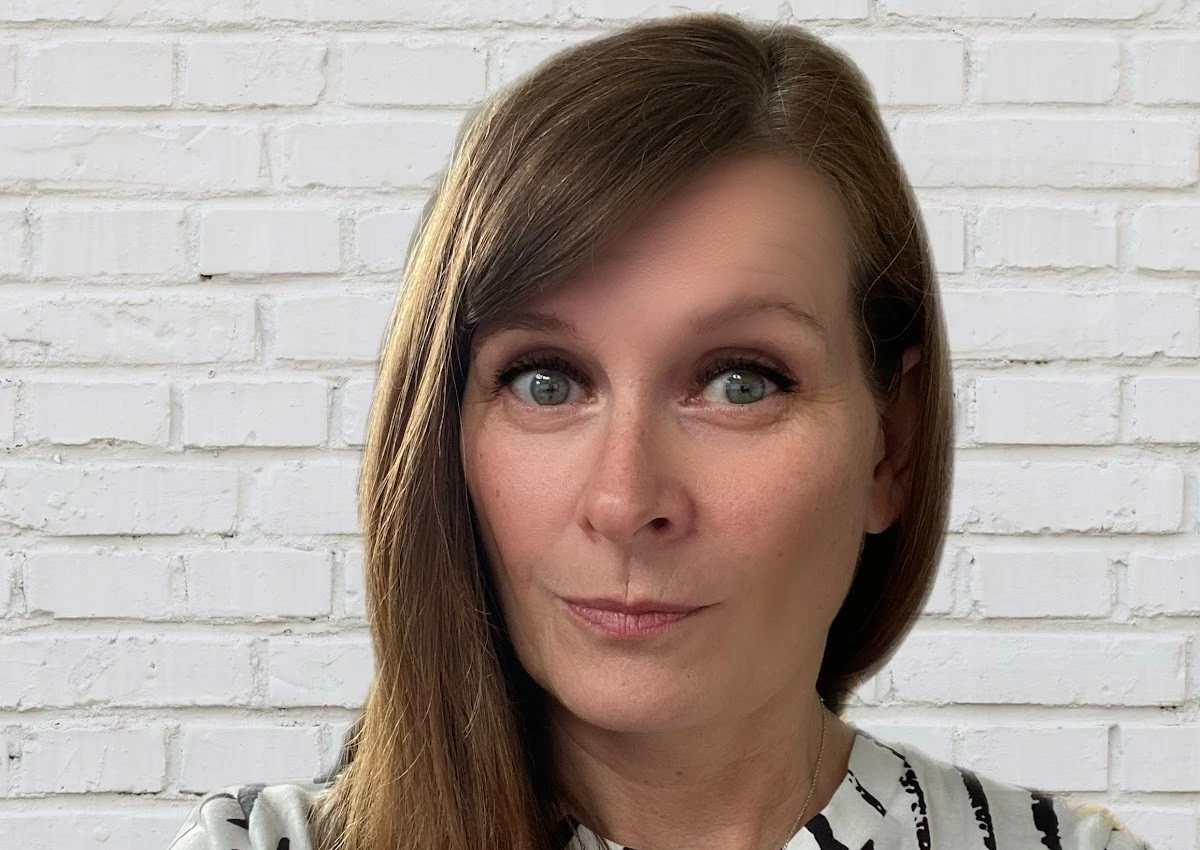
Spin Sucks, the professional development and communications agency founded by Gini Dietrich, has announced a comprehensive overhaul of its flagship PESO Model® Certification. The move marks a significant shift in the strategic application of the PESO Model—an acronym for Paid, Earned, Shared, and Owned media—transforming it from a conceptual framework into a functional operating system designed to meet the technical and economic demands of the 2026 communications landscape. This reconstruction follows a decade of industry-wide adoption, during which the model has been taught at more than 100 universities and utilized by over 1,400 professionals across 15 countries.
The updated certification, developed in partnership with the S.I. Newhouse School of Public Communications at Syracuse University, departs from traditional lecture-based learning. Instead, it prioritizes a "work-as-output" methodology, incorporating proprietary artificial intelligence tools and structured workbooks to ensure that participants complete the program with a fully operational communications strategy tailored to their specific organizational goals.
The Evolution of the PESO Model: From Framework to Operating System
The PESO Model was originally introduced by Gini Dietrich in her 2014 book, Spin Sucks, as a way to help communicators navigate the rapidly changing digital landscape. At its inception, the model provided a visual and conceptual map for how different media types overlap to build brand authority and search engine optimization (SEO) strength. However, as the digital economy has matured, the industry has faced increasing pressure to move beyond "vanity metrics" like impressions and towards business-centric outcomes.
According to Dietrich, the "2014 skill" of understanding how media types overlap is no longer sufficient for modern practitioners. The 2026 iteration of the model treats communications as a closed-loop system where owned content generates citations, earned media provides third-party validation, shared media amplifies the reach, and paid media boosts high-performing assets. This systematic approach is designed to create a compounding effect on brand equity and lead generation, functioning more as a software-like operating system than a static theoretical map.
The decision to rebuild the certification "from the studs" was driven by a perceived gap between professional knowledge and execution. While many practitioners could describe the PESO Model, a significant portion struggled to implement it within their organizations. The redesign aims to bridge this "implementation gap" by forcing the creation of tangible assets throughout the learning process.
Structural Changes and the Integration of Generative AI
The most notable technical addition to the 2026 certification is the inclusion of the PESO OS AI, a licensed tool specifically trained on the PESO Model’s proprietary methodology. Unlike general-purpose AI chatbots, this tool is designed to assist professionals in the operationalization of the system, helping to determine channel distribution, content structure, and integration points for specific campaigns.
The curriculum has also been restructured into a workbook-centric format. This pedagogical shift, spearheaded by Spin Sucks Chief Learning Officer Shelly Verkamp, ensures that the "output" of the course is the work itself. For example, the module focusing on "Owned Media" includes 11 specific worksheets that guide the user through building a strategy in real-time. Each exercise is accompanied by "worked examples" and embedded AI prompts to help practitioners pressure-test their strategies before implementation.
By the end of the eight-module program, participants do not just possess a certificate; they possess a completed PESO plan, including measurement protocols and multi-channel integration maps. This shift reflects a broader trend in professional development where the value of a credential is increasingly tied to the immediate utility of the skills acquired.
Academic Validation and the Role of Syracuse University
Despite the radical changes to the delivery and tools, Spin Sucks has maintained its long-standing partnership with the S.I. Newhouse School of Public Communications. The Newhouse School is widely regarded as one of the premier institutions for communications and journalism in the United States, and its endorsement serves as the academic backbone of the certification.
In the professional communications industry, a distinction is often made between a "badge" (indicating course completion) and a "credential" (indicating institutional validation). The PESO Model® Certification falls into the latter category. For practitioners who must defend budgets to Chief Financial Officers (CFOs) and Chief Marketing Officers (CMOs), the academic weight of the Newhouse School provides necessary institutional authority. This validation is particularly critical as PR and marketing departments face heightened scrutiny regarding their contribution to the bottom line.
Market Context: The Demand for Measurable PR Outcomes
The rebuild of the PESO Model comes at a time when the communications industry is grappling with a "visibility gap" and a "measurement trap." Recent industry data suggests that while 70% of PR professionals believe they are effective at storytelling, only a fraction can successfully link those stories to revenue or business growth.
The PESO Model Operating System addresses this by focusing on four key metric categories that align with corporate financial reporting:
- Brand Awareness: Moving beyond impressions to look at share of voice and sentiment.
- Engagement: Analyzing how shared and owned media drive community interaction.
- Lead Generation: Tracking how content funnels users toward conversion points.
- Authority: Measuring SEO strength, backlink profiles, and industry influence.
By integrating these metrics into the "operating system" itself, the new certification aims to professionalize the reporting standards of PR teams, moving them away from "impressions and a prayer" and toward data-driven accountability.
Chronology of the PESO Model Development
To understand the significance of the 2026 update, it is necessary to look at the timeline of the model’s development:
- 2014: The PESO Model is officially introduced in the book Spin Sucks, providing a unified graphic for integrated communications.
- 2016-2018: The model gains widespread adoption in university curricula and global agencies.
- 2020: The initial PESO Model Certification is launched in partnership with Syracuse University, focusing on the framework’s theoretical application.
- 2023-2024: Spin Sucks introduces the "PESO Model Maturity Ladder," a diagnostic tool helping organizations identify their level of integration (from "Foundation" to "Fully Integrated").
- Late 2024: Development begins on the 2026 "Operating System" rebuild, incorporating AI and workbook-based learning.
- 2026: The new PESO Model® Certification is officially released to the public.
Analysis of Implications for the Communications Industry
The transition of the PESO Model into an operating system has several long-term implications for the industry. First, it signals the end of "siloed" communications. In the OS version of PESO, an earned media hit is not a standalone success; it is a catalyst for owned media authority and shared media amplification. This requires a higher level of cross-functional collaboration between PR, social media, and SEO teams.
Second, the inclusion of a proprietary AI tool suggests that the future of PR is not just about human creativity, but about "augmented strategy." By using AI to handle the structural heavy lifting of campaign planning, practitioners can focus on higher-level strategic decisions and relationship building.
Third, the "Maturity Ladder" approach included in the new certification acknowledges that not all organizations are ready for full integration. By providing a diagnostic path, Spin Sucks is offering a roadmap for incremental improvement, allowing smaller teams to build a "Foundation" before attempting to run a high-level "Integrated" system.
Target Demographic and Strategic Fit
The redesigned certification is specifically targeted at mid-to-senior level communications professionals and agency owners who have the authority to change organizational processes. The program is described as "real work," requiring eight to ten weeks of self-paced study.
Spin Sucks has been transparent about who the program is not for, stating that it is unsuitable for those seeking a quick "vanity badge" or those without the budget or leadership "air cover" to implement changes. This selective approach highlights a shift in the professional development market toward high-intent, high-impact training rather than mass-market general education.
Conclusion and Future Outlook
The 2026 rebuild of the PESO Model® Certification represents a pivotal moment for Spin Sucks and the broader PR industry. By dismantling a successful framework to build a more rigorous operating system, Gini Dietrich is betting on a future where communications is treated as a core business function with measurable, repeatable processes.
As the industry continues to evolve under the influence of AI and changing consumer behavior, the PESO Model remains one of the few constants in the strategic toolkit of the modern communicator. The move to an operating system ensures that the model remains relevant in an era where "understanding" is no longer the benchmark for success—"operating" is.
For professionals currently positioned at the lower rungs of the PESO Maturity Ladder, the new certification offers a structured path to climb. For the industry at large, it sets a new standard for how professional credentials can be leveraged to drive actual business results. The integration of academic rigor from Syracuse University, the technological efficiency of AI, and the practical application of the workbook format suggests that the PESO Model is prepared to remain the industry standard for the next decade.