rifanmuazin
The distinct timing of Mother’s Day celebrations across the globe presents a unique strategic advantage for email marketers. While the United Kingdom observes the occasion in mid-March, the United States and a significant portion of Western Europe celebrate in May. This two-month differential offers a critical window for marketers to analyze the performance of early campaigns, glean insights into evolving inbox dynamics, adapt to the impact of artificial intelligence (AI), and navigate prevailing economic pressures. This article reviews eleven pivotal tactics that "Mother’s Day in May" senders should rigorously consider, transforming early market observations into refined, high-performing campaigns.
The Evolving Landscape of Mother’s Day Marketing
Mother’s Day, a cornerstone event in the retail calendar, has seen its marketing strategies shift dramatically over recent years. Historically, campaigns focused on broad promotional blasts. However, the rise of digital literacy, increased consumer sensitivity, and the sophistication of email platforms have necessitated a more nuanced, personalized, and empathetic approach. The COVID-19 pandemic, in particular, accelerated a trend towards greater sensitivity in promotional messaging, prompting many brands to offer opt-out options for potentially distressing events.

Beyond emotional considerations, the technical landscape of email marketing is in constant flux. Inbox providers like Gmail, Outlook, and Yahoo are continually refining their algorithms, increasingly leveraging AI to sort and prioritize emails. This means that a sender’s reputation, engagement metrics, and content relevance play a crucial role in determining whether an email lands in a primary inbox, a promotions tab, or, worse, a spam folder. Economic headwinds further complicate matters, as consumers become more discerning with their spending, demanding greater value, personalization, and seamless experiences. The UK’s earlier Mother’s Day serves as a real-time testing ground, providing invaluable data on what resonates with consumers under these dynamic conditions, allowing marketers targeting May celebrations to fine-tune their strategies for optimal impact.
Strategic Imperatives for May Campaigns: Eleven Key Tactics
Drawing lessons from the March observance, marketers can refine their strategies for the larger May market:
1. Re-evaluate "Do You Want to Hear From Us?" Opt-Out Emails

The practice of sending opt-out emails for sensitive events like Mother’s Day gained traction during the COVID-19 pandemic, reflecting a commendable effort by brands to show empathy. While initially well-received, this approach has evolved, with many marketing experts now questioning its long-term efficacy. Regularly prompting subscribers to opt-out of specific holiday communications can inadvertently highlight the very events some individuals wish to forget, potentially reinforcing negative feelings rather than alleviating them.
Instead of standalone opt-out emails, the prevailing recommendation is to integrate these preferences into a comprehensive, always-accessible preference center. As exemplified by brands like Hotel Chocolat, empowering subscribers to proactively manage their communication preferences at their leisure fosters a sense of control and respect. This shift minimizes the risk of negative associations with an email arriving and allows subscribers to make a one-time selection that applies to all future sensitive campaigns. Data suggests that while initial opt-out emails might see some engagement, a continuous stream can lead to user fatigue and, ironically, an increased likelihood of unsubscribes or even spam complaints from those who feel repeatedly reminded of their sensitivities. A well-designed preference center, offering granular control over content types and frequency, is a more sustainable and customer-centric solution.
2. Empower Subscribers with Granular Control Over Communication
Building on the concept of preference centers, extending subscriber control beyond just sensitive events is a critical strategy for enhancing engagement and retention. Studies consistently show that "too many emails" is the leading cause of unsubscribes and spam complaints. In an era of inbox overload, giving subscribers the power to dictate their email experience is paramount.
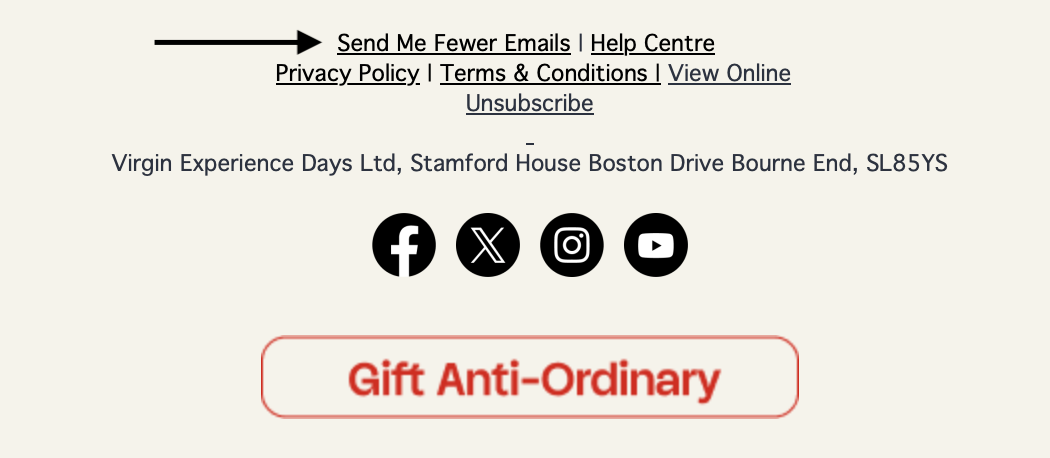
Brands like Virgin Experience Days have successfully implemented a "send me fewer emails" option, allowing subscribers to easily reduce the frequency of communications with a single click. This simple yet powerful feature acknowledges subscriber fatigue and offers an immediate, low-friction solution. Beyond frequency, robust preference centers should allow users to select specific categories of interest, ensuring that the content they receive is highly relevant to their needs and preferences. Dedicated campaigns promoting the existence and utility of these preference centers have shown to significantly boost engagement metrics and reduce churn. By offering more choices, brands not only improve the relevance of their communications but also build trust and foster a healthier, more engaged subscriber base, which translates into better deliverability and long-term customer value.
3. Prioritize Investment in Visually Striking Imagery
Despite the advancements in AI-generated email summaries that aim to provide quick content overviews, the power of compelling visuals in email marketing remains undiminished. Many subscribers still rely on preview panes for a rapid assessment of an email’s content and brand identity. Furthermore, platforms like Gmail now use "Annotations" to select and display key images directly within the Promotions tab, making high-quality visuals a direct driver of initial interest and opens.
Visually arresting imagery serves multiple purposes: it captures attention in a crowded inbox, communicates brand identity instantly, and can convey complex messages more effectively than text alone. Examples from the UK Mother’s Day campaigns, such as Belvedere’s elegant gift bag with roses and vodka, or Cartier’s clever recreation of its butterfly logo using jewelry, demonstrate how powerful visuals can stop a user mid-scroll. Pizza Express’s engaging GIF further illustrates the dynamic potential of imagery. Investing in professional photography, thoughtful graphic design, and even subtle animations ensures that emails are not only opened but also contribute positively to brand perception. In a highly visual digital landscape, imagery is not merely decorative; it is a critical component of engagement and brand reinforcement.

4. Employ Strategies to Encourage Subscriber Scrolling
Research from user experience authorities, such as the Nielsen Norman Group, consistently highlights a significant challenge in email engagement: fewer than half of consumers typically venture below the fold. This means a substantial portion of carefully crafted content and offers can go unseen, especially in a climate of inbox overload where users are quick to scan and move on.
To combat this, email marketers are increasingly incorporating explicit cues to encourage scrolling. This can range from subtle text prompts like "Scroll down for more" to engaging visual elements such as downward-pointing arrows or micro-animations that imply additional content. Bloom & Wild provided an excellent example by incentivizing the behavior with a compelling message: "Scroll to see how to win." This gamified approach leverages curiosity and the desire for reward, making the act of scrolling an active engagement rather than a passive observation. By strategically designing emails that draw the eye downwards and offer compelling reasons to explore further, brands can ensure that their full message is received, maximizing the impact of their content and calls to action.
5. Inspire Purchase Decisions with Curated Content

The pressure to find the perfect gift for Mother’s Day can be a source of genuine stress for many consumers. Recognizing this pain point, effective email marketing campaigns aim to alleviate anxiety by offering helpful guidance and inspiration rather than just direct sales pitches.
"Inspiration emails" shine in this context. Interflora, for instance, executed this brilliantly with a campaign titled, "Don’t worry, we’re here to help. Here are a few top tips for a beautiful and stress-free Mother’s Day." Their email provided a comprehensive gift-finder quiz, suggestions for heartfelt card messages, reminders about international delivery options, and even a thoughtful nudge to celebrate not just one’s own mother but also the "mom of your little ones." Similarly, Charlotte Tilbury encouraged subscribers to "Shop Trending Now" by showcasing the most-viewed products from the past seven days, leveraging social proof to guide purchasing decisions. By transforming a potential chore into an enjoyable discovery process, these emails add significant value, reduce decision fatigue, and ultimately drive conversions by meeting a genuine consumer need for guidance and ease.
6. Strategically Integrate Text/SMS to Enhance Email Visibility
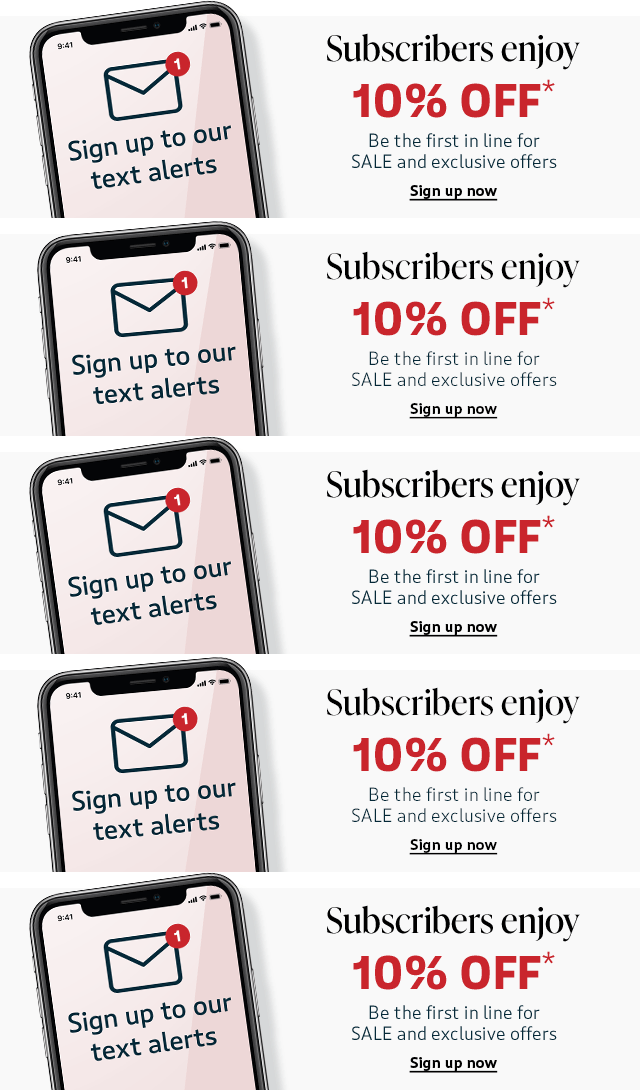
In today’s multi-channel marketing environment, a successful program relies on the harmonious interplay of various communication channels. While email remains foundational, mobile, social media, and apps play crucial supporting roles. Many consumers already prefer mobile for transactional messages like receipts and delivery updates, as demonstrated by Cotton Traders’ clever micro-animation encouraging SMS opt-in.

However, SMS is also emerging as a powerful tool to directly address the challenge of inbox de-prioritization. With AI-driven algorithms in platforms like Gmail sorting emails into "Promotions" tabs based on perceived relevance, time-sensitive campaigns can easily get buried. A well-timed SMS message, such as "Don’t miss our Mother’s Day promotion—check your inbox today!" can act as a direct conduit, guiding subscribers to the intended email. This cross-channel nudge ensures that important promotions are seen. As a complementary tactic, marketers should also leverage Gmail Annotations, which allow senders to explicitly define discounts, expiration dates, and product previews. Doing so can significantly boost visibility, potentially earning a coveted "Featured Deal" card at the top of the Promotions tab, further enhancing relevance and discoverability.
7. Incentivize Early Purchases for Operational Efficiency and Customer Satisfaction
For events like Mother’s Day, encouraging consumers to make their purchases in advance offers a multitude of benefits, both for the brand and the customer. From an operational standpoint, early orders alleviate pressure on website infrastructure, customer service teams, and fulfillment logistics, ensuring smoother operations during peak periods. For customers, it can be framed as a genuine advantage, reducing last-minute stress and often coming with added perks.
Interflora again provided a strong example, enticing customers with the pitch: "Order early for cheaper delivery, and mom gets to enjoy her flowers for the full weekend." This simple incentive created a win-win scenario: the brand managed its workload more effectively, and the customer received a tangible benefit (reduced cost) and an enhanced experience (longer enjoyment of the gift). Such tactics not only drive sales but also contribute to overall customer satisfaction and loyalty by offering thoughtful solutions that simplify the holiday shopping experience.

8. Implement a "Remember the Date!" Reminder Service
While some consumers are meticulous planners, a significant portion inevitably forgets important dates, leading to last-minute scrambling or, worse, missed opportunities. Brands have an opportunity to provide a valuable service by offering a "remember the date" reminder system.
Interflora’s approach to this is exemplary. They provide a service within customer accounts where individuals can set advance notifications for a range of special events, including Mother’s Day. Users can customize how far in advance they wish to be reminded and, crucially, receive a discount for each order placed through this reminder service. This not only serves as a practical solution for forgetful customers but also fosters loyalty and encourages repeat business. By proactively helping customers avoid oversights, brands position themselves as thoughtful partners, strengthening the customer relationship and securing future sales.
9. Dynamically Replace Expired Offers to Maintain Relevance

The lifecycle of promotional emails tied to specific events like Mother’s Day is inherently limited. Once the event has passed, these emails quickly become irrelevant. Allowing expired offers to linger in inboxes or, worse, to be accessed via old links, can lead to subscriber frustration, increased deletion rates, and a heightened risk of spam complaints, all of which negatively impact sender reputation.
Smart marketers leverage dynamic content to ensure that their communications remain current and engaging. This involves automatically swapping out expired Mother’s Day promotions with fresh, relevant content or transitioning to evergreen offers. While Look Fabulous Forever demonstrated the right instinct by attempting to replace expired content, they could have optimized further by, for example, redirecting to an upcoming holiday like Easter, which was "right around the corner." The key takeaway is the imperative to act swiftly and replace irrelevant content rather than letting it detract from the subscriber experience and potentially damage sender metrics. Maintaining content freshness is crucial for sustained engagement and a healthy sender reputation.
10. Avoid Attempts to "Game the System" with Inbox Placement
A persistent misconception among some email marketers is the belief that landing in the "Primary tab" of inboxes (particularly Gmail) guarantees superior visibility and engagement compared to the "Promotions tab." This often leads to misguided attempts to manipulate inbox placement, such as explicitly encouraging customers to recategorize emails, as observed with The White Company’s prompts.

However, leading email providers, including Gmail, Microsoft, and Yahoo, have consistently cautioned against any attempts to "game the system." Their algorithms are designed to categorize emails based on content and user interaction, and any deliberate manipulation can result in penalties, including reduced deliverability or even blacklisting. Subscribers generally understand and expect marketing emails to reside in their Promotions tab, and they engage with them there. Focusing on delivering high-quality, relevant content that genuinely interests subscribers, rather than trying to force placement, is the most sustainable and effective strategy for long-term email program health and deliverability. Trust in the system and focus on intrinsic value.
11. Geographic and Chronological Segmentation is Paramount
Reiterating a critical point for international senders, the chronological disparity of Mother’s Day celebrations (mid-March in the UK vs. May in the US and much of Europe) necessitates meticulous geographic and chronological segmentation. It is a surprisingly common, yet profoundly detrimental, error for non-UK senders with UK customers to send Mother’s Day promotions in May.
Such chronological mismatches lead directly to high complaint rates and significant damage to sender reputation. Customers receiving irrelevant or out-of-date promotions become disengaged and view the brand as disorganized or disrespectful of their local context. For any global brand, understanding and segmenting audiences based on their regional holiday calendars is non-negotiable. Implementing robust segmentation strategies ensures that the right message reaches the right audience at the right time, preventing negative customer experiences and protecting the integrity of the email program.
Learning from History: A Continuous Cycle of Refinement
The adage often attributed to Winston Churchill, "Those who fail to learn from history are doomed to repeat it," holds profound relevance for email marketers. The UK’s earlier Mother’s Day serves as a unique, real-world case study, offering a rare opportunity for global senders to observe, analyze, and fine-tune their strategies before the larger May event. This preemptive learning allows for agile adjustments to content, timing, segmentation, and overall campaign architecture, mitigating risks and maximizing potential returns.
In an increasingly complex digital ecosystem shaped by AI, economic fluctuations, and evolving consumer expectations, the ability to adapt and refine strategies based on real-time insights is a competitive advantage. Marketers who embrace this iterative approach, prioritizing customer control, compelling content, multi-channel synergy, and ethical practices, will be best positioned for sustained success. As the digital marketing landscape continues to evolve, continuous learning and strategic adaptation, as highlighted by resources like the Litmus State of Email 2026 report, are not just beneficial but essential for bringing any email program to its next level.


 Ammar Sabilarrohman
 Asro
Asro