
 rifanmuazin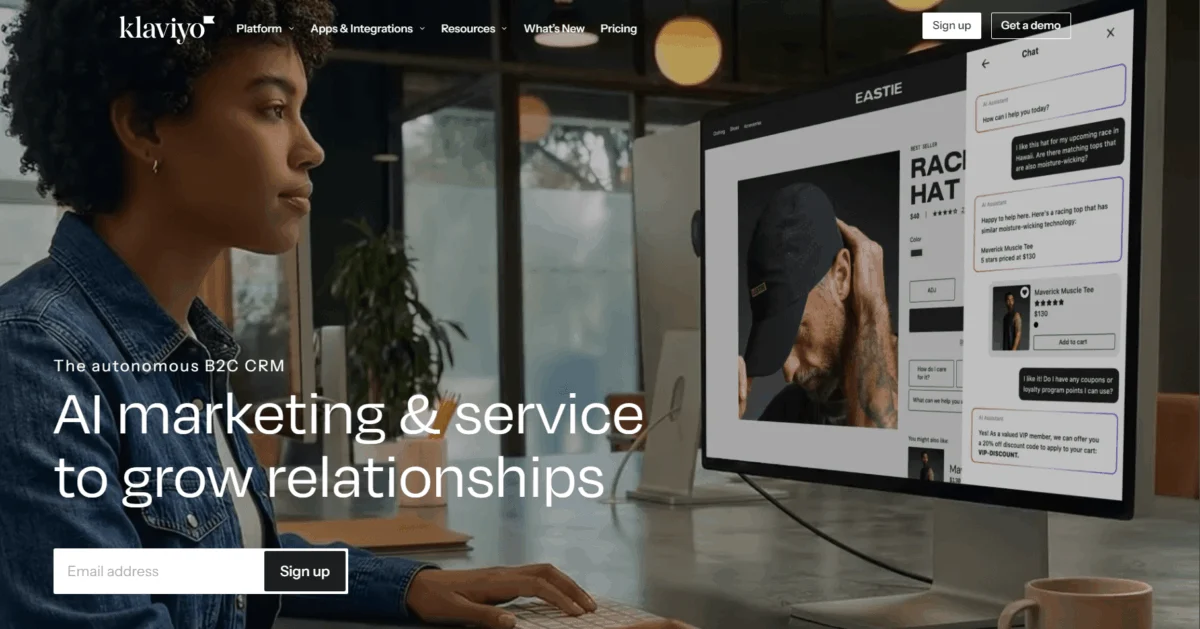
The digital marketing ecosystem is in a state of constant evolution, demanding specialized tools that cater to diverse business needs. While ConvertKit has long established itself as a preferred platform for content creators and digital product sellers, its capabilities for e-commerce stores are increasingly being re-evaluated. As online retail continues its robust growth trajectory, projected to reach unprecedented scales by 2026, the demand for sophisticated, e-commerce-centric marketing automation platforms has intensified. This article delves into the leading alternatives to ConvertKit, offering a detailed analysis for businesses seeking to optimize their customer journeys and maximize revenue in the competitive digital marketplace.
The Shifting Tides of Digital Marketing: Why Alternatives are Essential
ConvertKit, often lauded for its intuitive interface and powerful features tailored to creators, such as landing page builders, simple email sequences, and direct payment integrations for digital products, excels in nurturing an audience and monetizing content. However, the unique demands of an e-commerce operation — encompassing complex inventory management, diverse product catalogs, intricate customer segmentation based on purchase history, and the need for multi-channel engagement beyond email — expose ConvertKit’s inherent limitations for online retailers.
Industry analysts suggest that by 2026, the global e-commerce market will be heavily reliant on integrated marketing strategies that combine email, SMS, web push notifications, and robust CRM functionalities. E-commerce businesses require platforms that offer deep integration with their storefronts (like Shopify, WooCommerce), advanced analytics to track customer lifetime value (LTV), sophisticated abandoned cart recovery sequences, personalized product recommendations, and precise segmentation capabilities to target customers at every stage of their buying journey. ConvertKit’s pricing model, which can be restrictive with essential features often gated behind higher-tier plans (starting at $39/month and escalating to $79/month for full functionality with limited e-commerce tools), further prompts e-commerce merchants to seek more feature-rich and cost-effective alternatives designed for their specific operational scale and strategic objectives.
Methodology for Identifying Leading Alternatives
The selection of the six leading ConvertKit alternatives for 2026 was based on a comprehensive evaluation of several critical factors pertinent to e-commerce and broader marketing automation needs. These criteria included:
- E-commerce Integration: Depth and breadth of native integrations with popular e-commerce platforms.
- Automation Capabilities: The sophistication of pre-built and customizable automation workflows, including multi-step triggers and advanced branching logic.
- Multichannel Marketing: Support for email, SMS, web push notifications, and other communication channels.
- Segmentation & Personalization: Advanced audience segmentation based on behavioral data, purchase history, and demographic information, coupled with dynamic content personalization.
- CRM Features: Integrated customer relationship management tools for comprehensive customer insights and sales pipeline management.
- Analytics & Reporting: Robust dashboards, performance tracking, and actionable insights to optimize campaigns.
- Pricing & Scalability: Transparent pricing models that offer value across different business sizes, with room for growth.
- Ease of Use: User-friendly interfaces and intuitive drag-and-drop builders.
A Detailed Examination of the Top ConvertKit Alternatives for 2026

The following platforms have emerged as strong contenders, each offering distinct advantages depending on the specific needs of a business.
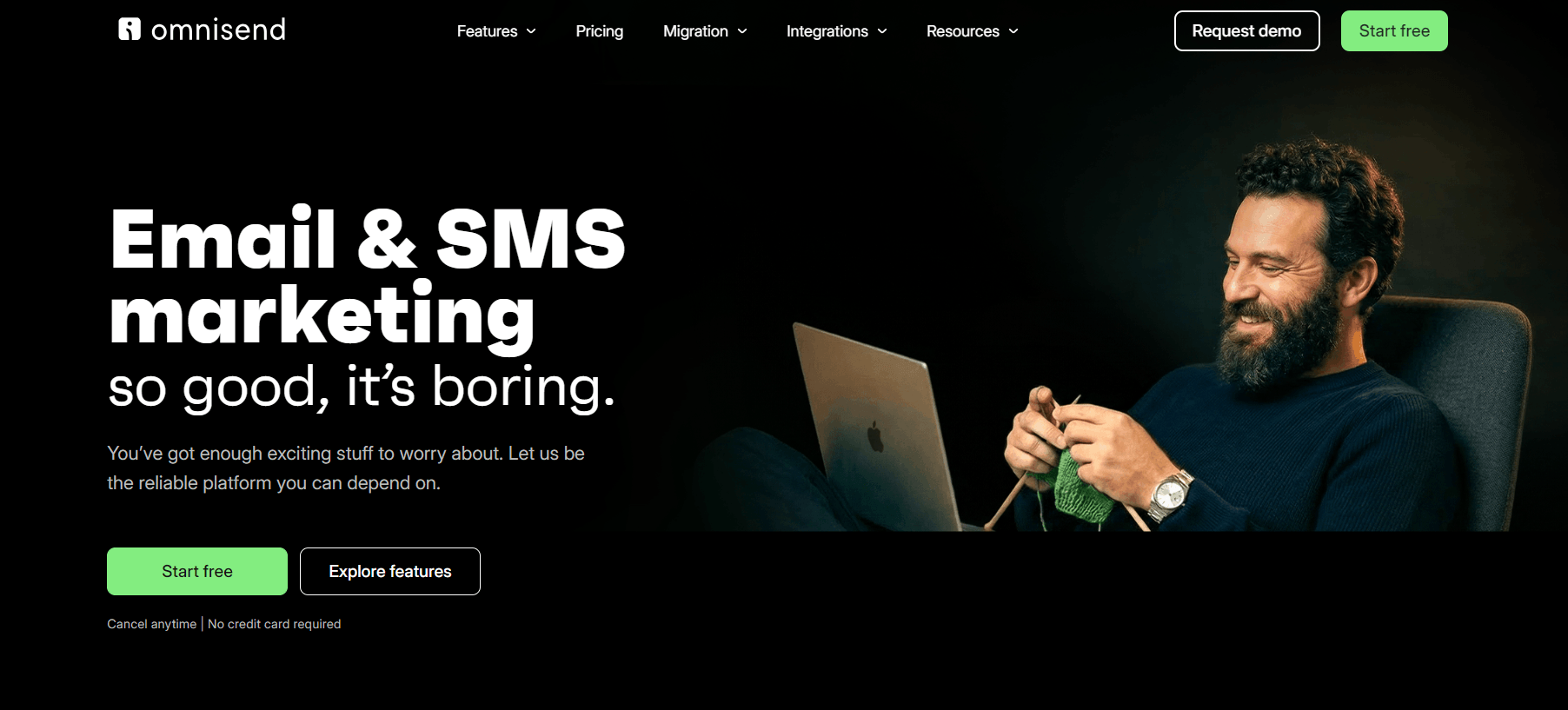
1. Omnisend: The E-commerce Powerhouse
- Overview: Omnisend stands out as the premier ConvertKit alternative for e-commerce stores of all sizes. Its design philosophy centers around creating seamless, high-quality customer experiences through integrated email, SMS, and web push notification campaigns. Omnisend’s strength lies in its deep, native integrations with leading e-commerce platforms like Shopify and WooCommerce, enabling unparalleled data synchronization and automation triggers.
- Key Strengths:
- Omnichannel Marketing: Unrivaled ability to build cohesive campaigns across email, SMS, and web push notifications within a single automation workflow. This multi-channel approach significantly boosts engagement and conversion rates, with studies showing omnichannel strategies outperform single-channel efforts by a considerable margin.
- E-commerce-Specific Automations: Features a rich library of pre-built, high-converting workflows for abandoned carts, welcome series, post-purchase follow-ups, browse abandonment, back-in-stock alerts, and birthday messages. These automations are critical for maximizing customer lifetime value (LTV).
- Intuitive Interface and AI Tools: Offers an exceptionally user-friendly drag-and-drop builder for emails and automation flows. Its AI-powered features, such as an AI forms builder and copywriting assistant, streamline content creation and optimize campaign effectiveness.
- Advanced Segmentation: Allows for highly granular segmentation based on customer behavior, purchase history, demographic data, and engagement levels, enabling hyper-personalized messaging.
- Robust Analytics: Provides clear, actionable insights into campaign performance, sales attribution, and customer journey analysis, empowering data-driven decision-making.
- Limitations: Primarily focused on e-commerce, it may not offer the same depth of content monetization features as ConvertKit or comprehensive CRM for complex B2B sales cycles.
- Versus ConvertKit: Omnisend is significantly more cost-effective per plan for e-commerce functionality, providing essential features like advanced automation, segmentation, and multichannel capabilities even in its free tier. While it lacks ConvertKit’s direct content monetization tools, it offers a robust toolkit specifically designed to maximize e-commerce ROI.
- Ideal Use Cases: Shopify and WooCommerce stores seeking deep platform integration, comprehensive multichannel marketing automation, and a strong focus on customer retention and revenue maximization.
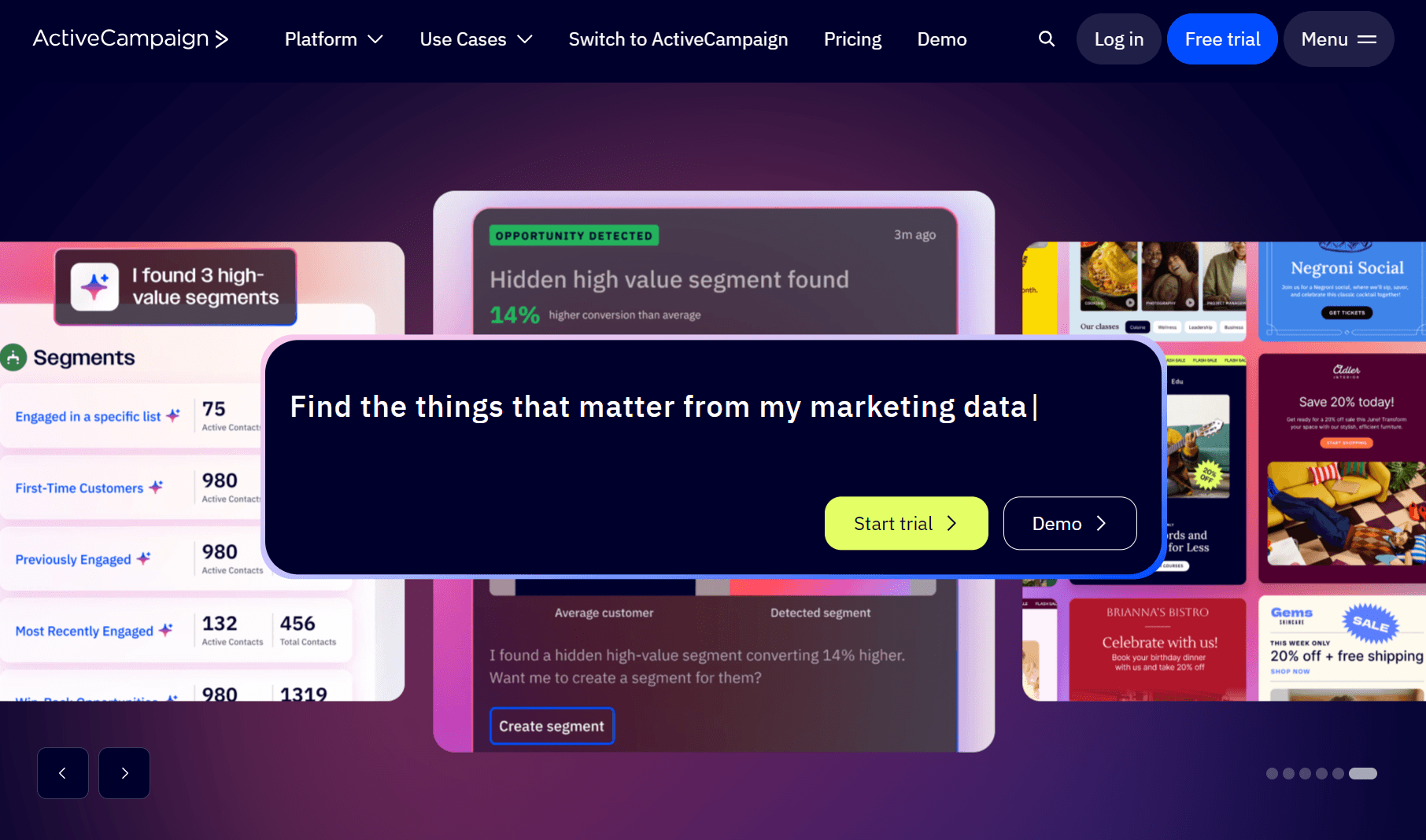
2. ActiveCampaign: The Automation and CRM Maestro
- Overview: ActiveCampaign is a formidable ConvertKit alternative for marketing teams, SaaS companies, and businesses requiring advanced automation coupled with robust CRM features. It excels at building intricate, goal-oriented customer journeys and providing detailed insights into how marketing efforts translate into sales.
- Key Strengths:
- Sophisticated Automation: Boasts over 950 automation "recipes," allowing users to create highly customized workflows triggered by a vast array of customer behaviors and data points.
- Integrated CRM: A powerful CRM system allows businesses to manage sales pipelines, track lead interactions, and align marketing and sales efforts seamlessly.
- Goal Tracking and Attribution: Unique goal-tracking features allow marketers to define specific objectives (e.g., increasing first-time purchases) and monitor progress across all marketing activities, providing clear ROI attribution.
- Machine Learning & AI: Incorporates AI for predictive sending, lead scoring, and dynamic content, optimizing engagement and conversion.
- Site and Event Tracking: Provides in-depth tracking of website behavior and custom events, feeding valuable data into automation and segmentation.
- Limitations: Can have a steeper learning curve due to its extensive feature set. While it offers e-commerce integrations, its primary strength lies in its broader marketing and sales automation rather than purely e-commerce-specific tools like Omnisend.
- Versus ConvertKit: ActiveCampaign provides a far more advanced automation engine and a comprehensive CRM, features largely absent in ConvertKit. While ConvertKit focuses on creator monetization, ActiveCampaign targets businesses needing to orchestrate complex marketing and sales processes.
- Ideal Use Cases: Marketing teams, growing e-commerce stores, and SaaS businesses that need a powerful, integrated platform for advanced automation, lead nurturing, sales pipeline management, and data-driven goal tracking.
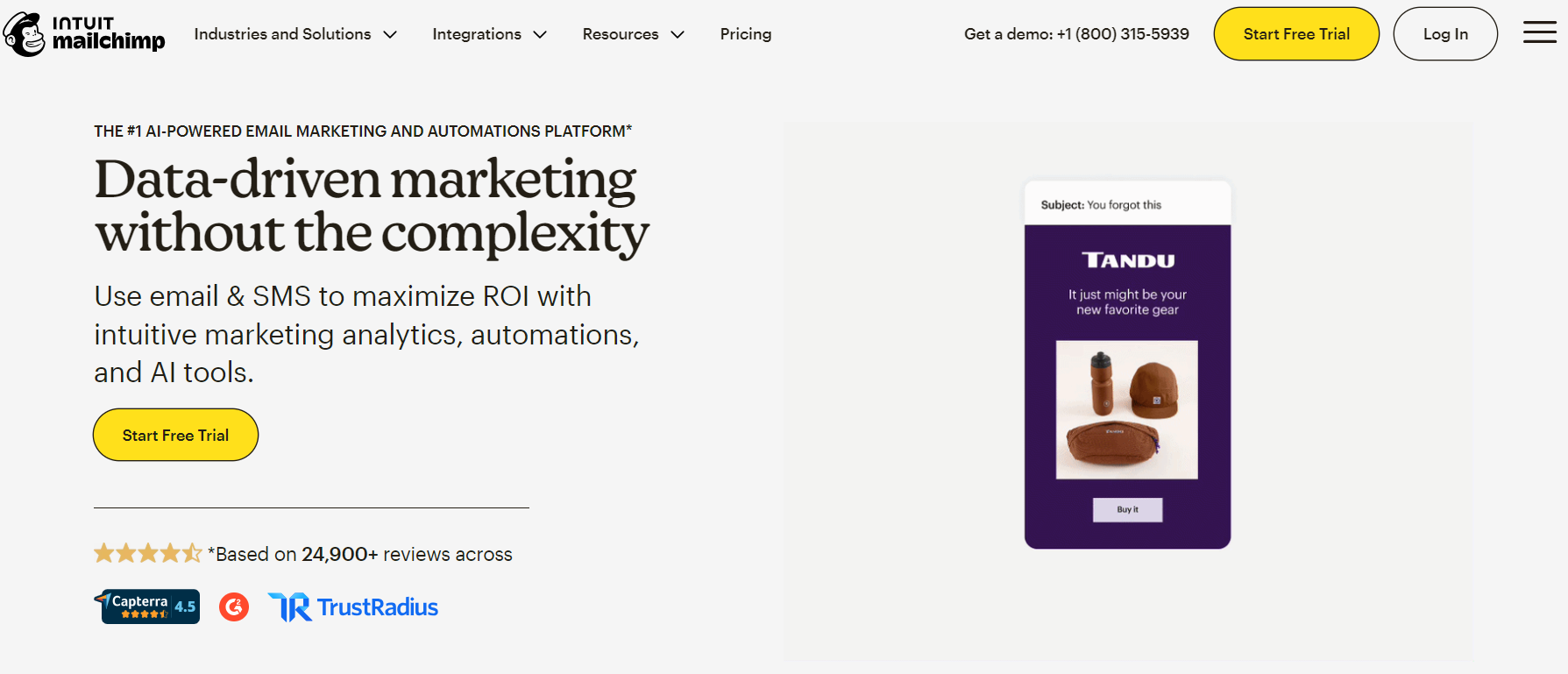
3. Mailchimp: The Small Business Champion
- Overview: Mailchimp remains a popular ConvertKit alternative, particularly for small businesses, service providers, and solopreneurs seeking an all-in-one platform for email marketing, website building, and audience management. It’s known for its user-friendly interface and comprehensive suite of basic marketing tools.
- Key Strengths:
- User-Friendly Interface: Highly accessible for beginners, with intuitive drag-and-drop editors for emails and landing pages.
- Integrated Marketing Tools: Offers more than just email, including a website builder with pre-built designs, landing pages, social media posting tools, and basic CRM functionalities.
- Predictive Segmentation: Uses AI to offer insights into customer behavior and suggest optimized segments.
- Built-in Surveys: A unique feature allowing businesses to collect customer feedback directly through email campaigns.
- Extensive Template Library: Provides over 130 email templates, significantly more than ConvertKit’s 40+.
- Limitations: While it has expanded its e-commerce capabilities, its advanced automation and deep e-commerce integrations may not match dedicated platforms like Omnisend or Klaviyo. Pricing can escalate quickly with growing contact lists and advanced features.
- Versus ConvertKit: Mailchimp offers a broader range of general marketing tools, including a more capable website builder and more email templates. While it lacks ConvertKit’s specific content monetization features, it covers more basic e-commerce automations and provides a more rounded solution for small businesses needing a central marketing hub.
- Ideal Use Cases: Small businesses, startups, and service providers who need an easy-to-use platform for email marketing, list building, basic automation, and an integrated solution for website and social media presence without the complexity of advanced CRM or deep e-commerce analytics.
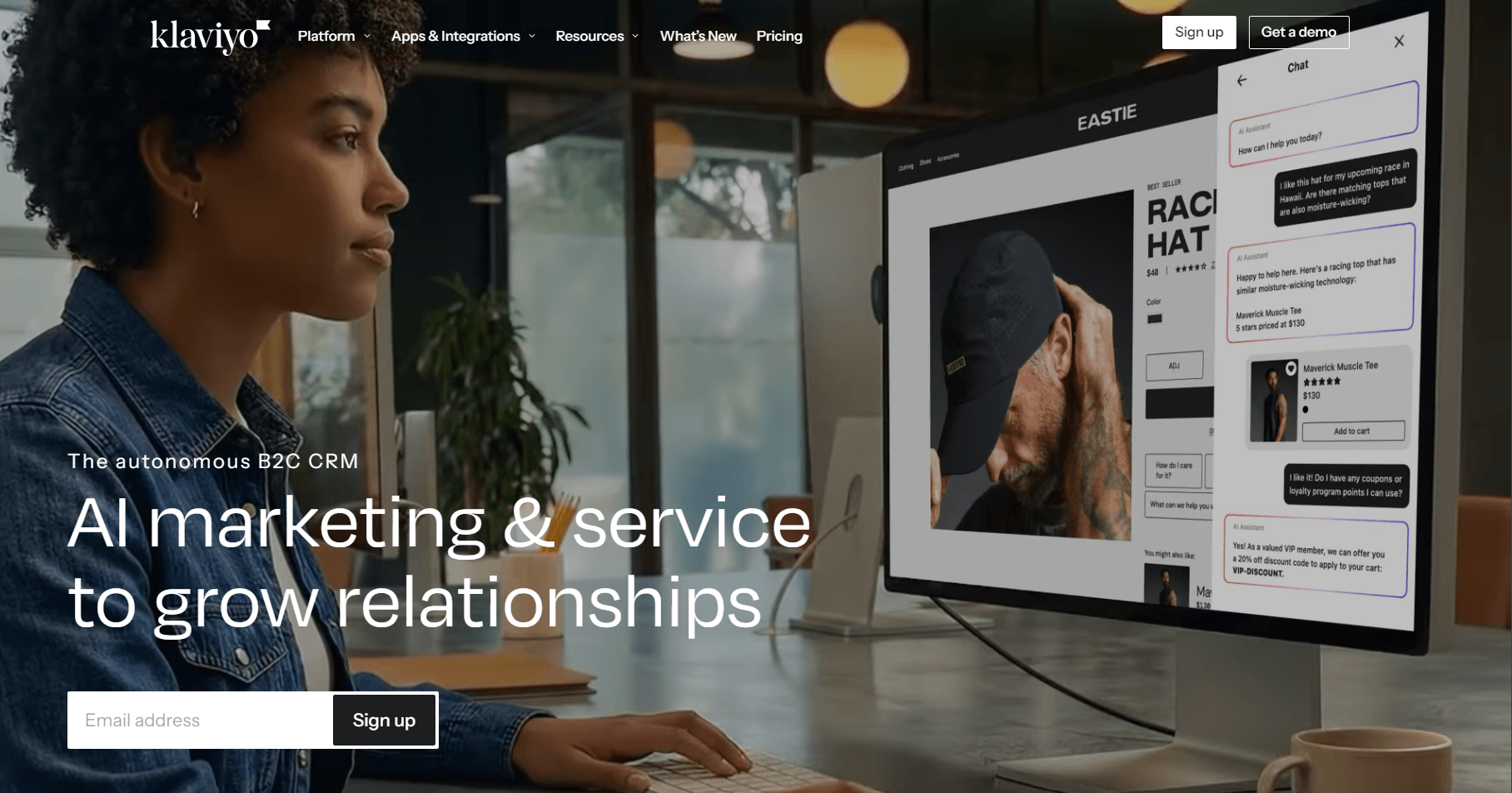
4. Klaviyo: The Data-Driven E-commerce Specialist
- Overview: Klaviyo is a leading ConvertKit alternative for mid-to-large e-commerce stores that require advanced data analytics and highly personalized, multi-step customer journeys. It excels at leveraging customer data to drive intelligent marketing decisions and maximize revenue.
- Key Strengths:
- Deep E-commerce Data Integration: Collects, stores, and analyzes a vast amount of customer data from e-commerce platforms, enabling unparalleled insights into customer behavior, purchases, and preferences.
- Predictive Analytics: Features unique predictive analytics, including customer lifetime value (CLV) prediction, churn risk assessment, and personalized product recommendations, empowering proactive marketing strategies.
- Advanced Multi-step Flows: Allows for the creation of complex automation flows with multiple entry points, conditional logic, and A/B testing, catering to intricate customer journeys.
- RFM Analysis: Utilizes Recency, Frequency, and Monetary analysis to segment customers effectively and tailor engagement strategies.
- Robust Segmentation: Offers highly granular segmentation based on virtually any data point, facilitating hyper-personalized messaging at scale.
- Limitations: Can be more expensive than other options, especially for larger contact lists. Its learning curve can be steeper due to the depth of its features and data-centric approach. While powerful, its interface might feel less intuitive for beginners compared to Omnisend or Mailchimp.
- Versus ConvertKit: Klaviyo is a fundamentally different tool, designed specifically for data-intensive e-commerce operations. It surpasses ConvertKit in data collection, predictive analytics, and the sophistication of e-commerce automation, catering to businesses with larger customer bases and more complex marketing needs.
- Ideal Use Cases: Growing to large e-commerce stores that need to leverage extensive customer data for highly personalized marketing, complex automation, and predictive insights to optimize customer engagement and revenue.
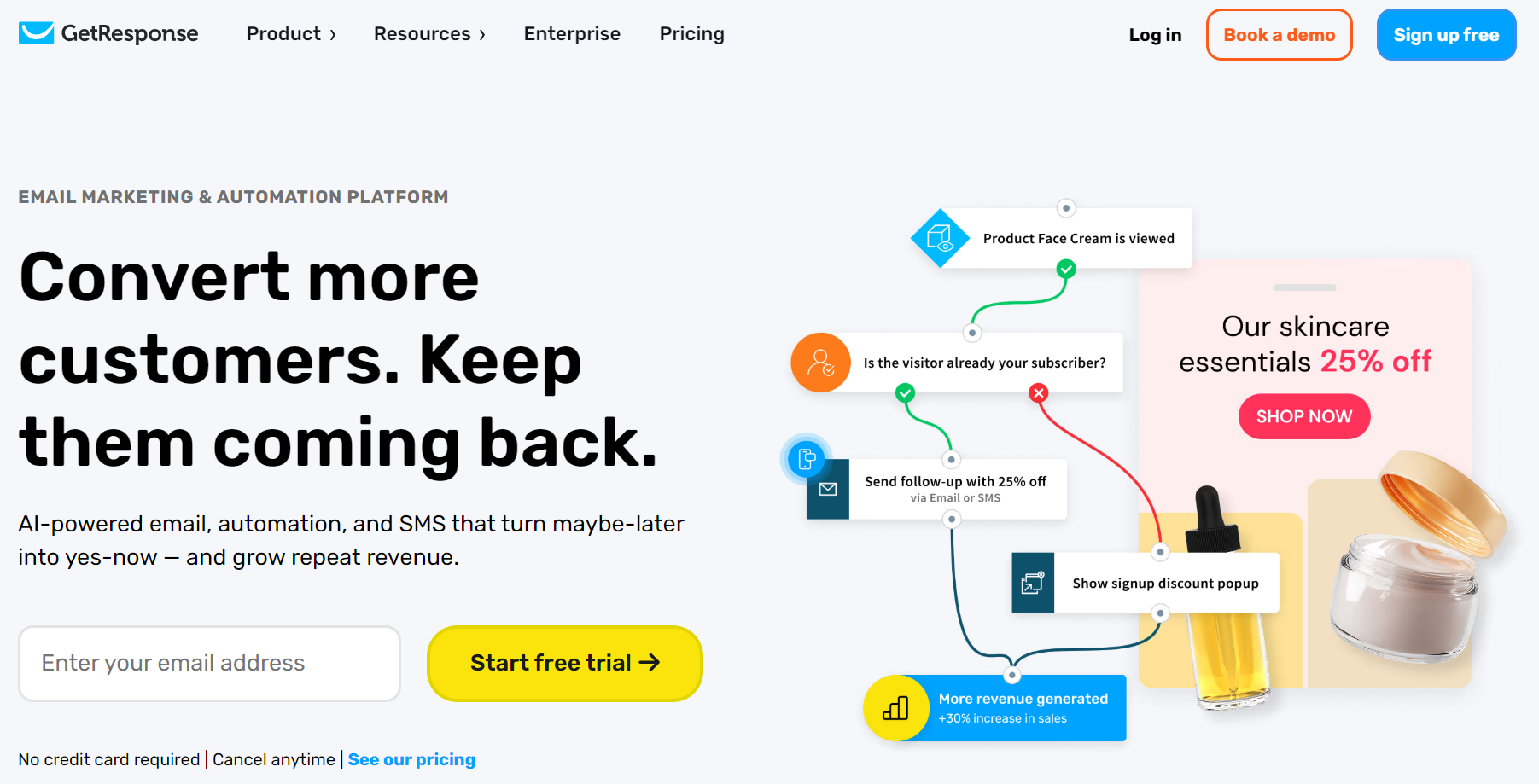
5. GetResponse: The All-in-One Marketing Suite for Creators and Beyond
- Overview: GetResponse positions itself as a comprehensive online marketing platform, making it a strong ConvertKit alternative for creators and educators who require more than just email, as well as small businesses seeking a broad range of marketing tools.
- Key Strengths:
- Integrated Course Creator & Webinars: Unique features for creators, allowing them to build and host online courses and webinars directly within the platform, complete with payment integrations (PayPal, Stripe).
- Full Marketing Automation: Offers robust automation capabilities for email, landing pages, and workflows covering various customer journey stages, including welcome, birthday, and conversion funnel flows.
- Website Builder & Landing Pages: Provides tools to create professional websites and high-converting landing pages.
- CRM and Sales Funnels: Includes basic CRM functionalities and a dedicated "Conversion Funnel" feature to guide prospects through the sales process.
- Live Chat: Offers live chat functionality to enhance customer support and engagement.
- Limitations: While comprehensive, its various tools might not be as specialized or deeply integrated as dedicated platforms (e.g., its e-commerce features are less robust than Omnisend’s). Its pricing for the full suite of features can be higher than ConvertKit’s.
- Versus ConvertKit: GetResponse’s "Creator" plan is the most like-for-like alternative for creators, offering a course creator and webinars that ConvertKit lacks. While ConvertKit offers niche features like virtual tip jars, GetResponse provides a broader marketing suite, making it more versatile for educators and small businesses needing an all-encompassing platform.
- Ideal Use Cases: Educators, coaches, and content creators who want to host courses and webinars in addition to email marketing. Also suitable for small businesses looking for an all-in-one platform to manage email, website, landing pages, and basic automation for lead generation and customer engagement.
6. Brevo (formerly Sendinblue): The Budget-Friendly Automation Powerhouse
- Overview: Brevo is a cost-effective ConvertKit alternative, particularly appealing to small businesses and service providers on a budget who require strong email and SMS automation capabilities without a hefty price tag.
- Key Strengths:
- Cost-Effective Pricing: Offers a generous free plan and competitive paid plans based on email send volume, making it highly accessible for budget-conscious users.
- Robust Automation: Provides powerful automation features even in its free tier, including real-time event triggers, abandoned cart recovery, and multi-channel automations for email and SMS.
- SMS Marketing: Native SMS capabilities allow for integrated multi-channel campaigns.
- Transactional Emails: Excellent for sending transactional emails (e.g., order confirmations, shipping updates) reliably.
- Sales Pipeline & CRM: Includes basic CRM and sales pipeline management features to track leads and customer interactions.
- Limitations: While strong on automation, its e-commerce integrations and advanced analytics might not be as deep as specialized platforms. The website builder is more basic, and advanced segmentation might require more manual effort.
- Versus ConvertKit: Brevo offers significantly more email and SMS automation capabilities than ConvertKit, along with CRM features, often at a lower entry price point. While it lacks ConvertKit’s content monetization focus, it provides more general business utility for small businesses and service providers.
- Ideal Use Cases: Small businesses, startups, and service providers who need a powerful, budget-friendly solution for email and SMS marketing automation, transactional emails, and basic CRM, especially if they value robust automation over niche creator tools.
Strategic Considerations for Platform Selection
Choosing the right marketing automation platform is a critical strategic decision that can significantly impact a business’s growth trajectory and operational efficiency. Beyond comparing feature lists, businesses should consider:
- Business Model: Is it primarily e-commerce, content creation, SaaS, or service-based? This dictates the core feature set required.
- Growth Stage: Startups may prioritize ease of use and affordability, while established businesses need scalability, advanced analytics, and deep integrations.
- Budget Allocation: Understand the total cost of ownership, including contact limits, email send volumes, and access to essential features across different plans.
- Team Expertise: The learning curve of a platform should align with the technical proficiency of the marketing team.
- Data Strategy: How important are advanced analytics, predictive insights, and deep customer data utilization for personalized marketing?
Common Pitfalls to Avoid During Platform Migration
Switching email platforms is more than just exporting contacts; it’s a strategic undertaking. Common mistakes can lead to lost revenue, reputational damage, and operational headaches:
- Underestimating Complexity: Migrating existing automations, segmentations, and historical data requires careful planning and execution.
- Neglecting Data Hygiene: Importing a messy contact list can lead to poor deliverability and wasted marketing efforts. Clean and segment your list before migration.
- Failing to Map Customer Journeys: Rebuilding automations without a clear understanding of your existing customer journeys can disrupt communication flows.
- Ignoring Sender Reputation: A sudden switch without warming up new IPs or sending domains can trigger spam filters, severely impacting deliverability.
- Lack of Internal Training: Ensure your team is adequately trained on the new platform to maximize its potential and avoid operational bottlenecks.
- Inadequate A/B Testing: Don’t assume existing content and strategies will perform the same way on a new platform. Test, optimize, and iterate.
- Choosing the Wrong Fit: Selecting a platform that doesn’t align with future growth plans or current needs can lead to another costly migration down the line.
The Broader Impact and Implications for 2026
The increasing sophistication of email and marketing automation platforms reflects a broader industry trend towards hyper-personalization and omnichannel customer engagement. For e-commerce businesses, the ability to seamlessly integrate marketing efforts across various touchpoints is no longer a luxury but a necessity for competitive advantage. Platforms like Omnisend and Klaviyo, with their specialized e-commerce focus, are driving higher customer lifetime value through intelligent automation and data-driven insights. ActiveCampaign’s blend of CRM and automation points towards a future where marketing and sales are inextricably linked. The emphasis on AI-driven tools across many platforms indicates a future where efficiency and predictive capabilities will become standard, allowing businesses to anticipate customer needs and deliver highly relevant experiences at scale.
Conclusion
While ConvertKit remains an excellent tool for content creators and digital product sellers, the evolving demands of the e-commerce landscape by 2026 necessitate a more specialized approach for online retailers. The "best" ConvertKit alternative is not a one-size-fits-all solution but rather a strategic choice contingent on specific business models, growth aspirations, and budget constraints.
For e-commerce stores prioritizing deep integration, comprehensive multichannel automation (email, SMS, web push), and a clear path to maximizing ROI, Omnisend stands out as the top contender. Businesses with complex sales cycles and a need for integrated CRM and advanced automation will find ActiveCampaign to be a powerful ally. Small businesses seeking an accessible, all-in-one marketing hub will appreciate Mailchimp’s versatility, while budget-conscious operations will benefit from Brevo’s robust automation at an attractive price point. For larger e-commerce operations driven by extensive data and predictive analytics, Klaviyo offers unparalleled depth. Finally, creators and educators requiring a broader suite of tools including course hosting and webinars will find GetResponse a compelling option.
The decision to switch from ConvertKit is a strategic investment in a business’s future, promising enhanced customer experiences, optimized marketing performance, and sustained revenue growth in an increasingly competitive digital world.









