
 rifanmuazin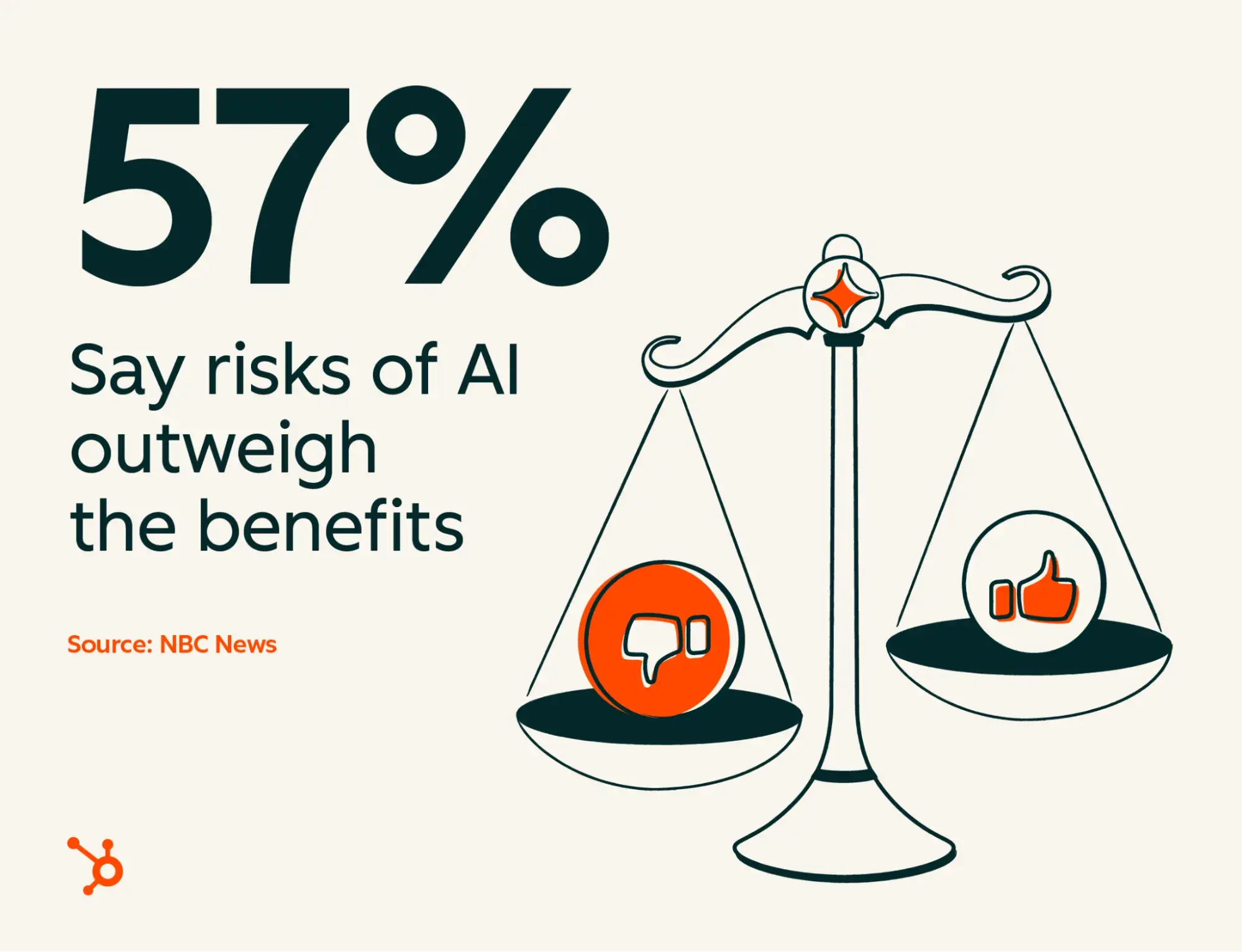
A significant divergence has emerged between the prevailing discourse surrounding artificial intelligence and the practical demands articulated by businesses actively seeking to implement AI solutions. While media outlets, venture capitalists, leading AI laboratories, and prominent influencers frequently champion AI as a revolutionary force poised to displace human workers, overhaul existing software infrastructures, and prioritize “token-maxxing” as an inherent goal, a different set of priorities is gaining traction among operational business leaders. These leaders are increasingly focused on fundamental questions: how can AI enhance their workforce capabilities, which AI systems can be reliably trusted, and how can the return on investment (ROI) for AI expenditures be concretely measured? This growing chasm between market perception and operational reality forms the bedrock of HubSpot’s articulated perspectives on AI, honed over three and a half years of intensive development and observation of customer adoption. The company posits that its core convictions regarding AI are largely absent from the broader public conversation.
HubSpot’s stance is underpinned by six key principles that collectively present a counter-narrative to the dominant AI discourse. These principles emphasize practical outcomes, integrated systems, accessibility for small and medium-sized businesses (SMBs), cost-efficiency aligned with customer value, human empowerment, and a comprehensive definition of trust.
The Evolution of AI Perception and Reality
The recent surge in generative AI capabilities, particularly since late 2022 with the widespread availability of tools like ChatGPT, has ignited a global fervor around artificial intelligence. Venture capital poured billions into AI startups, with investments reaching unprecedented levels. According to PitchBook data, global VC funding for AI companies surpassed $50 billion in 2023, signaling immense confidence in the sector’s transformative potential. This financial enthusiasm, coupled with media narratives often highlighting AI’s potential for automation and job replacement, has created a perception that AI’s primary value lies in its capacity for autonomous operation and radical disruption. However, HubSpot argues that this perception often overlooks the nuanced operational realities faced by the vast majority of businesses, especially those outside the Fortune 500.
From AI Activity to Tangible Business Outcomes
A central tenet of HubSpot’s perspective is the distinction between AI activity and concrete business outcomes. The industry, it suggests, has frequently conflated mere “motion” with genuine “progress.” While AI undeniably excels at automating tasks such as drafting emails, generating summaries, or conducting research—capabilities that HubSpot itself integrates into its offerings—these are fundamentally inputs, not desired results. Engaging in AI activities without a clear connection to measurable business outcomes is deemed “theater” by HubSpot, lacking true value.
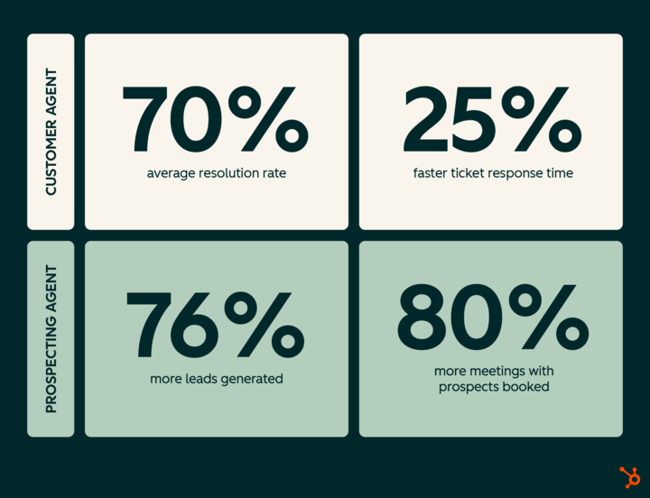
The companies demonstrating genuine success with AI are those that adopt a problem-first approach, working backward from a defined business challenge rather than forward from a model demonstration. HubSpot cites its own products as examples: customers utilizing its Customer Agent have reportedly seen a 25% reduction in ticket response times, alongside a 70% average resolution rate. Similarly, Prospecting Agent users have experienced a 76% increase in lead generation and an 80% increase in booked meetings with prospects. These metrics represent tangible improvements in efficiency and growth, directly impacting a business’s bottom line. Reflecting this philosophy, HubSpot transitioned its Customer Agent and Prospecting Agent to outcome-based pricing in April, aligning its financial model with its belief that measurable results, not just usage, are paramount. This move challenges the common industry practice where customers pay for AI activity, often under the guise of buying transformation, without a direct link to value delivery.
AI as Necessary, But Not Sufficient: The Need for Integrated Systems
While AI has significantly lowered the barrier to entry for certain technical tasks, such as generating code or building prototypes, HubSpot asserts that AI alone is insufficient to drive sustained value for growing businesses. The ease of prototype creation, for instance, often belies the brittle nature of such solutions under real-world operational demands. The underlying complexities of running a thriving business, far from being simplified, have arguably become more challenging.
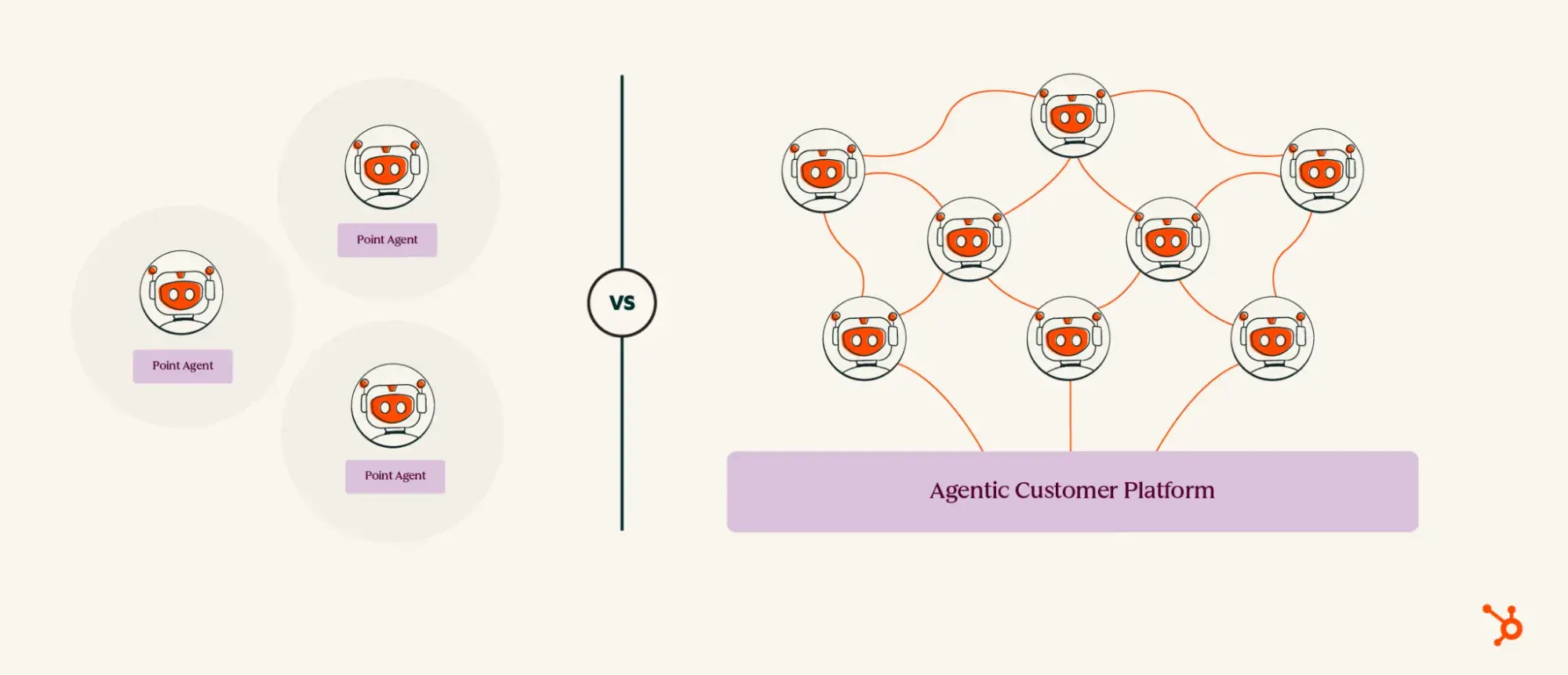
Key requirements remain steadfast: maintaining clean, integrated data rather than creating new data silos; seamless integration with dozens of existing applications; and establishing a holistic, context-rich view of the customer across marketing, sales, and service functions. The prevailing industry trend, HubSpot observes, often involves selling isolated AI models or single-purpose agents. What is frequently omitted from these offerings is the crucial “system in between”—the comprehensive data hygiene, meticulous workflow design, and essential change management required to make AI truly effective. As businesses accumulate disparate point agents, the complexity of managing these foundational elements only escalates.
HubSpot envisions a future where AI is deeply embedded within a coherent system, where data, workflows, agents, and human personnel share a unified context. AI, in this view, constitutes a powerful new layer that enhances the existing foundation, rather than replacing it entirely. This perspective underscores the critical role of robust platforms capable of integrating AI functionalities into a cohesive operational framework, addressing the widespread challenge of data fragmentation and system interoperability that plagues many organizations.
AI for the “Future 5000,” Not Exclusively the “Fortune 500”
A significant point of contention for HubSpot is the perceived bias in current AI development roadmaps towards large enterprises. Frontier AI labs, by their own admission, invest billions in deploying forward-thinking engineers to tailor and integrate AI solutions within major corporations. This model, while viable for organizations with vast financial and technical resources, is fundamentally inaccessible to the millions of growing businesses globally that are expected to fuel future economic growth. Small and midsize companies typically lack the capacity to engage dedicated teams of engineers, undertake massive data pipeline overhauls, or construct bespoke context platforms necessary for enterprise-grade AI deployment.
When the consensus proclaims that “AI is for everyone,” HubSpot challenges the practical reality of who can truly leverage these advancements today. In effect, it often benefits those already possessing the means—extensive engineering departments and development teams—to operationalize complex AI systems. This selective accessibility, HubSpot argues, runs counter to the spirit of democratization often associated with technological progress. According to the U.S. Small Business Administration, small businesses account for 99.9% of all U.S. businesses and employ nearly half of the private sector workforce, highlighting the immense economic importance of making AI truly accessible and beneficial to this segment.
Optimizing for Outcomes Per Token, Not Tokens Per Task
HubSpot highlights a fundamental business model conflict within the AI industry that customers are only beginning to discern. Many AI vendors, whose revenue models are directly tied to AI usage, lack a financial incentive to make AI more cost-effective or efficient. Their interest lies in maximizing usage, thereby keeping the “meter running.” This often translates into customers paying for AI “activity” while being promised “transformation,” a disconnect that can lead to spiraling costs without commensurate value.
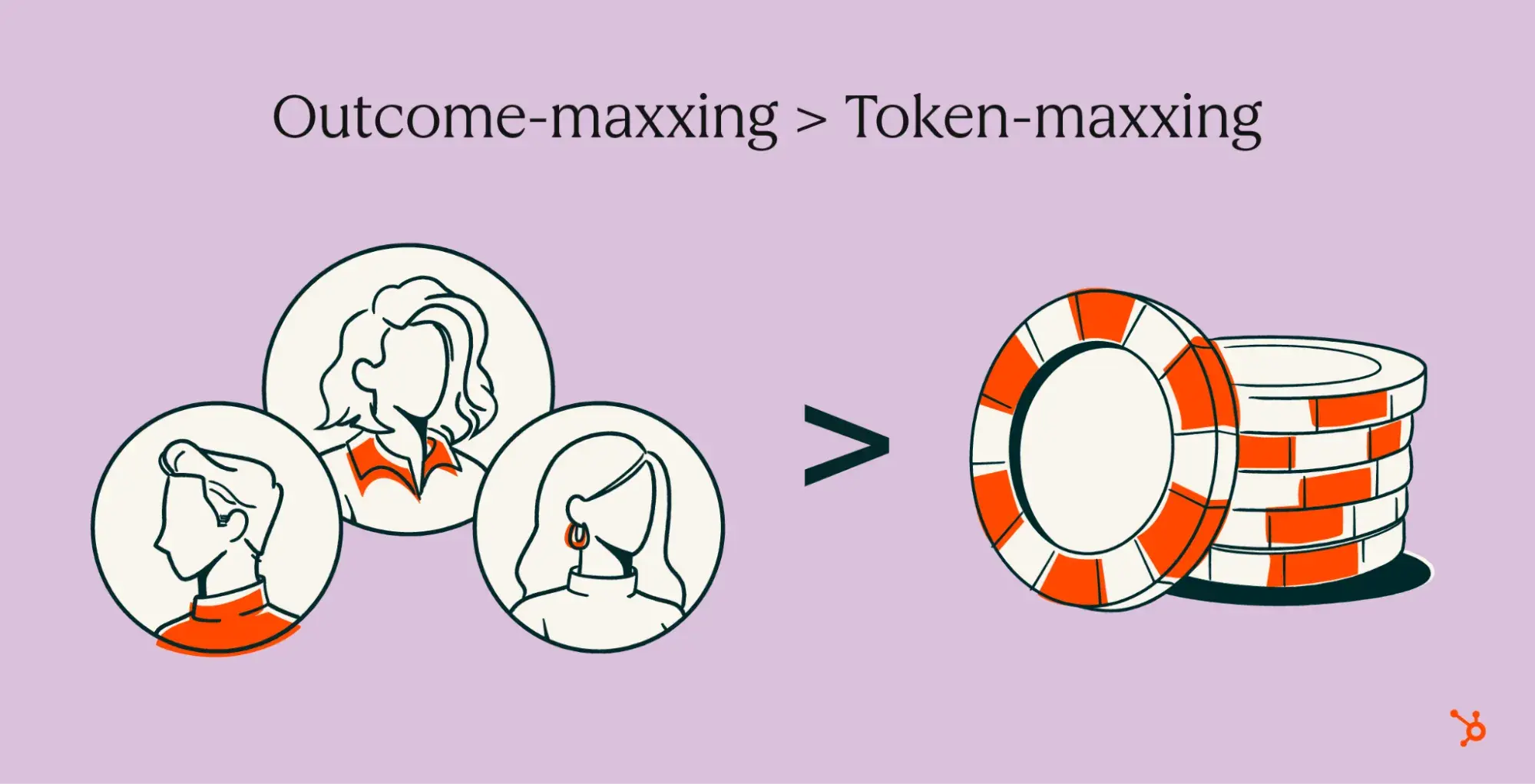
HubSpot advocates for an inverse approach to AI economics: clearly define the desired customer outcome and then identify the most cost-efficient path to achieve it. This responsibility, HubSpot asserts, should fall not only to the customer but also to the vendor. The current paradigm, favoring “token-maxxing” (maximizing the number of tokens processed), primarily benefits the vendor. “Outcome-maxxing,” conversely, aligns with the customer’s interest in achieving results efficiently. HubSpot posits that vendors who genuinely align their business models with customer outcomes will ultimately succeed, while those prioritizing usage metrics may face long-term challenges in maintaining customer trust and loyalty. The rising costs associated with large language model inference and training have made efficiency a critical consideration, pushing developers and users to optimize token usage for practical applications.
AI Should Empower People, Not Replace Them
One of the loudest and most pervasive narratives surrounding AI is that of autonomy—the idea that AI agents will entirely replace human workers, leading to significant headcount reductions. This narrative, HubSpot contends, is primarily crafted for Wall Street, focusing on cost-cutting and efficiency gains, rather than for “Main Street” businesses concerned with employee welfare and operational continuity. HubSpot explicitly rejects this framing.
The company’s philosophy centers on building AI tools that augment human capabilities, making individuals more powerful in their roles rather than rendering them obsolete. This means empowering sales representatives to close more deals, marketers to execute more impactful campaigns, service professionals to resolve more complex customer issues, and business owners to manage more aspects of their operations independently. While HubSpot does develop autonomous agents, it views autonomy as a capability that customers can choose to leverage, not a mandate for human displacement. The company’s default settings are designed to support the human operator, enabling them to decide where AI can assist, where human oversight is crucial, and where AI can offer suggestions.
This perspective resonates with broader societal concerns regarding AI’s impact on employment and ethics. A 2022 NBC News poll cited in the original article indicated that 57% of the public believes the risks of AI outweigh its benefits, reflecting a significant apprehension about job displacement and other negative consequences. HubSpot’s approach champions “human authenticity and AI efficiency,” arguing that uniquely human attributes—trust, judgment, taste, and genuine relationships—will only become more valuable as AI automates routine tasks. Businesses that bet against human involvement risk alienating customers, employees, and the wider public.
Trust Beyond a Privacy Policy
The concept of “trust” in AI is frequently invoked by vendors, yet HubSpot argues that its definition is often too narrow. Most AI providers define trust primarily through security postures, such as commitments not to train on customer data, adherence to SOC 2 compliance standards, and offering enterprise single sign-on (SSO). While these security measures are undeniably important and constitute fundamental “table stakes,” they are not differentiating claims. They represent promises.
True trust, according to HubSpot, extends far beyond security and privacy. It encompasses a complete business posture, addressing how vendors select AI models, manage associated costs, ensure reliability, and establish robust governance frameworks for their AI agents. Customers are increasingly asking critical questions: Can I trust the model selection process? Can I trust the cost structure? Can I trust the system’s reliability and uptime? Can I trust the governance mechanisms in place? Privacy policies primarily articulate what a vendor will not do; a comprehensive trust framework, however, must explicitly define what a vendor will do. The industry, HubSpot suggests, is largely still answering the first question, leaving the more critical second question largely unaddressed. As AI becomes more pervasive, concerns about bias, transparency, and accountability are escalating, making robust governance and explainability integral to building genuine trust.
The Sum of HubSpot’s AI Philosophy
The prevailing AI consensus, HubSpot suggests, has persisted largely because its proponents have not yet been directly accountable for its real-world implications. Directives like “cut headcount,” “rip out the old stack,” “keep the meter running,” and “trust us” have shaped much of the AI narrative.
However, growing businesses operate under different constraints. They lack the luxury of time to sift through hype versus reality. They cannot afford to deploy large teams of engineers for complex AI implementations. They cannot absorb pricing models that charge for activity while claiming to deliver transformation. Crucially, they cannot build their future on technological stacks that marginalize or eliminate human contributions.
What these businesses require is an AI foundation specifically designed to work for them—one built to empower their people, not eliminate them, and delivered by vendors whose business models are inherently aligned with their customers’ success, rather than opposed to it. This holistic, outcome-driven, and human-centric approach to artificial intelligence is precisely what HubSpot asserts it is building and delivering to the market. This philosophy signals a potential shift in how AI value is perceived, measured, and delivered, particularly for the vast and vital segment of growing businesses globally.









