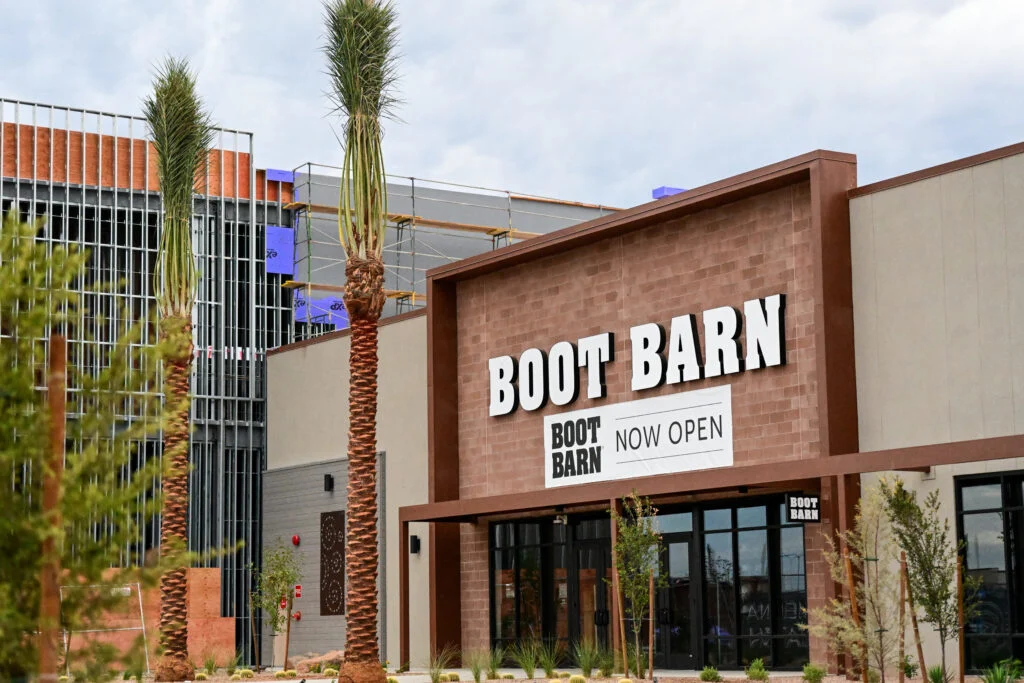
Boot Barn has reported a significant surge in its e-commerce sales during the first fiscal quarter of 2027, which concluded on June 27, 2026. The Western wear retailer attributes this impressive performance directly to its sophisticated omnichannel capabilities, which have become a cornerstone of its customer engagement strategy. This growth underscores the evolving retail landscape, where seamless integration between online and physical channels is no longer a differentiator but a critical success factor.
During the company’s quarterly earnings call, CEO John Hazen highlighted the strong customer adoption of its "buy online, pick up in store" (BOPIS) and ship-to-store services. These offerings have been instrumental in driving traffic to physical locations while simultaneously enhancing the digital shopping experience. In fiscal Q1 2027, Boot Barn’s e-commerce sales experienced a notable increase of 13.4%, a testament to the effectiveness of its integrated approach.
"In addition to driving online sales growth, our omnichannel capabilities remain a meaningful competitive advantage and reflect our team’s commitment to operate as a stores-first organization," Hazen stated to analysts. He further elaborated that a substantial portion of the company’s e-commerce orders are now fulfilled directly from its brick-and-mortar stores. This in-store fulfillment strategy not only bolsters merchandise margins by leveraging existing inventory and reducing shipping costs but also provides customers with access to a more extensive product assortment than might be available online at any given moment. This synergy between online demand and in-store fulfillment is a key driver of both efficiency and customer satisfaction.
The company’s overall financial performance for fiscal Q1 2027 was equally robust. Boot Barn recorded total sales of approximately $593.52 million, marking a substantial 17.7% increase compared to the $504.07 million reported in the same quarter of the previous fiscal year. This growth was supported by a healthy rise in physical same-store sales, which increased by 3.8% during the quarter. When factoring in e-commerce, Boot Barn’s total same-store sales saw an overall growth of 4.7% in Q1, indicating a broad-based strength across all sales channels.
Boot Barn’s strategic positioning in the retail sector is further evidenced by its rankings in industry databases. The company is recognized as No. 380 in the Digital Commerce 360 Top 1000 Database, a comprehensive ranking of North America’s largest online retailers based on their annual e-commerce sales and other key metrics. Furthermore, Boot Barn has been included in the inaugural AI Rankings by Digital Commerce 360, securing the No. 554 position. This new set of rankings, available within the Top 1000 Pro with AI Database, highlights the company’s early adoption and integration of artificial intelligence technologies into its operations.
Driving In-Store Traffic and Enhancing Customer Engagement
The success of Boot Barn’s omnichannel strategy is directly linked to the increased foot traffic generated by its BOPIS and ship-to-store services. Hazen emphasized that these services not only simplify the purchasing process for customers but also serve as a powerful tool for driving engagement within physical stores. By offering convenient options for customers to receive their online orders, Boot Barn encourages repeat visits and fosters a deeper connection with its brand. Simultaneously, these services contribute to reduced fulfillment costs by optimizing logistics and leveraging the existing store infrastructure.
Beyond its core omnichannel offerings, Boot Barn is experiencing significant traction with its exclusive brand websites. Traffic to and sales from these dedicated brand sites are on a consistent upward trend. While acknowledging that conversion rates on e-commerce sites typically hover around 2%, Hazen noted that the primary objective for these exclusive brand sites is not solely direct sales. Instead, Boot Barn aims to leverage these platforms as a powerful storytelling and brand-building tool. The goal is to educate consumers about brands like Cheyenne, Cody James, and Hawx, offering a richer narrative than what can be conveyed on a standard product detail page on BootBarn.com. Millions of online sessions on these sites provide customers with in-depth brand experiences, fostering a stronger emotional connection that can ultimately translate into in-store visits and purchases.
Expanding Reach Through Social Commerce and Influencer Marketing
Boot Barn is also making notable strides in the social commerce space, particularly on TikTok Shop. The retailer is effectively leveraging this platform to sell its own private label brands and collaborate with third-party brands. Hazen highlighted the company’s strategic engagement with "everyday influencers," a segment that includes "nano creators" or "nano influencers" with fewer than 10,000 followers. This approach allows Boot Barn to connect with highly engaged niche audiences in an authentic and relatable manner.
A specific example of this strategy is Boot Barn’s partnership with various sororities during the "RushTok" season. This targeted collaboration aims to reach a key demographic with tailored content and promotions. Hazen expressed strong optimism about the potential of TikTok Shop, viewing it as a vital channel for reaching new customer segments and driving brand awareness and sales. This diversification of sales channels beyond traditional e-commerce and physical stores is crucial for sustained growth in the dynamic retail environment.
Enhancing Customer Experience Through Technology and Data
Boot Barn’s commitment to elevating the customer experience was a key theme discussed at the Salesforce Connections 2026 conference in Chicago. Allie Cornett, Director of User Experience at Boot Barn, shared insights into the company’s ongoing efforts to create a frictionless and unified customer journey, irrespective of the channel. "We work really hard on making sure the customer doesn’t think about the channel," Cornett stated. "They just experience Boot Barn." This philosophy drives the company’s investments in technology and process improvements aimed at bridging the gap between online and offline interactions.
A significant focus for Boot Barn has been on mitigating revenue loss stemming from "search dead ends" on its website. To address this, the company is implementing Salesforce’s "intent-aware discovery" technology. This advanced solution aims to simulate shopper journeys, reduce reliance on manual rule-setting, and ultimately drive conversions by delivering highly contextual product recommendations. This proactive approach to search optimization ensures that customers can easily find what they are looking for, even when their search queries are not perfectly aligned with product catalog terms.
Cornett outlined three primary objectives guiding Boot Barn’s user experience initiatives:
- Seamless Channel Integration: Ensuring that customer data, product details, promotional offers, pricing information, and loyalty program details are consistently accessible and synchronized across all touchpoints. This unified data approach allows for personalized interactions and a cohesive brand experience.
- Bridging the In-Store to Online Gap: Acknowledging the challenge of replicating the rich, educational, and experiential aspects of shopping in a physical store to the online environment. This involves translating the product discovery process, the knowledgeable assistance from store associates, and the overall brand immersion into the digital realm.
- Consistent Brand Voice and Knowledge Transfer: Utilizing technology to ensure that the brand’s unique voice and tone are maintained across all channels, while also transferring crucial product knowledge from in-store experts to the online customer.
The company is leveraging Salesforce’s agentic artificial intelligence (AI) to tackle the challenge of replicating the in-store experience online. Agentic AI is proving instrumental in maintaining brand consistency, particularly with the use of specific vernacular. Cornett noted that while Boot Barn associates are referred to as "partners," this terminology is not directly customer-facing. However, the company is focused on ensuring that the deep product knowledge and training provided to store associates are also accessible to online customers. This involves feeding comprehensive product details and sales training materials into the AI system, enabling it to provide customers with knowledgeable, friendly, and contextually relevant information that mirrors the in-store experience. This meticulous attention to detail in knowledge transfer and brand voice ensures that customers receive a consistent and high-quality interaction, regardless of how they choose to engage with Boot Barn.
Industry Context and Future Outlook
Boot Barn’s success in fiscal Q1 2027 occurs within a broader retail environment characterized by increasing consumer expectations for seamless, personalized, and convenient shopping experiences. The company’s strategic investment in omnichannel capabilities, coupled with its embrace of emerging technologies like AI and social commerce, positions it favorably for continued growth. The ability to effectively blend the tangible benefits of physical retail with the convenience and reach of digital platforms is becoming a defining factor for success in the modern retail landscape.
The retailer’s consistent performance and strategic initiatives indicate a forward-thinking approach that anticipates and adapts to evolving consumer behaviors and technological advancements. As Boot Barn continues to refine its customer experience and expand its market reach, its integrated strategy is likely to remain a key driver of its competitive advantage and financial success in the coming fiscal periods. The company’s presence in key industry rankings further validates its strong performance and its influence within the North American retail sector.
For other retailers looking to emulate Boot Barn’s success, the focus on leveraging existing physical assets as fulfillment hubs, investing in robust data integration, and employing AI to personalize customer interactions are critical takeaways. The emphasis on building authentic brand narratives, particularly through social channels and influencer collaborations, also offers a valuable blueprint for engaging younger demographics and fostering brand loyalty. The ongoing evolution of e-commerce, with its increasing integration with physical retail and the rise of new digital marketplaces, demands a dynamic and adaptable strategy, a principle that Boot Barn appears to have fully embraced.


 Ammar Sabilarrohman
 Nila Kartika Wati