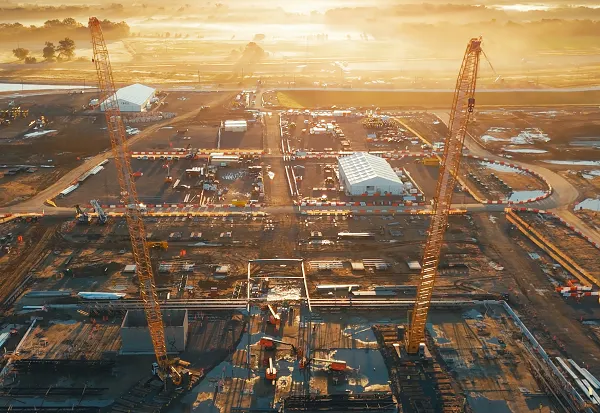
Meta Platforms, Inc. has announced a significant expansion of its data center project in Richland Parish, Louisiana, committing an additional investment exceeding $50 billion. This monumental undertaking is poised to be one of the largest investments in artificial intelligence (AI) infrastructure globally, designed to bolster Meta’s burgeoning network and power its ambitious AI development initiatives. The company touts the expansion as a catalyst for substantial regional economic growth, promising new job opportunities, robust support for local utilities infrastructure, and a suite of incentive programs tailored to benefit the local community, including schools, small businesses, and contractors. However, this colossal investment also reignites a broader national debate concerning the environmental and social ramifications of hyperscale data centers, a conversation amplified by legislative proposals seeking to temper the rapid pace of AI infrastructure development.
The Scale of Meta’s Investment and Stated Benefits
The core of Meta’s announcement centers on an unprecedented financial commitment to the Richland Parish region. "The data center expansion is an investment of more than $50 billion in the Richland Parish region – one of the largest investments in AI infrastructure in the world, built in America – supporting infrastructure projects, workforce development programs, and an energy agreement that is expected to save Entergy Louisiana customers more than $2 billion over 20 years, on top of the $650 million in savings for customers from the first agreement," Meta stated in its official communication. This declaration highlights not only the sheer magnitude of the capital injection but also its strategic alignment with national interests, emphasizing the "built in America" aspect.
Beyond the direct construction costs, Meta’s plan includes an additional $1 billion investment specifically earmarked for local infrastructure enhancements. This commitment is intended to alleviate potential strains on existing public services and utilities, ensuring that the local community can accommodate the increased operational demands of the expanded facility. The company’s narrative consistently emphasizes its role as a "net positive" force, framing the data centers as engines of prosperity that extend beyond direct employment to encompass broader community support mechanisms. These include dedicated programs for local schools, fostering educational opportunities and technological literacy; initiatives designed to bolster small businesses, potentially through local procurement and partnership schemes; and assurances of engagement with local contractors, aiming to keep a significant portion of the construction and maintenance spending within the regional economy. The promise of an energy agreement with Entergy Louisiana, projected to deliver billions in savings to customers over two decades, further underscores Meta’s strategy to present its expansion as a symbiotic relationship benefiting both the corporation and the local populace.
Meta’s Strategic Imperative: Fueling the AI Revolution
Meta’s aggressive expansion in Louisiana is inextricably linked to its strategic pivot towards artificial intelligence and the metaverse. The company, which owns Facebook, Instagram, and WhatsApp, is locked in an intense global race to develop and deploy cutting-edge AI technologies, from advanced large language models (LLMs) to sophisticated generative AI applications. These technologies demand unprecedented computational power, requiring vast networks of interconnected servers, storage devices, and networking equipment housed within hyperscale data centers. Each iteration of AI models, particularly those involved in deep learning and machine learning, necessitates more data and more processing capability, making data centers the indispensable backbone of the AI revolution.
The computational demands of modern AI are staggering. Training a single large language model can consume energy equivalent to what several homes use in a year. As Meta continues to innovate in areas like conversational AI, content moderation, personalized recommendations, and immersive metaverse experiences, its data center footprint must grow commensurately. This expansion in Louisiana, alongside other global projects such as the one in Canada, signifies Meta’s proactive approach to building the foundational infrastructure required to maintain its competitive edge in the rapidly evolving AI landscape. The choice of Louisiana, a state known for its energy resources and economic development incentives, aligns with Meta’s need for stable power supply and a favorable business environment.
A Chronology of Meta’s Louisiana Footprint
Meta’s engagement with Louisiana began several years prior to this latest announcement. The initial phase of the data center project in Richland Parish broke ground, marking Meta’s first significant infrastructure investment in the state. While specific initial investment figures were not as widely publicized as the current expansion, the establishment of the original facility laid the groundwork for the robust relationship between Meta and the local community. The selection of Richland Parish was reportedly influenced by factors such as access to reliable power, available land, and a skilled workforce, along with state and local economic development incentives designed to attract major tech investments.
Over time, as the demands of Meta’s global operations and its burgeoning AI ambitions intensified, the company began to assess the need for further expansion. The initial data center’s successful integration into the regional economy, coupled with Louisiana’s continued support, likely paved the way for the discussions that culminated in the multi-billion-dollar expansion revealed in the most recent announcement. This progression reflects a broader trend among tech giants to continually scale their infrastructure, adapting to the exponential growth in data generation, cloud computing services, and AI processing requirements. The current expansion represents a significant leap, transforming a substantial regional investment into a globally significant AI infrastructure hub.
The Unseen Costs: Environmental and Social Scrutiny
Despite Meta’s assurances of economic prosperity and community benefit, the proliferation of hyperscale data centers across the United States has not been without controversy. Multiple reports from communities hosting these massive facilities have highlighted significant negative impacts, casting a shadow over the optimistic pronouncements from tech corporations. These concerns range from tangible environmental degradation to disruptions in local quality of life and potential strains on public services.
Energy Consumption and Grid Strain: Data centers are voracious consumers of electricity. A typical hyperscale data center can consume as much electricity as a small city, often requiring dedicated power substations and significant upgrades to existing energy grids. The increased demand can strain local power infrastructure, leading to power drop-outs or brownouts for residential and commercial customers. While Meta’s agreement with Entergy Louisiana promises savings for customers, the sheer volume of electricity consumed by such a large facility can indirectly drive up overall energy costs for other consumers as utilities invest in costly new generation and transmission infrastructure. The carbon footprint associated with this immense energy consumption is also a major concern, particularly if the power is primarily sourced from fossil fuels, even with commitments to renewable energy procurement.
Water Usage: Cooling systems in data centers require enormous quantities of water to prevent overheating of servers. These systems often employ evaporative cooling towers, which consume millions of gallons of water annually. In regions already facing water scarcity or environmental stress, such demands can exacerbate existing issues, impacting local water tables, aquatic ecosystems, and the availability of water for agriculture or residential use. While Meta and other tech companies often highlight efforts to improve water efficiency, the absolute volume remains substantial, leading to ongoing environmental scrutiny.
Air and Noise Pollution: The construction phase of a multi-billion-dollar data center project generates considerable air pollution from heavy machinery, dust, and vehicle emissions. Once operational, backup diesel generators, essential for ensuring uninterrupted power supply, can contribute to air pollution with emissions of nitrogen oxides, particulate matter, and other pollutants, particularly during testing or actual power outages. Furthermore, the constant hum of cooling systems and other machinery can be a source of significant noise pollution for nearby residents, impacting their quality of life.
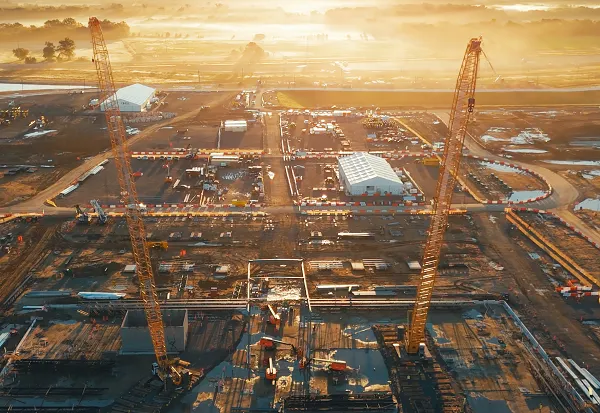
Traffic and Infrastructure Strain: The construction and ongoing operation of a massive data center lead to a substantial increase in heavy vehicle traffic. This can result in increased road incidents, accelerated wear and tear on local infrastructure, and chronic traffic congestion, disrupting daily routines for residents. While Meta’s $1 billion investment in local infrastructure aims to mitigate some of these issues, the scale of impact can often overwhelm existing capacities.
Socio-Economic Disparities: While data centers create jobs, the ratio of construction jobs to long-term operational jobs can be skewed. Many high-tech operational roles may be filled by specialists from outside the immediate community, and increasing automation within data centers can limit the total number of permanent local positions. Moreover, an influx of workers during the construction phase can drive up housing costs and strain local services, potentially displacing long-term residents or making the area unaffordable.
Legislative Pushback: The AI Data Center Moratorium Act
The growing concerns surrounding data center development have not gone unnoticed by policymakers. Earlier this year, U.S. Senator Bernie Sanders introduced the Artificial Intelligence Data Center Moratorium Act (S.4214). This proposed legislation is designed to implement a temporary pause on the construction of new data centers in the United States. The bill’s primary objective is to allow the federal government time to comprehensively assess and mitigate the potential dangers associated with the rapid expansion of AI infrastructure, including safeguarding the public from the localized impacts of data center projects.
The Act explicitly cites concerns about increased utility bills for consumers in construction regions, a direct challenge to claims of economic benefit. It also raises broader questions about the environmental impacts of data center construction and operation, echoing the criticisms from environmental groups and affected communities. Senator Sanders and proponents of the bill argue that while AI development is crucial, it must not come at the cost of public welfare or environmental sustainability. They advocate for a more measured approach, one that prioritizes robust regulatory frameworks, transparent environmental impact assessments, and community engagement before further expansions are approved. The bill underscores a growing sentiment that the unchecked growth of AI infrastructure could lead to unforeseen and irreversible consequences, necessitating a federal intervention to ensure responsible development.
Official Responses and Stakeholder Perspectives
In the wake of such a significant announcement and the accompanying scrutiny, various stakeholders offer distinct perspectives.
Meta’s Stance: A Meta spokesperson, while not directly quoted on the negative impacts in the original article, would logically reiterate the company’s commitment to responsible development. They would emphasize the creation of high-paying jobs, the substantial tax revenue generated for state and local governments, and the direct investments in community programs. They would likely highlight efforts to enhance energy efficiency, procure renewable energy, and implement water-saving technologies, portraying Meta as a good corporate citizen striving for sustainable growth. The energy agreement with Entergy Louisiana would be presented as a concrete example of how Meta’s investments directly benefit local residents through reduced utility costs.
Local and State Officials: Louisiana state economic development officials and local leaders in Richland Parish would undoubtedly welcome the $50 billion investment. They would likely emphasize the hundreds, if not thousands, of construction jobs created, followed by long-term operational roles. They would point to the diversification of the local economy, the increased tax base, and the potential for new educational and vocational training opportunities stimulated by Meta’s presence. For a state like Louisiana, attracting such a colossal investment from a global tech leader represents a significant economic victory.
Environmental Advocacy Groups: Environmental organizations, both local and national, would likely express cautious optimism at best, but more probably significant concern. They would call for stringent environmental impact assessments, transparent reporting on energy and water consumption, and robust commitments to 100% renewable energy sourcing. They might advocate for independent oversight of the project’s environmental performance and demand clear strategies for mitigating air and water pollution, as well as managing electronic waste. Their statements would likely highlight the broader systemic issues of energy-intensive AI development and the need for a national strategy that balances technological advancement with ecological preservation.
Entergy Louisiana: The utility company would confirm the details of the energy agreement, emphasizing its mutual benefits. They would likely highlight how working with a major customer like Meta allows for investments in grid infrastructure improvements that ultimately benefit all customers. The projected billions in savings would be a key talking point, reinforcing their commitment to affordable and reliable energy.
The Broader Implications and Future Outlook
Meta’s expanded data center in Louisiana is a microcosm of a much larger global phenomenon: the race to dominate artificial intelligence. The colossal investment underscores the strategic importance of physical infrastructure in the digital age. As AI models grow in complexity and applications become more pervasive, the demand for processing power will only intensify, making these data centers the silent, foundational pillars of our increasingly AI-driven world.
However, this rapid expansion presents a profound challenge to the principles of sustainable development. The tension between the undeniable economic benefits of such projects – jobs, investment, technological advancement – and their equally undeniable environmental and social costs is becoming increasingly apparent. The debate ignited by Senator Sanders’ bill reflects a growing recognition that the "AI gold rush" cannot proceed without careful consideration of its broader societal footprint.
The future trajectory of AI infrastructure development will likely be shaped by a delicate balance between corporate ambition, government regulation, and public advocacy. While the U.S. government is keen to foster AI innovation for economic competitiveness and national security, there is a burgeoning demand for stricter oversight to protect communities and the environment. The Meta expansion in Louisiana will serve as a critical case study in this ongoing dialogue, offering valuable insights into how large-scale technological advancement can either integrate harmoniously with or disrupt local ecosystems and economies. The ultimate success of such projects will not solely be measured by the gigabytes processed or the dollars invested, but by their ability to deliver promised benefits without imposing undue burdens on the communities they inhabit.