The landscape of digital optimization has undergone a fundamental transformation, moving away from the simplistic evaluation of surface-level interactions toward a rigorous, data-driven methodology focused on core business outcomes. While traditional A/B testing has long relied on easily quantifiable metrics such as click-through rates and email opens, modern experimentation programs are now prioritizing high-leverage decisions that directly influence revenue, long-term retention, and user lifetime value. This shift marks the transition from basic conversion rate optimization (CRO) to advanced experimentation systems that serve as a primary engine for organizational growth.
The Evolution of Digital Experimentation: From Clicks to Outcomes
Historically, A/B testing was a tool used primarily by marketing teams to refine aesthetic elements—testing button colors, headline variations, or hero images. This era, often characterized by “proxy metrics,” focused on behaviors that were easy to measure but frequently disconnected from actual profit. Industry data suggests that while a change might increase clicks by 10%, it does not always result in a corresponding increase in revenue. In many cases, higher click rates on a landing page can lead to lower-quality leads that fail to convert further down the funnel.
The modern chronology of experimentation began with the rise of sophisticated tracking and backend integration. Organizations realized that to achieve sustainable growth, they needed to test the logic governing the user experience. This includes pricing structures, onboarding sequences, feature rollouts, and the timing of paywalls. By moving experimentation to the “server-side,” companies can now test deep product functionality rather than just browser-rendered UI elements. This evolution has turned A/B testing into a cross-functional discipline involving product managers, data scientists, and engineers.

The Core Pillars of Advanced Methodology
Advanced experimentation is defined by a different philosophical approach to hypothesis generation and measurement. It relies on three primary pillars: behavior signals, business-centric metrics, and systemic learning.
1. Leveraging High-Fidelity Behavioral Signals
Basic testing often relies on heatmaps or session recordings to identify friction. Advanced teams go deeper, utilizing backend event data, cohort drop-off patterns, and cross-session behavior. By analyzing how different user cohorts interact with a product over 30, 60, or 90 days, teams can develop hypotheses that address the root causes of churn rather than just immediate bounce rates. Behavioral science plays a critical role here, as teams look for psychological triggers that influence user activation and habit formation.

2. Prioritizing Business Metrics Over Proxy Metrics
The hallmark of a mature experimentation program is the use of “Guardrail Metrics.” While the primary goal of a test might be to increase “Conversion to Paid,” a guardrail metric ensures that this gain does not come at the cost of “Customer Support Tickets” or “Refund Rates.” Advanced teams define these metrics before a test launches to ensure that a “win” in one area does not cause a “loss” in another. This holistic view of data ensures that experimentation remains aligned with the company’s bottom line.
3. Experimentation as an Operating System
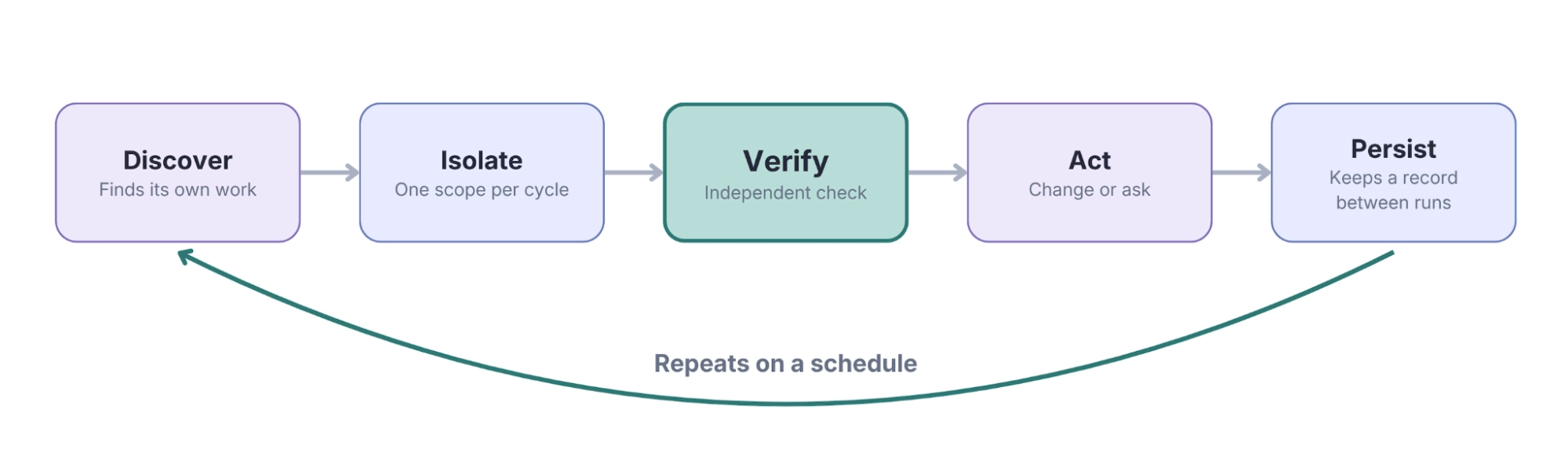
Andres Pinate, a leading voice in the field, emphasizes that a real experimentation system is an operating model rather than a collection of disparate tests. It requires a clear business thesis, disciplined prioritization, and a process that captures learning as an organizational asset. In this framework, the output of a test is not just the result (win or loss), but the insight gained, which then informs the next cycle of hypotheses. This compounding intelligence is what separates market leaders from companies that remain stuck in a cycle of incremental, surface-level tweaks.
Technical Sophistication: Beyond Simple A/B Splits
To execute at a high level, organizations must employ a variety of statistical techniques and testing frameworks tailored to specific scenarios.
- Multivariate Testing (MVT): Unlike A/B testing, which changes one variable at a time, MVT tests multiple elements simultaneously to identify the “interaction effect” between them. For example, a company might test three headlines and three images together. While MVT requires significantly more traffic to reach statistical significance, it is essential for understanding how complex landing pages work as a cohesive unit.
- Multi-Armed Bandit (MAB) Algorithms: Traditional A/B tests split traffic 50/50 until a winner is declared. MAB algorithms dynamically shift traffic toward the better-performing variant during the test. This is particularly useful for time-sensitive promotions where “regret”—the cost of sending users to a losing variation—must be minimized.
- CUPED (Controlled-experiment Using Pre-Experiment Data): This variance-reduction technique is a clear indicator of organizational maturity. By using data from before an experiment begins to adjust the results, CUPED allows teams to reach statistical significance faster and with less traffic. It filters out the “noise” of pre-existing user behavior, providing a clearer view of the experiment’s actual impact.
- Sequential Testing: This allows for the continuous monitoring of results. In traditional frequentist statistics, “peeking” at data before a test is finished can lead to false positives. Sequential testing adjusts the significance thresholds, allowing teams to stop a test as soon as a winner is found without compromising data integrity.
Strategic Components of a Modern Program
Building a robust experimentation program requires more than just statistical knowledge; it requires infrastructure that supports high-velocity testing without data corruption.
Mutually Exclusive Campaigns
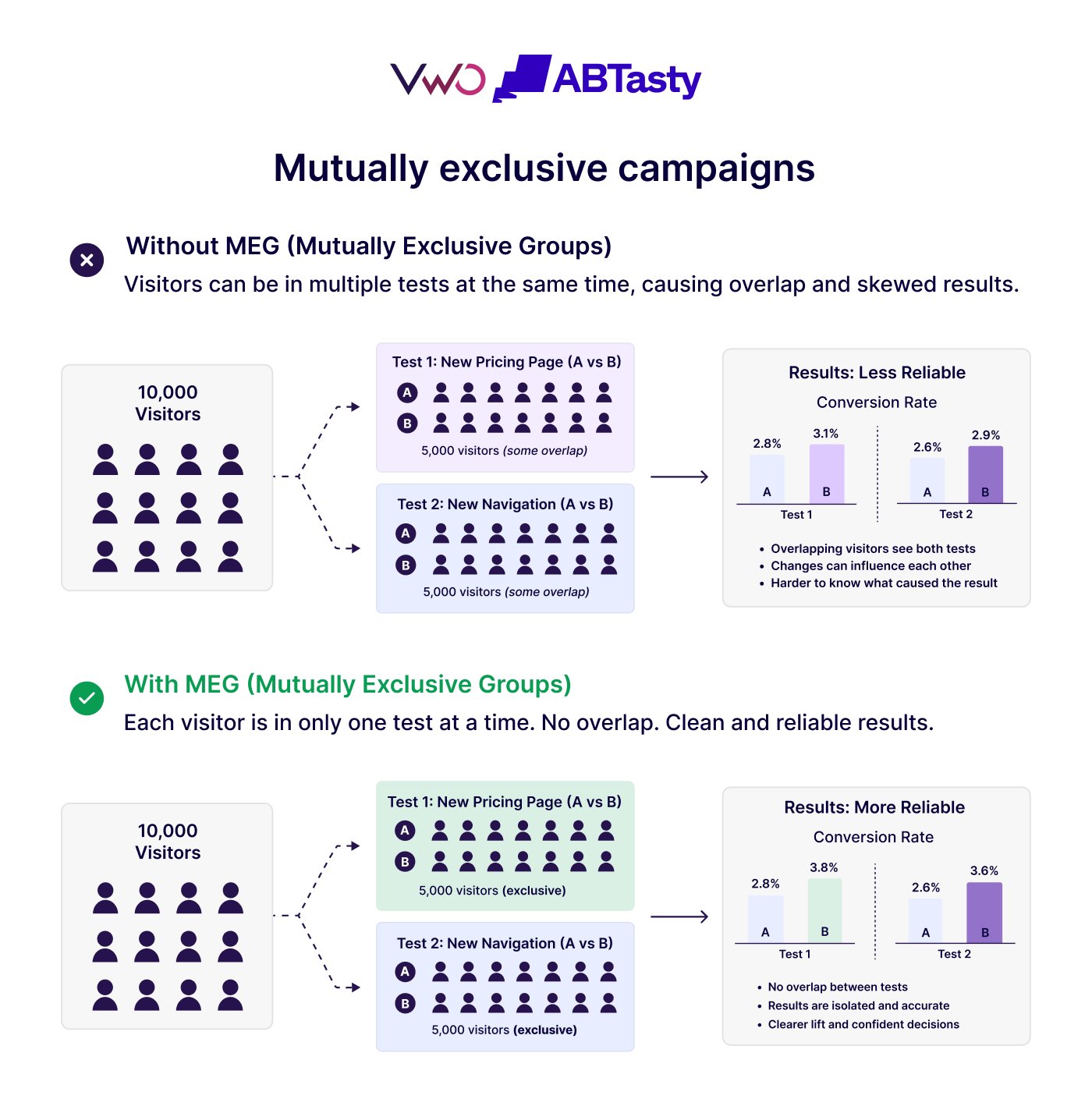
As companies scale their testing, they often run multiple experiments at once. If a user is simultaneously in a “Pricing Page” test and a “Checkout Flow” test, it becomes impossible to know which change influenced their purchase. Mutually exclusive groups solve this by ensuring that users in one experiment are excluded from others that might interfere with the data.
Deep Audience Segmentation
Aggregate results often hide the truth. A variation might fail for the general population but see a 20% uplift among “Mobile Users from Social Media.” Advanced teams pre-define these segments before launch to ensure the experiment is powered to find these specific signals. This produces actionable insights that can lead to personalized user experiences.
Server-Side and Feature Experimentation
By moving testing to the backend, teams can experiment with things that are invisible to the browser, such as search algorithms, recommendation engines, or pricing logic. Feature flagging—the ability to turn features on or off for specific users—allows for “canary releases” and controlled rollouts, reducing the risk associated with launching new product functionality.
High-Impact Case Studies: Evidence from the Field
Real-world applications demonstrate the financial impact of these advanced techniques.

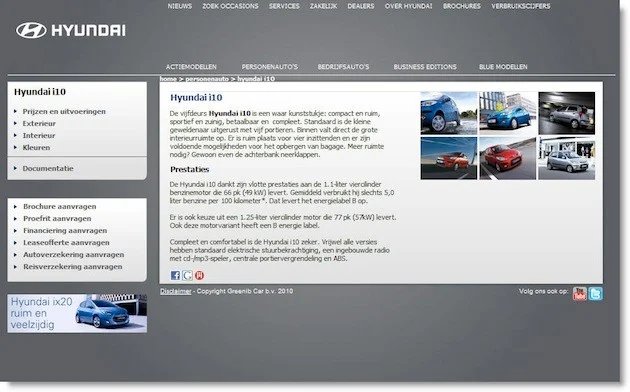
- Hyundai’s Multivariate Success: The automotive giant utilized MVT to optimize car model landing pages. By simultaneously testing SEO-optimized copy, CTA placement, and image sizes, they identified a combination that resulted in a 62% increase in total conversions and a staggering 208% increase in click-through rates to the next stage of the funnel.
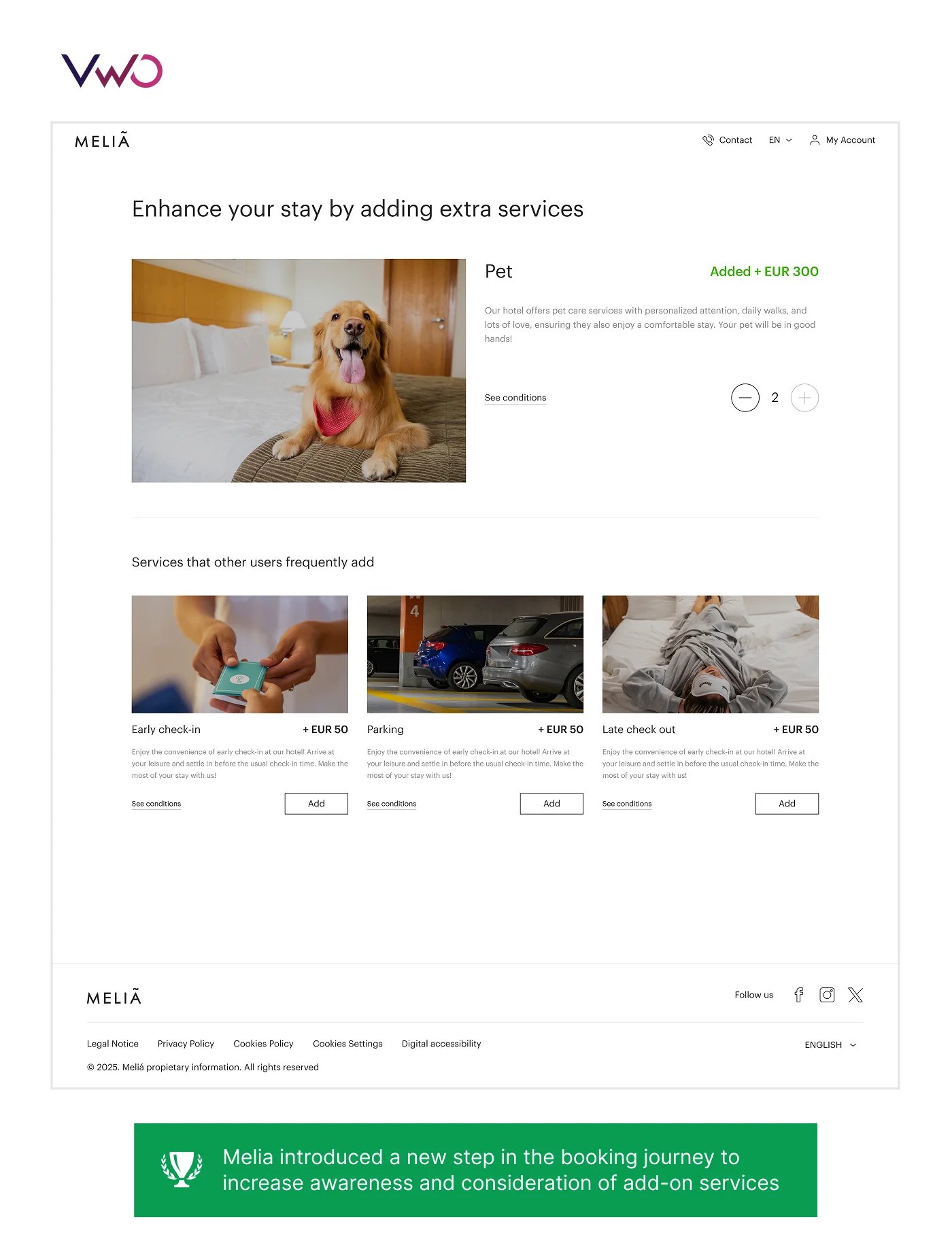
- Meliá Hotels and Funnel Sequencing: Meliá Hotels used feature experimentation to test the addition of a step in their booking funnel. By rolling the change out progressively and tracking revenue per visitor as the primary metric, they achieved a 1.85% uplift in revenue without increasing user drop-offs.
- AURUM’s Onboarding Optimization: In the SaaS sector, AURUM focused on the “activation moment.” Through a series of structured A/B tests on their onboarding sequence, they were able to achieve a 4x increase in user activation, directly impacting long-term retention.
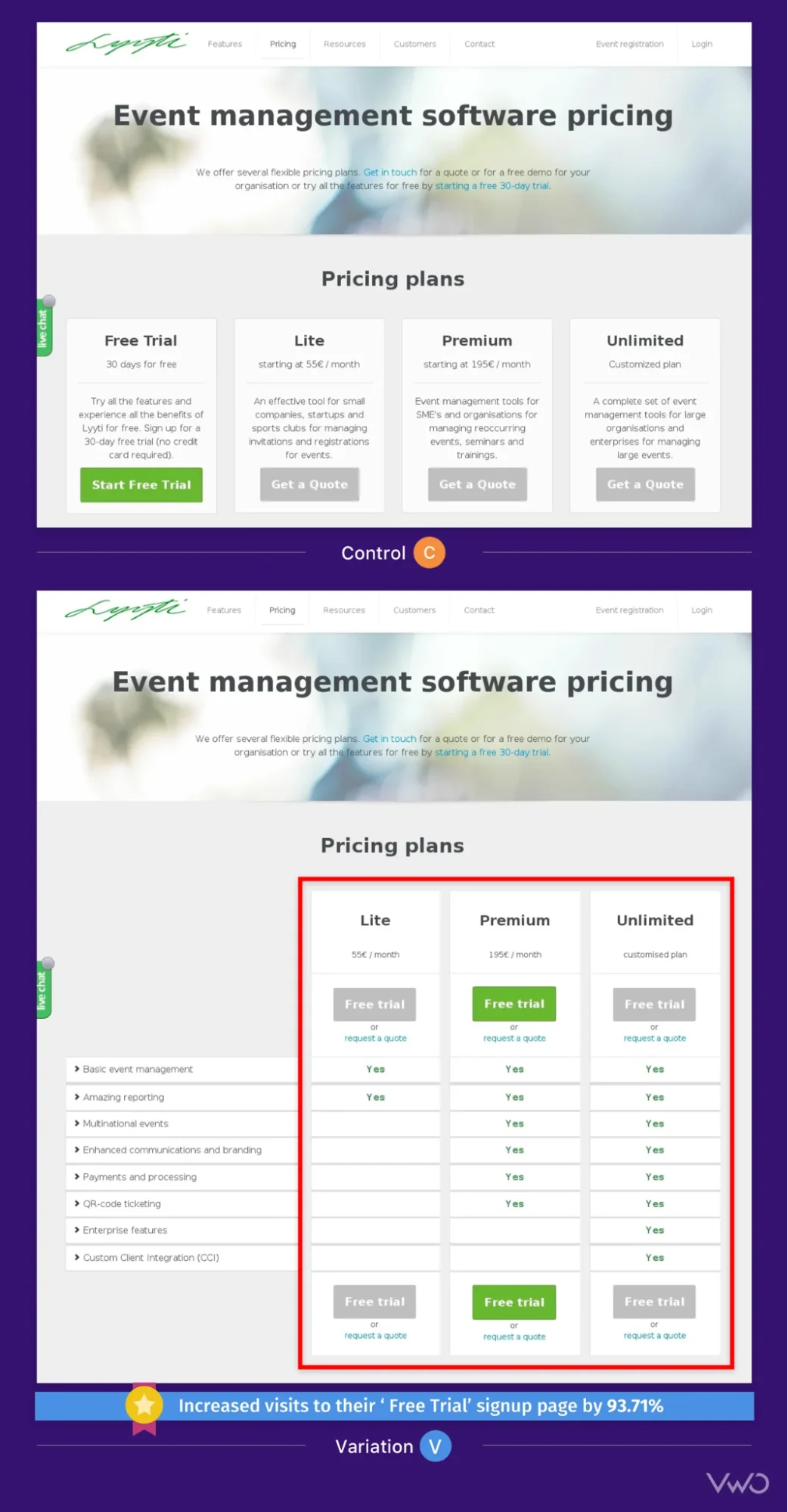
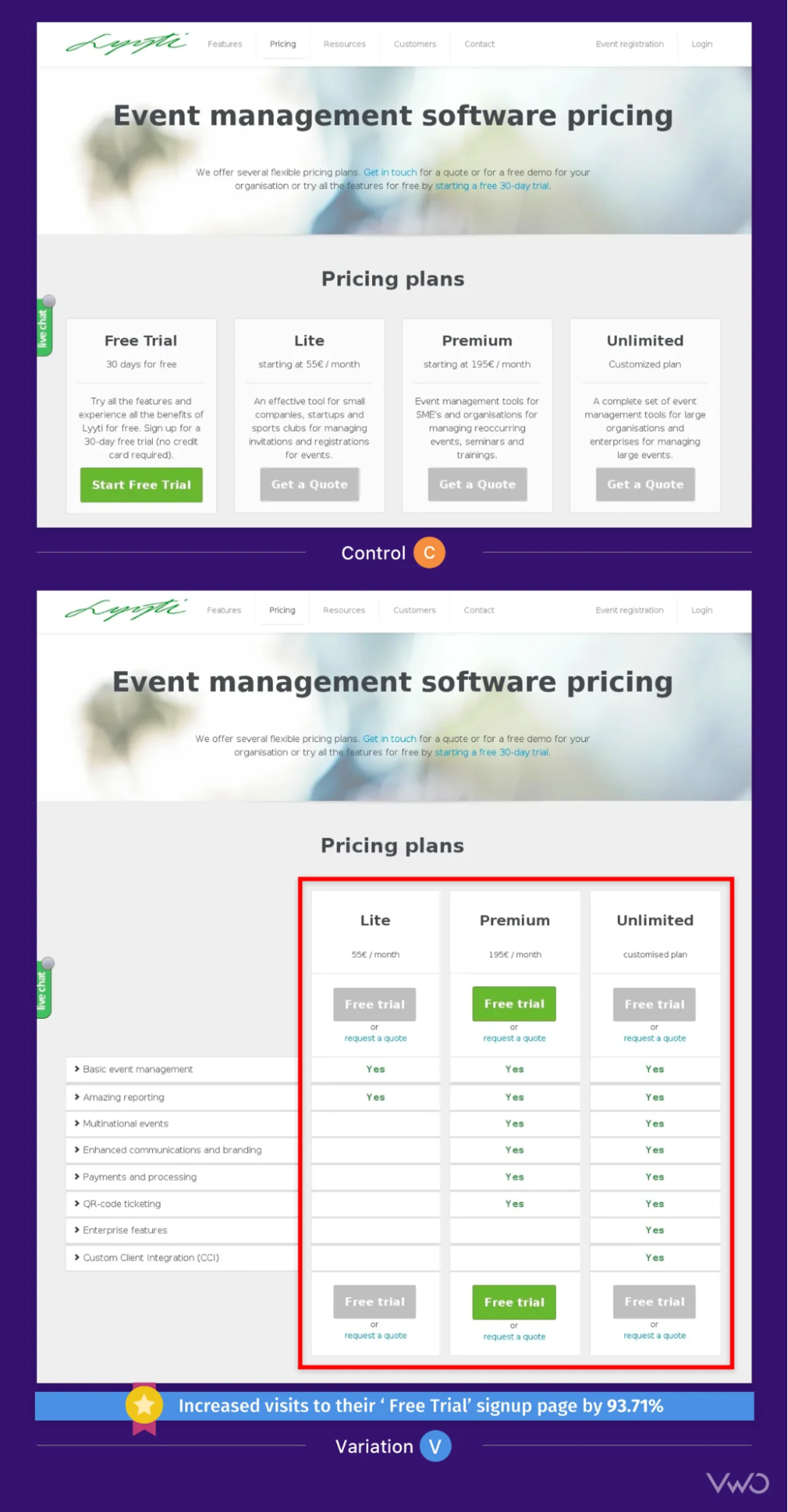
- Lyyti’s Pricing Clarity: Lyyti simplified its pricing page based on heatmap and clickmap data. By aligning all CTAs around a single intent (free trials) and highlighting key features, they saw a 93.71% increase in conversions, proving that clarity often outweighs complexity in high-stakes decisions.
The Role of Artificial Intelligence and Automation
The integration of AI is the latest frontier in advanced experimentation. Tools like VWO Copilot are shifting the human role from manual execution to strategic judgment. AI can now handle the generation of variations, identify promising audience segments, and surface patterns in large datasets that would take a human analyst weeks to find.
However, as AI reduces the “manual burden,” the importance of the “human element” increases. Teams must now focus on deciding what is worth testing and how different features interact within the broader business ecosystem. The goal is no longer just to run more tests, but to build a system that compounds intelligence over time.
Broader Impact and Implications for Business Growth
The move toward advanced experimentation has profound implications for how modern businesses operate. It reduces the “cost of failure” by allowing teams to test ideas in small, controlled environments before a full-scale launch. It also fosters a culture of humility and curiosity, where decisions are made based on evidence rather than the “HiPPO” (Highest Paid Person’s Opinion).
In an era of rising customer acquisition costs (CAC), the ability to maximize the value of every visitor through sophisticated optimization is no longer a luxury—it is a strategic necessity. Organizations that treat experimentation as a core operating model, rather than a series of one-off tests, are better positioned to adapt to changing market conditions and drive sustainable, long-term growth. By integrating behavioral analytics, statistical rigor, and AI-powered insights into a single, cohesive system, companies can turn data into their most valuable competitive advantage.

 Siti Muinah
 Nana
Nana