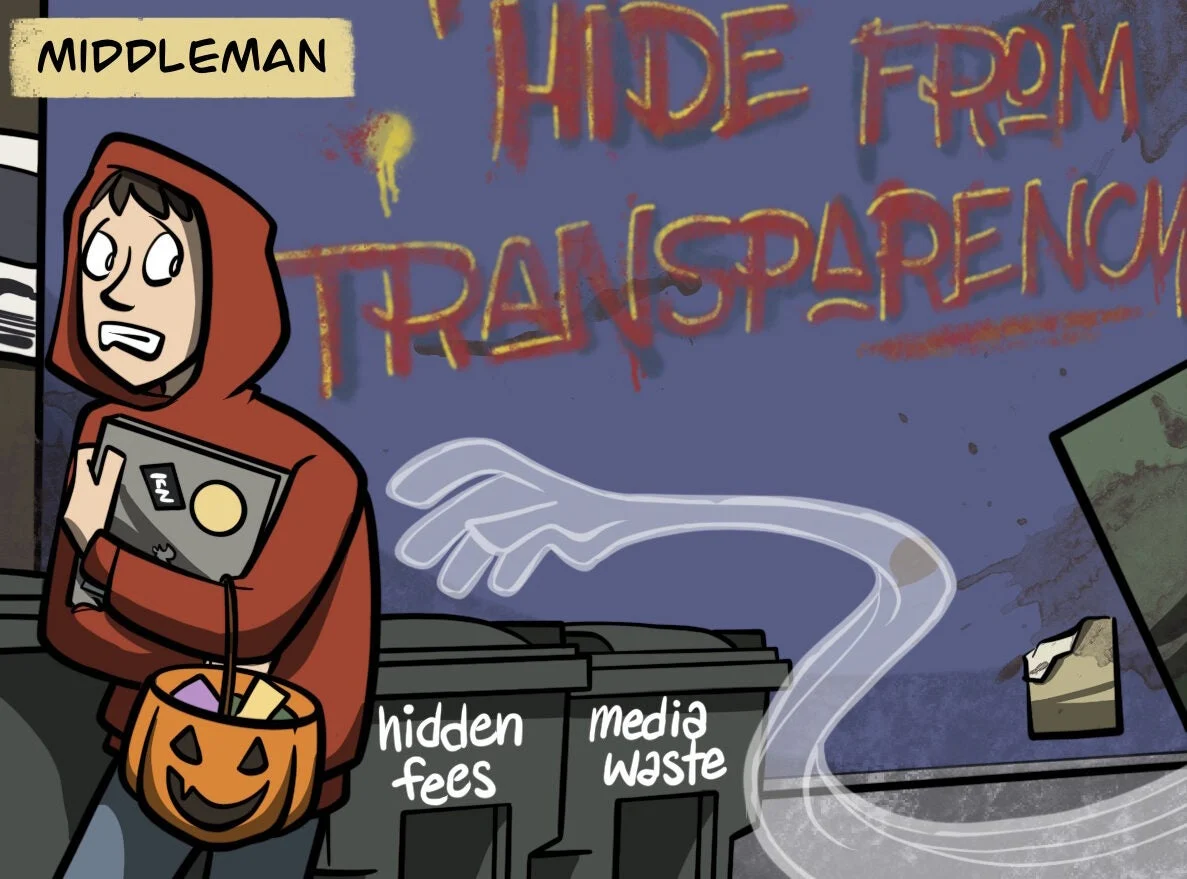
The digital advertising industry, a sector that frequently champions transparency and accountability, is currently grappling with a complex dilemma as exemplified by the experience of Check My Ads, a non-profit programmatic industry watchdog. Despite its public commitment to fostering a more open ad tech ecosystem, several Demand-Side Platforms (DSPs) have reportedly balked at providing Check My Ads with direct access to their platforms, effectively preventing the organization from conducting the in-depth analysis it deems crucial for its mission. This reluctance raises pertinent questions about the true depth of the industry’s dedication to transparency when confronted with entities aiming to scrutinize their inner workings.
The core of the issue lies in a fundamental tension: DSPs desire to meticulously vet potential buyers before granting them access to their sophisticated advertising infrastructure, aiming to safeguard against untrustworthy advertisers and potential misuse of their services. However, when a DSP’s apprehension stems from a buyer’s potential to "dig too deeply" into its supply chain, the industry’s professed commitment to transparency appears to falter. This paradoxical situation, where a watchdog organization is denied the very tools necessary to perform its oversight, highlights a significant gap between rhetoric and practice in the programmatic advertising landscape.
Check My Ads, over several years, has cultivated a reputation as a vigilant guardian of the programmatic ecosystem. Its COO, Arielle Garcia, has noted that many ad tech vendors have readily publicized their collaborations with Check My Ads as a testament to their own transparency initiatives. Yet, when it comes to granting the watchdog an actual DSP seat – a position that would afford it the same analytical capabilities as any other buyer – the industry seems to draw a line, a development Garcia describes as "a bridge too far."
A Signed Agreement, A Retreat
One particularly illustrative incident involved a DSP, which Check My Ads has chosen not to name publicly, that initially expressed strong enthusiasm for partnering with the watchdog. The DSP even went so far as to waive its minimum spending requirements, a significant concession that underscored its eagerness to collaborate. Both parties formally entered into a Master Service Agreement (MSA), a legally binding contract that signifies a commitment to a partnership. However, before Check My Ads could even launch its first campaign, the DSP abruptly rescinded the agreement. The stated reason for this sudden reversal was an expressed discomfort with "the scope of protections extended to our vendor and supply partners." AdExchanger has reviewed emails between the involved parties, provided by Check My Ads, which corroborate the existence of the signed MSA and the initial positive engagement.
This marked the first time Check My Ads had formally sought a DSP seat. According to Garcia, the primary objective was to bolster its research into programmatic buying. The organization intended to leverage this access to publish best practices, specifically aimed at assisting smaller advertisers in navigating programmatic campaigns and mitigating wasteful spending. This aligns with Check My Ads’ broader mission, which recently saw them release a comprehensive report on Google’s Performance Max, informed by their direct experience utilizing the platform.
Furthermore, Check My Ads harbors ambitions to eventually offer "agency-lite" managed services on a non-profit basis to small advertisers. To facilitate this expansion, establishing a DSP seat, akin to what any other agency would require, was a logical step. Beyond its research and advocacy efforts, Check My Ads also engages in self-promotion, running campaigns to market its services, newsletters, and branded merchandise.
Iesha White, Director of Intelligence at Check My Ads, who possesses a decade of experience as a media buyer, emphasized the practical necessity of this approach. "It’s important for Check My Ads to have technical expertise and stay current with how the industry is evolving," White stated. "In order for us to do that, we have to have skin in the game and spend money." White’s prior positive experience with the unnamed DSP prompted her to initiate contact earlier this year.
The initial response from the DSP was highly encouraging. An April platform demonstration was arranged, followed by an email summarizing meeting takeaways, which explicitly confirmed the waiver of the minimum spending requirement. By mid-May, the DSP provided an MSA for Check My Ads to sign, a document subsequently executed by both entities. The post-demonstration recap email also revealed a clear understanding of Check My Ads’ objectives: "Moving beyond Google PMax / Demand Gen into ‘real’ programmatic with full transparency and control, no black box. Running small but meaningful test campaigns ($1k-$20k/month range) for your own research and analysis, and for select advertisers where you can learn and potentially generate revenue. Evolving over time into a selective mini-agency model. (woot woot! SO honored you’re thinking of us)."
Shifting Sands and Supply Chain Concerns
The trajectory of the partnership took a noticeable downturn following this initial phase of enthusiastic engagement. On May 20, the DSP’s contact informed Check My Ads that their DSP seat should be operational the following week. However, this update was accompanied by a request for more detailed information regarding planned test campaigns, involved brands, anticipated budgets, and campaign objectives.
White responded on May 21, explaining that Check My Ads was still finalizing commitments with brand clients. She did, however, disclose plans for a brand lift campaign and a Cost Per Acquisition (CPA) campaign aimed at driving newsletter sign-ups, with a test budget of $1,000 – well within the range previously approved by the DSP.
A follow-up inquiry from White on June 3 regarding the status of the DSP seat yielded a non-committal response: "still confirming next steps." This was followed by a pointed question: "If you identify any vendor performance concerns on [redacted], can we agree to loop us in first before escalating externally?"
This question struck Check My Ads as a clear indication of suspicion regarding their intentions, suggesting the DSP was growing increasingly uneasy about granting a self-proclaimed watchdog platform access. White responded diplomatically, stating, "We would absolutely inform [redacted] of any supply issue first, and we would reach out to any impacted SSP vendors, as is our standard practice."
Despite this reassurance, further follow-up from White on June 5 resulted in a definitive rejection. The DSP’s head of client partnerships communicated that the platform had "decided not to move forward with this partnership." The explanation cited an inability to achieve comfort "with the scope of protections extended to our vendor and supply partners." The statement continued, "We have an obligation to consider the downstream impact on them before bringing on new clients, particularly in cases where the nature of the research or activation may intersect with those partners in ways that fall outside what our MSA covers."
Garcia expressed her disappointment with the decision, especially given the signed MSA. The DSP’s head of client partnerships responded that while they personally "advocated for this partnership," the decision was made at a higher level, driven by feedback from supply and legal teams that had been raised internally on May 20 and could not be resolved. The executive concluded by respecting Check My Ads’ mission and expressing hope for future collaboration under different circumstances.
The Nuances of DSP Vetting
It is important to acknowledge that extensive vetting of potential buyers by DSPs is a standard industry practice. DSPs have a legitimate interest in ensuring the financial stability and operational integrity of their clients to mitigate risks. This can include conducting financial audits to identify any red flags. However, in this instance, Garcia asserts that the DSP never initiated any such financial audit of Check My Ads.
The central concern articulated by the DSP revolved around the protection of its supply partners, though the exact nature of this protection remained unspecified. Check My Ads’ interpretation was that the DSP feared its supply chain would be subjected to scrutiny by a watchdog. An ad tech consultant, speaking anonymously to AdExchanger, acknowledged this as a valid concern for any DSP. "No DSP is going to knowingly onboard a party whose stated purpose is to turn that seat into an exposé," the consultant remarked. This sentiment underscores the inherent tension when a transparency advocate seeks direct access to the very mechanisms they aim to audit.
Despite the acknowledged complexities of DSP onboarding processes, the reluctance displayed by this DSP, and others, appears to contradict the industry’s pervasive discourse on the imperative of transparency.
A Pattern of Hesitation
The unnamed DSP was not an isolated case. Check My Ads has encountered similar hesitations from other programmatic platforms after initial expressions of interest. In another instance, a second DSP, which Check My Ads also declined to name, reached out to Iesha White for a podcast appearance. Following the recording, White inquired about gaining platform access for testing purposes, an request that was subsequently denied.
A comparable experience unfolded with Thrad, a platform specializing in ad placements within generative AI responses. While Thrad initially approved Check My Ads for platform usage, issues arose with the watchdog’s campaign setup. Specifically, sensitive targeting topics such as politics, abortion, mental health, and LGBTQ+ issues were flagged as areas where Thrad could not effectively place contextual LLM response ads. Additionally, the Check My Ads merchandise storefront was not configured for European shipping, despite the campaign including European audiences.
Even after White addressed these concerns by removing sensitive targeting categories and rectifying the storefront error, Thrad ultimately refused to launch the campaign. Thrad CEO Andrea Tortella later informed Garcia that Check My Ads did not align with their ideal customer profile. Thrad did not respond to multiple requests for comment from AdExchanger.
The cumulative effect of these experiences suggests that the digital advertising industry’s commitment to transparency may have distinct limitations, particularly when confronted with entities actively seeking to uncover and publicize potential shortcomings. Both Garcia and White maintain that Check My Ads remains eager to collaborate with any DSP willing to engage in a genuine partnership built on mutual trust and a shared commitment to making programmatic advertising more accessible and equitable, especially for small businesses.
"If there are any DSPs out there that are confident in their supply and want to help us make programmatic accessible to small businesses," Garcia appealed, "reach out to us." This invitation highlights Check My Ads’ ongoing dedication to its mission, despite the apparent hurdles.
Broader Implications for Industry Accountability
The incidents involving Check My Ads serve as a potent case study illustrating the challenges faced by independent watchdogs in the programmatic advertising space. While the industry broadly espouses the virtues of transparency, the practical implementation often reveals a more guarded approach when scrutiny intensifies. This reluctance can stifle genuine efforts to improve the ecosystem, as organizations like Check My Ads are deprived of the essential tools needed to conduct their work effectively.
The core tension between a DSP’s need for control and a watchdog’s mandate for oversight is unlikely to dissipate without a significant shift in industry culture. The potential for financial repercussions, reputational damage, and regulatory scrutiny provides strong incentives for DSPs to maintain a degree of opacity regarding their supply chains and vendor relationships. However, this can inadvertently shield problematic practices from public view and hinder progress towards a more equitable and efficient advertising marketplace.
The future of transparency in programmatic advertising may depend on the willingness of key players, including DSPs, to embrace scrutiny not as a threat, but as an opportunity for improvement. As Check My Ads continues its advocacy, its experiences underscore the ongoing need for dialogue and collaboration between industry stakeholders to reconcile the pursuit of transparency with the operational realities of digital advertising. The industry’s ability to foster an environment where watchdogs can operate effectively will ultimately be a crucial determinant of its long-term credibility and its capacity to deliver on its promises of openness and accountability.