The enduring cultural impact of Jamiroquai’s 1996 music video for "Virtual Insanity" has been harnessed by Pernod Ricard’s Beefeater brand for its latest campaign, introducing its alcohol-free gin, Beefeater 0.0. The ambitious project, spearheaded by London agency Lucky Generals, sees frontman Jay Kay revisiting the groundbreaking visuals and narrative of the iconic clip, reinterpreting its themes to promote a message of "Get More with 0.0." This initiative marks a significant effort by Beefeater to tap into the burgeoning non-alcoholic beverage market by leveraging nostalgia, aspirational messaging, and a deep connection to its London heritage.
The original "Virtual Insanity" video, directed by a pre-feature film Jonathan Glazer, remains a touchstone of 90s pop culture. Its distinctive industrial-chic set, with its mind-bending moving floors and Escher-esque architecture, provided a surreal backdrop for Jay Kay’s energetic performance. The song itself, with lyrics cautioning against the "useless twisting of our new technology," has resonated with audiences for decades, finding new life through its continued presence on nostalgic playlists and its frequent parodies across television and digital platforms.
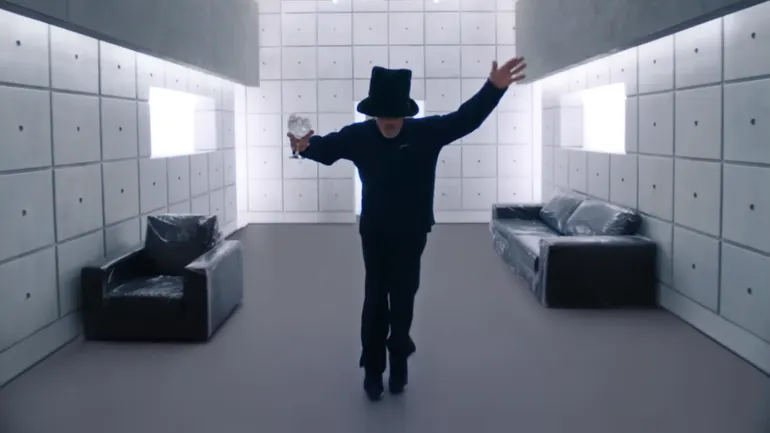
Thirty years after its initial release, Beefeater 0.0 aims to imbue this iconic visual language with a contemporary message. The campaign video features Jay Kay returning to a meticulously recreated version of the original set. In a pivotal scene, he extends his hand, mirroring the original video, but this time to pull a glass containing a Beefeater 0.0 cocktail. From this point, Kay embarks on a journey through a series of interconnected, imaginatively designed rooms. These spaces, including dedicated "hat rooms," a gym replete with treadmills, a pottery studio, a fine-dining restaurant, a wood-paneled sauna, and an understated nightclub, symbolize the multifaceted experiences and activities that can be enjoyed while embracing moderation. The video culminates with Kay breaking the fourth wall, revealing the constructed nature of the set, and departing on a motorized recliner, echoing the video’s opening sequence.
The strategic rationale behind this elaborate production was to create an advertising campaign that would transcend conventional marketing and generate organic conversation. Damien Le Castrec, Chief Strategy Officer at Lucky Generals, articulated the campaign’s core aspiration: to inject a sense of aspirational value into the non-alcoholic beverage sector, a quality he noted is often absent. "You miss nothing with Beefeater 0.0," Le Castrec explained. "You’ve got a full taste experience of a gin, none of the alcohol, so you can go out on Monday, Tuesday, Thursday, stay until 4 a.m. – within reason – and you still feel fresh the next day." This "tension," as Le Castrec termed it, between indulgence and sustained well-being, is deeply intertwined with the spirit of London, a city characterized by its fast pace and the necessity for its residents to adopt strategies for maximizing their urban experiences.
The choice of Jay Kay as the campaign’s ambassador was a deliberate and multi-faceted decision. Beefeater, as the only London Dry gin still distilled within the city, sought an individual who embodied the city’s spirit, possessed broad demographic recognition, and was within a feasible budget. Jay Kay, with his distinctive persona, his association with London, and his iconic presence in the "Virtual Insanity" video, fit these criteria remarkably well. Le Castrec indicated that Kay’s recognition rate among the 18-to-34-year-old demographic was approximately 60%, a significant figure for brand engagement. Furthermore, Kay’s personal journey towards moderation, a stark contrast to his earlier public image, aligns perfectly with the campaign’s central message.
The Genesis of a Modern Classic: Campaign Development
The ambition for the Beefeater 0.0 campaign was to produce an advertisement that would "punch above its weight" and foster earned media. The core concept, as developed by Lucky Generals, centered on the idea that by choosing Beefeater 0.0, consumers could "wear many hats" – metaphorically representing the diverse range of activities and lifestyles they could embrace without the constraints of alcohol. This concept was directly inspired by Jay Kay’s well-known affinity for hats, which became a visual metaphor for the multiple facets of life accessible with the alcohol-free gin.
Shelley Smoler, Chief Creative Officer at Lucky Generals, highlighted the creative challenge of translating this concept into tangible experiences within the video. "We were looking for that sweet spot between the things that he’s into, the things that appeal to our audience and the things that one would do in London," Smoler stated. The agency sought to evoke an aspirational feeling, encapsulated in the tagline "Get More with 0.0," suggesting that embracing moderation with Beefeater 0.0 allows for a richer, more fulfilling engagement with life.
The selection of an ambassador with such strong ties to an iconic piece of pop culture, and the decision to reimagine a beloved music video, presented a unique set of creative opportunities and potential pitfalls. "The possibility of dropping the ball with the production was pretty terrifying," Smoler admitted. The agency’s priority was to find production and direction partners who not only shared their aesthetic vision but also their core philosophy of honoring the original work. "We weren’t really interested in people that were trying to change the location, or people that were trying to redo the original," Smoler emphasized. "We wanted to make sure that we stay true to the original, pay homage to it and honor it. We’d be lying if we said we could do better than that, but what we wanted to do was add the next chapter."
Crafting the Illusion: Production and Innovation
To achieve this delicate balance of homage and innovation, Lucky Generals enlisted the directing duo Julien & Quentin (Julien Martorell and Quentin Garabedian) of Magna Studios. Known for their work on campaigns for brands like Coca-Cola, Starbucks, and Puma, they were chosen for their ability to blend artistic vision with technical execution. A crucial decision was made to prioritize practical effects and handmade craftsmanship over CGI or artificial intelligence, a deliberate choice to mirror the ingenuity of the original "Virtual Insanity" video.
"The reason people have questioned how the hell they [did the original] for 30 years is because of that human ingenuity. It was crucial that we didn’t lose that," Smoler stated. The team aimed to retain the element of mystique and the "how the hell did they do that?" factor that made the original so captivating. This commitment to tangible artistry extended to the set design and construction.
Unlike the original video, which famously employed moving walls, the Beefeater campaign primarily utilized a sophisticated moving floor mechanism across nine distinct sets. The logistical challenge of accommodating these sets within a single studio space led to the decision to shoot the video in two parts, which were then seamlessly stitched together to create the illusion of continuous movement. This hands-on approach not only allowed for the inclusion of subtle brand cues and Easter egg references for discerning viewers but also presented unforeseen production hurdles. For instance, during the filming of a party scene, the weight of the set components caused the rig to break, a testament to the demanding nature of the practical effects employed.
Smoler reflected on these challenges with a sense of satisfaction: "There’s all the beauty that comes out of all of that – I wouldn’t have done it any other way." She further underscored the thematic resonance of their production choices, noting, "Not to mention that the song itself is called ‘Virtual Insanity’ – it would be wrong to go against that with AI." This statement directly addresses the inherent paradox of using artificial intelligence to recreate a video that celebrates human creativity and warns against the unchecked advancement of technology.
Market Context and Strategic Implications
The Beefeater 0.0 campaign arrives at a pivotal moment for Pernod Ricard and the broader spirits industry. In fiscal year 2026, the company reported a 3.9% decline in organic net sales, with performance impacted by softer markets in key regions like the United States and China. During an earnings call, executives identified consumer-centric innovation, particularly in the burgeoning low- and no-alcohol (LONO) category, as a strategic imperative for accelerating growth. The introduction and promotion of Beefeater 0.0 align directly with this stated objective.
The non-alcoholic spirits market has witnessed substantial growth in recent years. Data from IWSR Drinks Market Analysis projects that the global low- and no-alcohol market will grow by 33% by 2026. This trend is driven by a confluence of factors, including increasing health consciousness, a desire for greater choice, and a growing social acceptance of alcohol-free options. Beefeater, a brand with a rich heritage and a strong association with London Dry gin, is strategically positioned to capture a significant share of this expanding market by offering a premium, alcohol-free alternative that retains the complex botanical profile of its alcoholic counterpart.
The "Get More with 0.0" tagline speaks directly to the evolving consumer mindset, where moderation is increasingly viewed not as a sacrifice, but as a means to enhance overall well-being and enable fuller participation in life’s experiences. By associating Beefeater 0.0 with the vibrant, multifaceted lifestyle exemplified by Jay Kay and the spirit of London, the campaign aims to elevate the perception of non-alcoholic beverages from a niche alternative to a desirable lifestyle choice.
The London Connection: Heritage and Authenticity
The campaign’s deep dive into London’s identity is no accident. Beefeater’s claim as the only London Dry gin still made in the city imbues the brand with a unique authenticity and heritage. This connection is not merely a marketing point but a core element of the brand’s identity. The choice of Jay Kay, a globally recognized British artist with strong London roots, reinforces this association. His recognition across a wide age range, coupled with his personal evolution towards moderation, makes him an ideal messenger for a brand seeking to connect with a contemporary audience while staying true to its historical origins.
The emphasis on handmade craft in the production of the video also serves as a parallel to the meticulous distillation process of Beefeater gin. By opting for practical effects and celebrating the human ingenuity involved in recreating the "Virtual Insanity" set, the campaign subtly reinforces the brand’s commitment to quality, craftsmanship, and authentic production values. This resonates with a growing consumer demand for transparency and provenance in the products they consume.
The success of this campaign will likely hinge on its ability to resonate with consumers who are seeking sophisticated, flavourful alternatives to alcoholic beverages without compromising on their social lives or personal well-being. By tapping into the potent nostalgia of a beloved music video and infusing it with a forward-looking message of moderation and enhanced living, Beefeater 0.0 is poised to make a significant impact in the dynamic non-alcoholic spirits market, offering a compelling narrative of "getting more" from every moment.