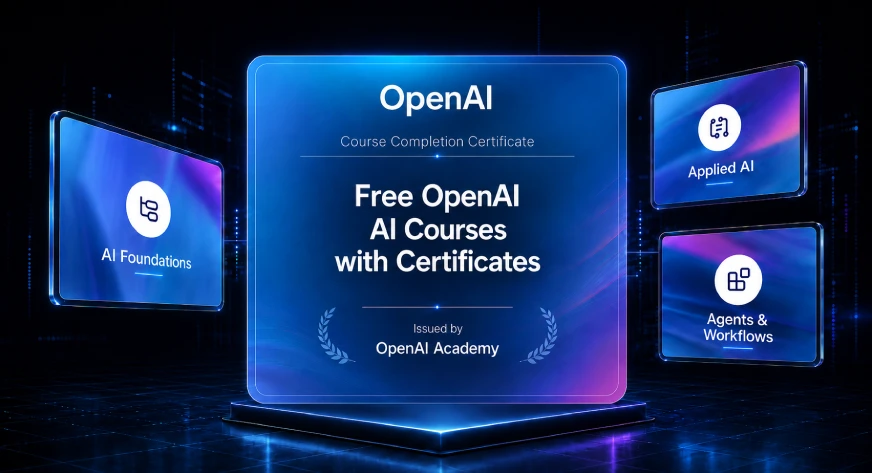
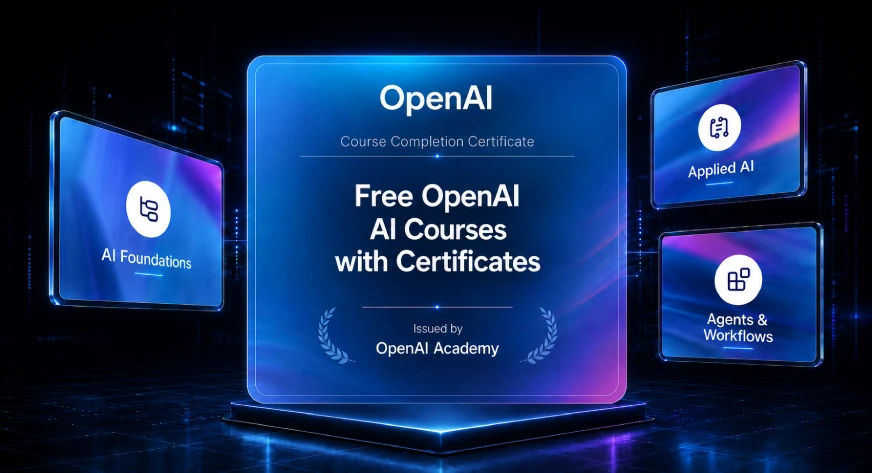
OpenAI, the organization responsible for the development of the industry-defining GPT-4 and ChatGPT models, has officially inaugurated the OpenAI Academy, a dedicated educational platform designed to provide accessible, high-level artificial intelligence training to a global audience. This strategic initiative marks a significant transition for the San Francisco-based company, moving beyond the role of a tool provider to becoming a central pillar in the global infrastructure for technological literacy. By offering a structured curriculum that spans from foundational concepts to advanced agentic workflows, the OpenAI Academy aims to bridge the widening skills gap in a global economy increasingly defined by generative AI. The platform’s initial rollout features three core courses—AI Foundations, Applied AI Foundations, and Agents and Workflows—all of which are available to the public free of charge and conclude with a formal certificate of completion.
The launch of the OpenAI Academy comes at a critical juncture for the global workforce. According to the World Economic Forum’s “Future of Jobs Report,” nearly 44% of workers’ core skills are expected to change within the next five years due to the rapid integration of automated systems and artificial intelligence. While the demand for AI-literate professionals has reached record highs, the supply of structured, credible, and affordable training has lagged behind. By offering these resources for free, OpenAI is effectively democratizing access to high-tier technical knowledge, ensuring that the benefits of the AI revolution are not restricted to those with the means to afford expensive specialized bootcamps or university programs.
A Chronology of OpenAI’s Educational Evolution
The establishment of the OpenAI Academy is the culmination of several years of incremental efforts by the organization to educate its user base. Following the public release of ChatGPT in late 2022, OpenAI initially focused on providing technical documentation primarily for developers and researchers. As the user base expanded into the hundreds of millions, the need for a more structured pedagogical approach became evident.
In 2023, the company introduced the “OpenAI Cookbook,” a collection of code snippets and guides designed to help developers implement API features. However, as AI tools permeated the corporate world, non-technical professionals—ranging from marketing executives to healthcare administrators—expressed a need for a curriculum that did not require a computer science background. This demand led to the pilot programs that eventually formed the basis of the OpenAI Academy. The current iteration of the platform represents a formalized, user-centric environment that prioritizes practical application over abstract theory, signaling OpenAI’s commitment to fostering a workforce capable of navigating the “Age of Intelligence.”
Detailed Curricular Overview: The Three Pillars of OpenAI Training
The OpenAI Academy has structured its initial offerings to cater to a sequential learning path, allowing users to progress from basic literacy to sophisticated operational management of AI systems.
1. AI Foundations: Establishing the Groundwork
The “AI Foundations” course is specifically engineered for individuals with little to no prior experience with large language models (LLMs). The curriculum focuses on demystifying the underlying mechanics of generative AI, explaining how models process information and generate human-like text. Beyond the technical basics, the course places a heavy emphasis on the art of prompting—the primary interface through which humans interact with AI.
A significant portion of this course is dedicated to “Responsible AI.” As organizations face increasing scrutiny over the ethical use of technology, OpenAI provides learners with a framework for identifying hallucinations, mitigating bias, and ensuring data privacy. This foundational knowledge is designed to build “AI confidence,” enabling workers to use ChatGPT as a collaborative partner rather than a black-box tool.
2. Applied AI Foundations: Transitioning to Productivity
For professionals who have mastered the basics, the “Applied AI Foundations” course shifts the focus toward workplace utility. This module is less about individual prompts and more about “repeatable workflows.” In a corporate setting, the value of AI is often found in its ability to automate recurring tasks, such as generating weekly reports, summarizing lengthy meeting transcripts, or drafting standard communications.
The course teaches learners how to decompose complex projects into smaller, AI-manageable steps. It introduces the concept of “review checkpoints,” a crucial strategy where human oversight is integrated into the AI workflow to ensure quality control. By the end of this module, participants are expected to be able to design a comprehensive AI strategy for their specific professional role, effectively turning the AI into a specialized assistant.

3. Agents and Workflows: The Advanced Frontier
The most advanced offering currently available is “Agents and Workflows.” This course delves into the burgeoning field of “agentic AI”—systems that can be assigned a goal and given the autonomy to use tools and execute multi-step tasks to achieve that goal. Unlike standard chatbots, agents are designed for structured, long-term work.
Learners are taught how to define the “boundaries” and “context” for these agents, ensuring they operate within specific parameters. This involves defining the specific outputs required and teaching the agent how to iterate on its own drafts based on feedback. This course is particularly relevant for project managers and operations specialists who are looking to oversee fleets of AI agents to handle large-scale data processing or complex customer service infrastructures.
The Strategic Value of Certification
One of the most notable features of the OpenAI Academy is the provision of a certificate of completion. In the current job market, “AI proficiency” has become a buzzword often found on resumes, yet employers frequently struggle to verify these claims. A certificate directly from OpenAI carries significant weight, serving as a standardized credential that validates a candidate’s understanding of the most widely used AI models in the world.
From a strategic perspective, these certificates help create a “common language” for AI in the workplace. When an entire department completes the OpenAI Academy curriculum, they adopt a unified vocabulary and a shared understanding of best practices, which significantly reduces the friction often associated with the digital transformation of a business.
Supporting Data: The Economic Imperative for AI Upskilling
The necessity for such a platform is supported by a growing body of economic data. A recent study by LinkedIn indicated that mentions of “Generative AI” in job postings increased by over 20-fold between 2022 and 2024. Furthermore, a report by Goldman Sachs suggests that generative AI could drive a 7% (or nearly $7 trillion) increase in global GDP and lift productivity growth by 1.5 percentage points over a 10-year period.
However, these gains are contingent upon the workforce’s ability to use the technology effectively. Research from the University of Pennsylvania and OpenAI itself found that approximately 80% of the U.S. workforce could have at least 10% of their work tasks affected by the introduction of LLMs. By providing free training, OpenAI is attempting to ensure that this disruption leads to “augmentation” (making workers more productive) rather than “displacement” (replacing workers entirely).
Industry Reactions and Implications
The announcement of the OpenAI Academy has been met with generally positive reactions from both the tech industry and the educational sector. Industry analysts view this as a “moat-building” move by OpenAI. By training the next generation of workers specifically on OpenAI’s ecosystem, the company ensures that its models remain the industry standard. As professionals become accustomed to the specific logic and interface of ChatGPT and its agents, they are more likely to advocate for OpenAI tools within their respective organizations.
Educational experts have also noted the potential for the Academy to address the “digital divide.” By making the courses free and accessible via the web, OpenAI provides a pathway for individuals in developing economies to gain high-value skills that are globally marketable. This has the potential to decentralize the tech industry, allowing for a more geographically diverse pool of AI talent.
Future Outlook and Broader Impact
Looking forward, the OpenAI Academy is expected to expand its course catalog to include more specialized tracks, such as “AI for Developers,” “Data Analysis with GPTs,” and “AI Ethics and Governance.” As the technology evolves from text-based models to multimodal systems—capable of processing voice, images, and video in real-time—the curriculum will likely adapt to cover these new capabilities.
The broader implication of the OpenAI Academy is the shift toward “lifelong learning” as a requirement for professional survival. The days of a single degree sufficing for a 40-year career are fading. In their place is a new model where workers must continuously update their skills in response to technological shifts. OpenAI has positioned itself not just as a creator of intelligence, but as the primary instructor for a world that must learn to live and work alongside it.

In conclusion, the OpenAI Academy represents a landmark effort to institutionalize AI education. By providing free, certified training, OpenAI is addressing a critical economic need while simultaneously solidifying its influence over the future of work. For professionals across all sectors, the message is clear: the ability to collaborate with artificial intelligence is no longer an optional skill, but a fundamental requirement for the modern era.