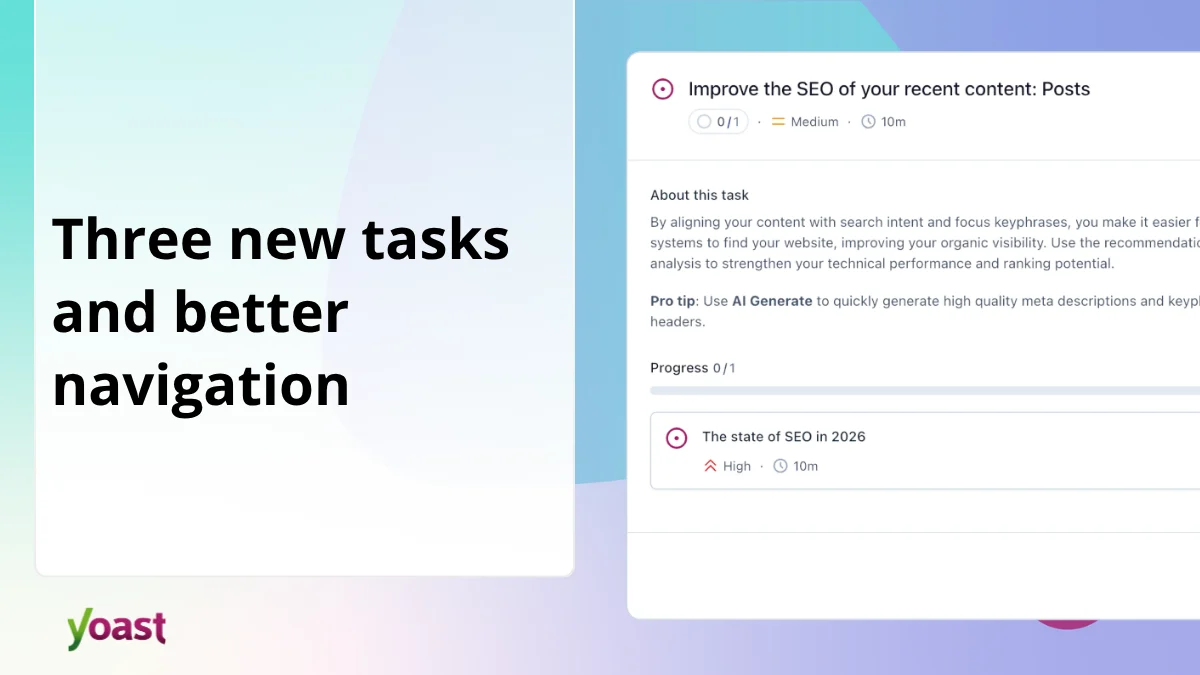
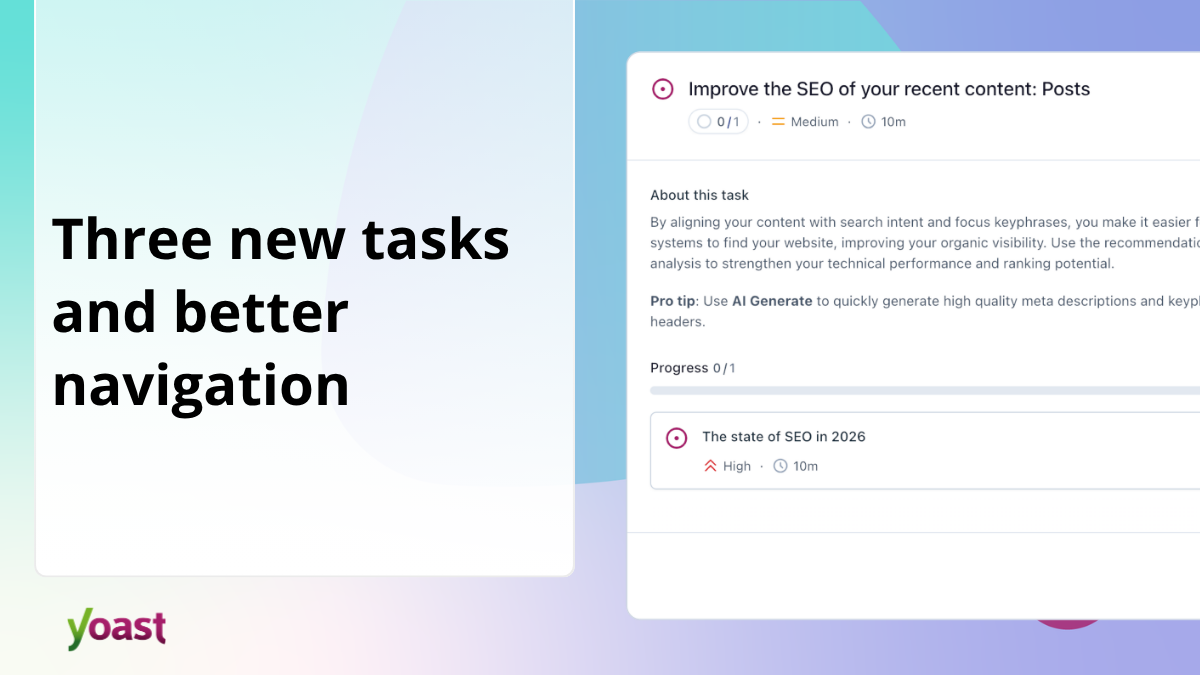
Yoast, a leading developer of WordPress SEO solutions, has rolled out a significant update to its innovative SEO Task List, introduced in December. This latest iteration, version 27.4, brings two crucial new tasks, refines the user experience with direct navigation to suggested fixes, and resolves a critical bug related to language display. The update underscores Yoast’s commitment to providing webmasters with clear, actionable insights to improve their site’s search engine performance and overall digital presence.
The Evolving Landscape of SEO and Yoast’s Role
In the dynamic world of search engine optimization, staying abreast of best practices is paramount for online visibility. Websites constantly vie for top rankings on search engine results pages (SERPs), a position that can dramatically influence traffic, conversions, and brand authority. For many website owners, particularly those managing WordPress sites, the intricacies of SEO can be daunting. This is where tools like Yoast SEO become indispensable. Since its inception, Yoast SEO has aimed to democratize SEO, making complex optimization strategies accessible to individuals without deep technical expertise. The plugin assists millions of users in managing various aspects of their site’s SEO, from content readability and keyword optimization to technical configurations and XML sitemaps.
The introduction of the Yoast SEO Task List in December marked a pivotal step in this mission. Prior to this feature, users often relied on general SEO audits or had to manually identify areas for improvement. The Task List, however, was designed to act as a personalized SEO assistant, scanning a user’s site to pinpoint specific content that required attention. It then prioritized these tasks, provided an estimated time for completion, and, crucially, guided users directly to the section within their WordPress editor where the fix could be implemented. This proactive and guided approach significantly streamlined the optimization process, allowing users to focus on high-impact changes without the guesswork. The initial reception of the Task List was overwhelmingly positive, with users praising its clarity and efficiency, which paved the way for its continued expansion and refinement.
A Chronology of Progress: From Launch to Latest Iteration
The journey of the Yoast SEO Task List began in December, when it was first launched to the public. This initial release provided a foundational set of actionable recommendations aimed at improving core SEO elements across WordPress sites. The goal was to transform the often-abstract concept of SEO into a tangible to-do list, making optimization less intimidating and more achievable for webmasters of all skill levels.
Following the successful debut, Yoast gathered user feedback and analyzed common pain points encountered by website administrators. This iterative development process led directly to the enhancements introduced in Yoast SEO version 27.4. This latest update, rolled out recently, builds upon the existing framework by integrating new, high-priority tasks and refining the user interface for even greater efficiency. The continuous development trajectory signals Yoast’s commitment to evolving its tools in response to the ever-changing SEO landscape and the practical needs of its user base. Looking ahead, Yoast has indicated that users of its paid plans can expect even more specialized tasks in subsequent releases, further tailoring the optimization process to specific site requirements and advanced SEO strategies.
Diving Deep into the New Features of Yoast SEO 27.4
The Yoast SEO 27.4 update introduces several key improvements designed to empower users with more comprehensive and user-friendly SEO guidance. Each new task and enhancement addresses specific aspects of website optimization, contributing to a more robust and effective online presence.
Refining Meta Descriptions for Enhanced Click-Through Rates
One of the most significant additions to the Task List is the new directive to “improve your meta descriptions.” Meta descriptions are the short text snippets that appear under a page title in search engine results. While search engines like Google have stated that meta descriptions do not directly influence search rankings as a ranking factor, their impact on a user’s decision to click on a link is undeniable. A well-crafted meta description acts as a mini-advertisement for the page, enticing users to choose that particular result over others.
Studies consistently show a strong correlation between compelling meta descriptions and higher click-through rates (CTR). For instance, research by Advanced Web Ranking suggests that pages with well-optimized meta descriptions can see CTR improvements of 5-10% or even higher. While this doesn’t directly boost ranking, an increased CTR signals to search engines that a page is highly relevant and valuable to users, which can indirectly contribute to improved rankings over time. Search engines prioritize user experience, and a page that consistently attracts more clicks from search results is often perceived as more authoritative and useful.
The Yoast Task List will now intelligently flag recent posts and pages where the meta description is either missing entirely or could be significantly strengthened. This is particularly valuable as many webmasters, in their haste to publish content, often overlook this crucial element. The tool will then guide users directly to the meta description field within the editor, simplifying the process of making improvements. For Premium users, Yoast takes this a step further by integrating an “AI Generate” button, leveraging artificial intelligence to instantly draft high-quality, relevant meta descriptions. This feature taps into the growing trend of AI-powered content generation, offering a swift and efficient solution for optimizing these critical snippets, saving valuable time and ensuring optimal messaging.
Streamlining Site Hygiene: The Case of the Sample Page
Another practical addition is the task to “delete your sample page.” Every new WordPress installation comes pre-loaded with a default “Sample Page.” While seemingly innocuous, this page serves no functional purpose for a live website and can inadvertently create SEO inefficiencies. Search engines crawl websites using a “crawl budget,” which refers to the number of URLs Googlebot can and wants to crawl on a site within a given timeframe. Having irrelevant, low-value pages like a sample page can consume a portion of this crawl budget, potentially diverting crawlers away from more important, high-value content.
Furthermore, a plethora of low-quality or irrelevant pages can dilute a site’s overall authority and user experience. While a single sample page might not drastically impact a large, established site, for new or smaller websites, every page counts. Removing such boilerplate content is a simple yet effective way to maintain a clean, optimized site structure. The Task List’s reminder to delete this page, which is often overlooked during initial site setup, is a testament to Yoast’s focus on comprehensive site hygiene. It’s a two-minute job that yields tangible benefits in terms of crawl efficiency and site clarity, ensuring that search engines and users alike encounter only relevant content.
Boosting Social Engagement with Custom Sharing Images
The third new task focuses on enhancing social media visibility by prompting users to “set a custom social sharing image.” In today’s interconnected digital landscape, content virality often hinges on its visual appeal on social platforms. When a piece of content is shared on platforms like Facebook or X (formerly Twitter), a corresponding image typically appears alongside the link. The presence and quality of this image can dramatically influence whether users click, share, or simply scroll past.
Data consistently supports the power of visuals in social media engagement. Posts with images on Facebook, for example, reportedly receive 2.3 times more engagement than those without. Similarly, tweets with images receive 150% more retweets than text-only tweets. A compelling, custom-designed image not only makes the shared link more attractive but also provides context and reinforces brand identity. Without a custom image, social platforms often pull a random image from the page or display a generic placeholder, which can significantly diminish the content’s impact and click-through potential.
Yoast’s Task List now identifies posts and pages that lack a designated social sharing image, guiding users to the appropriate section within the editor to upload or select one. This feature leverages the power of Open Graph (OG) tags for Facebook and Twitter Cards for X, which Yoast SEO expertly manages in the backend. By ensuring that every shared piece of content looks its best, Yoast empowers users to maximize their content’s reach and engagement on social media, translating into more traffic and wider audience exposure. This is a Premium feature, highlighting the added value for subscribers seeking to optimize every facet of their online presence.
Enhanced User Experience: Direct Navigation and Multilingual Support
Beyond the introduction of new tasks, Yoast SEO 27.4 brings significant improvements to the user experience, making the process of implementing SEO fixes even more intuitive and efficient.
Previously, when a user clicked on a task within the list, Yoast would open the relevant post or page in the WordPress editor. While helpful, it still required the user to manually locate the specific section – be it the SEO tab, the readability panel, or the meta description field – where the change needed to be made. This added a layer of friction, particularly for users managing complex content or those less familiar with the editor’s layout.
The latest update resolves this by introducing direct navigation to the exact field required for the fix. Now, clicking a task will not only open the editor but will also automatically scroll to and highlight the precise input field or section where the user needs to make the adjustment. This eliminates unnecessary scrolling and searching, significantly accelerating the workflow and making the optimization process remarkably smoother and faster. This seemingly small improvement dramatically enhances user efficiency, embodying Yoast’s commitment to user-centric design.
Furthermore, a critical bug fix has been implemented concerning language display. Previously, task descriptions within the Task List might appear in the site’s default language, even if the logged-in user had their WordPress profile configured for a different language. This created confusion, especially for administrators managing multilingual sites or those working in diverse teams where individual language preferences vary. With this update, task descriptions will now correctly display in the logged-in user’s chosen language, ensuring a personalized and coherent experience for everyone, regardless of the site’s default language settings. This attention to detail in multilingual support reinforces Yoast’s global user base and its dedication to accessibility.
Expert Insights and Company Vision
Beth Parker, Product Marketing Manager at Yoast, whose insights are integral to the product’s evolution, emphasizes the company’s continuous drive to simplify SEO. While not explicitly quoted in detail, her role highlights Yoast’s focus on user needs and practical application. “Our goal with the Task List is to demystify SEO, transforming it from a complex, often overwhelming discipline into a series of manageable, actionable steps,” Parker’s philosophy would likely resonate. “Each update is designed to remove friction, save time, and empower users to achieve tangible improvements in their site’s performance without needing to be an SEO expert.”
From a broader company perspective, Yoast’s founders, Joost de Valk and Marieke van de Rakt, have consistently championed the vision of democratizing SEO. Updates like these align perfectly with that ethos. The expansion of the Task List, particularly with features that guide users to specific fixes and offer AI-powered assistance, reflects a proactive approach to evolving digital marketing challenges. It suggests a strategic move to not only maintain Yoast’s market leadership but also to continuously raise the bar for what users can expect from an SEO plugin – moving beyond passive recommendations to active, guided optimization. This commitment to ongoing development ensures that Yoast SEO remains a relevant and powerful tool in a rapidly changing search landscape.
The Broader Implications for Webmasters and the SEO Industry
The latest Yoast SEO update carries significant implications for various stakeholders within the digital ecosystem. For individual webmasters and small business owners, these enhancements translate into more accessible and efficient SEO management. The guided, prioritized task list reduces the learning curve and time investment typically associated with SEO, allowing them to focus more on content creation and business operations. The direct navigation feature, in particular, minimizes frustration and accelerates the implementation of critical fixes, leading to faster improvements in search visibility and user engagement. This empowerment of non-experts reinforces the idea that effective SEO is no longer exclusive to agencies or highly specialized professionals.
For Yoast as a company, this update strengthens its position as a market leader in WordPress SEO solutions. By consistently introducing features that simplify complex tasks and enhance user experience, Yoast fosters greater user loyalty and encourages upgrades to its premium offerings. The inclusion of AI-powered meta description generation is also a strategic move, showcasing Yoast’s embrace of emerging technologies and positioning it at the forefront of AI integration in SEO tools. This innovation can serve as a significant differentiator in a competitive plugin market.
More broadly, these developments reflect several key trends within the SEO industry. There is a clear shift towards holistic SEO, where technical optimization, content quality, and user experience are inextricably linked. Tools like Yoast’s Task List facilitate this by addressing diverse optimization aspects in a unified framework. Furthermore, the emphasis on actionable, prioritized tasks highlights a move away from generic advice towards personalized, site-specific recommendations. The integration of AI also signals the increasing role of artificial intelligence in automating and enhancing various aspects of digital marketing, making advanced capabilities more readily available to a wider audience. This trend suggests a future where SEO tools become even more intelligent, predictive, and integrated into content creation workflows.
Looking Ahead: The Future of Yoast SEO Task List
The current update is not the final chapter for the Yoast SEO Task List. The company has explicitly stated its intention to continue expanding the feature, with more improvements and additional tasks slated for upcoming releases. These future enhancements are particularly aimed at users of Yoast’s paid plans, suggesting a tiered approach where premium subscribers will gain access to more advanced, high-impact changes tailored to their specific content and business goals. This ongoing development cycle ensures that the Task List will remain a dynamic and evolving tool, adapting to new SEO challenges and opportunities as they emerge. The focus on continuous improvement underscores Yoast’s commitment to staying ahead of the curve and providing its users with the most effective and up-to-date SEO guidance available.
Conclusion: Empowering SEO for All
The release of Yoast SEO 27.4 represents a significant step forward in making search engine optimization more accessible, efficient, and user-friendly. By introducing crucial new tasks for meta descriptions, site hygiene, and social sharing images, alongside refining the user experience with direct navigation and robust language support, Yoast continues to empower webmasters to take control of their online visibility. These enhancements not only streamline the optimization process but also reinforce the importance of meticulous attention to detail in achieving superior search rankings and engaging a wider audience. Users are encouraged to update to Yoast SEO 27.4 immediately, either automatically or by downloading the latest version from the WordPress plugin directory, to leverage these powerful new tools and ensure their websites are optimally positioned for success in the competitive digital landscape.