
 rifanmuazin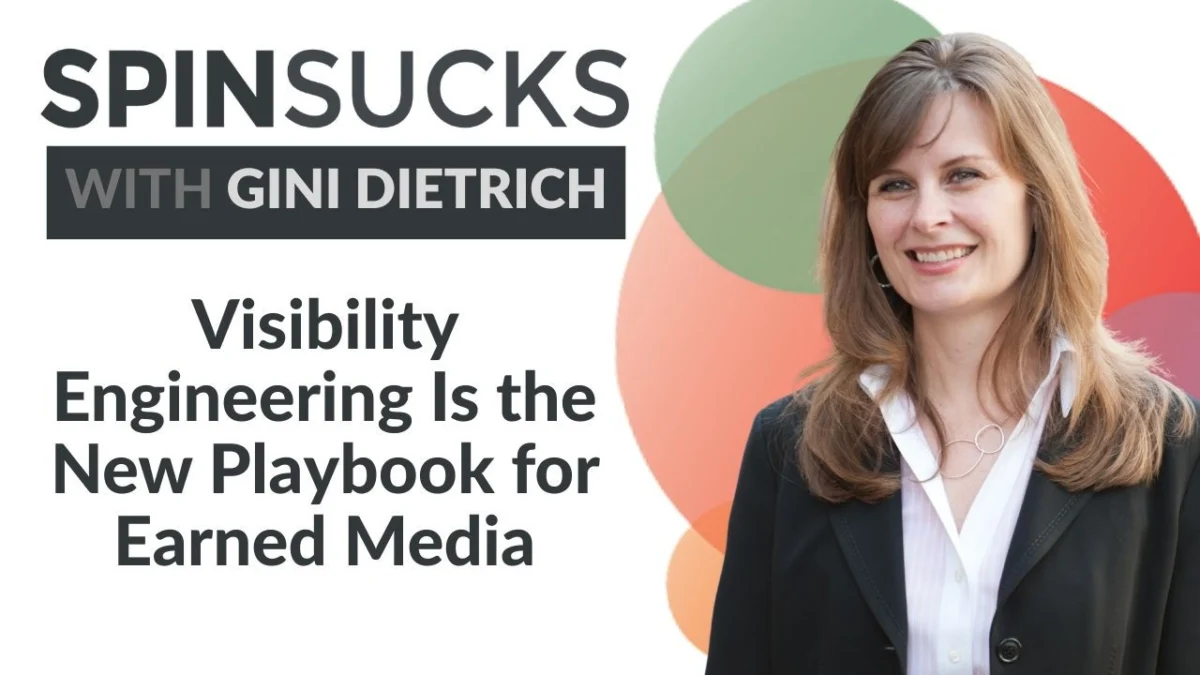
The landscape of professional credibility and brand visibility has undergone a fundamental transformation, shifting from a model centered on isolated media placements to a complex ecosystem governed by artificial intelligence and integrated content systems. For decades, the public relations and communications industries operated under a relatively straightforward paradigm: a "media hit" in a reputable trade publication or national outlet served as both a discovery mechanism and a badge of legitimacy. When a prospective client or journalist encountered a brand through earned media, that single touchpoint often sufficed to establish trust. However, the emergence of Large Language Models (LLMs) such as ChatGPT, Claude, and Gemini, alongside the rise of social media-driven research, has rendered the traditional "clipbook" approach insufficient for maintaining long-term authority.
In the current market, visibility is increasingly mediated by AI systems that synthesize vast amounts of data to provide users with direct answers, comparisons, and recommendations. This shift necessitates a new discipline known as "visibility engineering"—the practice of connecting owned and earned media to ensure a brand’s expertise is clear, consistent, and verifiable across both human and machine-driven search environments. Instead of treating media mentions as isolated trophies, modern organizations are moving toward a "credibility loop" model, where a central "anchor hub" of owned content is reinforced by every external interview, byline, and mention.
The Evolution of Credibility: From Print to Generative AI
To understand the necessity of visibility engineering, one must examine the chronological progression of how information is consumed and validated. In the pre-digital and early digital eras (1990s–2010s), earned media was the primary gatekeeper of trust. A feature in a major newspaper or a quote in an industry journal provided a "transfer of credibility" from the established outlet to the subject.
By the mid-2010s, the rise of Search Engine Optimization (SEO) introduced a second layer of complexity. Brands had to balance human-centric storytelling with the technical requirements of Google’s algorithms. However, discovery still largely resulted in a "click" to a website where the brand could control the narrative.
The current era, beginning roughly in 2023 with the mass adoption of generative AI, has introduced the "zero-click" and "AI-summarized" reality. According to recent data from search industry analysts, over 65% of Google searches now end without a click to a third-party website, as users find their answers directly on the search results page or via AI chat interfaces. This means that a brand’s presence must be robust enough to be synthesized by an LLM even if the user never visits the brand’s official homepage. Consequently, isolated media hits that do not reinforce a consistent, overarching theme fail to provide the "patterns of proof" that AI systems require to categorize a brand as a definitive authority in its space.
The Strategic Shift: From Trophy Cases to Credibility Loops
The traditional PR strategy often resembles a "trophy case." A company secures a high-profile placement, celebrates the win internally, shares it on social media, and then immediately pivots to the next unrelated story. While this creates spikes in attention, it fails to build compounding authority. In an AI-shaped market, credibility is built on reinforcement rather than novelty.
Visibility engineering replaces the trophy case with a credibility loop. This system begins with an "anchor hub"—a deep, defensible, and highly useful piece of owned content hosted on the brand’s website. This hub is not a generic services page or a ephemeral blog post; it is a comprehensive reference entry designed to answer a specific, high-intent buyer question.
Once the anchor hub is established, all earned media efforts are engineered to point back to it, either through direct links or, more importantly, through the consistent use of specific language, frameworks, and expert associations. AI models are trained to recognize these patterns. When an LLM sees a specific expert discussing a topic in a podcast, writing about it in a trade byline, and providing a deep-dive analysis on their own site, it validates the entity as a "trusted answer."
Supporting Data: The Impact of Integrated Media Models
The move toward visibility engineering is supported by broader shifts in B2B and B2C buying behavior. Research from Gartner indicates that 80% of B2B sales interactions will occur in digital channels by 2025. Furthermore, the "PESO Model" (Paid, Earned, Shared, Owned media), developed by industry experts, has become the gold standard for this type of integration.
Data suggests that brands utilizing an integrated PESO approach see a significant lift in "Share of Voice" compared to those relying solely on earned media. A study of digital authority found that brands with a centralized content pillar (an anchor hub) supported by external guest contributions saw a 40% higher retention rate in AI-generated summaries for their respective keywords. This reinforces the argument that disconnected earned media creates "noise," while engineered visibility creates "signals."
Industry Reactions and Professional Implications
The communications industry has reacted to these changes with a mix of urgency and restructuring. Chief Marketing Officers (CMOs) are increasingly demanding metrics that move beyond "impressions" to "authority scores" and "AI sentiment." There is a growing recognition that the silos between PR teams (earned), content teams (owned), and social teams (shared) are a strategic liability.
"The problem isn’t earned media; the problem is disconnected earned media," industry analysts have noted. Forward-thinking agencies are now rebranding their services to include "visibility engineering" or "digital authority management." This shift requires PR professionals to possess a deeper understanding of information architecture and how AI crawlers process relational data between different web entities.
For the individual expert or executive, the implications are equally significant. Personal branding is no longer about being "famous" in a general sense; it is about being the "obvious answer" for a specific query. This requires a disciplined focus on a single topic or framework until it is firmly established in the digital record.
A Chronology of Implementing Visibility Engineering
Organizations looking to adapt to this new environment generally follow a structured timeline for implementation:
- Baseline AI Assessment: Professionals begin by querying major LLMs in "incognito" modes to determine how the brand is currently perceived. This reveals whether the AI recognizes the brand as an authority or if the signals are too thin to be synthesized.
- Anchor Hub Development: The organization identifies one primary question or problem they want to own. They then build the "best page on the internet" for that topic—a citable, complete, and evidence-backed resource.
- Expert Alignment: A specific internal expert is assigned to the anchor hub. This ensures that the human element of authority is tied to the digital content.
- Earned Media Synchronization: The PR team pitches stories that specifically reinforce the anchor hub’s themes. Every interview and guest article is treated as a building block for the central pillar.
- Measurement Shift: Success is measured by the "reuse" of the brand’s language and frameworks across the web and the frequency of the brand’s appearance in AI-generated answers.
Broader Impact and Future Outlook
The broader impact of visibility engineering extends to the very nature of truth and trust on the internet. As AI-generated content continues to proliferate, the value of "unbuyable" proof—genuine earned media from reputable sources—will only increase. However, that proof must be anchored to a stable, owned foundation to survive the rapid turnover of digital information.
In the long term, visibility engineering will likely become the standard operating procedure for any entity seeking to maintain relevance. The brands that win will not be those with the largest volume of content, but those with the most coherent and reinforced signals. By moving away from the "collection of wins" mentality and toward a systemic approach to credibility, organizations can ensure that they remain the trusted answer in a market where the gatekeepers are no longer just human editors, but sophisticated algorithms seeking the most reliable data points.
The transition from traditional PR to visibility engineering represents a maturation of the communications field. It acknowledges that in a world of infinite information, the most valuable asset is not just being seen, but being recognized as a definitive source of truth that compounds in value over time. For those who embrace this shift, the reward is a durable authority that persists across all platforms where humans and machines seek credibility.










