rifanmuazin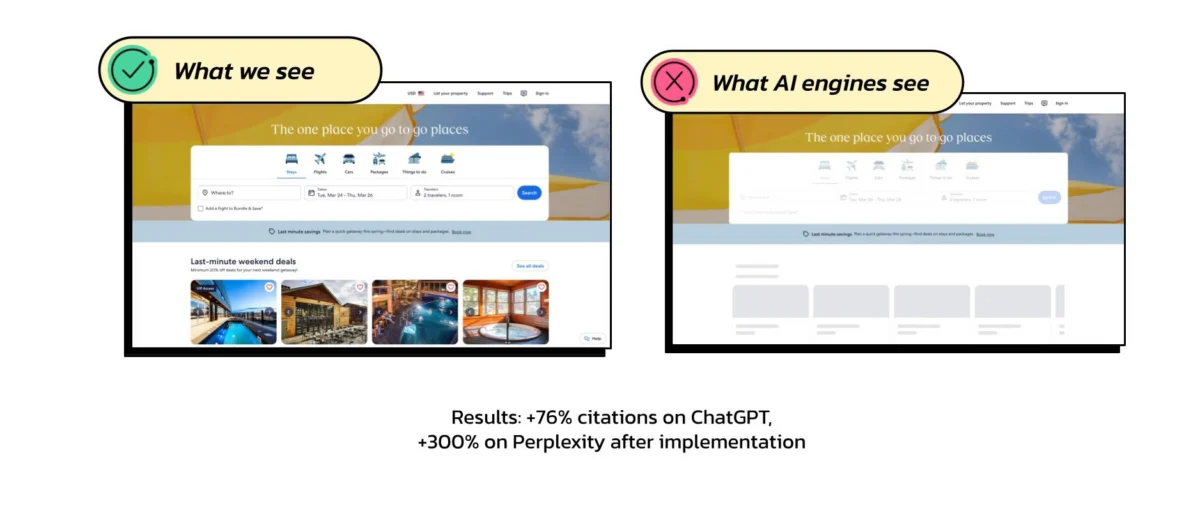
By now, the consensus among marketing leaders is clear: artificial intelligence visibility is no longer a theoretical concern but a tangible necessity. The conversation has pivoted from a nascent inquiry about its importance to a practical, often challenging, question of implementation: "What concrete actions can we take to ensure our brand thrives in the AI-driven search landscape?" Many brands are finding themselves at an impasse, not due to a scarcity of opportunities, but because capitalizing on these AI search advantages demands a level of interdepartmental collaboration that often exceeds existing operational structures.
The most impactful strategies for AI search optimization are not exclusively resource-intensive endeavors. Some are surprisingly straightforward, even aligning with long-standing SEO wishlists. However, nearly all of these crucial plays necessitate input and execution from multiple teams. Understanding the ownership and responsibilities within this collaborative framework is as vital as grasping the technical intricacies of AI search itself. The reality is that a singular SEO team cannot unilaterally achieve AI search success. This necessitates a foundational shift in how marketing departments operate, beginning with a critical examination of how AI engines perceive and process brand information.
AI’s Perception: The Crucial Role of Server-Side Rendering
A fundamental prerequisite for AI search success is ensuring that AI crawlers can accurately and comprehensively access a brand’s website. This might seem like a basic tenet, yet it’s an area where oversight can occur precisely because websites often appear functional and complete to human users.
AI search engines, unlike human navigators, do not execute JavaScript in real-time to render content. Instead, they primarily process information delivered via server-side rendering (SSR). If a website relies heavily on client-side JavaScript to dynamically load content, AI agents may be operating with an incomplete or even distorted view of the brand’s digital presence. This discrepancy can have profound implications. When an AI engine fields a user’s query, it’s not "browsing" the site as a person would. It’s interpreting the version of the webpage that is directly transmitted from the server, prior to any client-side script execution. This means critical elements such as navigation menus, detailed product descriptions, or pivotal content sections that only materialize after JavaScript has run might be entirely invisible to AI crawlers. Consequently, AI may form judgments and generate answers based on a fragmented understanding of the brand’s offerings and narrative, leaving marketers unaware of this fundamental communication gap.
The technical remediation of this issue typically falls under the purview of engineering and development teams, rather than SEO specialists. While SEO professionals are instrumental in auditing the site, identifying affected pages, and articulating the necessary changes, the actual implementation—such as optimizing rendering processes or adjusting JavaScript loading strategies—requires development sprints and integration into product roadmaps. Leadership buy-in is therefore essential to prioritize these technical enhancements alongside other product development initiatives. Paid media teams can also offer invaluable insights, as they often possess a clear understanding of which pages drive the most commercial value, thereby aiding in the prioritization of rendering optimization efforts for high-impact sections of a website.
Establishing Credibility: Schema Markup and Content Freshness
Beyond ensuring accessibility, the next critical hurdle is establishing trust and credibility with AI search engines. AI answer engines increasingly factor in the recency and authority of content when determining what information to cite. Schema markup offers a direct and effective method to communicate these vital signals.
While schema markup might sound inherently technical, its conceptual purpose is straightforward. It involves adding small, invisible code snippets to a website’s source code. These additions, imperceptible to human visitors, provide explicit instructions to search engines and AI crawlers about the nature of the content. This can include details such as the last update time, the author, and the content format. For multimedia assets like videos, schema markup is particularly crucial. It can alert AI to the presence of a video on a page, summarize its content, and indicate its production date. Without this structured data, a valuable video might be effectively nonexistent from an AI visibility perspective, regardless of its on-page prominence.
The primary reason many brands have not fully adopted schema markup is not its inherent difficulty, but rather its placement in a functional gray area between SEO and development. Neither team may have formal ownership of its deployment. The solution lies in establishing a routine workflow: SEO teams should identify the necessary schema for various pages and content types, and development teams should integrate schema deployment into their standard publishing processes. This transforms schema implementation from an ad-hoc project into a consistent operational practice. Creative and social media teams also play a vital role in this conversation, as they are the primary producers of content, such as videos, that most significantly benefits from accurate schema markup.
From Keywords to Topics: The Paradigm Shift in AI Search Optimization
Perhaps the most significant unlock in current AI search strategies is the transition from optimizing for individual keywords to optimizing for comprehensive topics. This necessitates a fundamental reevaluation of how marketing teams collaborate and structure their content efforts.
Unlike traditional search engines that often rank pages based on specific keyword matches, AI search engines reward content that is meticulously organized around overarching themes and demonstrates deep expertise across an entire subject area. A brand with numerous pages that superficially address various aspects of a topic, without achieving true depth on any single one, is likely to be overlooked in favor of competitors whose content is structured to convey genuine authority and comprehensive understanding.

The analytical technique that reveals AI’s preferred thematic structures is embeddings analysis. At its core, AI engines understand language by creating complex mathematical representations of words and concepts, clustering them based on their semantic relationships. Embeddings analysis provides a window into these clusters, allowing marketers to discern which themes and content architectures AI considers authoritative within a given category and identify where their own content aligns or falls short.
The output of this analysis is a data-driven topic framework—a blueprint for organizing content to maximize visibility in AI-generated answers. However, the true value of this framework is realized only when it becomes a shared operational logic across content, social media, and public relations teams, rather than an isolated SEO document. When PR teams pitch stories, they should be aligning their narratives with these identified priority themes. Similarly, social media teams should use these topics as the foundational structure for their editorial calendars. While SEO may lead the analysis, the resulting framework must be adopted and utilized by all relevant departments to achieve synergistic results.
Beyond the Website: The Holistic AI Search Ecosystem
A crucial realization for brands navigating AI search is that their website is only one component of a much larger information ecosystem. AI-generated answers are not solely synthesized from a brand’s proprietary website; they are compiled from a diverse array of sources, including social media discussions, online forums, video platforms, and editorial coverage across the web. A brand’s narrative within AI search is therefore being shaped by a multitude of platforms, many of which fall outside of direct marketing team control.
This dynamic has a practical consequence: a brand may possess an impeccably designed website and highly optimized content, yet still falter in AI search rankings due to a fragmented, contradictory, or insufficient broader online conversation surrounding its offerings.
To address this, SEO teams must establish consistent communication channels with social media and community management teams. This ensures that insights into which topics AI is surfacing and prioritizing can inform platform-specific content strategies. The objective is not for SEO to dictate content across other channels, but rather to ensure coherence in the signals that exist across the web, a goal achievable only through active cross-channel connectivity and information sharing.
Reimagining Public Relations for the AI Era
The final critical strategic shift involves redefining success metrics within public relations, a move that many current PR briefs have yet to fully encompass. AI answers synthesize sentiment and information from PR coverage, community mentions, and publisher citations concurrently. Consequently, a negative or inaccurate mention, once contained within the confines of a specific publication, can now be integrated into the aggregated information AI provides to potential customers.
This reality elevates the priority beyond simply earning backlinks from high-authority publications. The new imperative is to cultivate a greater volume of positive and accurate mentions across the sources that AI engines actively cite, and to proactively correct misinformation wherever it appears in the digital ecosystem. This represents a departure from traditional PR objectives, where the prestige of a publication often outweighed its accessibility to AI crawlers. Paywalled coverage, regardless of its perceived authority, may not contribute to AI visibility if AI engines cannot access and process the content.
To facilitate this transition, SEO teams must equip PR departments with data identifying the specific sources that Large Language Models (LLMs) are drawing from, and pinpointing instances of inaccurate or missing brand mentions. PR professionals can then leverage this intelligence to refine their outreach and messaging strategies. Partnership teams are also integral to this process, as co-created content and third-party endorsements offer open, readable signals that significantly bolster AI credibility, often more effectively than exclusive, paywalled feature articles.
The Unifying Principle: Cross-Functional Collaboration
The strategic plays outlined above are not proprietary secrets. The underlying techniques are established, the necessary data is accessible, and the solutions are generally well-understood. What is conspicuously absent in many organizations is the cohesive, cross-functional process required for their effective execution. An SEO team can perform intricate analyses and identify significant opportunities, but it cannot unilaterally implement rendering fixes without engineering support, deploy schema markup without development resources, align content calendars without the direct involvement of content creators, or redirect PR targeting without a shared framework for measurement and attribution.
The brands currently achieving significant traction in AI search are not necessarily employing more sophisticated analytical methods. Instead, they are the organizations that have successfully elevated AI visibility to a shared organizational priority, rather than confining it to the responsibility of a single department. This fundamental shift begins with leadership fostering open and candid internal dialogues, not solely about the potential of AI search, but critically, about who bears the responsibility and ownership for capitalizing on those opportunities. This requires a commitment to breaking down silos and building bridges between traditionally disparate marketing functions.