rifanmuazin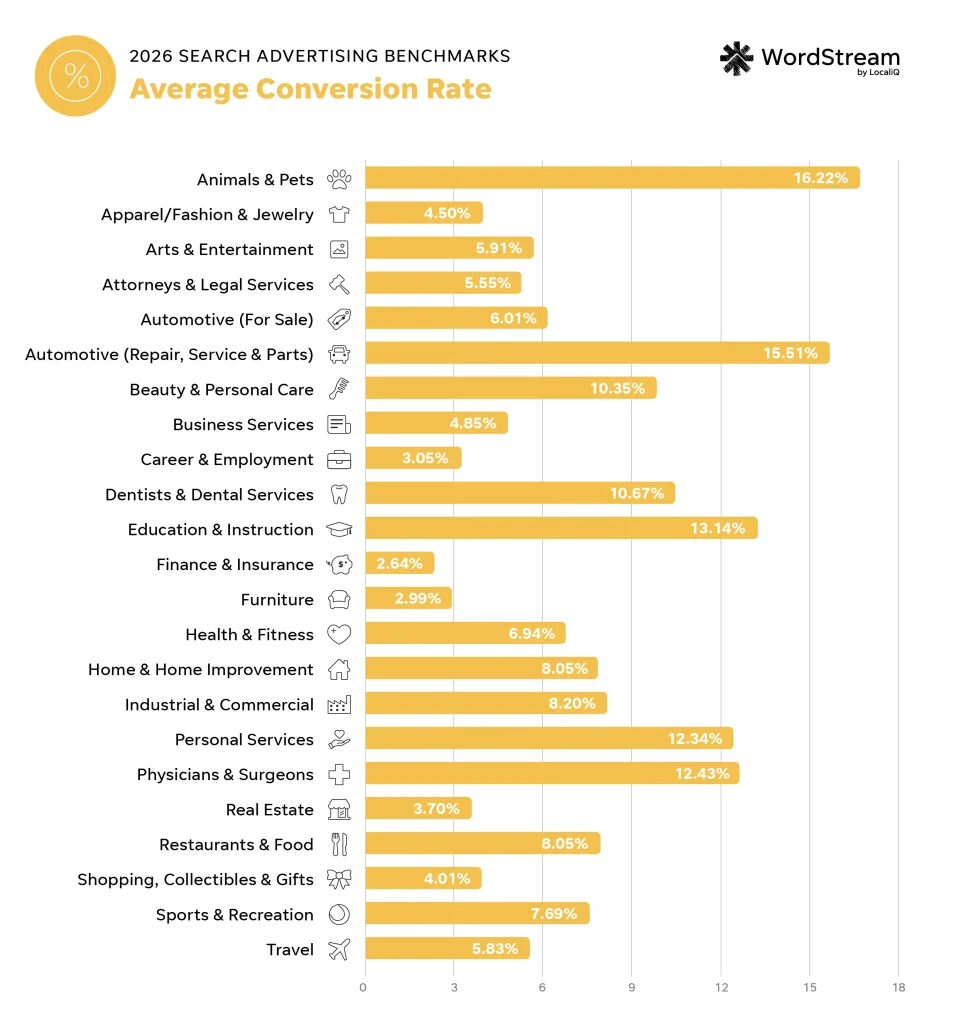
The digital advertising landscape is in constant flux, yet the latest Google Ads benchmarks report, now celebrating its tenth anniversary, reveals a surprising period of stability in key performance indicators. Analyzing over 13,000 search advertising campaigns across 23 industries between April 2025 and March 2026, the report from WordStream and LocaliQ offers a comprehensive look at the average metrics for click-through rate (CTR), cost per click (CPC), conversion rate (CVR), and cost per lead (CPL) on both Google Ads and Microsoft Ads platforms. This year’s findings are particularly noteworthy for a significant shift: for the first time in half a decade, the overall average cost per lead has actually decreased, signaling a potentially more predictable and efficient advertising environment for many businesses.
A Decade of Evolution in Search Advertising
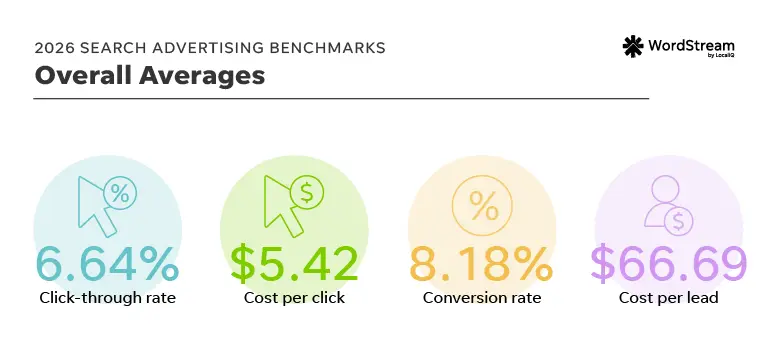
The release of the 2026 Google Ads benchmarks marks a significant milestone, celebrating ten years of providing advertisers with crucial data to inform their strategies. The first benchmarks report, released in 2016, offered a snapshot of a nascent digital advertising ecosystem. Back then, average CTRs hovered around 3.17%, CPCs averaged $1.41, CVRs stood at 4.40%, and CPL was a mere $50.00. The landscape has dramatically transformed since then, with the advent of new ad formats, the increasing sophistication of AI-driven optimization tools, and a significant increase in the number of businesses investing in paid search. This year’s data, reflecting campaigns from April 2025 to March 2026, shows a markedly different picture, with average CTR at 6.64%, CPC at $5.42, CVR at 8.18%, and CPL at $66.69. The growth in average metrics reflects both increased competition and the enhanced capabilities of advertising platforms.
The past decade has seen profound changes, including major algorithm updates from Google, the introduction of AI-powered campaign types like Performance Max, and the evolving search behavior of consumers. The relative stability observed in this year’s benchmarks, compared to the significant fluctuations seen between 2024 and 2025 (which included a 12% increase in CPC and a 25% increase in CPL), suggests that advertisers may be adapting more effectively to these shifts.
Key Trends and Data Insights for 2026
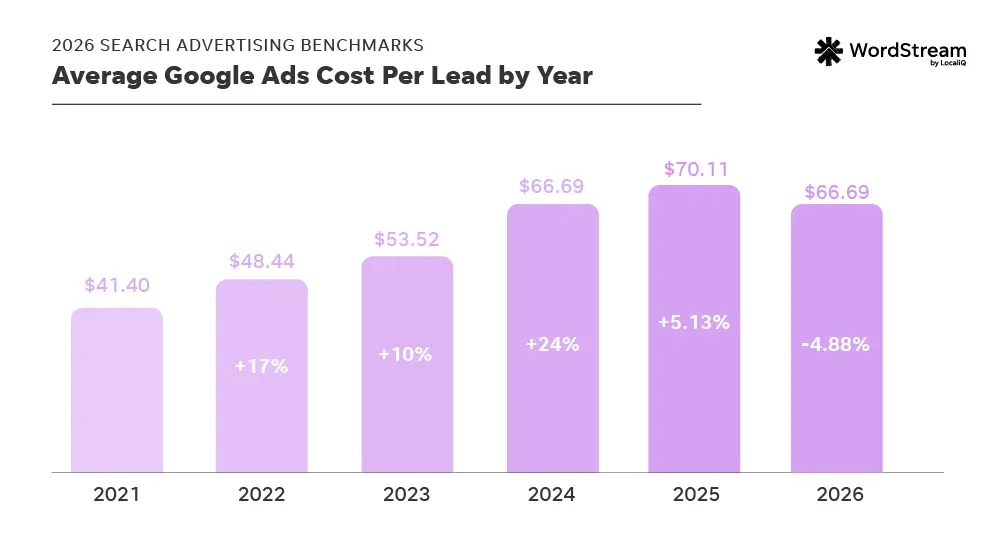
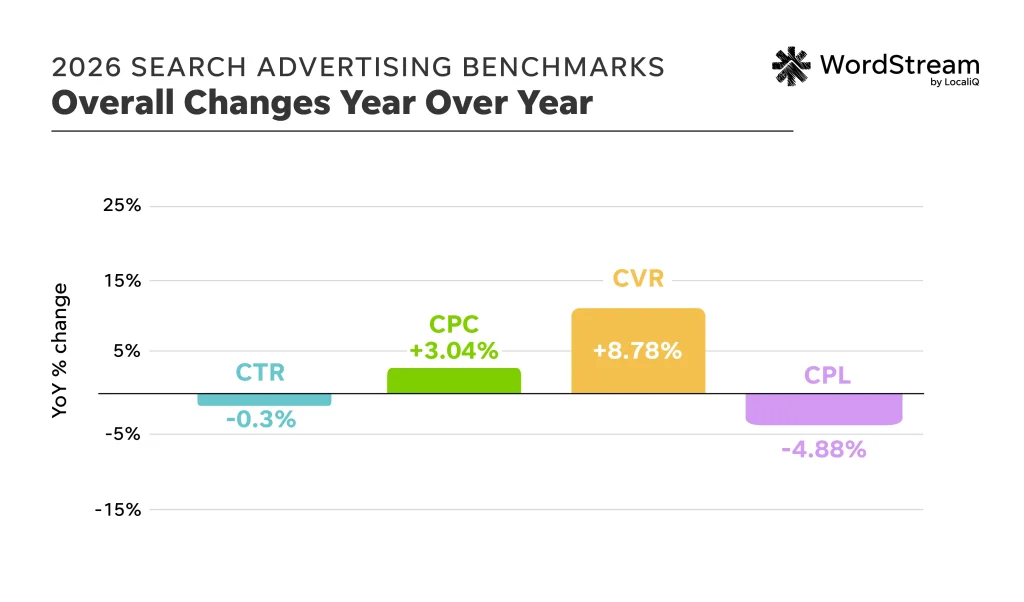
The overarching narrative of the 2026 Google Ads benchmarks report is one of recalibration and emerging efficiency. While overall year-over-year changes in key metrics have been less dramatic than in previous years, the decrease in average cost per lead is a standout development. This positive trend is attributed by experts to the growing adoption and effectiveness of AI-driven advertising tools and strategies.
"Seeing an overall drop in cost per lead for the first time since before 2020 is a big signal that advertisers who’ve adapted to search platform changes are getting more stable and predictable results," commented Pepe Hernandez, Senior Director of Optimization Strategy at LocaliQ. This adaptation likely includes a greater reliance on automated bidding strategies, such as those integrated into Performance Max campaigns, and a more strategic approach to incorporating AI-generated insights, like Google’s AI Overviews, into campaign planning. Brett McHale, Founder of Empiric Marketing, echoed this sentiment, stating, "With campaign types like Performance Max and other AI-driven settings such as AI Max, it’s become a lot easier to generate leads at a lower cost."
Average Click-Through Rate (CTR): Measuring Ad Relevance
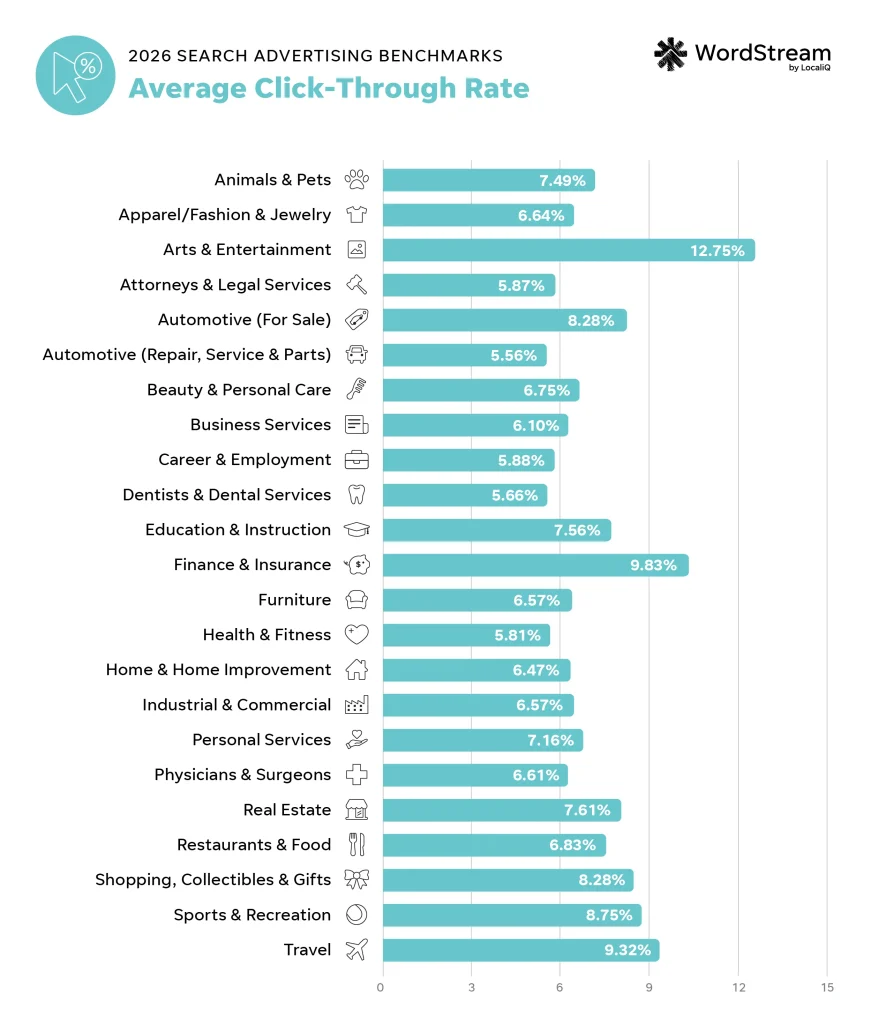
The average Click-Through Rate (CTR) across all industries in Google Ads for the 2026 period stands at 6.64%. CTR remains a critical metric, directly indicating how well an ad resonates with its target audience and how likely users are to click on it. A higher CTR often leads to more cost-efficient campaigns and improved ad rankings.
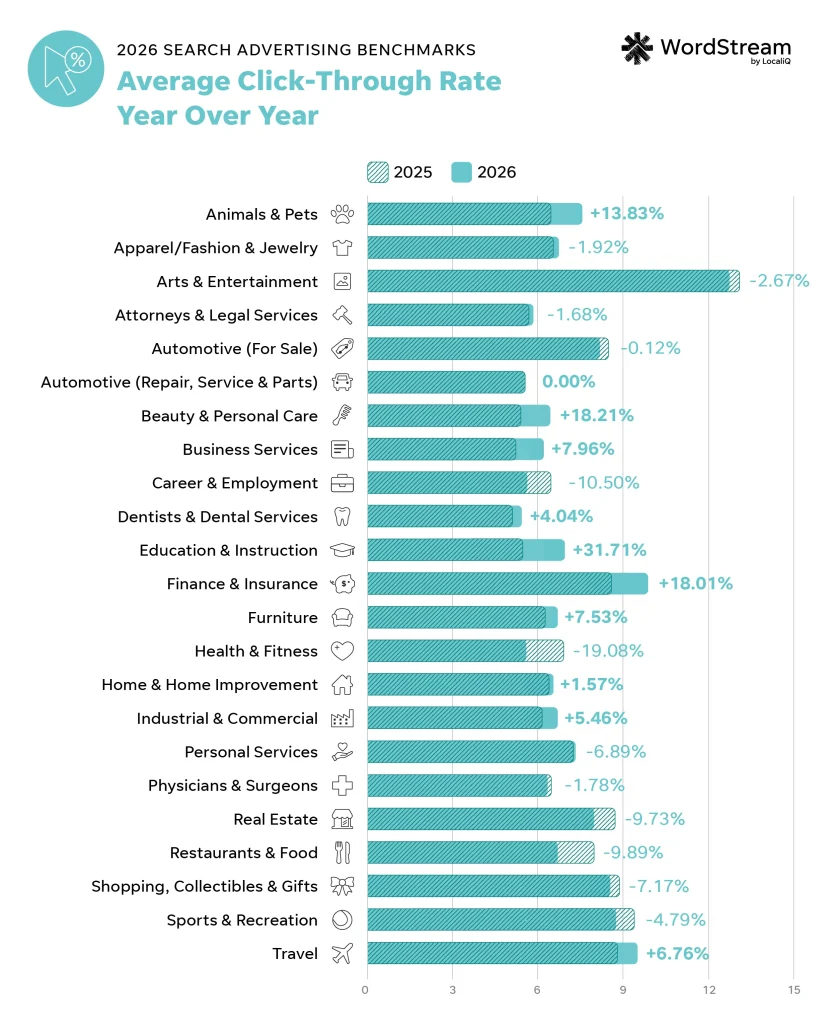
While overall CTRs have remained relatively stable for WordStream and LocaliQ’s clients, the report notes that broader market trends have indicated a general decline in CTRs for both organic and paid search results. The platform’s optimization technology is credited with helping their clients achieve better-than-average performance. Industries like Education and Instruction saw a significant 31.71% year-over-year improvement in CTR, followed by Beauty and Personal Care (up 18.21%) and Finance and Insurance (up 18.01%). Conversely, Health and Fitness experienced a notable decline of 19.08%.
Average Cost Per Click (CPC): The Price of Visibility
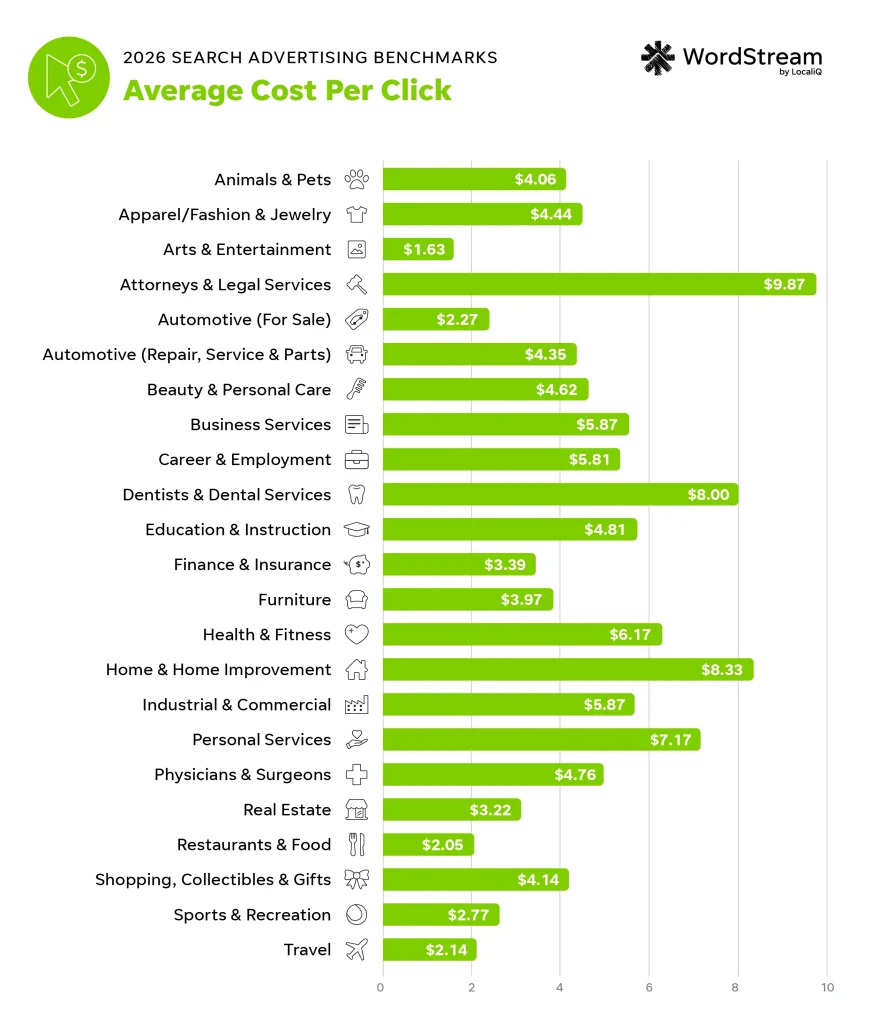
The average Cost Per Click (CPC) for Google Ads in 2026 is $5.42. CPC is a fundamental metric for managing advertising budgets, as it directly reflects the cost incurred for each user interaction with an ad. While advertisers naturally aim for lower CPCs to maximize their budget, the report emphasizes that a higher CPC can be justified if it leads to higher-quality clicks that are more likely to convert.
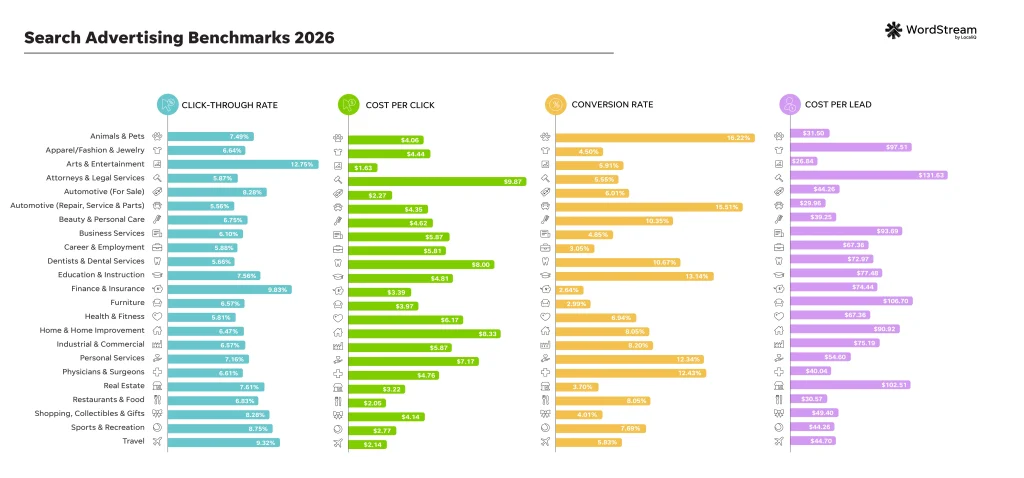
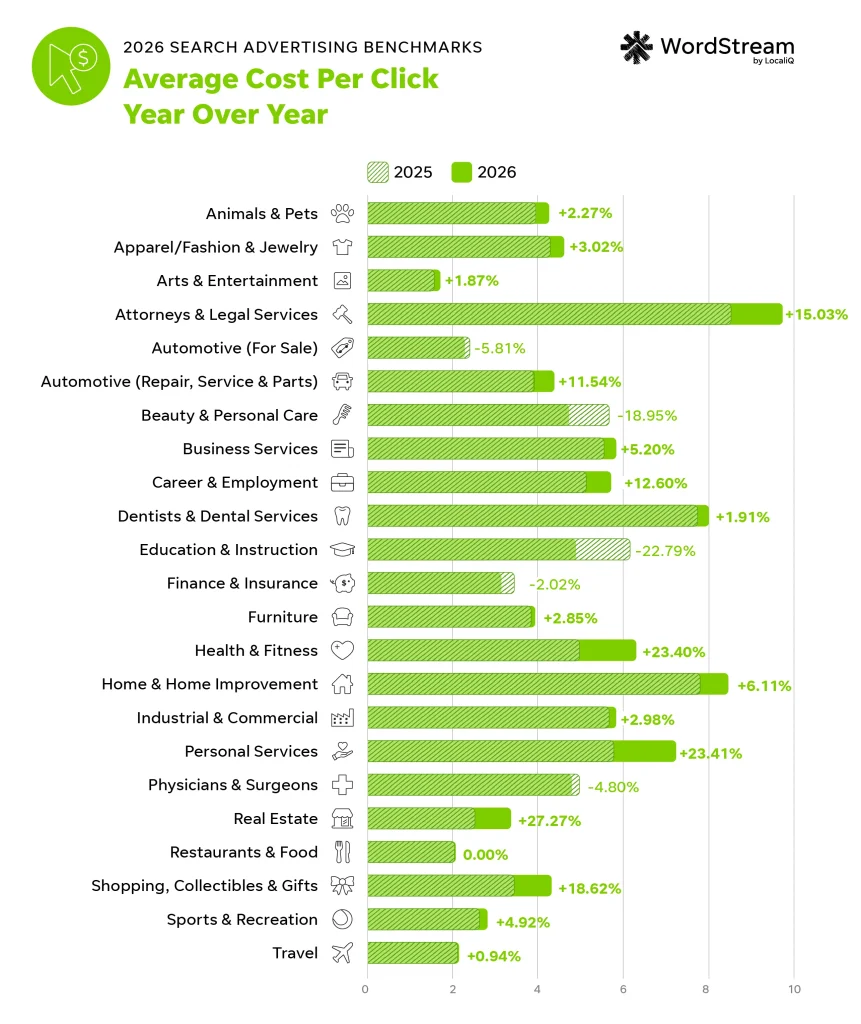
The report highlights that while some industries, like Arts & Entertainment ($1.63) and Restaurants & Food ($2.05), boast very low average CPCs, others, such as Attorneys & Legal Services ($9.87) and Home & Home Improvement ($8.33), face significantly higher costs per click. Year-over-year, the Education and Instruction sector saw the most substantial decrease in CPC, down 22.79%. Conversely, Real Estate experienced the largest increase, up 27.27%.
Average Conversion Rate (CVR): Turning Clicks into Customers
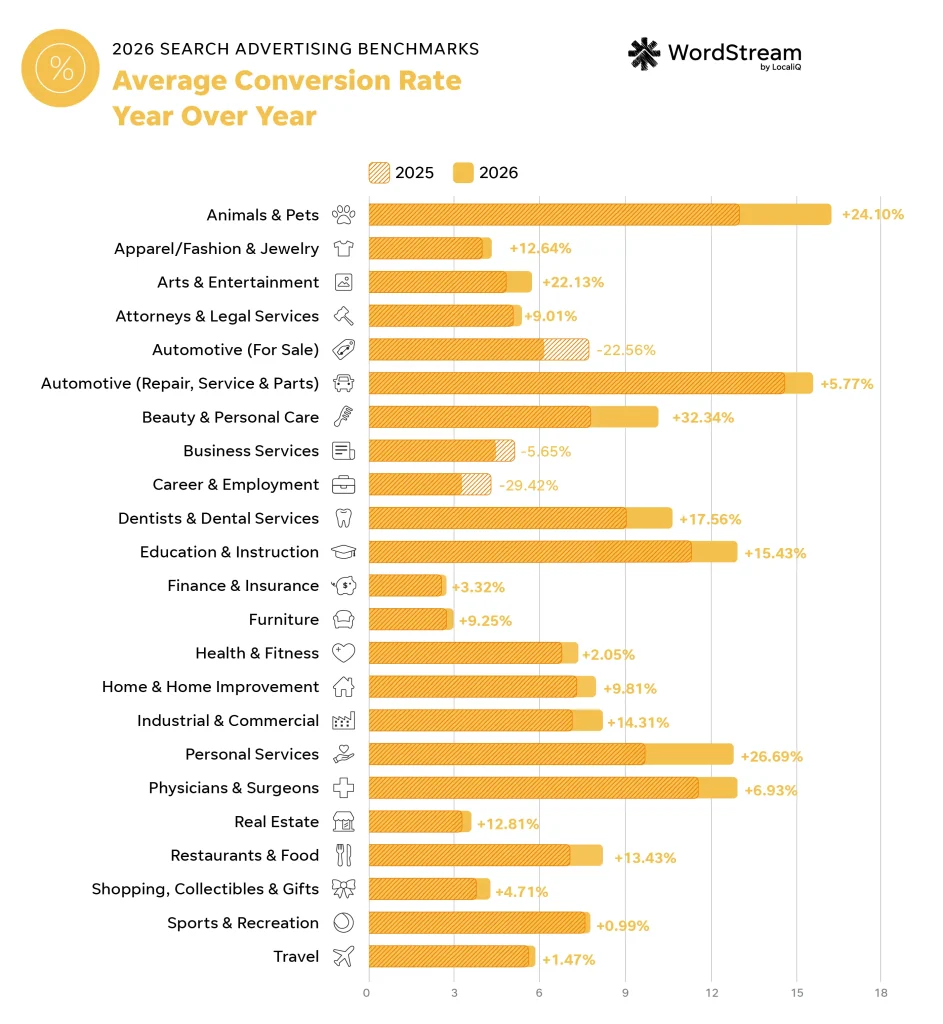
The average Conversion Rate (CVR) across Google Ads for 2026 is 8.18%. This metric is vital for understanding the effectiveness of ads in driving desired actions, whether that’s a sale, a lead submission, or another valuable outcome. A higher CVR signifies that the traffic generated by ads is of high quality and that landing pages and offers are compelling.
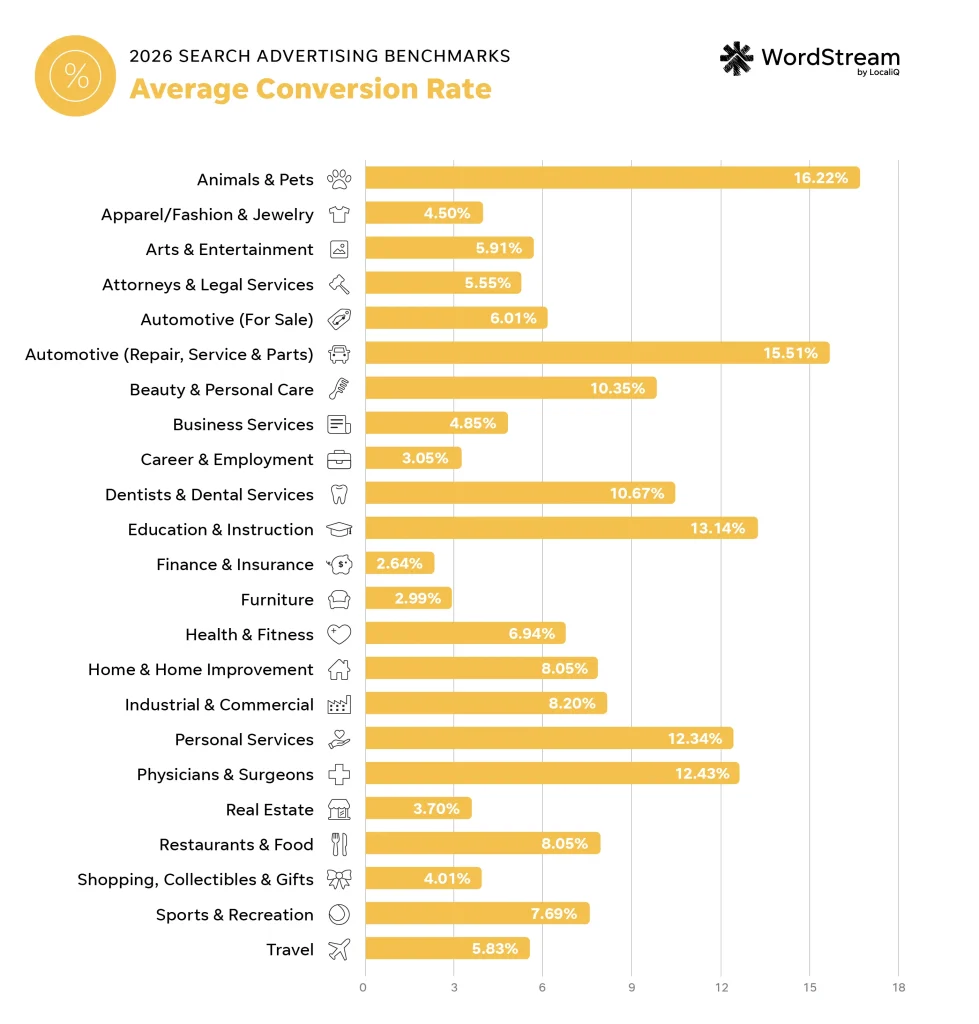
Industries like Animals & Pets (16.22%), Automotive—Repair, Service & Parts (15.51%), and Education & Instruction (13.14%) demonstrated the strongest conversion rates. On the other hand, Finance & Insurance (2.64%) and Furniture (2.99%) reported lower CVRs. Year-over-year, Beauty and Personal Care saw a remarkable surge of 32.34% in CVR, while Career & Employment experienced a significant drop of 29.42%, continuing a downward trend for the second consecutive year.
Average Cost Per Lead (CPL): The "Money Metric"
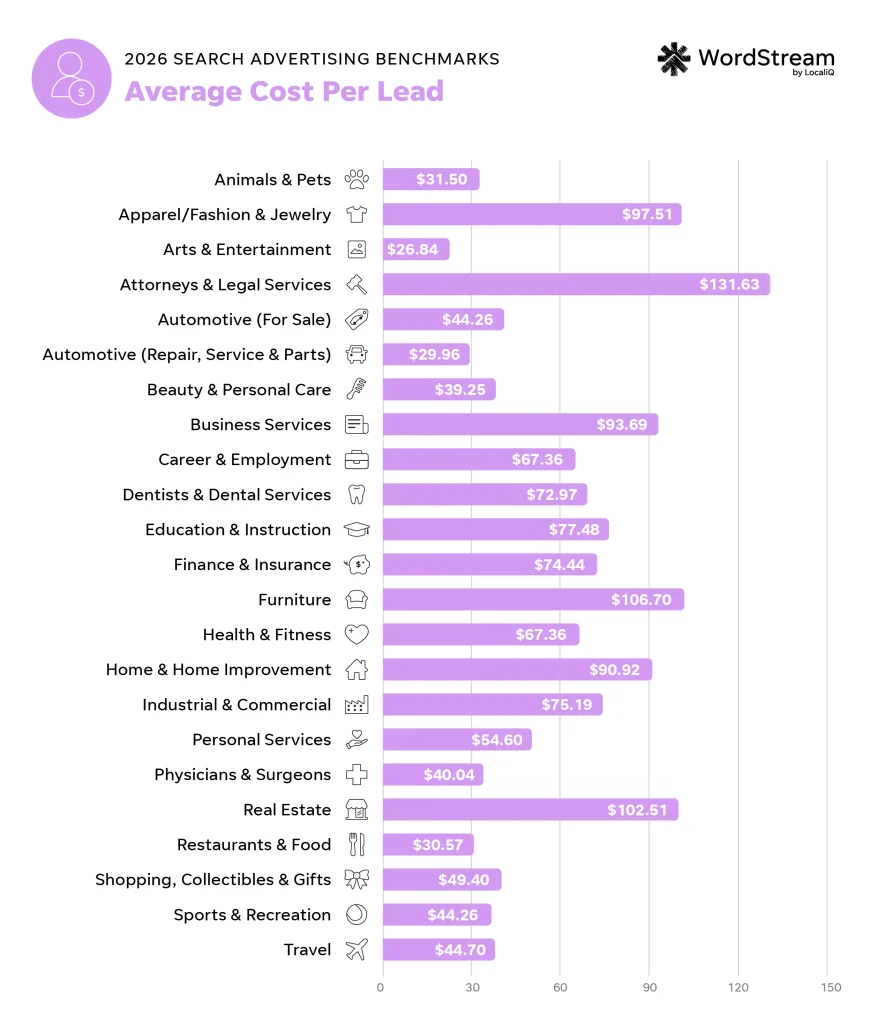
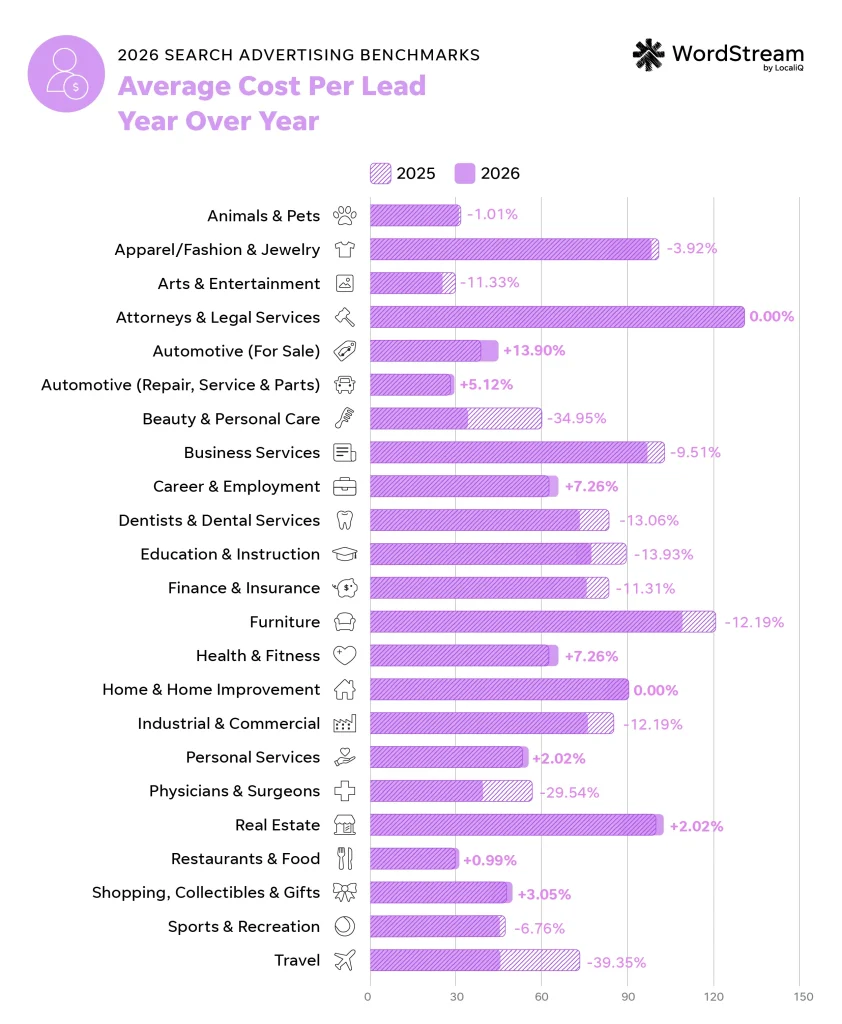
The average Cost Per Lead (CPL) for Google Ads in 2026 is $66.69. This metric is often considered the "money metric" as it directly ties advertising spend to the acquisition of a potential customer. The decrease in average CPL this year is a significant positive development, suggesting improved efficiency in lead generation efforts.
Industries like Arts & Entertainment ($26.84) and Restaurants & Food ($30.57) achieved the lowest costs per lead, while Attorneys & Legal Services ($131.63) and Furniture ($106.70) faced the highest. Year-over-year, Travel saw a dramatic reduction in CPL, down 39.35%, followed by Beauty and Personal Care (down 34.95%).
Implications and Actionable Strategies for Advertisers
The data presented in the 2026 benchmarks report offers several key takeaways for advertisers seeking to optimize their search campaigns:
-
Prioritize Goals Over Single Metrics: The report strongly advises against fixating on any single metric. While CTR and CPC can appear favorable, they are meaningless if conversions are not occurring. Advertisers should align their metric focus with overarching business objectives, recognizing that in niche markets, efficiency might outweigh raw volume. As Katie Ashafa, Senior Director of Optimization Strategy at LocaliQ, notes, "if click-through rate declines but the clicks driven are higher quality and convert at stronger rates, that lower CTR alone does not warrant concern."
-
Embrace Regular Account Optimization: The digital advertising landscape is dynamic. Even established accounts require continuous monitoring and adjustment. The historical data over the past decade underscores the need for flexibility and adaptation to evolving market conditions, consumer trends, and platform updates. Monthly account health checks are recommended to identify and implement necessary pivots.
-
Leverage Automation and AI: The increasing integration of AI and automated features in platforms like Google Ads is undeniable. Campaign types such as Performance Max and Demand Gen, along with AI Max and Smart Bidding, offer advertisers enhanced reach and efficiency. These tools can help identify valuable audiences and optimize bids for better performance, even if it means fewer direct clicks from traditional search campaigns. As Navah Hopkins, Ad Product Liaison at Microsoft, observes, "AI-powered ad campaigns tend to have higher conversion and relevancy rates."
-
Reinforce Account Fundamentals: Despite advancements in AI, foundational elements of campaign management remain critical. A strong alignment between keywords, ad copy, and landing pages, alongside diligent use of negative keywords and a focus on Quality Score, significantly impacts performance. The report highlights that even minor improvements, like adding a single negative keyword, can dramatically boost conversion rates.
-
Refine Targeting Granularity: The emphasis in PPC is shifting from broad reach to precise targeting. By focusing on audiences more likely to convert, advertisers can achieve a higher return on investment. This involves leveraging custom audiences, remarketing lists, interest and demographic targeting, and lookalike audiences to ensure ads are shown to the most relevant users. As Stephanie Scanlan, Vice President of Customer Success at LocaliQ, emphasizes, "Advertisers should focus on showing their ads to a precise audience, with the right language, at the right time, and at the right cost."
-
Data-Informed Optimization: Continuous testing and data analysis are paramount. Deploying different ad creatives, targeting strategies, and bidding approaches on a consistent basis allows for the identification of impactful optimizations. Tracking conversion value, not just lead volume, provides a more accurate picture of campaign success and informs bidding strategies more effectively. "If you’re only tracking how many leads your campaign drove, you’re missing the point. You need to know which of those leads actually turned into customers, and that needs to feed into how you’re bidding—not just how you’re reporting," stated Katia Hausman, Vice President of Paid Media Products, LocaliQ.
A Look Back: The Evolving Benchmarks
The decade-long journey of the Google Ads benchmarks report underscores the profound evolution of the digital advertising landscape. The increasing number of businesses utilizing paid search, coupled with platform-driven price adjustments, has contributed to a general rise in average metrics over the years. Factors such as increased competition, Google’s revenue objectives highlighted during antitrust proceedings, and global events like the COVID-19 pandemic have all influenced performance averages.
The consistent delivery of these benchmarks by WordStream and LocaliQ provides invaluable context for advertisers, enabling them to gauge their performance against industry standards and make informed strategic decisions. As the digital advertising world continues to advance, these annual reports will remain a cornerstone for understanding trends, adapting strategies, and ultimately driving success.