
 rifanmuazin
On the social media platforms of WordStream and LocaliQ, a consistent pattern has emerged: posts featuring employees or shared by employees consistently outperform others, generating engagement levels up to tenfold and fostering a significant increase in shares. This phenomenon is not unique to these digital marketing companies; it reflects a broader, powerful trend in modern brand communication: the rise of employee-generated content (EGC). When individuals who work for a company share their authentic experiences, the impact is profound, transforming them into organic brand advocates and marketers, often without even realizing it. This article delves into the compelling reasons behind EGC’s effectiveness, illustrates its success with real-world examples, and provides actionable strategies for companies seeking to harness its potential.
At its core, employee-generated content encompasses any form of media—photos, videos, blog posts, testimonials, or social media updates—created by employees that reflects their direct experiences with their employing company. Unlike traditional employer-created content, EGC possesses a distinct human element, offering a relatable and often unfiltered perspective. For instance, imagine scrolling through Instagram and encountering a photo of a breathtaking sunset, accompanied by a simple caption from a resort bartender: "My view from the office." This is EGC in action. It’s an unscripted, genuine moment shared by an individual whose daily life is intertwined with the brand, inherently spotlighting the company in an authentic and compelling way.
It is crucial to distinguish EGC from user-generated content (UGC). While both leverage authentic voices, UGC originates from customers or end-users of a product or service, whereas EGC stems from those within the organization. EGC can manifest in various formats, from quick, spontaneous social media posts and engaging video testimonials to in-depth blog articles and candid reviews on professional networking sites. A striking example of EGC in the wild can be found on TikTok, where a Papa John’s employee, operating under the handle @d0ughjoe, shared a playful video showcasing their skill and enjoyment in manipulating pizza dough. Such content, unburdened by corporate polish, resonates deeply with audiences.

The Multifaceted Benefits of Employee-Generated Content
The efficacy of EGC hinges on a fundamental principle: people inherently trust other people more than they trust corporate messaging. This trust translates into tangible benefits for brands.
Enhancing Brand Authenticity, Trust, and Reach
Consider the power of a personal recommendation. When a friend suggests a new restaurant, you are far more likely to try it than if you saw a generic advertisement. EGC operates on a similar principle. When an employee shares a candid glimpse into their workday—perhaps a photo of them preparing flower leis at a Hawaiian resort—it doesn’t feel like a sales pitch. Instead, it subtly builds trust and expands the brand’s reach in ways that traditional advertising often struggles to achieve.
Data supports this assertion unequivocally. Research indicates that employee-generated content can achieve up to eight times more engagement than content shared directly by official brand channels. Alexandra Howard, Brand Manager at LocaliQ, has observed this firsthand, stating, "The most rewarding aspect of EGC is constantly seeing it drive our highest levels of engagement and reach. Much of the performance is driven by our own employees, who are proud to showcase our culture, expertise, and the value we offer."
Furthermore, employees are often perceived as more credible sources of information about a company than its leadership. According to Edelman’s Trust Barometer, employees are consistently trusted more than CEOs when discussing their organizations. A simple Instagram Reel posted by a front desk manager highlighting a nearby beach, for example, carries significant influence due to the trust associated with their role.

Cultivating a Team of Brand Advocates
When employees feel a genuine sense of pride in their workplace, they are naturally inclined to share their positive experiences. This organic advocacy humanizes the brand and fosters a sense of community that is difficult to manufacture. A housekeeping team posting a lighthearted behind-the-scenes photo of creating towel animals for a returning family, for instance, offers a genuine connection that can make followers and potential guests feel more invested.
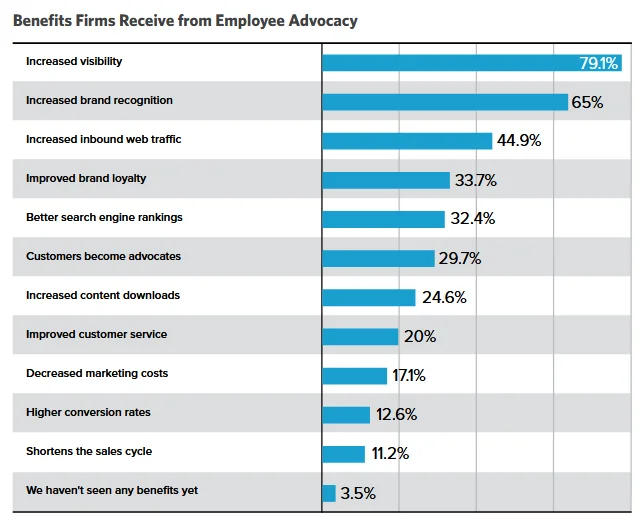
Companies can further formalize this by implementing employee advocacy programs. Such initiatives not only encourage employees to share their positive experiences but also contribute to their professional development and can significantly boost retention rates. Studies suggest that companies with socially engaged employees are approximately 20% more likely to retain them. Moreover, a substantial 79% of companies with established advocacy programs report increased social media visibility.
A Cost-Effective Marketing and Recruitment Tool
In an era of escalating advertising costs, EGC presents a remarkably cost-effective marketing and recruitment solution. Companies are already investing in various forms of online advertising, and EGC allows them to tap into a ready-made team of storytellers who are deeply familiar with the brand, without significantly increasing their marketing budget.
Imagine a resort seeking to showcase its amenities. Instead of hiring an expensive production crew, they could encourage and reward several team members to record short video clips of their daily routines—the walk to the beach chairs, the poolside atmosphere, or an engaging activity. These authentic, budget-friendly moments can be amplified by strategically investing a portion of the advertising budget behind them, adding a personalized touch to broader campaigns.
The recruitment benefits are equally compelling. When employees share job openings or positive work experiences, those positions tend to attract significantly more applications, with some reports indicating an increase of up to 30%. A video showcasing an activity coordinator ziplining with guests, for example, could serve as an engaging recruitment tool, attracting candidates who are drawn to the company’s vibrant and adventurous culture.
Diverse Formats and Real-World Examples of EGC
Employee-generated content spans a wide spectrum, from brief, ephemeral social media updates to more comprehensive, in-depth narratives. Its adaptability allows it to be visual, text-based, or a combination of both.
Social Media Posts and Stories: The Digital Frontline
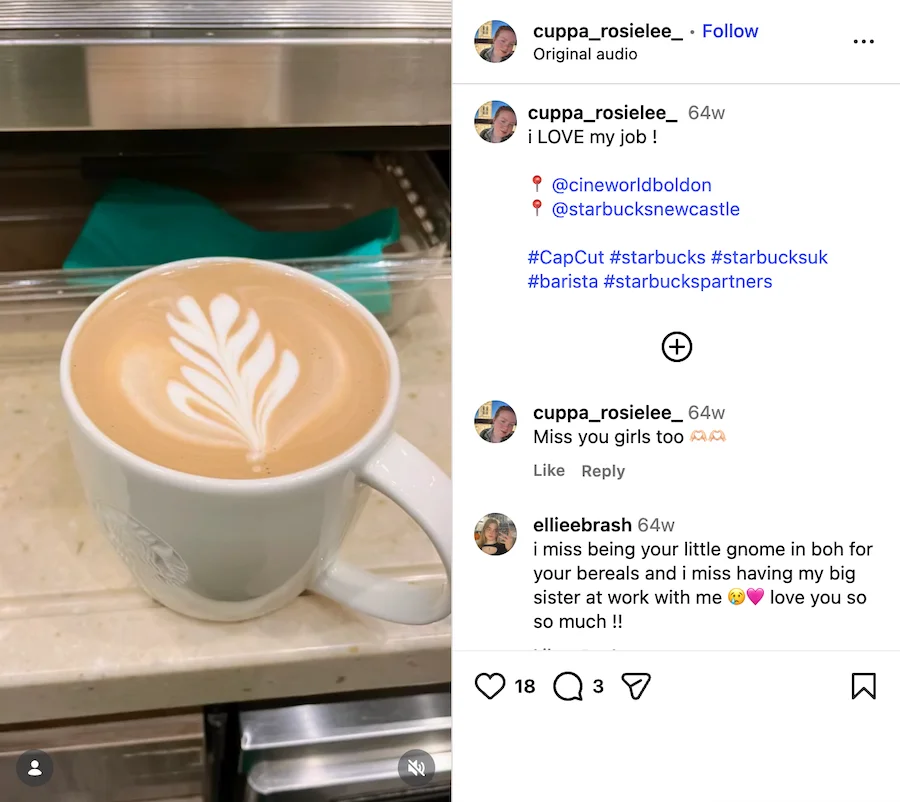
Social media platforms, particularly TikTok and Instagram Reels, serve as prime real estate for EGC, especially when the content is authentic and not part of a formal campaign. A compelling example is an Instagram Reel from a Starbucks employee, @cuppa_rosielee, who shared a heartfelt post about their job satisfaction. The effectiveness of such content lies in its genuineness, offering Starbucks increased reach and relatability without the need for professional production.
Blog Posts and Thought Leadership: Deeper Narratives
Beyond short-form social media, EGC can also manifest in longer formats, such as blog posts. Big Sky Resort in Montana, for instance, published an article detailing their investment in employee housing. The blog post featured employee insights and quotes, highlighting the resort’s commitment to improving the living conditions for its staff. This type of content not only connects the employee experience to the resort’s reputation but also contributes positively to search engine optimization (SEO).
Video Testimonials and Behind-the-Scenes Glimpses: Building Trust
Video content is exceptionally effective for capturing employee testimonials and offering a behind-the-scenes look at company operations. This can significantly bolster trust among potential hires and customers. Anchor Real Estate in North Carolina, for example, produced a YouTube video featuring employee testimonials where staff members shared their positive experiences working for the company. The simplicity of the video, with employees discussing what they appreciate about their jobs, lends a credibility that a standard careers page might lack.
Reviews and Ratings: The Unsolicited Endorsement
Sometimes, the most impactful EGC comes in the form of unsolicited reviews and ratings on platforms like Glassdoor. While these may not be as visually engaging as other forms of EGC, they hold considerable sway with job seekers conducting due diligence. These employee feedback mechanisms foster transparency and provide potential candidates with candid insights that go beyond the curated information found in a job description.
Strategies for Encouraging Employee-Generated Content
Fostering a thriving EGC ecosystem begins with cultivating a workplace culture where employees feel empowered and motivated to share their experiences. This can be achieved through several key strategies:
Cultivating a Culture of Sharing and Recognition
If employees are hesitant to speak about their work or fear missteps, EGC will struggle to gain traction. A positive reinforcement loop is essential. When an HVAC technician in San Diego, for example, successfully completes a challenging rooftop unit installation during a heatwave, and their manager publicly acknowledges this achievement on social media, it incentivizes that technician—and others—to share their own accomplishments in the future. Recognition is a powerful catalyst for content creation. Companies can initiate this by celebrating wins during team meetings, highlighting exemplary work in internal communications, and featuring employees on official company social media channels. Research indicates that employees who feel recognized are 82% happier and more inclined to share their contributions.

Providing Clear Guidelines and Support
Many employees are willing to contribute but may be unsure about what to post or what information is appropriate to share. Providing a simple, accessible guide can alleviate these concerns. This guide should outline best practices, such as maintaining professionalism, respecting confidentiality, and adhering to brand guidelines, without feeling overly restrictive. Presenting these guidelines as a helpful "cheat sheet" or style guide, rather than a rigid policy, can encourage participation. Including real examples of successful EGC can further illustrate desired outcomes.
Offering Incentives and Rewards
While intrinsic motivation is valuable, tangible incentives can further encourage EGC. These can range from small gestures to more significant rewards. This might include:
- Contests: A weekly or monthly contest for the most engaging post or the best jobsite photo, with prizes like branded merchandise or gift cards.
- Recognition Programs: Publicly acknowledging employees who consistently contribute high-quality EGC, perhaps through internal awards or shout-outs.
- Exclusive Opportunities: Offering employees who generate valuable content special perks, such as early access to new products, invitations to company events, or even small bonuses.
For instance, a San Diego HVAC company might offer a contest for the most visually interesting jobsite photo of the week, with the winner receiving a Yeti water bottle or lunch from a popular local food truck. These rewards, while not necessarily extravagant, demonstrate genuine appreciation.
Storyarb, a ghostwriting agency, implemented a 10-week competition offering a $5,000 prize to the employee who generated the most LinkedIn impressions for business-related posts. This initiative revealed that employees with smaller personal followings often achieved greater engagement, underscoring the power of authentic employee voices.

Leadership Participation: Walking the Walk
The effectiveness of an EGC strategy is significantly amplified when leadership actively participates. When managers and executives engage in sharing their own experiences and insights, it signals to the rest of the team that EGC is a valued and encouraged activity. If the owner of an HVAC company posts a photo from a job site with a caption like, "AC back on in record time!" it demonstrates a commitment to storytelling from the top down. This sets a precedent and encourages employees to follow suit.
Embracing the Power of Your Team
Employee-generated content represents one of the most authentic and relatable avenues for conveying a brand’s story. From spontaneous Instagram Reels to thoughtful blog posts and candid behind-the-scenes videos, EGC breathes life into a business in ways that highly polished advertisements often cannot. By providing employees with clarity, recognition, and a supportive environment, companies can empower their teams to become powerful advocates, driving engagement, building trust, and ultimately, strengthening the brand’s presence.
To effectively leverage EGC, organizations should consider these immediate steps:
- Assess current employee sentiment: Understand how employees feel about sharing their experiences.
- Develop clear, concise guidelines: Ensure employees know what is expected and what is permissible.
- Implement a recognition program: Acknowledge and reward employees who contribute valuable content.
- Encourage leadership participation: Demonstrate commitment to EGC from the top.
- Share success stories: Highlight the positive impact of EGC within the organization to foster further participation.
By handing the microphone to their team, businesses can unlock a potent and cost-effective marketing channel, transforming their employees into the most compelling storytellers of their brand.










