rifanmuazin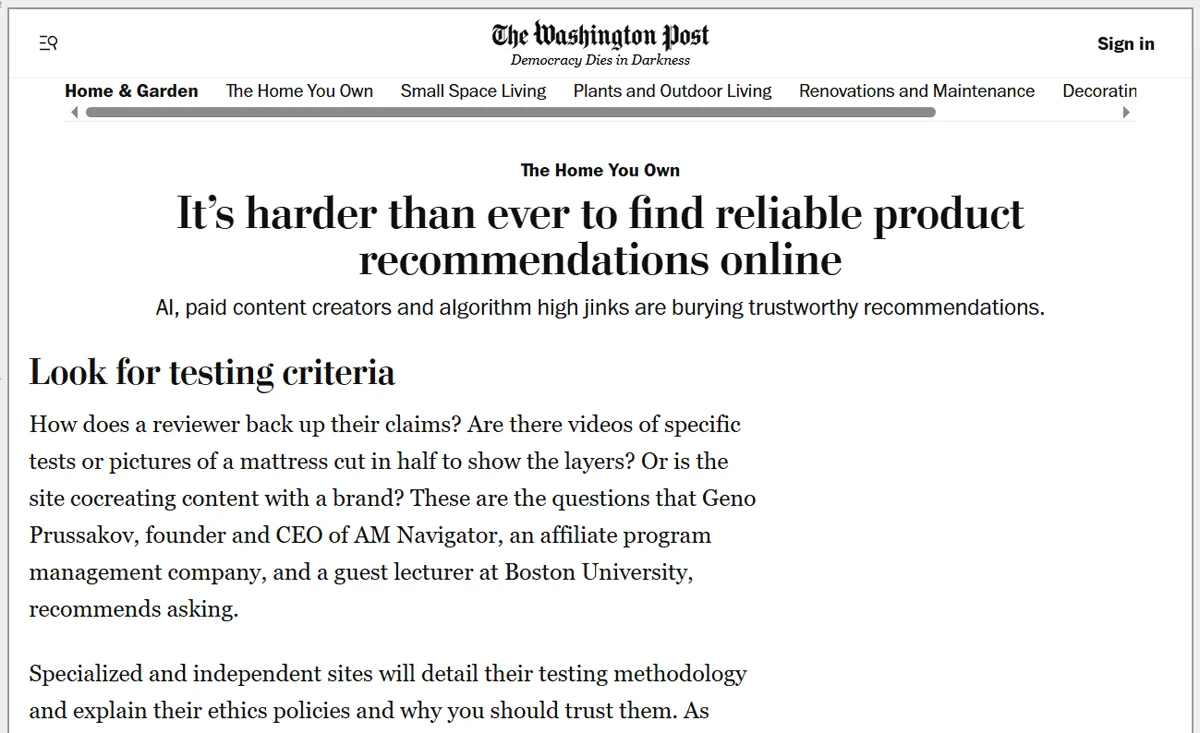
The digital publishing landscape has undergone a seismic shift over the last decade, transitioning from a primary reliance on display advertising to a sophisticated model of "commerce content" and authority monetization. This evolution was highlighted in early 2025 when The Washington Post sought expert insights into the reliability of online product recommendation lists published by major media outlets. Geno Prussakov, a prominent figure in the affiliate marketing industry and CEO of AM Navigator, provided a critical framework for understanding how legacy media brands leverage their search engine authority to influence consumer purchasing decisions. The resulting discourse underscores a complex intersection between editorial integrity, search engine optimization (SEO), and the financial imperatives of modern journalism.
The Rise of Authority Monetization in Digital Media
For several years, major media conglomerates have recognized that their established brand equity translates into high "domain authority" in the eyes of search engines like Google. This authority allows their content to rank prominently for lucrative "commercial intent" keywords—terms like "best wireless headphones" or "top-rated vacuum cleaners." By securing these top positions, media houses can direct massive volumes of traffic to product recommendation lists, which are then monetized through affiliate marketing links.
This practice, often referred to as authority monetization or "parasite SEO" in more critical circles, involves using a high-authority domain to host content that might otherwise struggle to rank on a smaller, niche-specific site. Examples of this phenomenon are prevalent across the internet, where venerable news organizations and lifestyle magazines now host expansive "best-of" sections. These sections are frequently managed by separate commerce teams whose primary goal is to generate revenue through affiliate commissions, placement fees, and Earnings Per Click (EPC) guarantees.
The Infrastructure of Modern Product Testing
Despite the skepticism surrounding the commercial motives of these lists, the industry has seen a professionalization of the review process. To maintain reader trust and protect their brand reputation, many large media organizations have invested heavily in the infrastructure of product testing. This process typically follows four distinct pillars:
- Dedicated Testing Facilities: Major publishers, such as Dotdash Meredith and The New York Times (through Wirecutter), have established physical labs where products are subjected to rigorous, standardized testing. These labs allow for objective measurements of performance, durability, and ease of use, providing a layer of factual data to back up editorial claims.
- Specialized Review Personnel: Rather than relying on generalist reporters, media outlets increasingly hire subject matter experts. These individuals often possess years of experience in specific categories, such as consumer electronics, home appliances, or skincare, ensuring that the reviews are informed by deep industry knowledge.
- Editorial Independence: To mitigate conflicts of interest, many organizations maintain a strict "firewall" between their editorial teams and their sales or business development departments. In this model, the reviewers select and test products based on merit, while the commerce team handles the technical implementation of affiliate links and partnership negotiations after the rankings have been established.
- Data-Driven Optimization: Publishers utilize sophisticated analytics to track consumer behavior. By analyzing which products are clicked and purchased, they can refine their recommendations to better align with market demand and consumer preferences, theoretically creating a feedback loop that prioritizes high-quality, high-converting products.
The Financial Mechanics of Rankings
While many outlets strive for editorial purity, the financial reality of the industry introduces significant variables. Prussakov notes that a product’s position on a recommendation list is not always determined solely by its performance in a lab. Financial arrangements with advertisers can, and do, influence rankings.
These arrangements may include:
- Placement Fees: Fixed payments made by brands to ensure their product is featured in a specific roundup.
- Inflated Commission Rates: Brands may offer a higher percentage of the sale to the publisher in exchange for more prominent placement.
- EPC Guarantees: Advertisers may guarantee a certain level of earnings for every click the publisher sends, regardless of whether a sale occurs, making that product more "valuable" to the publisher’s bottom line than a superior competitor with lower financial returns.
A Chronology of the Commerce Content Shift
The transition to this model did not happen overnight. The timeline of this shift reflects the broader economic pressures on the media industry:
- 2010–2015: The decline of print advertising and the rise of ad-blocking software forced digital publishers to seek alternative revenue streams. Early adopters began experimenting with basic affiliate links in gift guides.
- 2016: The New York Times acquired Wirecutter for approximately $30 million. This move served as a proof-of-concept for the industry, demonstrating that high-quality, service-oriented journalism could be a major profit center.
- 2018–2021: Major publishers like CNN (Underscored), Hearst, and Vox Media expanded their commerce divisions. During the COVID-19 pandemic, the surge in e-commerce further accelerated the growth of these platforms.
- 2023–2024: Google’s "Helpful Content Updates" began targeting low-quality review sites, inadvertently (and sometimes intentionally) favoring large media brands with high authority, even if their specific expertise in a product category was questioned by niche enthusiasts.
- 2025: The industry faces increased scrutiny from both consumers and regulatory bodies like the FTC, leading to a demand for greater transparency in how these lists are compiled and monetized.
Regulatory Response and Disclosure Requirements
The Federal Trade Commission (FTC) in the United States has been active in addressing the potential for consumer deception in affiliate-funded content. In 2023, the FTC updated its "Guides Concerning the Use of Endorsements and Testimonials in Advertising." These guidelines mandate that if there is a "material connection" between an endorser and a seller of a product—such as a commission or a free sample—it must be clearly and conspicuously disclosed to the consumer.
Most major media outlets now include disclosure statements at the top of their review articles. However, the effectiveness of these disclosures remains a point of debate. Critics argue that a generic statement at the top of a page does not sufficiently inform a reader that a specific product’s #1 ranking might have been influenced by a higher commission rate compared to the #2 product.

Consumer Strategies for Navigating Online Reviews
As the line between editorial recommendation and paid advertisement continues to blur, consumers must adopt a more analytical approach to online shopping. Industry experts suggest four primary strategies for verifying the validity of product roundups:
First, consumers should cross-reference reviews across multiple independent sources. If a product is ranked as "best" on five different major sites, it is more likely to be a high-quality item than if it only appears on one site that has a known partnership with the manufacturer.
Second, shoppers should look for "proof of testing." Reliable reviews often include original photography of the product in a real-world setting, detailed descriptions of the testing methodology, and specific pros and cons that go beyond the manufacturer’s marketing copy.
Third, the reputation of the parent publication matters. Established brands with long histories of journalistic integrity are generally more cautious about compromising their reputation for short-term affiliate gains than "pop-up" review sites that exist solely for SEO purposes.
Finally, consumers should scrutinize the disclosure. A transparent publication will be upfront about its relationship with retailers. If a site lacks a clear affiliate disclosure or makes it difficult to find, its recommendations should be viewed with a high degree of skepticism.
The Broader Impact on the Digital Ecosystem
The dominance of big media in the product recommendation space has profound implications for the digital ecosystem. For small, independent review sites, the competition is becoming insurmountable. Even when an independent blogger conducts more thorough testing, they often lack the "ranking power" to compete with a legacy news domain on Google’s first page. This concentration of influence in a few large hands could potentially stifle diverse voices and niche expertise in the long run.
Furthermore, the "incentive structure" of affiliate marketing naturally favors products sold on major platforms like Amazon or Walmart. This can lead to a "homogenization of recommendations," where smaller, innovative brands that do not offer affiliate programs or cannot afford high placement fees are excluded from the conversation entirely, regardless of the quality of their products.
Future Outlook: The Convergence of AI and Commerce
Looking ahead, the integration of Artificial Intelligence (AI) into search engines and content creation is expected to disrupt the commerce content model once again. With "Search Generative Experiences," search engines may provide product recommendations directly in the search results, potentially bypassing the media lists altogether. This will likely force big media to pivot toward even more "human-centric" and experiential content that AI cannot easily replicate—such as long-term durability tests and highly subjective, personality-driven reviews.
The discussion initiated by Geno Prussakov and highlighted by The Washington Post serves as a crucial reminder of the "trust economy" that underpins the modern internet. While big media outlets provide a valuable service by filtering the overwhelming sea of consumer choices, the financial mechanisms behind those filters require a vigilant and informed public. As the industry continues to evolve, the balance between profitability and editorial honesty will remain the defining challenge for digital publishers in the mid-2020s.