rifanmuazin
The global research landscape saw a significant diversification of power. While Silicon Valley remains a central hub, 2025 was the year that Chinese labs, such as DeepSeek and Alibaba Cloud, and decentralized academic collaborations introduced architectures that challenged the efficiency and performance of established giants like Google DeepMind and OpenAI. This shift has fundamentally altered the roadmap for Machine Learning (ML) engineers and Generative AI (GenAI) builders, moving the focus from prompt engineering to the design of recursive reasoning loops and multimodal world models.
A Chronology of Breakthroughs: The 2025 AI Timeline
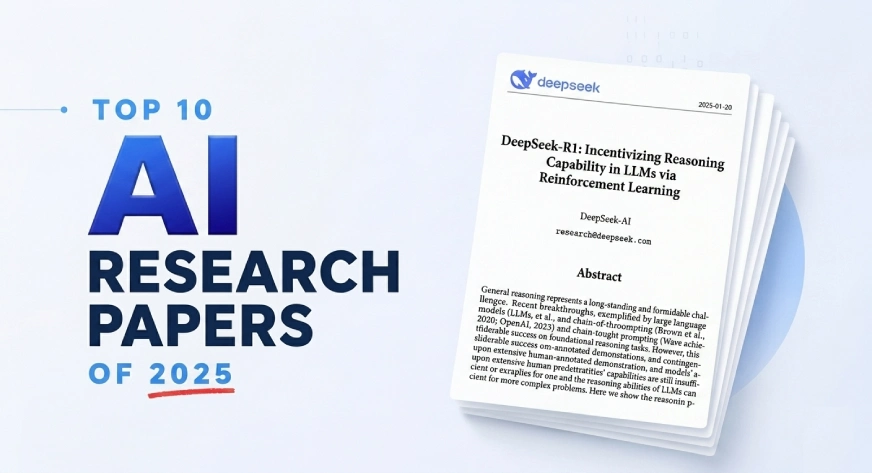
The evolution of AI research in 2025 followed a clear trajectory. The first quarter was dominated by the “Reasoning Revolution,” triggered by the release of DeepSeek-R1, which proved that high-level logic could be incentivized through reinforcement learning rather than just massive pre-training data. By mid-year, the focus shifted to “Agentic Economic Value,” where researchers began measuring AI success not by benchmark scores like MMLU, but by the ability of models to perform real-world freelance engineering tasks and generate revenue.
In the third quarter, the industry saw a surge in “World Models,” as NVIDIA and ByteDance released frameworks that allowed AI to learn the laws of physics directly from video, bypassing the need for human-annotated datasets. The year concluded with a focus on “Autonomous Science,” where systems like Sakana AI’s The AI Scientist-v2 began conducting end-to-end research, from hypothesis generation to peer review, signaling a future where AI accelerates its own development.
1. DeepSeek-R1: Incentivizing Reasoning via Reinforcement Learning
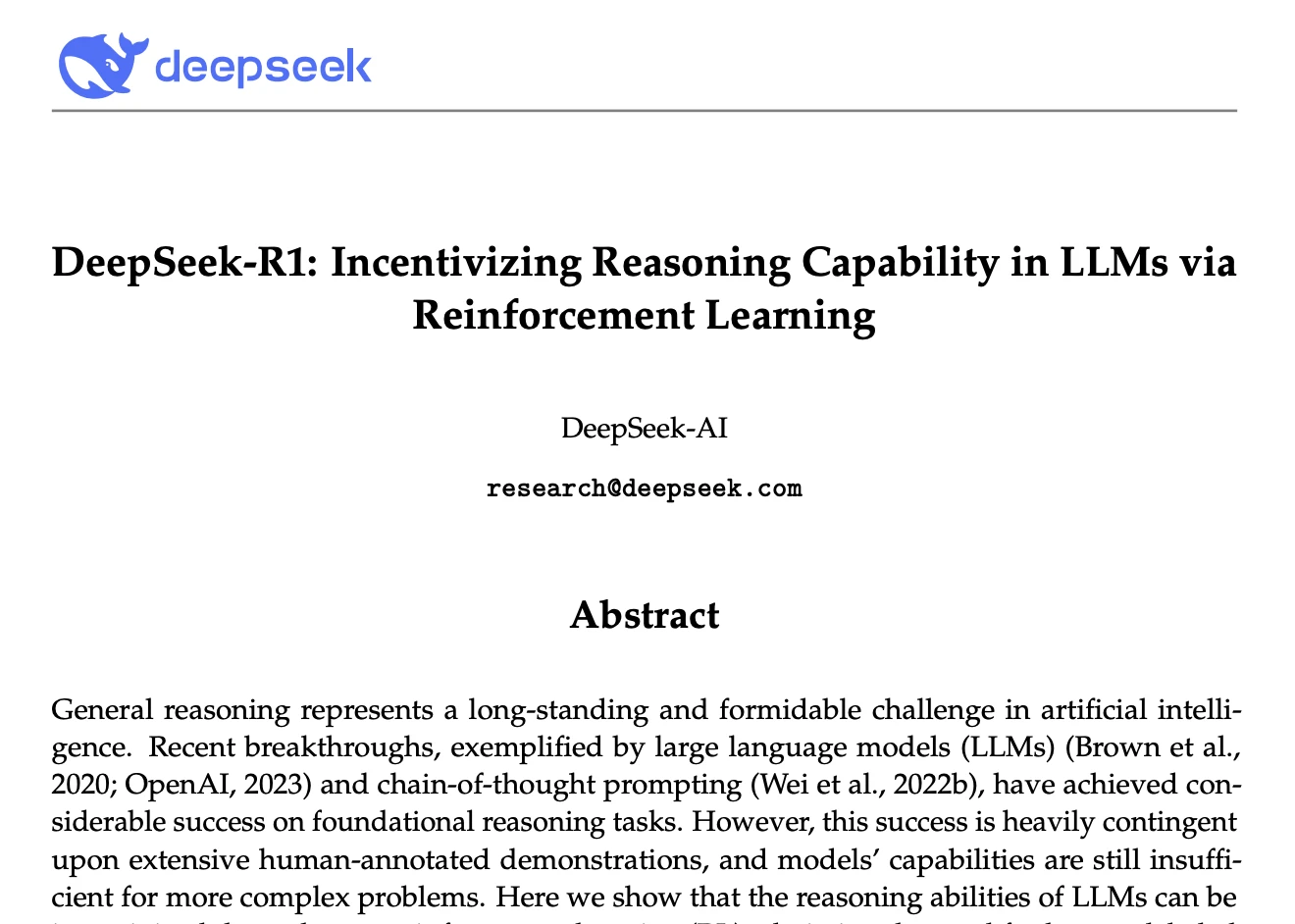
The release of DeepSeek-R1 by the Chinese lab DeepSeek was perhaps the most disruptive event of early 2025. This paper introduced a methodology that utilized Reinforcement Learning (RL) as a primary post-training mechanism to enhance reasoning. Unlike previous models that relied heavily on supervised fine-tuning (SFT) with human-curated “Chain-of-Thought” (CoT) data, DeepSeek-R1 demonstrated that a model could “learn to think” by being rewarded for correct answers in mathematics and coding.
The technical novelty lay in the model’s ability to self-correct during inference. Industry analysts noted that DeepSeek-R1’s performance on the AIME (American Invitational Mathematics Examination) and Codeforces benchmarks rivaled proprietary models with significantly higher training costs. This paper effectively forced the industry to acknowledge that the efficiency of the Mixture-of-Experts (MoE) architecture, combined with pure RL, could level the playing field between open-source and closed-source frontier models.
2. Gemini 2.5 Technical Report: The Era of Thinking Modes
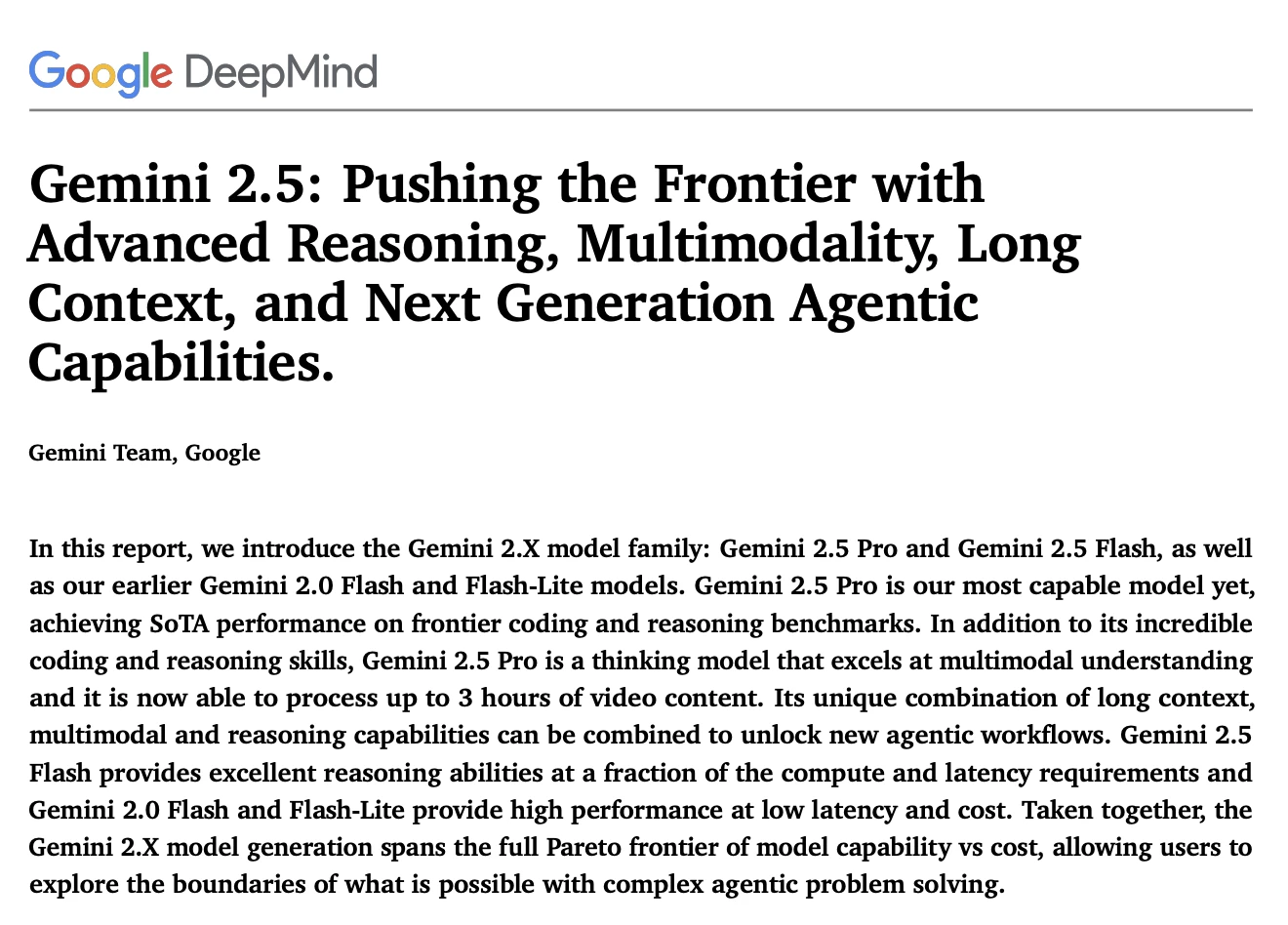
Google DeepMind’s Gemini 2.5 Technical Report solidified the concept of “Thinking Mode” as a standard feature for frontier models. This research focused on the trade-off between speed and accuracy, introducing a system where the model could dynamically allocate more compute time to difficult queries. By performing internal reasoning before generating a final response, Gemini 2.5 achieved unprecedented scores in long-context understanding and multimodal reasoning.
The report also detailed the integration of “Nano Banana,” a specialized image generation architecture that allowed the model to maintain spatial consistency across video frames. This move signaled Google’s commitment to “Native Multimodality,” where a single model processes text, vision, and audio in a unified latent space, rather than using separate encoders for different modalities.
3. Qwen 2.5: The New Standard for Open Frontier Models
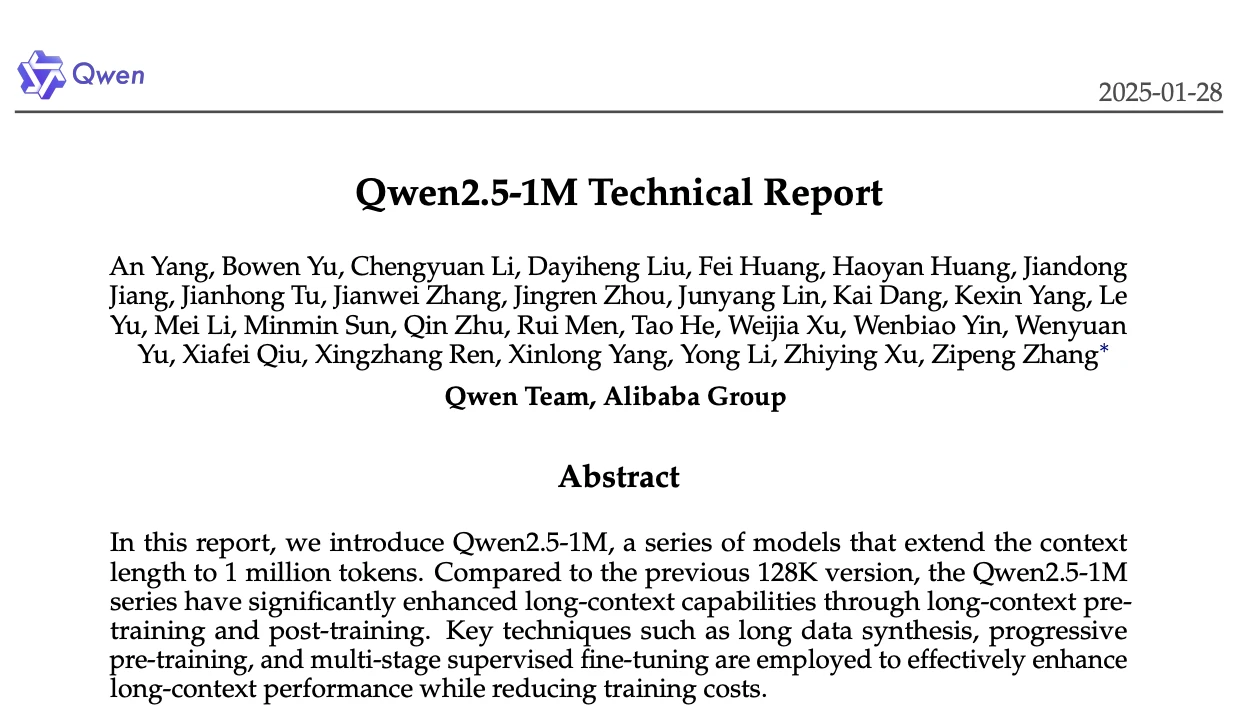
Alibaba Cloud’s Qwen 2.5 Technical Report arrived as a testament to the rapid maturation of the Chinese AI ecosystem. Qwen 2.5 stood out for its exceptional multilingual capabilities and its dominance in coding benchmarks. The paper detailed a hybrid MoE architecture that allowed the model to scale to trillions of parameters while remaining computationally efficient for deployment.
For GenAI builders, Qwen 2.5 provided a high-performance alternative to Llama models, particularly for applications requiring complex logical reasoning in non-English languages. The model’s success sparked a debate among Western researchers regarding the efficacy of massive-scale data filtering, as the Qwen team attributed their success to the “purity” of their training corpus rather than just its volume.
4. Large Concept Models: Moving Beyond Tokens
Meta’s research into Large Concept Models (LCMs) proposed a radical departure from the traditional autoregressive transformer architecture. While standard LLMs predict the next token (a piece of a word), LCMs operate in a “sentence representation space.” This means the model processes and generates entire concepts at once, leading to more coherent long-form reasoning and significantly faster inference for complex tasks.
This paper is viewed by many as the first step toward a “post-transformer” era. By modeling language at the level of semantic concepts rather than characters, Meta’s researchers suggested a path toward reducing the “hallucination” problems inherent in token-by-token generation.
5. Robust ESG Analysis: AI for Sustainability
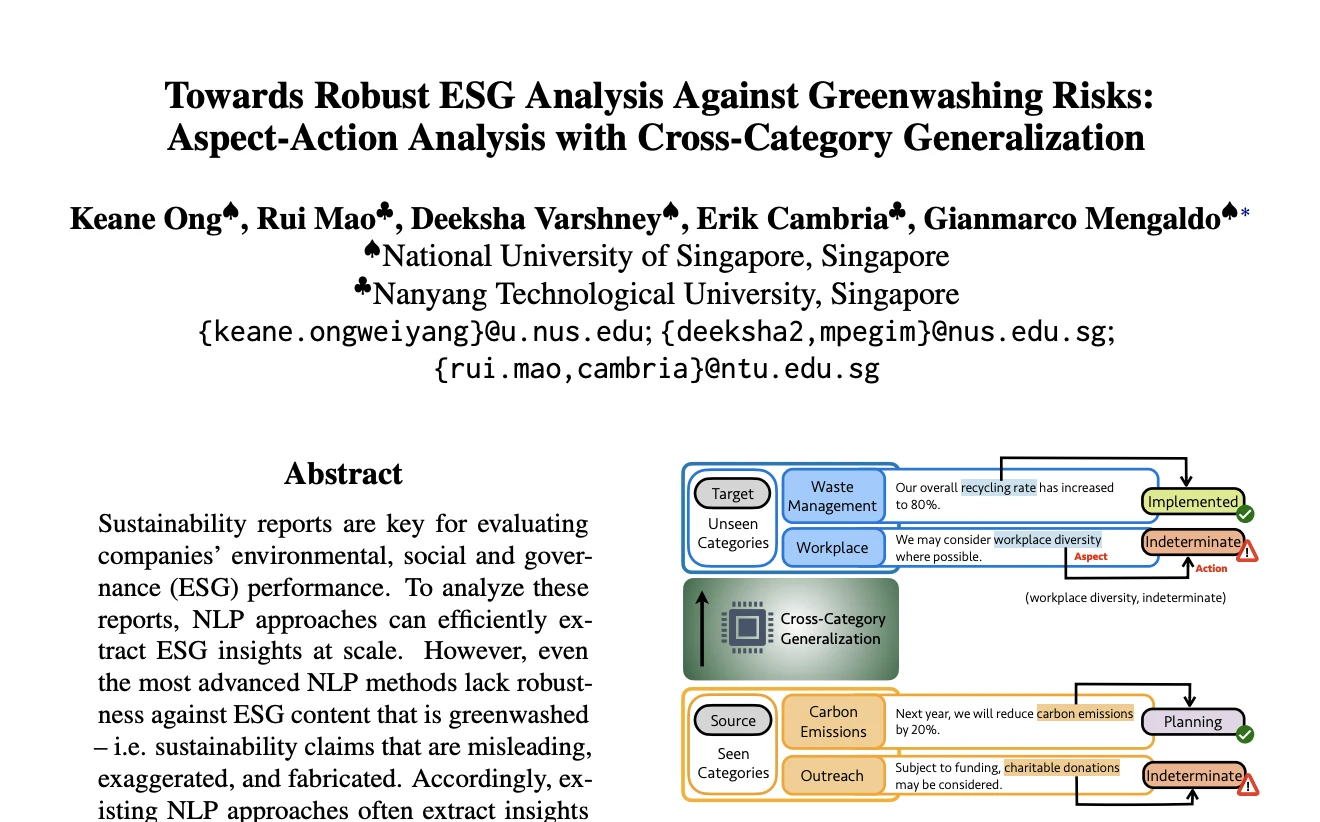
Ant Group’s contribution to AI for sustainability addressed the growing concern of “greenwashing” in corporate reporting. Their paper, Towards Robust ESG Analysis Against Greenwashing Risks, introduced an aspect-action framework. This system does not just look for keywords like “carbon neutral”; it analyzes the specific actions a company takes—such as infrastructure investments or supply chain changes—and compares them against stated environmental goals.
The implications for the financial sector are profound. By using AI to detect discrepancies between corporate rhetoric and physical reality, Ant Group provided a tool for more accurate Environmental, Social, and Governance (ESG) scoring, helping to direct capital toward truly sustainable enterprises.
6. VideoWorld: Learning Physics from the Unseen
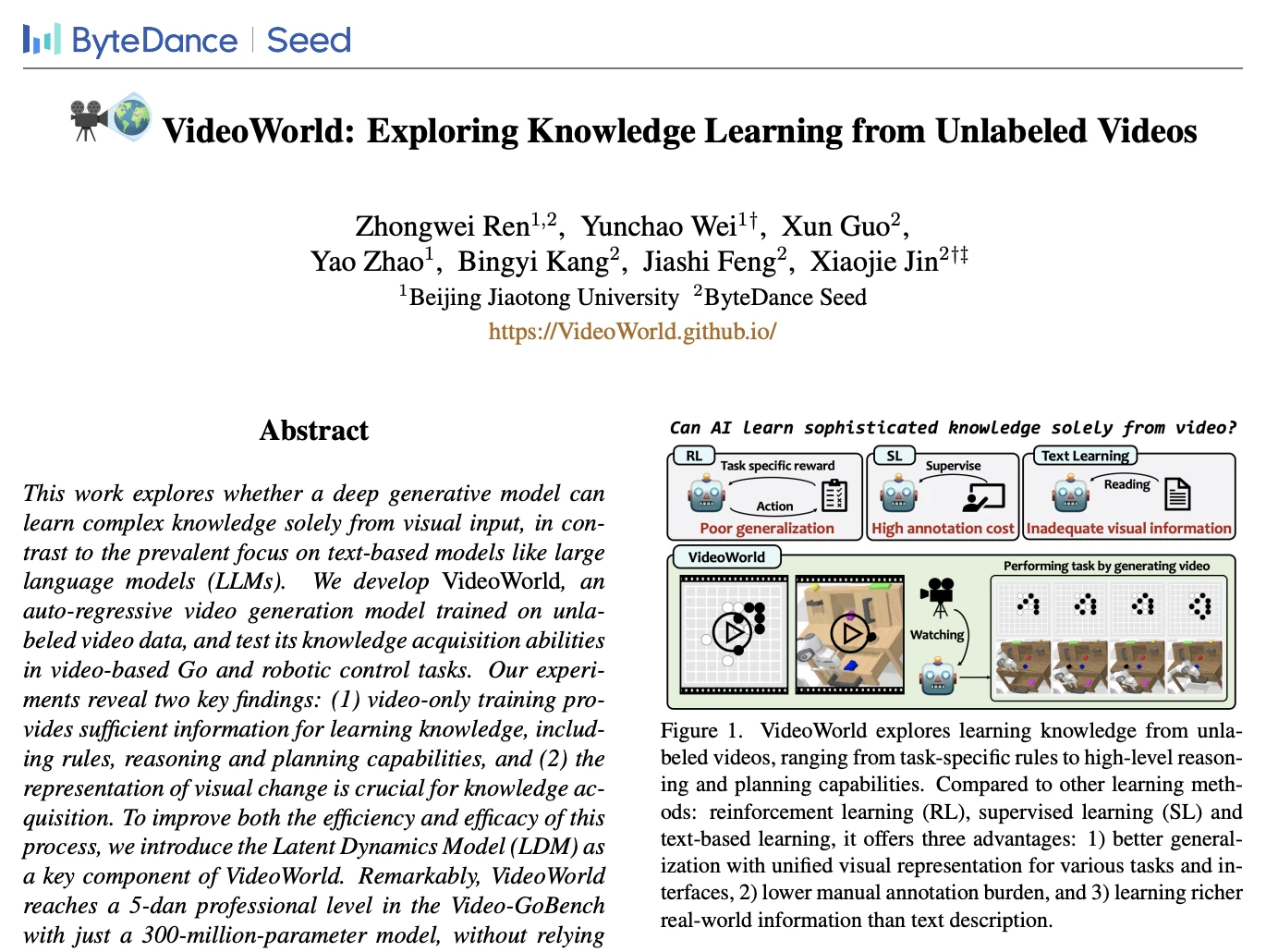
The VideoWorld paper, a collaboration involving researchers from NVIDIA and ByteDance, explored how AI can learn “knowledge” from unlabeled videos. Instead of being told what an object is, the model learns the physical properties of the world—gravity, collision, fluid dynamics—by predicting subsequent frames in a video sequence.
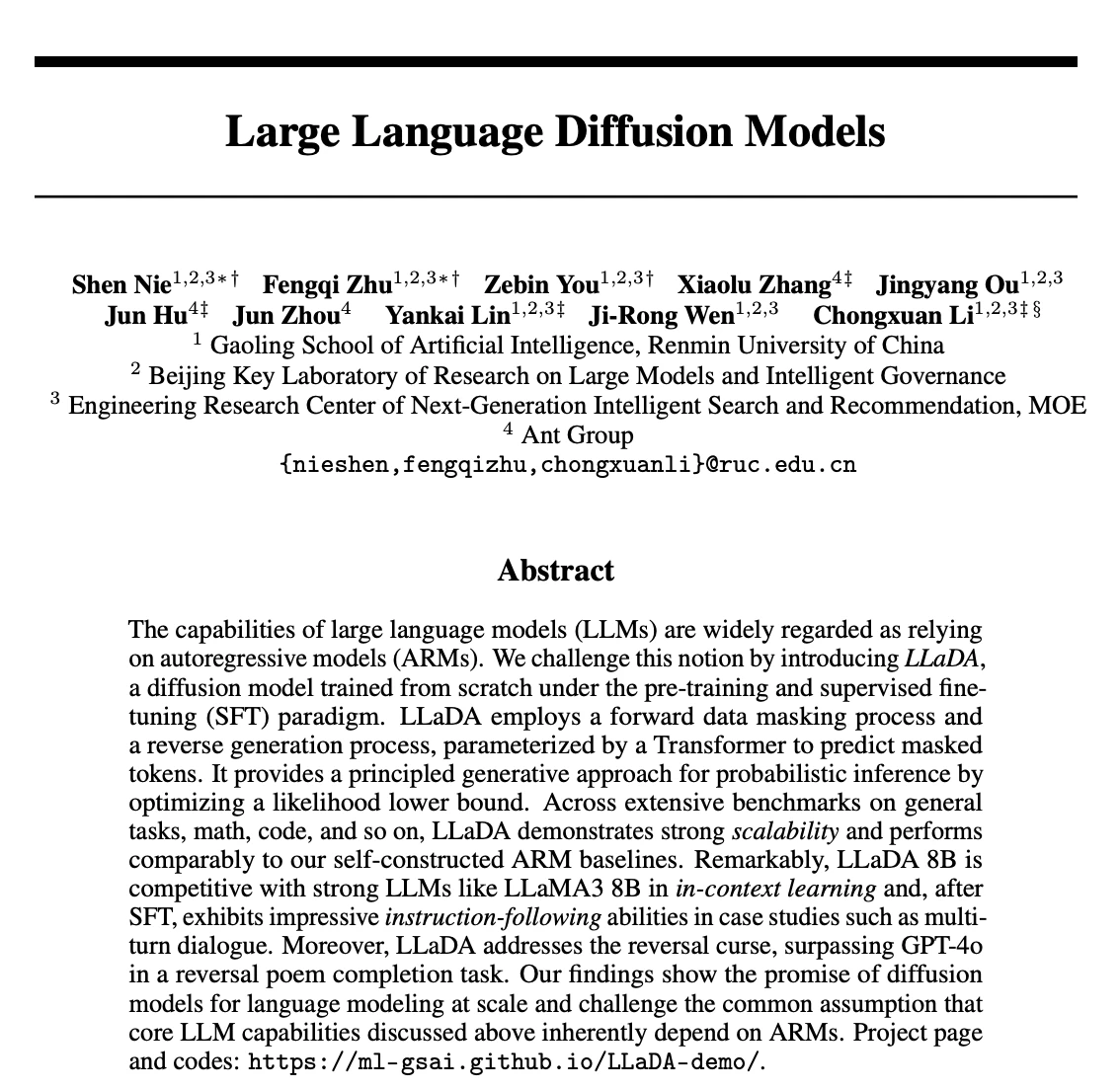
This research is foundational for the field of robotics and Embodied AI. By creating a “world model” that understands how physical objects interact, VideoWorld allows robots to simulate actions in their “mind” before executing them in the real world, drastically reducing the risk of hardware damage during the learning process.
7. The AI Scientist-v2: Autonomous Research Systems
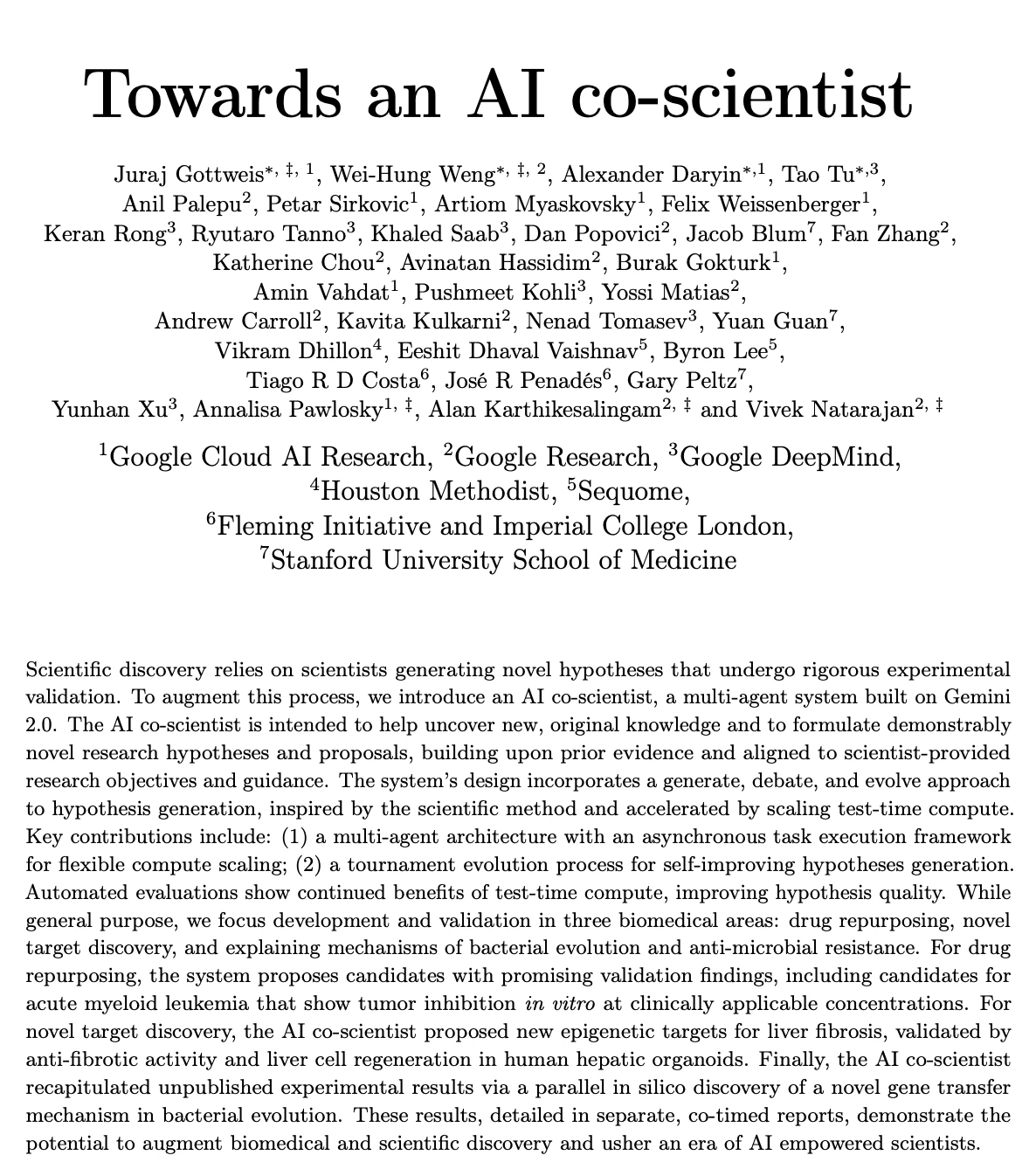
Sakana AI’s The AI Scientist-v2 pushed the boundaries of what is possible in automated discovery. The system is capable of browsing the web for current research, formulating a novel hypothesis, writing the necessary code to test that hypothesis, and then drafting a full scientific paper.
While the first version was a proof of concept, v2 introduced a “meta-review” layer where the AI critiques its own work to improve quality. This has sparked intense discussion in the academic community regarding the future of peer review and the potential for an “infinite loop” of AI-generated research that could either accelerate human knowledge or clutter the field with derivative works.
8. SWE-Lancer: Economic Utility as a Benchmark
OpenAI’s SWE-Lancer paper introduced a shift in how AI is evaluated. Moving away from synthetic coding tests, SWE-Lancer evaluated whether frontier LLMs could actually earn money on real-world freelance platforms like Upwork or GitHub. The benchmark tasked models with solving real bugs and implementing new features for which human developers are paid.
The results were a wake-up call for the software engineering industry. The paper demonstrated that while AI is not yet ready to replace senior architects, it is increasingly capable of handling the tasks of entry-level and mid-level freelance engineers, tying AI performance directly to market value.
9. OLMo 2: The Push for Total Transparency
The Allen Institute for AI (AI2) released OLMo 2, emphasizing that a model cannot be truly “open” unless its training data, weights, and evaluation code are all public. In a year where “Open Source” became a marketing buzzword used by companies that kept their data secret, OLMo 2 provided a truly transparent alternative.
The paper detailed the “pre-training recipe” in such depth that other labs could replicate the model’s performance. This has become a vital resource for academic researchers who need to understand the “why” behind model behavior, rather than just using a “black box” API.
10. Mixture-of-Recursions: Efficient Reasoning Architectures
A collaboration between several leading academic institutions resulted in the Mixture-of-Recursions paper. This research proposed that instead of having a fixed number of layers for every query, a model should dynamically “recurse” or repeat its reasoning layers based on the difficulty of the task.
A simple question like “What is 2+2?” might only require one pass, whereas a complex legal analysis might trigger multiple recursive loops. This architecture represents a significant leap in compute efficiency, allowing models to be smaller and faster without sacrificing the ability to handle high-complexity problems.
Broader Impact and Industry Implications
The research output of 2025 has signaled the end of the “black box” era of AI. The industry is moving toward “System 2” thinking—a psychological term for slow, deliberate, and logical thought—as opposed to the “System 1” thinking (fast, intuitive, and often biased) of earlier LLMs.
Official responses from industry leaders suggest a consolidation of these technologies into “Agentic Workflows.” During the 2025 AI Summit, representatives from Microsoft and Google noted that the goal is no longer to build a better chatbot, but to build a reliable “digital employee.” The focus on ESG and autonomous research also indicates that AI is being integrated into the core “boring” sectors of the economy—finance, law, and physical engineering—where accuracy and reliability are non-negotiable.
For ML engineers, the takeaway from 2025 is clear: the future lies in mastering reinforcement learning and dynamic architectures. As the “Scaling Laws” for pre-training begin to show diminishing returns, the new frontier is the optimization of inference-time compute. The papers of 2025 have provided the blueprint for this next generation of intelligent systems, moving us closer to artificial general intelligence that is not only conversational but capable of reasoning through the complexities of the physical and economic world.