
 rifanmuazin
In the rapidly evolving landscape of conversion rate optimization (CRO), the technical execution of split URL tests—commonly referred to as redirect tests—remains a significant hurdle for digital marketers and experimentation engineers. While these tests are essential for comparing entirely different page designs or architectures, client-side implementations are notorious for jeopardizing data integrity. The primary culprit is often the reliance on manual Regular Expressions (Regex), a powerful but brittle tool where a single character error can misdirect traffic, skew analytical data, or result in a total loss of user sessions. To address these vulnerabilities, new methodologies involving low-code automation through platforms like n8n and artificial intelligence (AI) are being deployed to standardize the creation and validation of these critical experimentation components.

The Technical Challenges of Redirect Testing
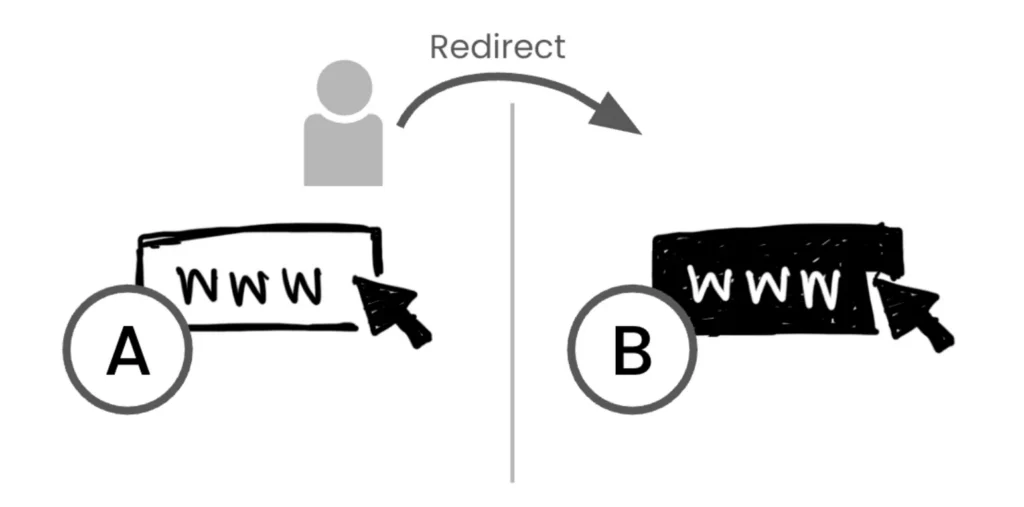
A redirect test involves splitting incoming web traffic between an original URL and a new version. Unlike standard A/B tests that modify elements on a single page, a split URL test physically moves the user to a different address. While server-side redirects are generally considered more stable, many organizations rely on client-side redirects due to their ease of deployment via experimentation platforms like Convert or Optimizely. However, client-side execution introduces risks such as "flicker"—where the original page is briefly visible before the redirect occurs—and complex URL matching requirements.
The mechanism for these redirects usually depends on Regex. A Regex rule is designed to match specific URL patterns while preserving essential query parameters, such as UTM codes for marketing attribution. The inherent fragility of Regex stems from its lack of readability and the high probability of "over-matching" or "under-matching." For instance, a poorly written expression might inadvertently redirect a sub-page that was intended to remain out of scope, or it might fail to pass along a tracking ID, effectively blinding the marketing team to the source of their conversions.

A Chronological Overview of the Automated Workflow
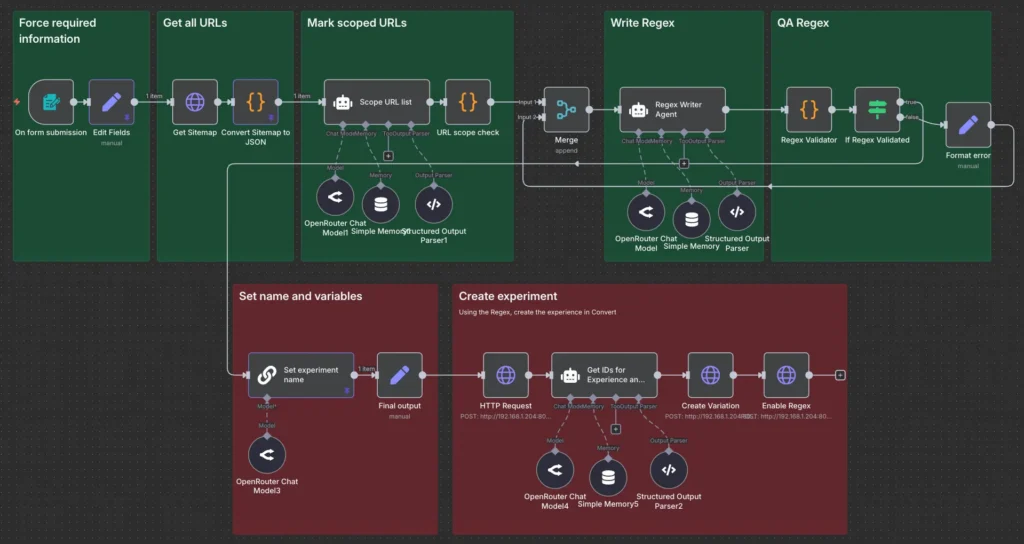
To mitigate these risks, industry experts have developed a structured, six-step automation process that leverages the n8n workflow engine and Large Language Models (LLMs). This system shifts the responsibility of Regex creation from prone-to-error human manual entry to an AI-driven, auto-validated pipeline.
Step 1: Standardized Data Collection
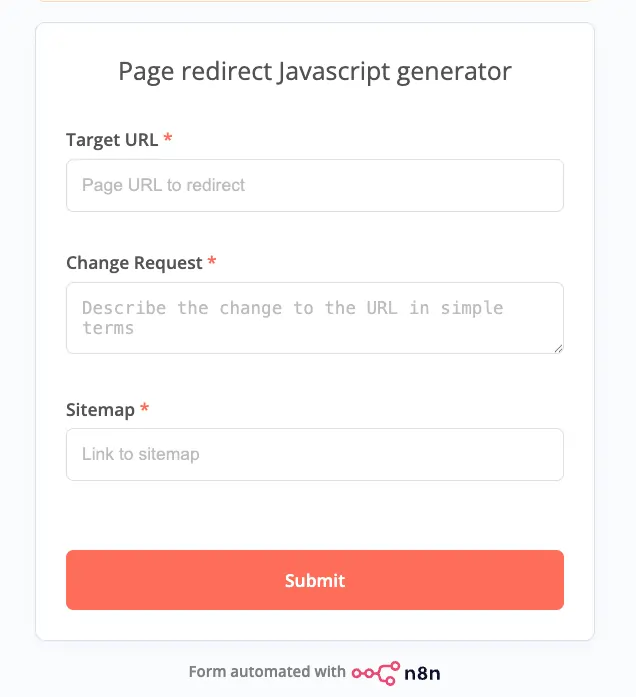
The process begins with a structured intake form. Automation relies on clean data, and by enforcing a form-based entry system, organizations ensure that three critical pieces of information are captured: the target URL, the specific change request (e.g., "change /product-a to /product-b"), and a link to the site’s XML sitemap. This prevents the "garbage in, garbage out" scenario common in ad-hoc testing setups.
Step 2: Sitemap Analysis and URL Preparation
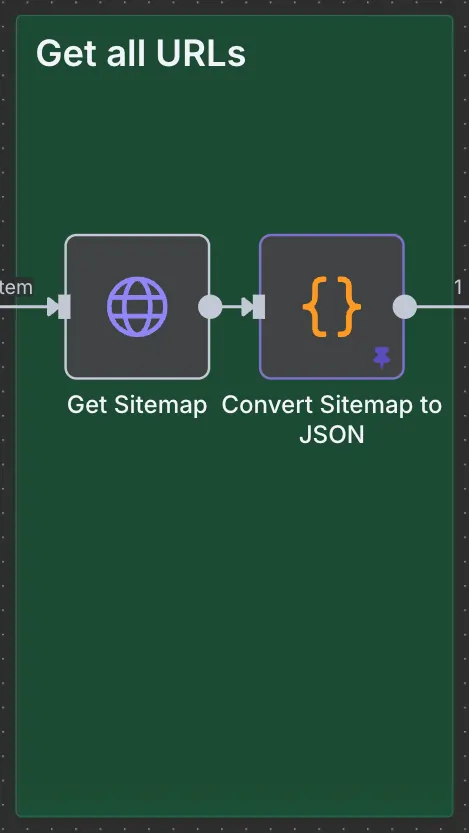
Once the request is submitted, the workflow fetches the complete list of URLs from the provided sitemap. This step is crucial for the subsequent Quality Assurance (QA) phase. By having a comprehensive list of all existing live URLs, the system can later test the proposed Regex against the entire site architecture to ensure no unintended pages are affected.
Step 3: AI-Driven Scoping
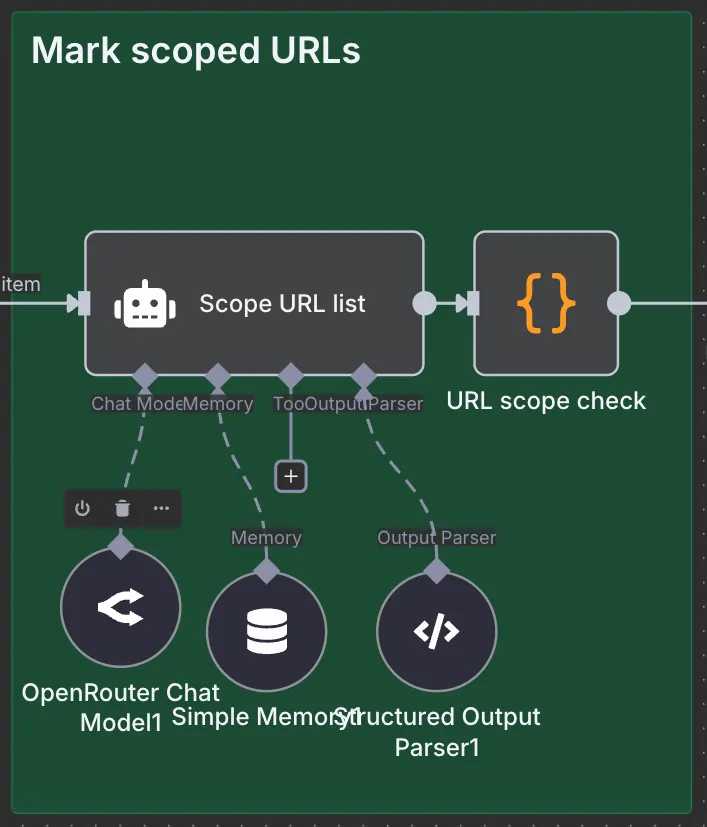
The first application of AI in this workflow involves "few-shot prompting." An AI agent reviews the sitemap and the change request to determine the scope. It identifies which URLs should be modified and which must remain untouched. For example, if the request is to redirect a specific category page, the AI must decide if sub-pages or paginated versions of that category should also be included in the redirect.

Step 4: Automated Regex Generation
With the scope defined, a second AI agent generates the actual Regular Expression. This agent is programmed with specific instructions to avoid "lookbehinds" (which can be incompatible with some browsers) and to ensure that query parameters are preserved. The use of structured output parsers ensures that the AI returns a clean JSON object containing both the "match" and "replace" strings, ready for technical implementation.
Step 5: Iterative Quality Assurance Loop
The most critical innovation in this process is the automated QA loop. A script executes the generated Regex against every single URL found in the sitemap. It checks for two conditions:
- False Negatives: Did the Regex fail to redirect a URL that was supposed to be in scope?
- False Positives: Did the Regex incorrectly redirect a URL that was supposed to be ignored?
If the script detects an error, it sends the failure report back to the AI agent. The agent then analyzes the mistake, rewrites the Regex, and submits it for testing again. This loop continues until the Regex passes with 100% accuracy across the entire sitemap.
Step 6: Experiment Deployment
Once validated, the workflow connects to the experimentation platform’s API—such as Convert’s Management API—to automatically create the experiment. It sets the experiment name, defines the variations, and inputs the perfected Regex. This eliminates the final manual step where human error often occurs: the "copy-paste" phase.
Supporting Data and Industry Context
The need for such automation is underscored by the high cost of experimentation errors. According to industry benchmarks, approximately 20% to 30% of A/B tests are compromised by technical implementation issues, leading to "Sample Ratio Mismatch" (SRM) or corrupted data. In a redirect test, a broken Regex can lead to a 404 error for 50% of the site’s traffic, directly impacting revenue and user trust.
Furthermore, the shift toward AI-assisted development is accelerating. Research from GitHub suggests that developers using AI tools complete tasks up to 55% faster. In the context of CRO, this doesn’t just mean faster test deployment; it means higher "velocity with quality." By reducing the time spent on debugging Regex, experimentation teams can focus on hypothesis generation and strategic analysis.

Expert Perspectives and Implications
Experimentation consultants, including Iqbal Ali, emphasize that while AI is highly capable, it is the "human-in-the-loop" or "script-in-the-loop" validation that makes the system reliable. "Regular expressions are brittle," Ali notes, pointing out that even a small typo can have catastrophic consequences. The consensus among technical SEOs and CRO specialists is that automation should not replace human oversight but should provide a "safety net" that catches the edge cases humans often miss.
The implications of this technology extend beyond simple URL changes. As organizations move toward "edge" computing and more sophisticated server-side testing, the ability to generate and validate logic via AI will become a standard requirement. The democratization of these technical tasks allows non-technical team members to launch complex tests without waiting for developer cycles, provided the underlying automation framework is robust.
Broader Impact on Digital Strategy
The adoption of n8n and AI for test automation represents a broader trend toward the "composability" of marketing technology. Rather than relying on a single monolithic tool, companies are building custom workflows that connect various specialized services—AI for logic, n8n for orchestration, and Convert for execution.
This approach offers several strategic advantages:
- Scalability: A single specialist can manage dozens of concurrent tests without an increase in implementation errors.
- Security: By using local or private AI models within n8n, companies can ensure that their site architecture and testing strategies remain confidential.
- Cost-Efficiency: Small LLMs are increasingly capable of handling specific tasks like Regex generation at a fraction of the cost of senior engineering time.
In conclusion, the integration of AI-driven validation into the split URL testing process marks a significant step forward in the quest for data integrity. By automating the most fragile part of the experimentation pipeline, organizations can ensure that their optimization efforts are built on a foundation of accurate, reliable data. As these tools become more accessible, the barrier to high-quality, technical experimentation will continue to fall, allowing for more ambitious and innovative digital experiences.








