The field of predictive analytics is currently undergoing a fundamental transformation as traditional statistical methodologies give way to high-capacity neural networks and large-scale foundation models. Time series forecasting, a critical discipline used to predict future values based on historical temporal data, serves as the backbone for decision-making in global finance, energy grid management, inventory logistics, and retail demand planning. Historically dominated by linear models such as ARIMA (AutoRegressive Integrated Moving Average) and Exponential Smoothing, the landscape has been disrupted by a new generation of tools—Prophet, NeuralProphet, TimeGPT, and Chronos—each offering distinct advantages in terms of accuracy, interpretability, and computational scalability.
The Historical Context of Forecasting Models
To understand the current state of forecasting, one must look at the trajectory of the industry over the last decade. In the early 2010s, forecasting was largely a manual, expert-driven process requiring deep statistical knowledge to tune parameters for individual data streams. This changed in 2017 when Meta’s (formerly Facebook) Core Data Science team released Prophet. The goal was to provide a tool that was “fast, automated, and robust to outliers,” allowing non-experts to produce high-quality business forecasts at scale.
As data complexity grew, particularly with the rise of High-Frequency Trading (HFT) and Internet of Things (IoT) sensors, the limitations of additive statistical models became apparent. This led to the development of NeuralProphet in 2020, which integrated deep learning capabilities via PyTorch. Most recently, 2023 and 2024 have seen the emergence of “Foundation Models” for time series, such as Nixtla’s TimeGPT and Amazon’s Chronos. These models represent a “Zero-Shot” paradigm shift, where a single model, trained on billions of diverse data points, can forecast new datasets without requiring specific training on that local data.
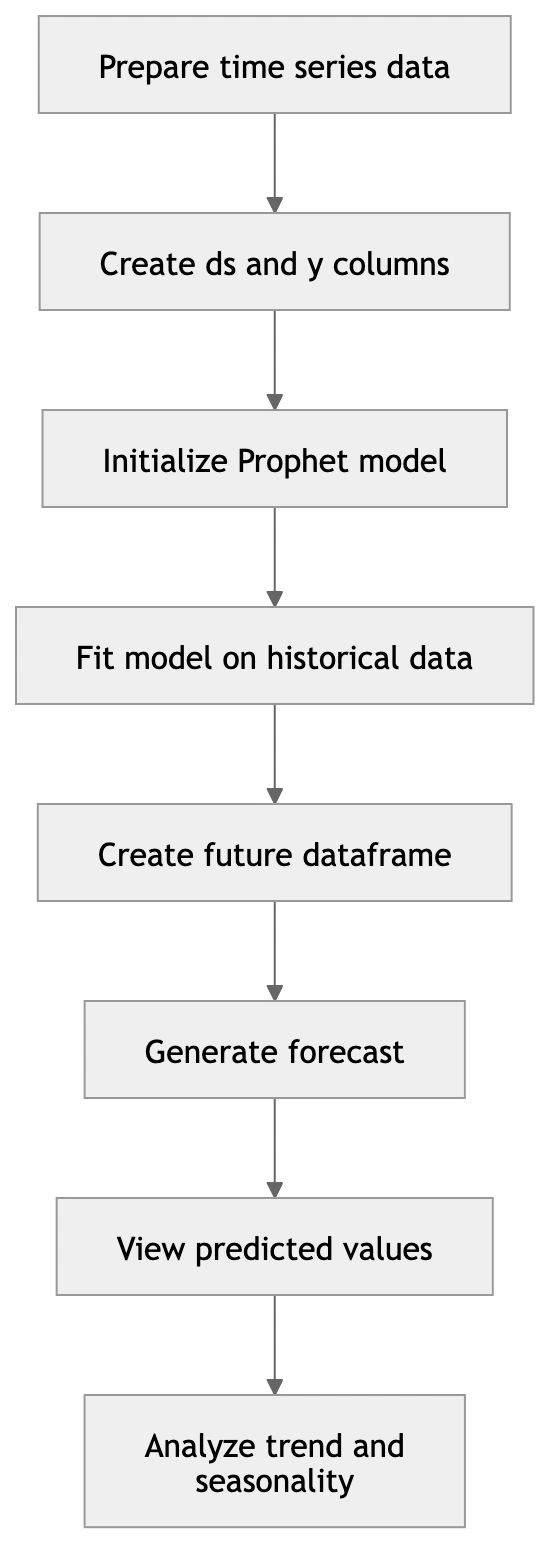
Prophet: The Standard for Interpretability and Business Logic
Prophet remains one of the most widely adopted forecasting tools in the corporate world. Its architecture is based on a decomposable time series model with three main components: trend, seasonality, and holidays. By treating forecasting as a curve-fitting exercise rather than a traditional time-series problem, it handles missing data and large outliers with remarkable resilience.
Industry analysts note that Prophet’s primary strength is its transparency. Because it breaks down a forecast into human-readable components (e.g., “this dip is due to the Thanksgiving holiday” or “this rise is a weekly Saturday trend”), it is favored by business analysts who must justify their predictions to stakeholders. However, from a technical standpoint, Prophet is often criticized for its inability to account for “lagged” variables—where the value of yesterday directly influences the value of today—making it less effective for highly volatile data like stock prices or energy consumption.

NeuralProphet: Integrating Deep Learning into the Prophet Framework
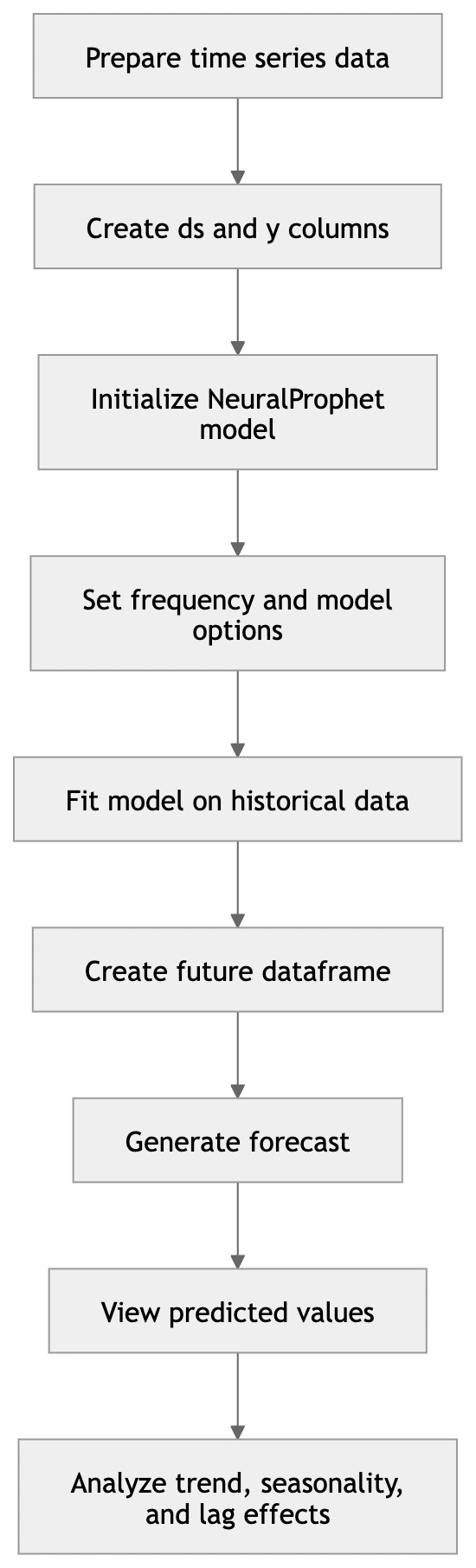
NeuralProphet was developed to bridge the gap between the explainability of Prophet and the power of modern neural networks. Built on the PyTorch framework, it introduces a hybrid approach. It maintains the decomposable structure of the original Prophet but adds a crucial component: the AR-Net (Auto-Regressive Neural Network).
The inclusion of AR-Net allows the model to learn complex, non-linear relationships from recent past values, a feature known as “lag learning.” This makes NeuralProphet significantly more capable than its predecessor in handling short-term fluctuations. According to performance benchmarks, NeuralProphet often outperforms standard statistical models in scenarios where local context and recent trends are more predictive than long-term seasonality. However, this added power comes at a cost; the model requires more computational resources and a more nuanced understanding of hyperparameters to avoid overfitting.
TimeGPT: The Advent of Managed Foundation Models
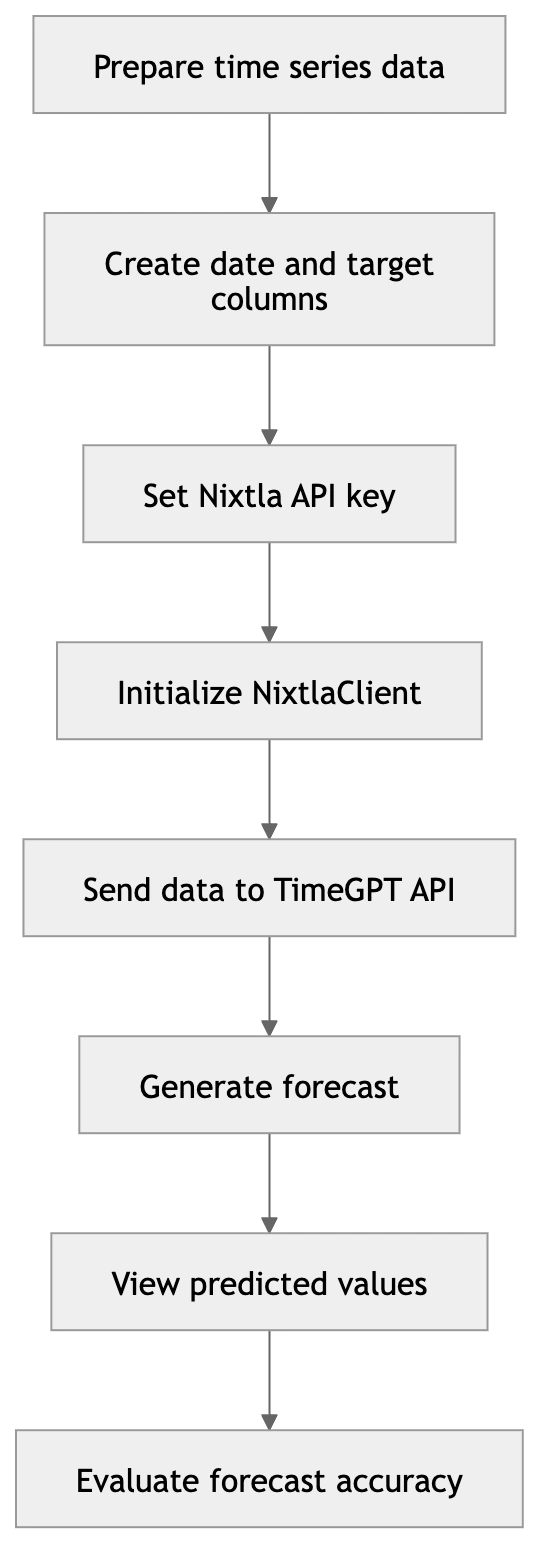
In late 2023, Nixtla introduced TimeGPT, the first foundation model specifically designed for time series forecasting. Following the logic of Large Language Models (LLMs) like GPT-4, TimeGPT was trained on an immense corpus of over 100 billion historical data points across various domains, including retail, electricity, and finance.
The disruptive nature of TimeGPT lies in its “Zero-Shot” capability. Unlike Prophet or NeuralProphet, which must be “fitted” or trained on a specific company’s historical data before they can produce a forecast, TimeGPT can ingest a new dataset and provide an immediate prediction via an API. This significantly reduces the “time-to-insight” for data science teams.
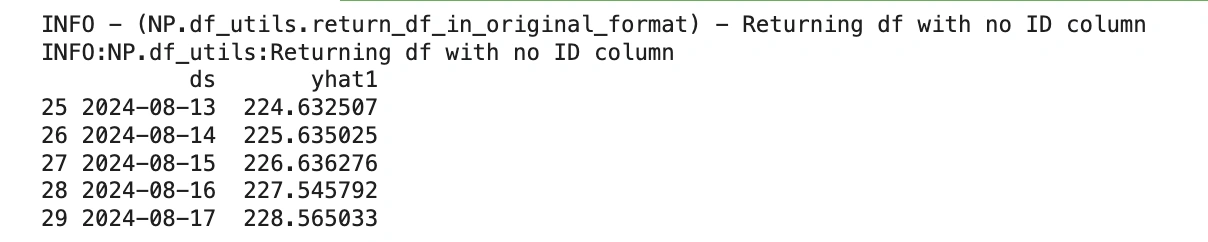
Market reactions to TimeGPT have been polarized. While many praise its speed and the reduction of engineering overhead, enterprise security officers have raised concerns regarding data privacy, as the data must be sent to a third-party API for processing. Furthermore, as a closed-source model, the “black box” nature of its predictions can be a hurdle in highly regulated industries such as healthcare or banking.
Chronos: A Linguistic Approach to Temporal Data
Parallel to the development of TimeGPT, Amazon Science released Chronos in early 2024. Chronos represents a unique technical approach: it treats time series forecasting as a language modeling task. By “tokenizing” numerical values—converting numbers into discrete units similar to words in a sentence—Chronos utilizes standard Transformer architectures (the same technology behind ChatGPT) to predict future “tokens” in a sequence.
Chronos is available in several sizes (Small, Base, and Large) and is offered as an open-weight model. This allows organizations to host the model on their own infrastructure, addressing the privacy concerns associated with API-based models like TimeGPT. Chronos-Bolt, a specialized version of the model, has further improved the speed and memory efficiency of this approach, making it viable for real-time applications in edge computing and IoT.
Technical Implementation and Operational Requirements
For organizations looking to deploy these tools, the technical barrier to entry varies significantly. Prophet and NeuralProphet are primarily Python-based libraries (pip install prophet neuralprophet) that run on local servers or cloud instances. They require the user to manage the data pipeline, handle preprocessing, and execute the training loops.
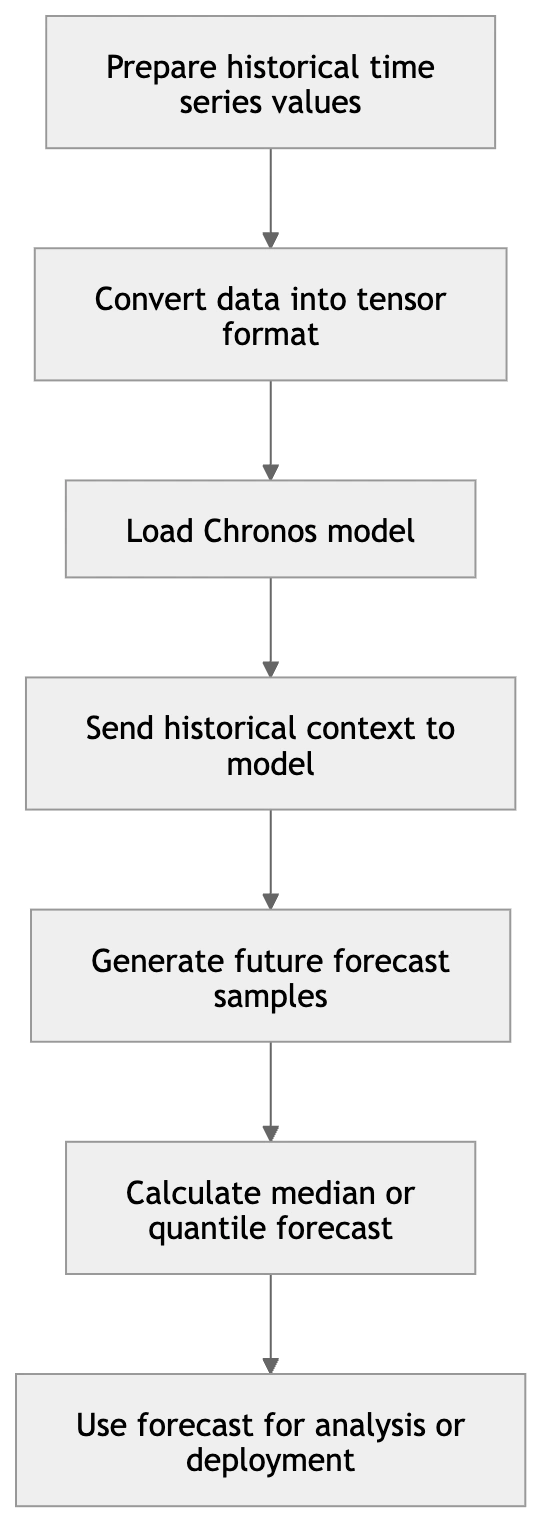
In contrast, TimeGPT requires minimal local code, as the heavy lifting is done on Nixtla’s servers. The user only needs an API key and a basic client library. Chronos occupies a middle ground; while it can be used for zero-shot forecasting like TimeGPT, it often requires a GPU (Graphics Processing Unit) for optimal performance, necessitating a more robust infrastructure plan for self-hosting.
Comparative Analysis: Performance, Scalability, and Cost
When evaluating these tools, organizations typically use a multi-factor matrix:

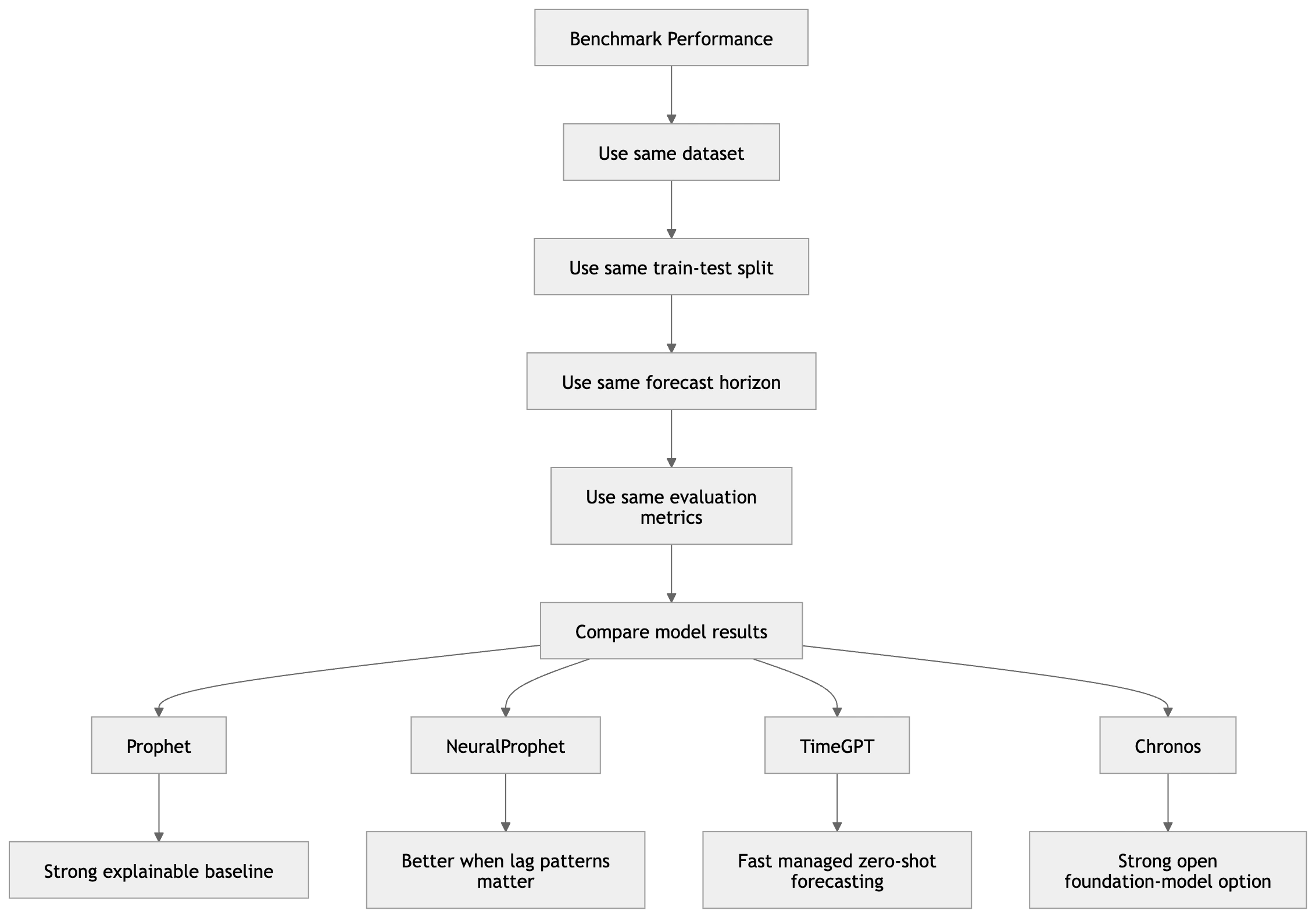
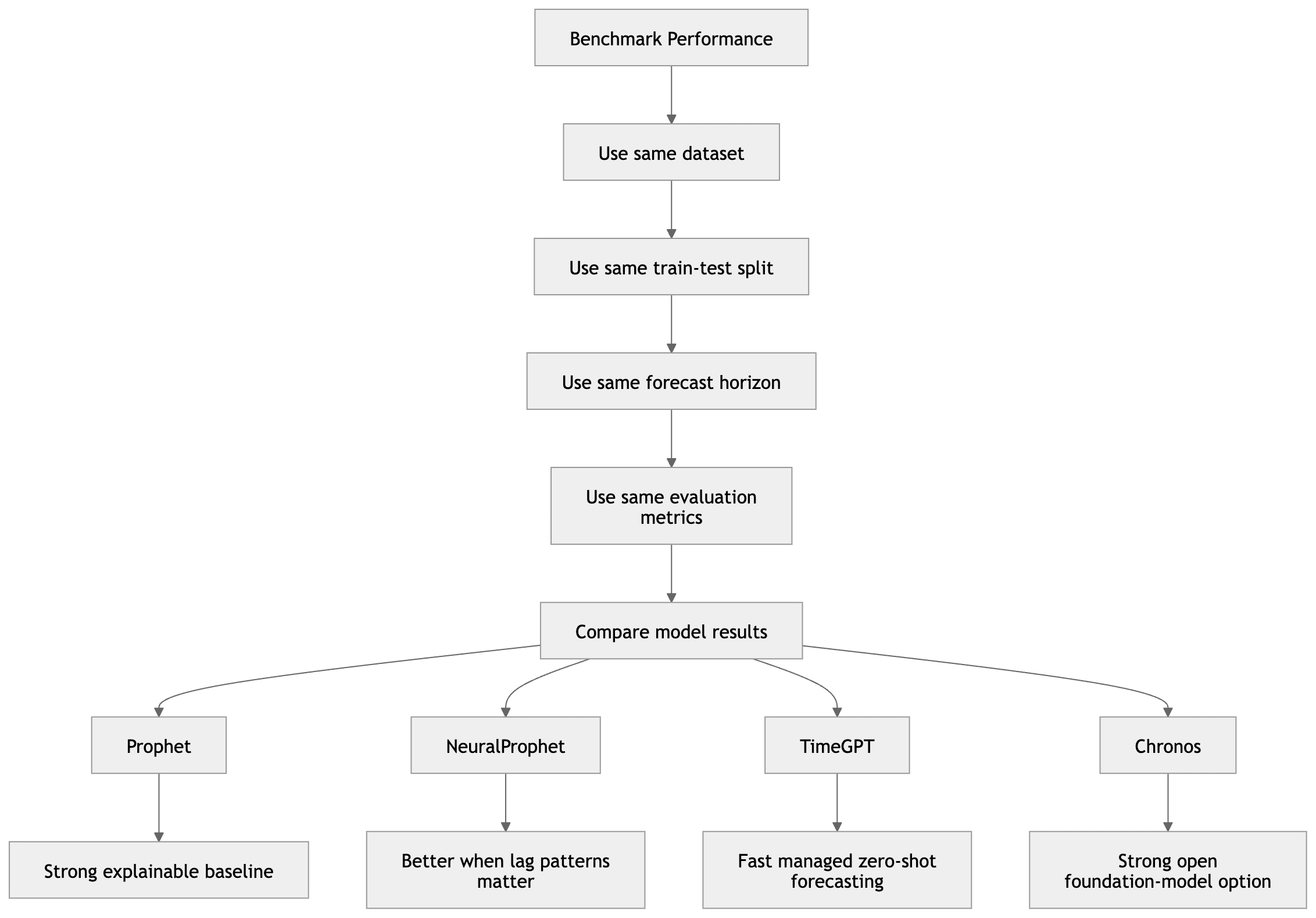
- Accuracy: Foundation models like TimeGPT and Chronos generally lead in “zero-shot” accuracy on diverse datasets. However, a finely tuned Prophet or NeuralProphet model can still outperform them on specific, stable business metrics where domain-specific holidays and events are well-defined.
- Interpretability: Prophet remains the undisputed leader. Its ability to generate “component plots” allows non-technical users to understand the why behind a forecast.
- Scalability: For companies needing to forecast millions of individual SKUs (Stock Keeping Units) simultaneously, TimeGPT’s API or Chronos-Bolt’s high-speed inference are superior to the iterative training required by Prophet.
- Cost: Prophet and NeuralProphet are open-source and free to use, making them the most cost-effective for small to medium workloads. TimeGPT operates on a consumption-based pricing model, which can become expensive at extreme scales. Chronos involves infrastructure costs related to GPU maintenance.
The Strategic Impact on Industry
The shift toward foundation models is changing the role of the data scientist. Previously, a significant portion of a data scientist’s time was spent on “feature engineering”—manually creating variables for day-of-the-week, month-of-the-year, or lagged values. With tools like Chronos and TimeGPT, these features are learned implicitly by the model.
Industry experts suggest that the future of forecasting will likely involve a “Champion-Challenger” setup. In this configuration, a transparent model like Prophet serves as the “Champion,” providing a baseline and explainable insights, while an advanced model like Chronos acts as the “Challenger,” pushing the boundaries of accuracy. If the Challenger significantly outperforms the Champion, the team investigates the discrepancy, leading to more robust strategic planning.
Conclusion and Future Outlook
The landscape of time series forecasting has evolved from simple statistical extrapolation to a sophisticated field of neural architecture. Prophet and NeuralProphet continue to serve as essential tools for explainable, local forecasting, while TimeGPT and Chronos are pioneering the future of scalable, zero-shot predictive analytics.
As these models continue to mature, the integration of “multivariate” data—incorporating external factors like weather, social media sentiment, and economic indicators—will likely be the next frontier. For now, the choice of tool depends on the specific needs of the project: the clarity of Prophet, the flexibility of NeuralProphet, the speed of TimeGPT, or the cutting-edge architecture of Chronos. Organizations that successfully navigate this spectrum will gain a significant competitive advantage in an increasingly data-driven global economy.