rifanmuazin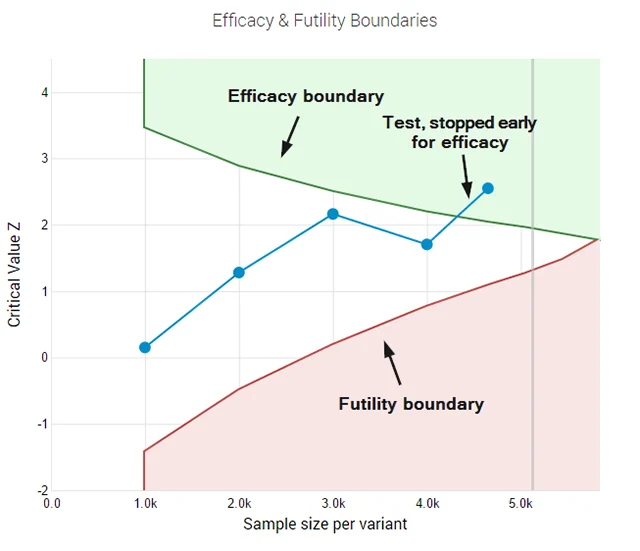
A/B testing has long been heralded as the gold standard of digital marketing, providing a scientific veneer to the often-speculative world of user experience and conversion rate optimization. By utilizing randomized controlled trials—the same methodology underpinning breakthroughs in physics, genetics, and pharmacology—marketers aim to establish clear causal relationships between website changes and consumer behavior. However, a growing consensus among data scientists suggests that the common application of these tests in the corporate world is lagging nearly half a century behind modern statistical science. While the tools for experimentation have become more accessible, the rigorous application of the underlying mathematics has frequently faltered, leading to a phenomenon where “data-driven” decisions are often based on illusory findings.
The fundamental disconnect stems from the reliance on classical frequentist statistics, specifically methods like the Student’s t-test, which were designed for scenarios with fixed parameters and single-point evaluations. In the fast-paced environment of digital commerce, these rigid frameworks often clash with the operational realities of real-time data monitoring. This discrepancy has given rise to three critical issues: the misuse of statistical significance, a profound neglect of statistical power, and a general lack of efficiency that costs businesses both time and revenue.
The Crisis of Rigor in Digital Experimentation
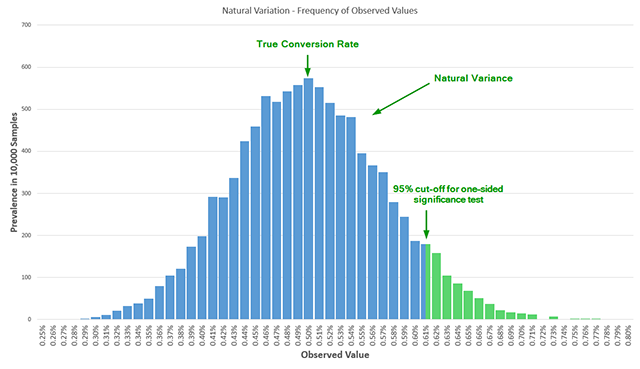
The first and perhaps most pervasive issue in modern A/B testing is the widespread misunderstanding of statistical significance. In a standard experimental design, significance is intended to estimate the probability that an observed difference in performance—such as a higher conversion rate for a new landing page—occurred due to the inherent variance of the data rather than a true improvement. When a result is labeled “statistically significant” at a 95% confidence level, it implies there is only a 5% chance that the observed lift is a false positive.
However, classical significance tests carry a strict requirement: the sample size must be fixed in advance. To maintain the integrity of the p-value, a researcher must decide to test a specific number of users, such as 20,000 per variant, and only analyze the results once that threshold is reached. In practice, this rule is routinely violated. Marketing teams, eager for quick wins or desperate to mitigate losses, frequently “peek” at the data daily. This practice, known as data-driven optional stopping, creates a massive inflation of the false positive rate.
Statistical research dating back to 1969 demonstrates that peeking at data just five times during a test can triple the actual error rate compared to the reported nominal error. If a practitioner peeks ten times, the probability of declaring a “winner” that does not actually exist increases fivefold. When businesses act on these “garbage” results, they implement changes that may actually harm their bottom line, all while under the illusion of scientific certainty.
The Invisible Constraint: Understanding Statistical Power
While significance focuses on avoiding false positives (Type I errors), statistical power is concerned with avoiding false negatives (Type II errors). Statistical power, or “test sensitivity,” represents the probability that an experiment will detect a true effect if one actually exists. Despite its importance, a review of influential literature in the conversion rate optimization (CRO) field reveals a startling omission: the vast majority of resources fail to mention power entirely or treat it as a secondary concern.
Running an underpowered test is akin to using a low-resolution radar to find a small ship in a vast ocean; the ship may be there, but the tool is not sensitive enough to see it. When a test lacks sufficient power, a variant that is truly superior may be discarded because the results failed to reach the significance threshold. This leads to “wasted” experiments where weeks of development and testing yield no actionable insights, effectively barring future exploration into directions that could have yielded significant gains.
The relationship between power and sample size is immutable. To increase the sensitivity of a test, one must either increase the number of participants or accept a larger minimum effect size. Many free online calculators operate at a default power of 50%, which is essentially a coin toss. For a business to conduct a meaningful experiment, it must often commit to sample sizes that are much larger—and timelines that are much longer—than stakeholders are typically prepared to accept.
The Inefficiency of Classical Fixed-Sample Designs
The third major hurdle is the inherent inefficiency of classical testing in a business context. In fields like agriculture or physics, where data collection might happen in discrete, seasonal batches, fixed-sample testing makes sense. In digital marketing, however, data accrues continuously.
Classical methods force a binary choice: either wait until the very end of a long test to make a decision, or peek early and destroy the statistical validity of the experiment. This creates a significant opportunity cost. For instance, if a new checkout process is performing exceptionally well, a fixed-sample test requires the business to continue the experiment for several more weeks to satisfy the pre-set sample size, delaying the full implementation and the resulting revenue. Conversely, if a variant is performing poorly and actively losing the company money, a rigid statistical framework provides no “legal” way to stop the test early without compromising the data.
This inefficiency has led to a demand for a more “agile” approach—one that mirrors the advancements made in medical biostatistics, where ethical and financial pressures long ago necessitated the development of interim monitoring and early-stopping rules.
A New Paradigm: The AGILE Statistical Method
To bridge the gap between academic rigor and business reality, experts have proposed the AGILE statistical method. Inspired by group sequential designs used in clinical trials, the AGILE approach is designed to provide the flexibility of interim analysis while maintaining strict control over error rates.
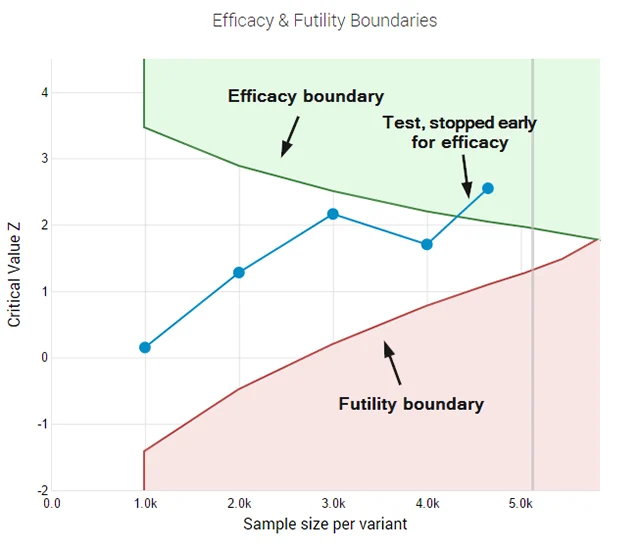
The AGILE method utilizes “error-spending functions.” This mathematical framework allows practitioners to distribute their “error budget” across multiple checkpoints throughout the duration of the test. Instead of a single evaluation at the end, the test can be analyzed at several pre-determined intervals. If the data shows an overwhelming lead for one variant, the test can be stopped early for “efficacy.” If the variant is performing so poorly that it is unlikely to ever reach significance, the test can be stopped early for “futility.”
Chronology of Experimental Methodology
- 1908: William Sealy Gosset (writing as “Student”) publishes the t-distribution, laying the groundwork for modern significance testing.
- 1930s-1950s: The Neyman-Pearson framework formalizes the concepts of Alpha (significance) and Beta (power).
- 1960s-1970s: Clinical trials in medicine begin adopting sequential analysis to allow for early stopping for patient safety.
- 2000s: A/B testing becomes a staple of the “Lean Startup” and digital marketing movements, though largely relying on 100-year-old fixed-sample math.
- 2010s-Present: The rise of the AGILE method and Bayesian alternatives as businesses seek more efficient ways to experiment at scale.
Broader Implications for the Digital Economy
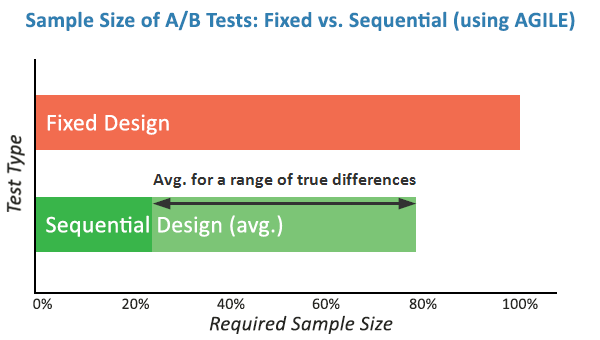
The adoption of more sophisticated statistical methods like AGILE has profound implications for the digital economy. The primary benefit is a drastic increase in experimentation velocity. Simulations indicate that using an AGILE framework can yield efficiency gains of 20% to 80% compared to classical fixed-sample tests. By reaching conclusions faster, companies can run more tests per year, accelerating their learning curve and compounding their conversion gains.
Furthermore, the “futility stopping rule” serves as a critical safety net. In a standard A/B test, a failing variant might be allowed to run for a full month, costing the company thousands in lost conversions. Under an AGILE framework, that same test could be terminated in a matter of days once it becomes statistically evident that the variant is not a winner. This “fail fast” mentality is essential for maintaining agility in competitive markets.
The transition toward these modern methods also signals a maturation of the marketing profession. As digital platforms become more saturated and the “easy wins” of the early web disappear, the margin for error narrows. Businesses can no longer afford to base their strategy on false positives generated by flawed testing practices.
Conclusion: Toward a Scientific Future
The future of digital experimentation lies in the alignment of statistical theory with the operational needs of the modern enterprise. While the misuse of classical tests has led to a “reproducibility crisis” in some marketing circles, the introduction of the AGILE statistical method offers a path forward. By acknowledging the importance of statistical power, controlling for the risks of data peeking, and embracing the efficiency of interim analysis, organizations can transform their A/B testing programs from a source of uncertainty into a powerful engine for growth.
The move toward AGILE testing is more than a technical upgrade; it is a shift toward a more honest and rigorous form of data science. For practitioners, it means moving away from the “confidence” metrics provided by black-box tools and toward a deeper understanding of the trade-offs between speed, certainty, and risk. In an era where data is the most valuable commodity, the ability to interpret that data accurately is the ultimate competitive advantage.