


Digital optimization has reached a critical juncture where the ubiquity of experimentation is often overshadowed by the high-profile platforms that facilitate it. While the industry narrative frequently centers on sophisticated, all-in-one experimentation suites, a significant segment of the market continues to rely on manual A/B testing. This practice involves using custom-built stacks, feature flags, manual scripts, and standard analytics tools to validate product changes. For many organizations, manual testing is not merely a budgetary compromise but a strategic choice driven by technical constraints, data residency requirements, and the need for granular engineering control. However, as these organizations scale, the operational complexities of maintaining statistical integrity and technical performance often necessitate a transition toward more robust, automated solutions.
The prevalence of manual experimentation is a testament to the democratization of data-driven decision-making. Engineering teams operating in highly customized environments—such as headless frontends, server-side rendered applications, or native mobile apps—frequently prefer to own the randomization logic and traffic allocation. By avoiding third-party platforms, these teams can maintain a leaner tech stack and ensure that experiment data remains within their own secure infrastructure, a priority that has become increasingly urgent in the era of stringent data privacy regulations like GDPR and CCPA.
The Evolution of Experimentation Methodologies
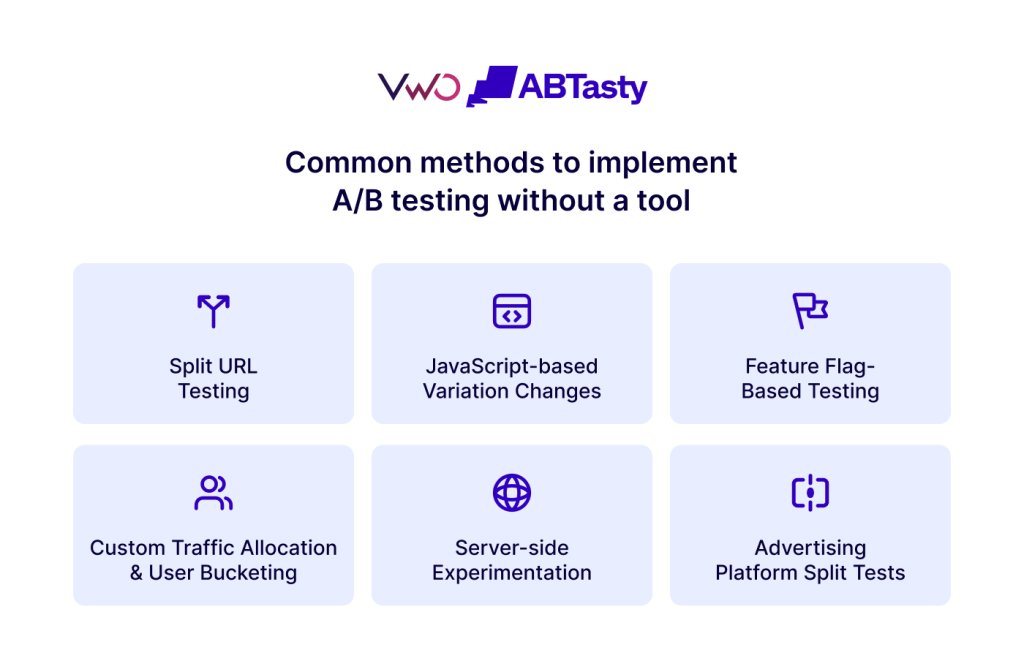
The history of A/B testing can be traced back to the early 2000s, with Google famously testing 41 different shades of blue for its search result links in 2009. Since then, the practice has evolved from simple front-end changes to complex server-side experiments that influence core business logic. Manual testing today generally falls into several distinct categories:
- Split URL Testing: This method involves creating two separate versions of a webpage and routing traffic between them using redirects or Content Management System (CMS) rules. It is most frequently used for major redesigns or pricing page overhauls.
- JavaScript-Based Variations: Often deployed via tag managers or internal frameworks, this method modifies page elements dynamically. While flexible, it is prone to "flicker" effects where the original content is visible for a split second before the variation loads.
- Feature Flag-Based Testing: This has become the standard for modern DevOps. By wrapping new features in "flags," teams can toggle experiences for specific user groups. This allows for staged rollouts and beta programs without the need for constant redeployments.
- Server-Side Experimentation: This is the most technically rigorous manual approach. Assignments are made on the server before the content is delivered to the browser, ensuring a seamless user experience and allowing for the testing of backend algorithms, such as recommendation engines or search logic.
Technical and Statistical Hurdles
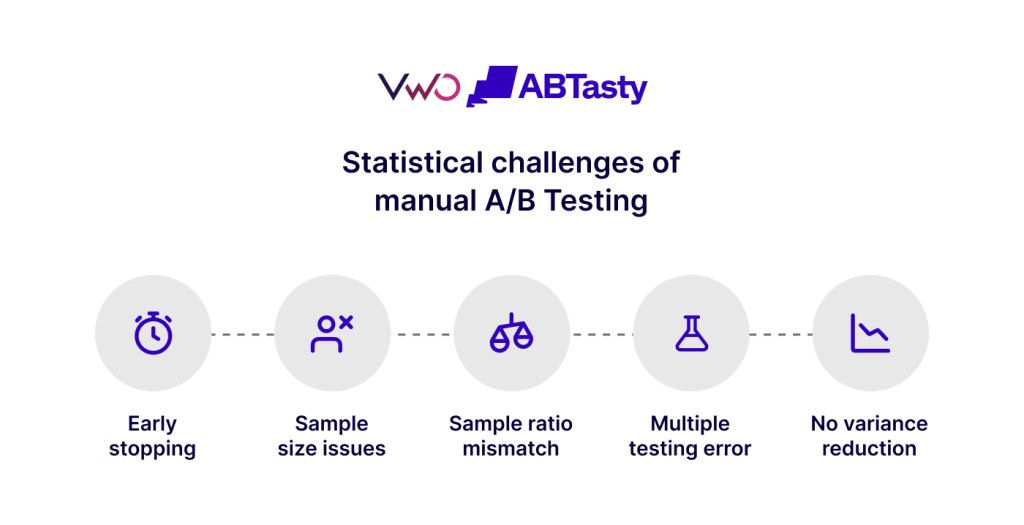
While manual testing offers autonomy, it introduces significant risks regarding data accuracy. Industry observers note that manual setups often lack the "guardrails" provided by dedicated platforms, leading to what is known as "experiment pollution." One of the most common issues is the "Peeking Problem," where teams monitor results daily and stop a test the moment it reaches a nominal significance level. Statistically, this practice drastically increases the rate of false positives, as a result that appears "winning" on day four may revert to the mean by day fourteen.
Furthermore, manual testing rarely accounts for Sample Ratio Mismatch (SRM). SRM occurs when the actual traffic split deviates from the intended ratio (e.g., a 50/50 split resulting in 48/52). In a manual environment, SRM often goes undetected, rendering the entire experiment’s results invalid. Dedicated platforms like Wingify (VWO) or Optimizely include automated SRM detection, which alerts teams to underlying issues such as bot traffic, caching errors, or flawed assignment logic.
Advanced statistical techniques, such as Controlled-experiment Using Pre-Existing Data (CUPED), are also absent in most manual setups. CUPED reduces variance by using historical data to adjust the results of an experiment, effectively allowing for shorter test durations and higher confidence. Without these tools, manual testing requires significantly larger sample sizes and longer runtimes to achieve the same level of reliability.
SEO and Performance Implications
The impact of manual A/B testing on Search Engine Optimization (SEO) is a frequent point of concern for digital marketers. Search engines, primarily Google, have clear guidelines on experimentation to prevent "cloaking"—the practice of showing different content to search bots than to human users. If a manual script is poorly implemented, it may inadvertently hide content from indexers, leading to severe ranking penalties.
Duplicate content is another risk. In Split URL testing, if the variant page is not correctly tagged with a "rel=canonical" link pointing back to the original, search engines may index both versions, splitting the "link equity" and weakening the page’s overall authority. Additionally, the performance overhead of manual JavaScript injections can negatively affect Core Web Vitals, specifically Cumulative Layout Shift (CLS) and Largest Contentful Paint (LCP), which are now direct ranking factors in Google’s algorithm.
The Economic Argument: Build vs. Buy
The decision to remain manual or migrate to a platform often hinges on a "Build vs. Buy" analysis. For a startup running two tests a year, a dedicated platform’s licensing fee may be hard to justify. However, as the volume of testing increases, the "hidden costs" of manual testing begin to surface. These include the engineering hours spent on setup, the data scientist hours spent on manual analysis in SQL or Python, and the opportunity cost of making decisions based on potentially flawed data.
Industry data suggests that high-maturity experimentation programs can run hundreds of tests simultaneously. At this scale, the operational overhead of manual governance—ensuring tests don’t overlap or contaminate each other—becomes nearly impossible without automation. A dedicated platform acts as a "single source of truth," centralizing hypotheses, results, and behavioral insights.
Behavioral Insights and the Hypothesis Layer
One of the primary advantages of transitioning from manual testing to an integrated platform is the addition of a behavioral layer. Manual testing often tells a team what happened (e.g., Variant B had a 5% higher conversion rate) but fails to explain why. Platforms that integrate heatmaps, session recordings, and form analytics allow teams to see the friction points that led to a specific result.
For example, a case study involving the energy company Vandebron highlighted this synergy. By using behavioral insights alongside A/B testing, the team identified a specific technical friction point in their sign-up form’s date-of-birth field—a nuance that was invisible in standard conversion data. By fixing this and validating it through a controlled experiment, they achieved a 16.3% improvement in sign-up rates. This level of insight is difficult to achieve when experiment data is siloed in a data warehouse and behavioral data is trapped in a separate analytics tool.
The Shift Toward Continuous Optimization
As organizations mature, the focus shifts from "winning" a single test to a culture of continuous optimization. This involves not just A/B testing, but also personalization and feature management. In a manual setup, personalization is often handled as a separate project, leading to inconsistent user experiences. Modern experimentation platforms allow teams to take a winning variation from an A/B test and immediately deploy it as a personalized experience for a specific audience segment, such as returning visitors or users from a specific geographic region.
Meliá Hotels International serves as a prime example of this evolution. By utilizing server-side experimentation and feature management, the hotel chain was able to progressively roll out a booking funnel change, increasing traffic exposure from 5% to 100% over the course of a week. This "canary release" approach ensured stability while measuring a 1.85% uplift in revenue per visitor, a result that would have been significantly riskier to achieve through manual deployment.

Conclusion: Future-Proofing the Experimentation Program
Manual A/B testing remains a viable entry point for many businesses, providing a low-cost way to prove the value of data-driven decision-making. However, the path to enterprise-scale optimization is paved with challenges that manual processes are ill-equipped to handle. The transition to a dedicated experimentation platform is often triggered by the need for greater velocity, higher statistical confidence, and the desire to democratize testing across marketing, product, and engineering teams.
Ultimately, the goal of any experimentation program is to reduce uncertainty. While manual testing can provide a glimpse into user preferences, the rigor and scalability of a dedicated platform transform experimentation from a series of ad-hoc projects into a core business function. As the digital landscape becomes increasingly competitive, the ability to run reliable, high-velocity experiments will likely be the defining factor between companies that guess and companies that grow. Organizations must evaluate their current experimentation maturity and determine if their manual "training wheels" are now holding them back from achieving true optimization ROI.







