

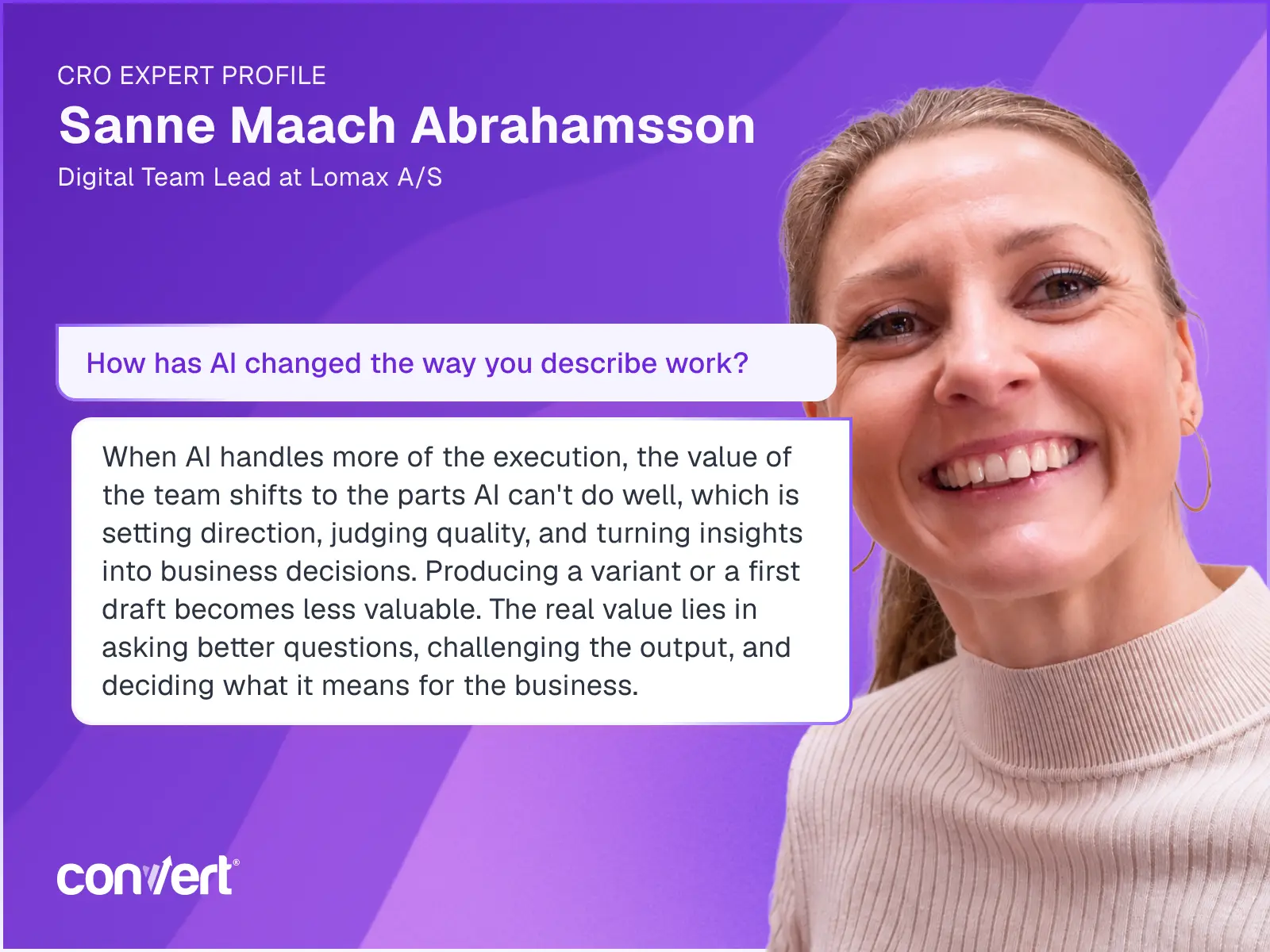
The digital landscape for B2B e-commerce is undergoing a fundamental transformation, shifting from speculative design to rigorous, evidence-based experimentation. At the center of this evolution within the Nordic market is Lomax A/S, a leading Danish office supplier that has successfully integrated Conversion Rate Optimization (CRO) into its core operational DNA. Sanne Maach Abrahamsson, Digital Team Lead at Lomax A/S, recently shared insights into how the organization has moved beyond simple A/B testing to build a sophisticated learning infrastructure powered by artificial intelligence. Her experience reflects a broader industry trend where the value of digital teams is increasingly measured not by the volume of their output, but by the strategic quality of their judgment.
The Genesis of Experimentation at Lomax A/S
The journey of CRO at Lomax A/S did not begin with a predefined roadmap, but rather as a strategic pivot to modernize the company’s decision-making process. Sanne Maach Abrahamsson transitioned into the world of e-commerce from a background in finance and interaction design. This unique combination of fiscal discipline and user-centric philosophy provided the ideal foundation for a data-driven approach to web development.

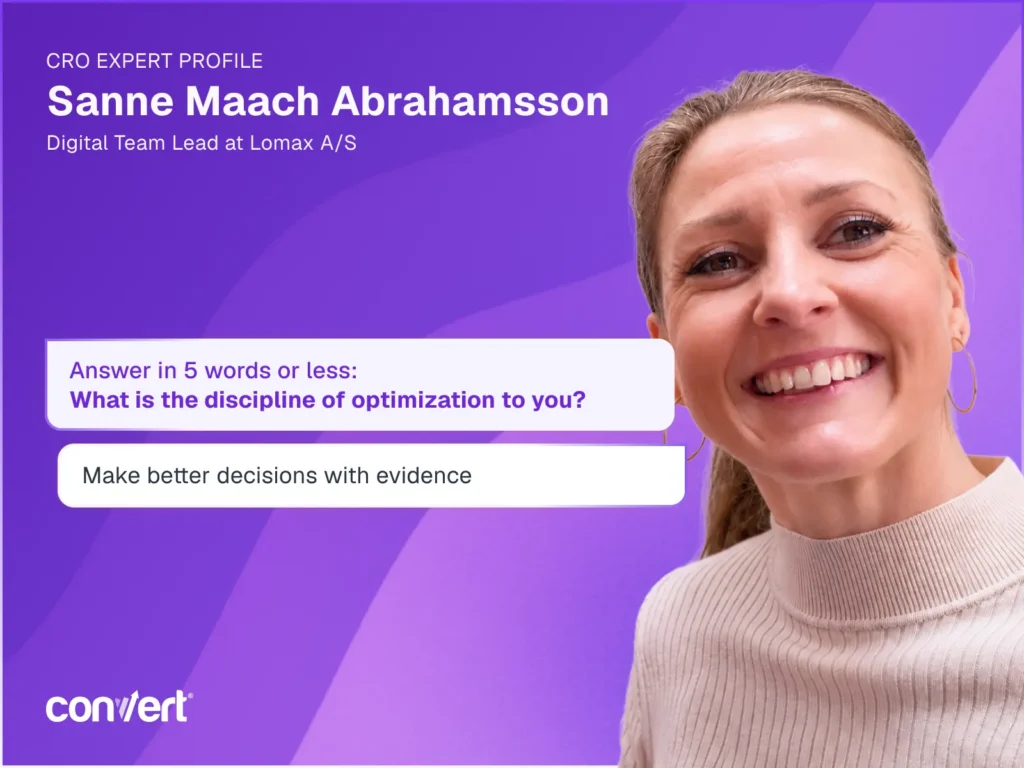
When Lomax first introduced CRO, the discipline was largely alien to the organization. Abrahamsson notes that her entry into the field required a ground-up educational effort, beginning with basic research into the methodologies of optimization. However, the connection between interaction design—the study of how users navigate digital spaces—and the commercial outcomes of e-commerce became immediately apparent. The ability to quantify user behavior through data turned subjective design debates into objective business discussions. This transition marked a shift from "opinion-based" management to "evidence-based" management, a philosophy Abrahamsson summarizes in five words: "Make better decisions with evidence."
Chronology of a Digital Transformation
The development of the experimentation culture at Lomax can be viewed through three distinct phases: the foundational phase, the infrastructure phase, and the AI-augmentation phase.
In the foundational phase, the focus was on establishing the validity of testing. This involved running initial A/B tests to demonstrate that small, data-backed changes could yield significant commercial results. During this period, the organization learned to value "failed" tests as much as "winning" ones, recognizing that a negative result often prevents the implementation of a harmful or costly feature.

The infrastructure phase saw Lomax move away from siloed data. Abrahamsson identified a recurring risk in experimentation: the loss of institutional memory. Often, test results are buried in old slide decks or project management tickets, leading teams to repeat the same mistakes or re-test the same hypotheses years later. To combat this, Lomax invested in a "single source of truth" using Airtable. This database serves as a central repository for research, roadmaps, and historical results, ensuring that every insight is reusable and accessible.
The current AI-augmentation phase involves integrating Large Language Models (LLMs) like Claude with this structured data. By connecting AI to their historical database, Lomax has enabled its team to synthesize learnings across hundreds of tests, identifying patterns in customer behavior that would be invisible to a human analyst reviewing individual reports.
Supporting Data: The High Stakes of B2B E-commerce
The importance of Abrahamsson’s work is underscored by the scale of the B2B e-commerce market. In the Nordic region, B2B digital sales have seen a compound annual growth rate (CAGR) exceeding 10% over the last five years. For a company like Lomax, which handles thousands of SKUs and serves a diverse range of business clients, the cost of a poor user experience is high.

Industry data suggests that the average conversion rate for B2B e-commerce sites hovers between 1.5% and 3.5%. However, even a 0.1% increase in conversion can translate into millions of dollars in additional annual revenue for a market leader. Conversely, implementing an untested "automated" feature that degrades the user experience by just 5% can lead to catastrophic losses in customer lifetime value (CLV). This reality forms the backdrop for Lomax’s "test everything" mandate.
Case Study: Preventing Expensive Business Mistakes
One of the most compelling arguments for a robust experimentation framework is its role as a risk mitigation tool. Abrahamsson highlights a specific instance involving an automated video integration tool. The vendor promised to scrape the Lomax product catalog, match items with relevant YouTube videos, and place them on product pages automatically.
From a management perspective, the business case was strong: video content is known to increase engagement, and automation would save hundreds of man-hours. However, when the digital team subjected the tool to a controlled experiment, the results were overwhelmingly negative. The automated matching process resulted in influencer content that did not align with the brand, videos in incorrect languages, and a cluttered UI. Both the conversion rate and the average order value (AOV) dropped significantly.
"Without experimentation, we would probably have signed a one-year contract based on the vendor demo alone," Abrahamsson noted. This case study serves as a critical reminder that "best practices" and vendor promises are no substitute for primary data derived from one’s own user base.
The Nuance of AI in the Funnel
Lomax’s exploration of AI-generated content further illustrates the need for human-in-the-loop oversight. In a large-scale test, the team compared AI-generated product descriptions against human-written ones across two different types of pages: product detail pages (PDPs) and category pages.
The results revealed a fascinating dichotomy. On PDPs, the AI excelled. It provided clear, concise, and highly structured information that helped customers find technical specifications quickly, leading to a performance boost. However, on category pages—where the goal is often to inspire or provide a thematic overview—the AI-generated text was generic and lacked the creative "spark" necessary to guide a user’s journey.
This experiment provided a nuanced insight: AI is currently a superior tool for information organization but remains a subordinate tool for creative brand storytelling. This finding allowed Lomax to refine its AI strategy, deploying the technology where it adds the most value while retaining human expertise for higher-funnel emotional engagement.
Official Responses and Organizational Impact
The success of the digital team has influenced the broader corporate culture at Lomax. Management’s initial excitement for "fast" automation has evolved into a more mature appreciation for "validated" progress. The organization now views AI not as a replacement for staff, but as a force multiplier.
The goal of AI integration at Lomax is to automate repetitive, low-value tasks—such as data entry or initial draft generation—allowing the team to focus on "higher-value work." This shift has significant implications for employee satisfaction and retention. By removing the "drudgery" of execution, the team can spend more time on strategy, hypothesis formulation, and deep data analysis.

Broader Impact and Future Implications
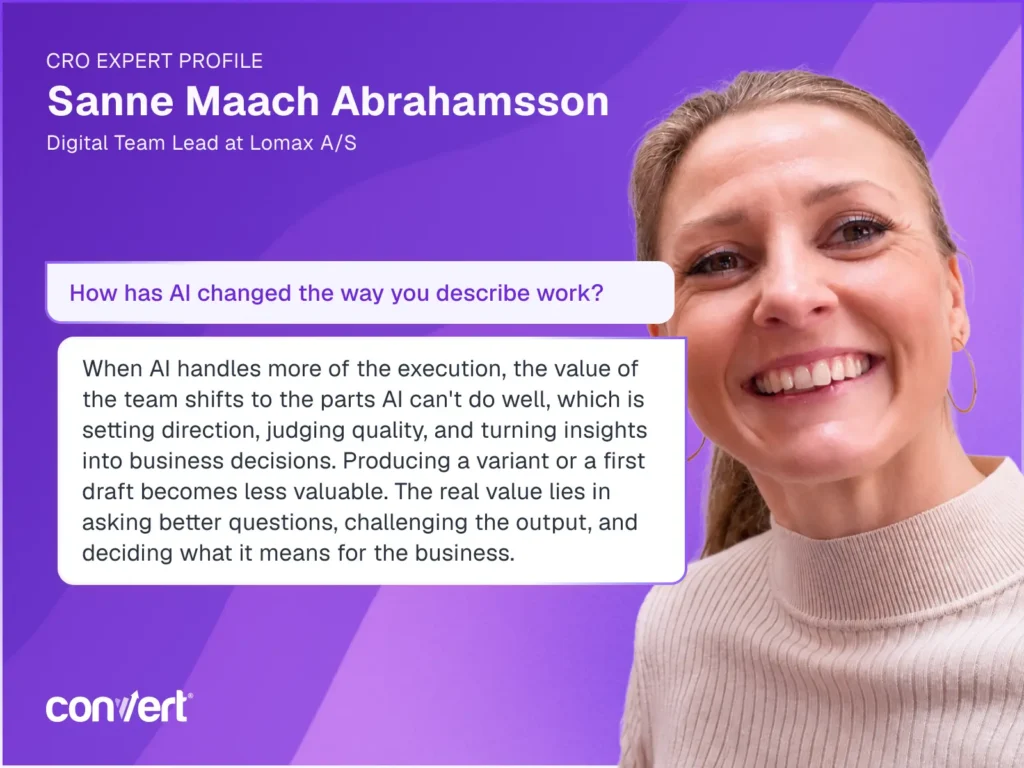
The approach taken by Sanne Maach Abrahamsson and Lomax A/S offers a blueprint for the future of digital marketing and e-commerce. As AI tools become commoditized, the competitive advantage will no longer lie in the ability to generate content or code, but in the ability to judge the quality and relevance of that output.
- The Rise of the "Editor-in-Chief" Model: Digital teams are moving away from being "producers" to being "editors." Whether it is AI-generated code, copy, or design variants, the human role is to set the direction and ensure brand integrity.
- The Importance of Learning Infrastructure: Companies that do not invest in structured learning databases will find their AI efforts hampered. AI is only as effective as the data it can access; without a "shared organizational memory," AI cannot help a company learn from its past.
- Judgment as a Core Competency: As Abrahamsson suggests, the future of leadership in the digital space involves managing both people and AI agents. The primary skill required for this will be critical thinking—the ability to challenge an AI’s output and decide what it means for the business.
- Economic Resilience through Data: In an uncertain economic climate, the ability to avoid "expensive mistakes" through testing is a vital survival trait. Experimentation provides a safety net that allows companies to innovate without betting the farm on unproven ideas.
In conclusion, the work being done at Lomax A/S under the leadership of Sanne Maach Abrahamsson demonstrates that the true power of AI in e-commerce is not just speed, but the ability to facilitate better, evidence-based decisions. By prioritizing learning over mere execution, Lomax is building a resilient, intelligent organization capable of navigating the complexities of the modern digital economy. The transition from a "doing" team to a "thinking" team is not just a change in workflow; it is a fundamental reimagining of what it means to be a digital professional in the age of artificial intelligence.







