

Fashion, inherently a visual and aspirational industry, leverages email marketing as an indispensable tool to connect with consumers, showcase new collections, build enduring brand loyalty, and significantly boost sales in an increasingly competitive digital landscape. This sophisticated approach transcends mere promotional blasts, evolving into a highly personalized communication channel that, despite constituting a small percentage of overall marketing sends, delivers disproportionately high returns. A notable 2024 e-commerce marketing report by Omnisend highlighted that automated emails, representing just 2% of total sends, were responsible for approximately 30% of all email revenue for e-commerce brands, unequivocally demonstrating the profound impact of well-timed and relevant messaging. This comprehensive guide delves into the intricate facets of fashion email marketing, exploring its definition, critical types, exemplary real-world applications, and the strategic framework for its successful implementation within the dynamic realm of fashion e-commerce.
![Fashion Email Marketing: 9 Best Practices and Examples [2026]](https://www.omnisend.com/blog/wp-content/uploads/2026/07/unnamed-8.png)
The Evolution of Digital Engagement in Fashion: From Broadcast to Personalization
Email marketing within the fashion sector has undergone a profound transformation, mirroring the broader evolution of digital communication. Initially, in the early days of e-commerce, fashion brands primarily utilized email for mass newsletters, broadcasting generic promotions, and new product announcements to their entire subscriber base. These early efforts, while rudimentary, established email as a direct line to consumers. However, as digital marketing matured and consumer expectations for personalized experiences grew, the paradigm shifted dramatically. The advent of sophisticated marketing automation platforms and advanced data analytics empowered brands to move beyond a "one-size-fits-all" approach, ushering in an era of hyper-personalization and segmentation.
![Fashion Email Marketing: 9 Best Practices and Examples [2026]](https://www.omnisend.com/blog/wp-content/uploads/2026/07/unnamed-1.png)
This chronological shift saw email marketing evolve from a simple push notification system to a complex, multi-faceted strategy integral to the customer journey. The integration of customer relationship management (CRM) systems with email platforms allowed brands to track browsing behavior, purchase history, demographic data, and engagement patterns. This rich data laid the groundwork for tailored communications, ensuring that subscribers received content most relevant to their interests, style preferences, and lifecycle stage. The imperative to stand out in crowded inboxes also pushed brands to refine their visual storytelling, subject line crafting, and call-to-action optimization, transforming email from a functional announcement tool into a powerful extension of brand identity and narrative.
Core Pillars of Effective Fashion Email Marketing
![Fashion Email Marketing: 9 Best Practices and Examples [2026]](https://www.omnisend.com/blog/wp-content/uploads/2026/07/image-52.png)
Fashion email marketing encompasses a diverse array of email types, each strategically designed to engage shoppers at distinct points along their purchasing journey, fostering a deeper connection with the brand and guiding them towards their next acquisition.
- Welcome Emails: These are the initial touchpoints with new subscribers, serving as a crucial opportunity to introduce the brand’s ethos, showcase popular collections, and often provide a welcome discount to encourage a first purchase. A well-crafted welcome series can significantly boost engagement and conversions, setting the tone for future interactions.
- New Arrivals & Collection Launches: Fashion is cyclical, driven by trends and seasons. Emails announcing new collections or specific product drops are essential for generating excitement and driving immediate traffic to fresh inventory. These campaigns often feature high-quality editorial imagery and compelling narratives around the collection’s inspiration.
- Promotional & Sales Campaigns: While discounts should not overshadow brand identity, strategic sales and promotional emails are vital for clearing inventory, attracting price-sensitive customers, and creating urgency. These can include seasonal sales, flash sales, or special holiday offers.
- Abandoned Cart Reminders: A significant portion of online shoppers abandon their carts before completing a purchase. Automated abandoned cart emails serve as gentle reminders, often showcasing the exact items left behind and providing a direct link back to checkout, effectively recovering potentially lost sales. Industry data suggests these emails have some of the highest conversion rates.
- Post-Purchase Follow-ups: Beyond the transaction, these emails enhance the customer experience. They can include order confirmations, shipping updates, product care instructions, requests for reviews, or personalized recommendations for complementary items, fostering satisfaction and encouraging repeat business.
- Back-in-Stock Alerts: For popular items that frequently sell out, back-in-stock notifications are highly effective. They target customers who have previously expressed interest in a specific product, capitalizing on existing demand and urgency.
- Re-engagement Campaigns: Designed to reactivate dormant subscribers, these emails aim to rekindle interest through exclusive offers, updates on new arrivals, or personalized content, preventing list decay and preserving potential customer relationships.
Data-Driven Personalization: The Engine of Relevance
![Fashion Email Marketing: 9 Best Practices and Examples [2026]](https://www.omnisend.com/blog/wp-content/uploads/2026/07/unnamed-3.png)
At the heart of modern fashion email marketing lies the strategic deployment of data-driven personalization and segmentation. Recognizing that not all subscribers are alike, leading brands meticulously segment their email lists to deliver content that resonates deeply with individual preferences and behaviors.
- Segmentation as a Foundational Strategy: Dividing subscribers into smaller, more homogeneous groups based on shared characteristics or actions significantly enhances email relevance. Common segmentation criteria include:
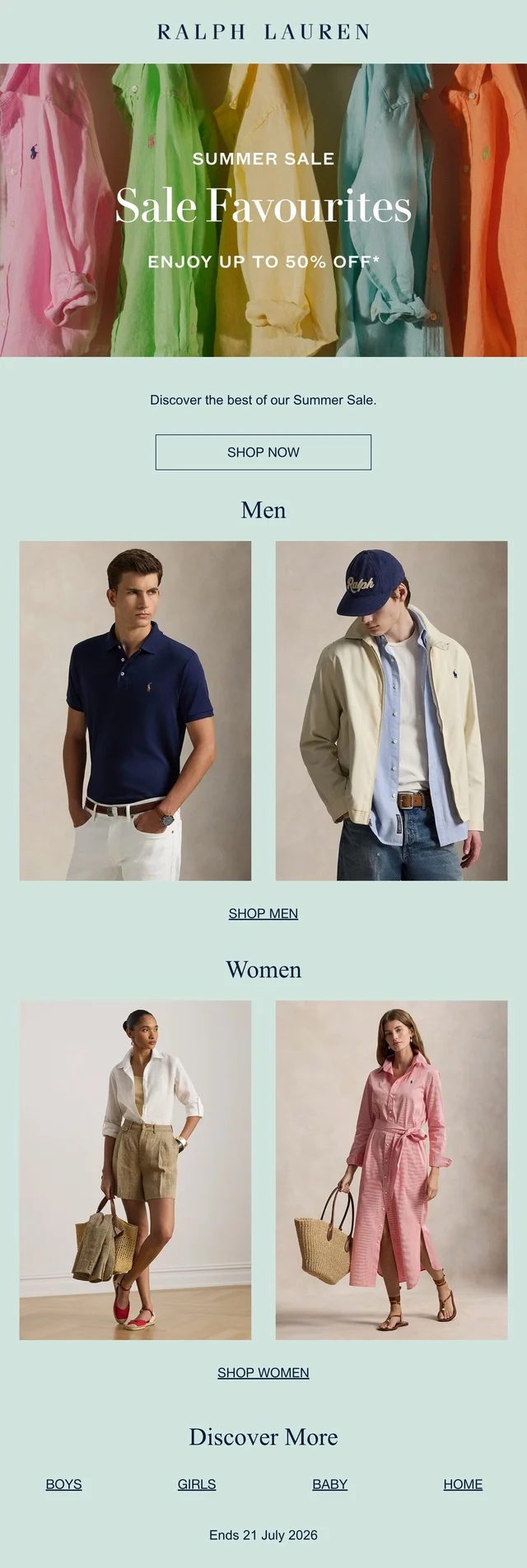
- Demographics: Gender, age, location. For instance, Ralph Lauren expertly organizes a single sales email into distinct shopping paths for men, women, children, and home products. This immediately guides subscribers to the most pertinent section, eliminating the need to browse a vast catalog and increasing the likelihood of a click.
- Purchase History: Past purchases offer invaluable insights into preferred styles, sizes, and product categories. Brands can recommend similar items or complementary products based on this data.
- Browsing Behavior: Tracking viewed products, categories, or wishlist additions allows for highly targeted recommendations, even if a purchase wasn’t completed.
- Engagement Level: Segmenting by open rates, click-through rates, or recency of interaction helps tailor messaging to highly engaged subscribers versus those needing re-engagement.
- Lifestyle & Interests: For brands like Amundsen, which builds its email campaigns around an outdoor lifestyle, segmenting by implied interests allows them to showcase products within a broader aspirational context rather than solely focusing on discounts.
- Leveraging Behavioral Data for Hyper-Targeting: The power of behavioral data cannot be overstated. When a customer views a specific dress multiple times but doesn’t add it to their cart, a personalized email featuring that exact dress, perhaps with a style guide or customer testimonials, can be incredibly effective. Similarly, Bonobos effectively uses back-in-stock emails for popular items like their Sweater Pocket Tee, following up with suggestions for complementary items to encourage additional purchases, demonstrating a keen understanding of customer journey progression.
- The Power of AI and Marketing Automation Platforms: Modern platforms like Omnisend integrate AI capabilities to automate segmentation, personalize product recommendations, and even assist with generating compelling subject lines and email copy. This technological backbone enables fashion brands to scale their personalization efforts without overwhelming manual input, ensuring every email feels custom-tailored.
Authenticity and Community: The Role of Social Proof
![Fashion Email Marketing: 9 Best Practices and Examples [2026]](https://www.omnisend.com/blog/wp-content/uploads/2026/07/unnamed-2.png)
In an era where consumers are increasingly wary of overt advertising, authenticity and social proof have become potent drivers of purchasing decisions. Fashion brands are harnessing the power of their customers to create more relatable and trustworthy email campaigns.
- User-Generated Content (UGC): Featuring real customers wearing products, often sourced from social media, lends credibility and inspires confidence. Rouje, for example, masterfully leverages its #LaVieEnRouje campaign, showcasing a grid of customer photos with Instagram handles and inviting subscribers to participate for a chance to win gift cards. This not only provides diverse styling inspiration but also fosters a sense of community and aspirational belonging. Such content demonstrates how clothing looks on various body types and in real-life settings, addressing a key visual concern for online shoppers.
- Integrating Social Channels: Seamlessly connecting email campaigns with social media presence enhances brand discoverability and allows customers to explore more content. Links to Instagram, Pinterest, or TikTok within emails encourage further engagement and reinforce the brand’s lifestyle narrative.
- Customer Reviews and Testimonials: Integrating star ratings and snippets of positive reviews directly into product emails builds trust. When Asphalte dedicates an email to "The Ultimate T-shirt," incorporating customer feedback on its quality or fit would further strengthen the product’s story and reduce perceived risk for potential buyers.
Tactical Implementation: Best Practices in Action
![Fashion Email Marketing: 9 Best Practices and Examples [2026]](https://www.omnisend.com/blog/wp-content/uploads/2026/07/unnamed-4.png)
Beyond the strategic pillars, several tactical best practices ensure fashion email marketing campaigns achieve their full potential.
- Crafting Compelling Visual Narratives: Fashion is inherently visual, making high-quality photography paramount. Taylor Stitch exemplifies this by combining aspirational outdoor lifestyle photography with detailed close-up images of fabric textures for "The Brody Sweater Tee." This dual approach allows customers to envision the complete outfit and appreciate the material quality without lengthy descriptions, directly addressing the sensory gap of online shopping. The goal is to make the product feel tangible and desirable.
- Creating Exclusivity and Urgency: While promotions are common, framing them with exclusivity and urgency elevates their impact. Rachel Riley’s "Archive Sale (VIP early access)" brilliantly achieves this by addressing VIP subscribers directly and highlighting a limited-time offer. This creates a sense of privilege and motivates immediate action, proving that the perception of value can be as powerful as the discount itself.
- Optimizing for Mobile: With a significant portion of emails opened on smartphones, mobile responsiveness is non-negotiable. Emails must load quickly, display correctly on smaller screens, and feature easily tappable calls to action. Cluttered designs or tiny text will lead to rapid disengagement.
- Clear Calls to Action (CTAs): Every fashion email should have a singular, clear, and compelling call to action. Whether it’s "Shop New Arrivals," "Discover the Collection," or "Complete Your Order," the CTA should be prominent and guide the user directly to the desired next step. Gymshark’s abandoned cart email, featuring a single, clear button to "Return to Checkout," perfectly illustrates this principle, minimizing friction for the customer.
- Timeliness and Seasonal Relevance: Aligning campaigns with seasonal shifts, holidays, and cultural events is critical. Net-a-Porter’s "Vacation Mode" campaign, framing its summer collection around travel, demonstrates how perfectly timed themes resonate with consumer mindsets and purchasing intentions, making the products feel relevant and aspirational for immediate needs.
The Broader Implications for Fashion Retail
![Fashion Email Marketing: 9 Best Practices and Examples [2026]](https://www.omnisend.com/blog/wp-content/uploads/2026/07/unnamed-5.png)
The strategic application of fashion email marketing carries significant implications for the broader retail landscape. It plays a pivotal role in:
- Building Enduring Brand-Consumer Relationships: Beyond transactional interactions, personalized email communication fosters a sense of connection, trust, and loyalty, transforming one-time buyers into repeat customers and brand advocates.
- Gaining a Competitive Advantage: In a crowded market, brands that master personalized, visually rich, and timely email marketing stand out. Their ability to deliver relevant content directly to a customer’s inbox provides a distinct edge over competitors relying on generic approaches.
- Synergy with Omnichannel Strategies: Email marketing does not operate in a vacuum. It seamlessly integrates with other marketing channels—social media, in-app notifications, and even in-store experiences—to create a cohesive and consistent brand journey across all touchpoints. For instance, an email promoting an in-store event can drive foot traffic, while post-purchase emails can encourage social sharing.
- Driving Measurable ROI: Unlike some other marketing channels, email marketing offers clear, quantifiable metrics, from open rates and click-through rates to conversion rates and revenue per email. This allows brands to continuously test, optimize, and refine their strategies for maximum impact.
Building Your Fashion Email Strategy: A Practical Guide
![Fashion Email Marketing: 9 Best Practices and Examples [2026]](https://www.omnisend.com/blog/wp-content/uploads/2026/07/rouje.png)
Implementing a robust fashion email marketing strategy doesn’t require complex setups but rather a structured approach, often facilitated by dedicated platforms.
- Selecting the Right Tools and Templates: Begin by choosing a fashion email template from a platform like Omnisend that aligns with the campaign’s objective, whether it’s a new collection announcement or a sale. Ready-made layouts significantly streamline the design process.
- Establishing Brand Consistency: Define and save your brand kit, including logo, brand colors, typography, and button styles. This ensures every email reflects a consistent brand identity, making it instantly recognizable to subscribers.
- Designing Engaging Content: Craft the email with a strong hero image, a concise headline, and product blocks that dynamically pull information (names, prices, images, links) from your e-commerce store. Keep the layout clean, prioritize visual appeal, and ensure a single, clear call to action. Utilize AI features for subject line or copy generation as a starting point.
- Implementing Automation Workflows: Set up essential email automations such as welcome series, abandoned cart reminders, back-in-stock notifications, and post-purchase follow-ups. These automated workflows ensure continuous engagement even without active campaign creation.
- Refining Segmentation: Create specific customer segments based on gender, purchase history, browsing behavior, or category preferences. This enables the delivery of highly relevant content, increasing the likelihood of conversion.
- Rigorous Testing and Performance Monitoring: Before deployment, preview emails on various devices (desktop, mobile), verify all links, and consider A/B testing different subject lines or CTAs. Post-send, meticulously track key metrics like open rates, click rates, and revenue per email to inform future optimizations.
In conclusion, fashion email marketing stands as a powerful fusion of artistic visual storytelling and data-driven precision. The most impactful campaigns are characterized by their simplicity, the contextual presentation of products, and an effortless path for customers to take action. Whether a brand is executing seasonal drops or daily updates, these core principles remain universally applicable across small boutiques and large retail enterprises. By embracing these strategies and leveraging intuitive platforms, fashion brands can unlock significant revenue potential, deepen customer relationships, and solidify their position in the ever-evolving digital marketplace. The journey from send to sale, when guided by strategic email marketing, is not just about transactions but about cultivating a vibrant, loyal community around the brand.








