

The digital marketing landscape has reached a critical inflection point where the distinction between a standard web presence and a high-converting conversion engine determines the survival of modern enterprises. On February 3, 2026, industry analysts Luke Bailey, Colin Loughran, and Paul Park released an exhaustive study identifying the 40 most effective landing page architectures currently driving global commerce. The report establishes a fundamental starting principle for the year: a polished, professional landing page is no longer a luxury but a baseline requirement for maintaining competitive conversion rates. Conversely, fragmented or “messy” user experiences are cited as the primary drivers of marketing budget attrition.

As businesses navigate an increasingly crowded digital marketplace, the standalone landing page—a dedicated environment designed for a specific campaign—has emerged as the premier tool for transforming passive traffic into active leads and customers. Unlike a corporate homepage, which serves as a general-purpose navigation hub, these specialized pages are engineered with a singular focus. The following analysis explores the data-backed methodologies and real-world applications that define the current gold standard in digital conversion.
The Architecture of High-Converting Digital Environments
Data compiled by Unbounce and other leading SaaS platforms indicates that the most effective landing pages share a specific set of structural DNA. One of the most significant findings in the 2026 report is the impact of rich media on user engagement. Statistics show that the integration of high-quality video content can increase conversion rates by as much as 86%. This surge is attributed to the medium’s ability to simplify complex value propositions and establish emotional resonance more rapidly than static text.
Furthermore, the report highlights the necessity of “message match,” a principle where the primary headline of a landing page must align perfectly with the advertisement or email that directed the visitor there. This seamless transition reduces cognitive friction and reassures the user that they have arrived at the correct destination. In the current era of the “attention economy,” where users decide whether to stay on a page within milliseconds, placing a clear value statement “above the fold”—the area visible without scrolling—is considered a non-negotiable requirement for success.

Chronology of the Landing Page Evolution (1990–2026)
To understand the sophistication of the 40 examples cited in the 2026 study, it is necessary to examine the chronological progression of conversion technology:

- The Direct Response Era (1990s–2000s): Early digital marketing relied on long-form sales letters and cluttered homepages. Conversion was secondary to information density.
- The Search Engine Marketing Revolution (2000s–2010s): The rise of Google AdWords necessitated the creation of specific pages for specific search queries. The concept of “Quality Score” made relevance the primary metric.
- The Drag-and-Drop Democratization (2010s–2020s): Tools like Unbounce allowed marketers to bypass traditional IT bottlenecks, enabling rapid A/B testing and design iteration without custom coding.
- The Hyper-Personalization Era (2020–2026): Current landing pages utilize AI-driven insights and behavioral triggers to present unique experiences to different user segments. The 40 examples identified by Bailey, Loughran, and Park represent the pinnacle of this technological maturity.
Sector-Specific Analysis: SaaS and Health and Wellness
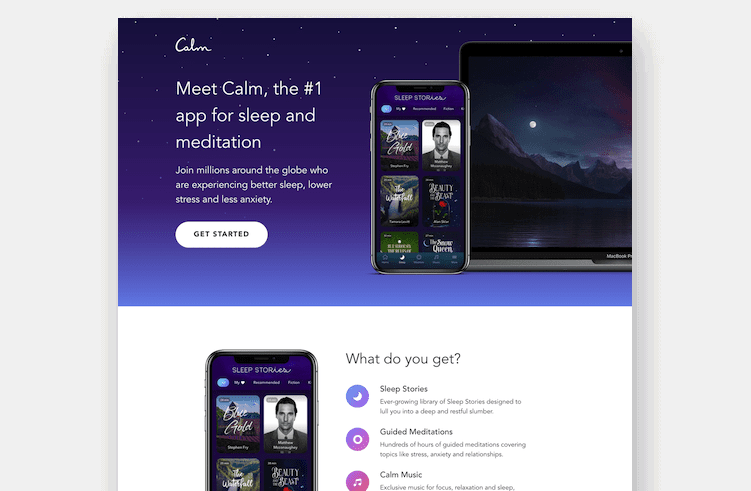
The health and wellness sector, exemplified by the meditation app Calm, has pioneered the “tranquility-first” design philosophy. Calm’s landing page serves as a psychological bridge; by using a minimalist aesthetic and soothing visuals, the page provides the user with an immediate sample of the product’s core benefit—relaxation—before a single dollar is spent. This “experience-as-marketing” strategy is a recurring theme among high-growth SaaS companies.

In the professional services space, LinkedIn’s landing pages for its Premium tier focus on “career advancement” as the primary psychological driver. For job seekers, the page highlights specific, tangible benefits—such as standing out to recruiters—rather than technical features. This shift from “feature-dumping” to “benefit-selling” is a hallmark of the top 40 examples.

Data-Driven Case Studies: E-commerce and Niche Services
The 2026 report provides granular data on several standout performers across various industries:

- Bariatric Eating: This niche nutrition service, managed by Sevah Creative, achieved an extraordinary conversion rate of over 39%. Analysts attribute this success to the page’s “personality-driven” design, which replaces a cold, clinical atmosphere with a colorful and approachable aesthetic, effectively lowering the barrier to entry for a sensitive subject.
- Netflix: Despite having over 300 million subscribers, Netflix continues to utilize a simplified, high-contrast landing page. Its strategy relies on a “low-risk” value proposition, emphasizing “Cancel anytime” to mitigate user hesitation.
- Goby: In the competitive dentistry space, Goby uses social proof and a money-back guarantee to disrupt traditional retail models. Their landing page focuses on “Brushing perfected,” positioning an everyday task as an aspirational achievement.
- Grass Roots Farmers’ Cooperative: In partnership with MuteSix, this organization uses storytelling to guide users through the entire customer journey—from educating them on the benefits of grass-fed meat to offering a $30 incentive for a first purchase.
Broader Impact on Global Digital Commerce
The implications of these findings extend beyond marketing departments. The 2026 report suggests that the “Michael Jordan of landing pages” is not a single entity but any brand that successfully combines technical speed with psychological empathy. The broader impact of these strategies is a more efficient global marketplace where consumers are matched with the exact solutions they require with minimal waste.

For small to medium enterprises (SMEs), the availability of drag-and-drop builders and standardized templates has leveled the playing field. The study notes that many of the most successful pages were built using Unbounce templates, proving that a massive budget is less important than a clear strategy and a deep understanding of the target audience.

Official Responses and Industry Sentiment
While individual companies featured in the top 40 list have largely declined to share proprietary internal data, the marketing agencies behind them—such as ConversionLab, J7 Media, and Webistry—have voiced strong support for the “Conversion-Centered Design” (CCD) movement. Industry leaders agree that the future of the web is moving toward a fragmented but highly relevant network of standalone pages rather than monolithic corporate websites.

“Our goal is always to cut through the clutter,” stated a designer for Wavehuggers, a surf lesson provider included in the list. “Getting each important component—social proof, urgency, and a clear CTA—above the fold was tricky, but it is the only way to catch the eye in a crowded market like Southern California.”

Tactical Roadmap: Creating a High-Converting Page in 2026
For organizations looking to replicate the success of the top 40, the report outlines a 10-step tactical roadmap:
- Define a Single Goal: Avoid multiple calls to action (CTAs). Focus on one desired outcome.
- Know Your Audience: Tailor messaging to specific pain points.
- Message Match: Ensure consistency between the ad and the page.
- Craft a Compelling Headline: Use the “above the fold” area to state the primary benefit.
- Focus on Benefits: Explain how the product improves the user’s life, not just what it does.
- Use High-Quality Visuals: Integrate video and high-resolution photography.
- Incorporate Social Proof: Use reviews, testimonials, and trust badges to build credibility.
- Minimize Friction: Keep forms short and navigation limited.
- Optimize for Mobile: Ensure the page performs flawlessly on all devices.
- Test and Iterate: Use A/B testing to refine every element based on real user data.
Conclusion: The Future of Digital Interaction
As the year 2026 progresses, the distinction between “good” and “great” landing pages will continue to widen. The 40 examples provided by Unbounce serve as a blueprint for a future where digital interaction is defined by relevance, speed, and trust. By moving away from the “one-size-fits-all” approach of the traditional homepage, businesses are finding that they can build deeper, more profitable relationships with their customers.
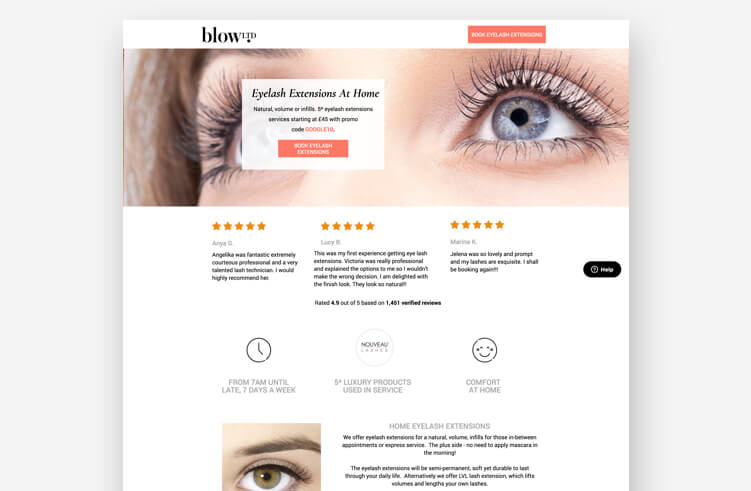
The final takeaway from the 2026 report is a call to action for all digital marketers: no page is perfect, but every page can be better. In an environment where every click has a cost, the ability to optimize the “landing” is the most valuable skill in the modern economy. Whether selling cat food, car insurance, or cloud software, the principles of clarity and focus remain the ultimate drivers of digital success.







